
REVIEW · COMMUNISM & WWII HISTORY TOURS
Prague Private Tour and Museum of Communism with transfer
A wall can teach faster than a lecture. This private Prague route pairs hotel pickup with skip-the-line museum access and then strings together real street-level clues from the Velvet Revolution era. I especially like the Mercedes transfer that keeps you from wrestling with transit or taxi lines, and the way the museum connects day-to-day life to politics and repression. The main downside is the topic is heavy, so if you want light, breezy sightseeing only, this may feel intense.
You’ll spend about four hours total with a moderate amount of walking, plus a guided museum visit that targets the communist system in Czechoslovakia from 1948 to 1989. Then you get a paced walk around key landmarks, with your guide tailoring stops to your interests where possible.
Key strengths if you’re a history fan: you get context, you get structure, and you don’t have to guess your way around Prague’s streets.
In This Review
- Key points at a glance
- The big win: private pickup plus skip-the-line museum time
- Museum of Communism: what you see in one guided hour
- A practical note before you go
- Albertov: where the Velvet Revolution demonstrations began
- Wenceslas Square and the National Museum bullet holes
- Where the National Museum fits in
- Narodni Trida: the street of the hardest beatings
- Museum and city viewpoints: Letna Park and the Stalin base
- Why this stop is useful
- The walking plan: how the 4 hours usually feel
- Guide style and flexibility: why private matters
- Transport, timing, and comfort: the Mercedes part you’ll feel
- Price and value: is $221.60 per person worth it?
- Who should book this tour, and who might skip it
- Should you book the Prague Private Tour + Museum of Communism?
- FAQ
- How long is the tour?
- Is hotel pickup included?
- Do I need to buy museum tickets separately?
- Does the tour include skip-the-line admission?
- What language is the tour offered in?
- How much walking is involved?
- Are food and drinks included?
- Where does the tour visit?
- What are the museum hours/days the tour operates?
- Is the tour private?
Key points at a glance
- Skip-the-line Museum of Communism entry saves time and gets you inside before lines build.
- Hotel pickup and drop-off keeps the day efficient, especially if your lodging is outside the center.
- A local, professional guide explains how communist power affected daily life, work, education, and the arts.
- Street stops tied to 1989 events give the history a clear timeline: protests, police violence, and the aftermath.
- Moderate walking with flexibility means you can choose where you want emphasis during the city walk.
The 20th century left its mark here. More of that history, on foot.
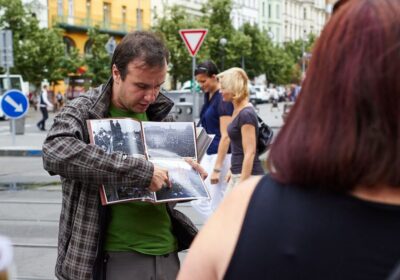
- Prague: Communism History and Nuclear Bunker Guided Tour★ 4.7 · 2,417 reviews
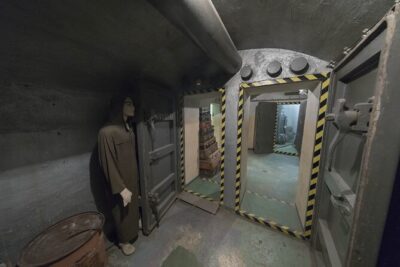
- Prague Communism History and Nuclear Bunker Tour★ 5.0 · 1,742 reviews
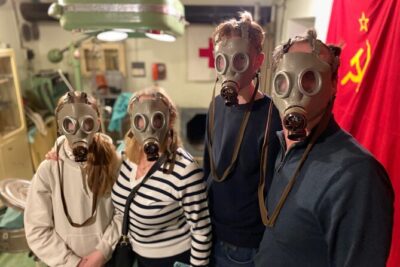
- Communism & Nuclear Bunker Tour + 70s Canteen Lunch (own expense)★ 5.0 · 1,036 reviews
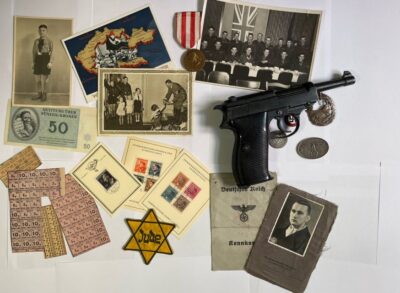
- Prague: WWII Guided Tour & The Crypt of Operation Anthropoid★ 4.7 · 1,030 reviews
The big win: private pickup plus skip-the-line museum time
Prague is gorgeous, but it can also be easy to waste time. You’re solving that problem up front with a private pickup from your hotel (or a place you choose), then a ride in a comfortable Mercedes Benz with a driver and bottled water. It’s a small detail that matters: you arrive fresh, not flustered, and you start the day already oriented.
The other big time-saver is skip-the-line museum admission. The Museum of Communism is the heart of this tour, and getting inside quickly helps you actually spend your hour seeing and understanding, rather than waiting.
This is also built for people who don’t want to play “spot the historical marker” on their own. Your guide leads the route and keeps the story coherent—especially useful when you’re hopping between places like Wenceslas Square, Narodni Trida, and Letna Park, where many layers overlap.
Museum of Communism: what you see in one guided hour
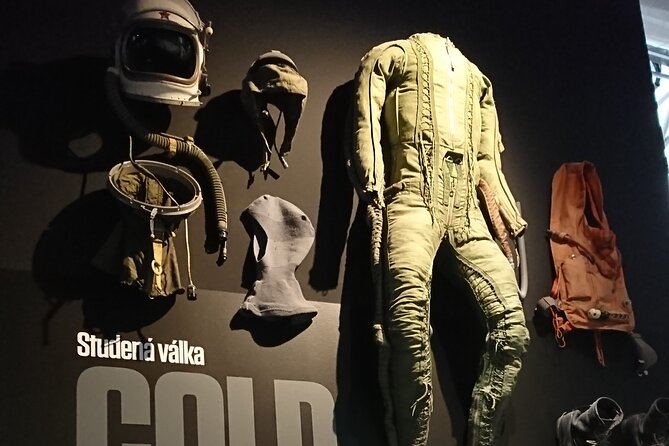
The museum visit is where the tour earns its name. You’ll get a full guided hour focused on the totalitarian regime that ruled from the February putsch in 1948 until the Velvet Revolution in 1989.
What I like about this setup is that it doesn’t stop at slogans. You’re shown how power worked through everyday systems:
- daily life, education, and sports
- politics, propaganda, media control, and censorship
- police and secret police (including the StB)
- courts and show trials, plus the idea of political labor camps during the Stalinist era
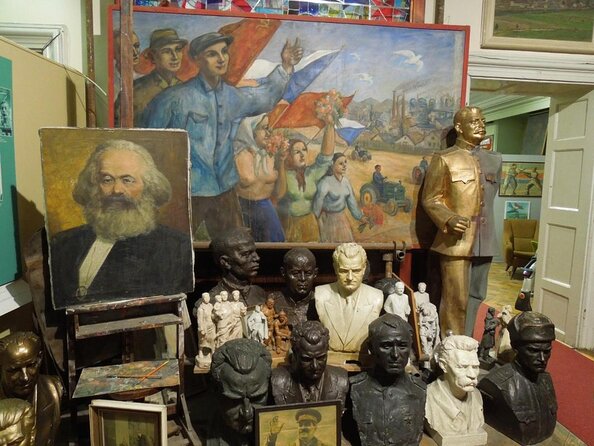
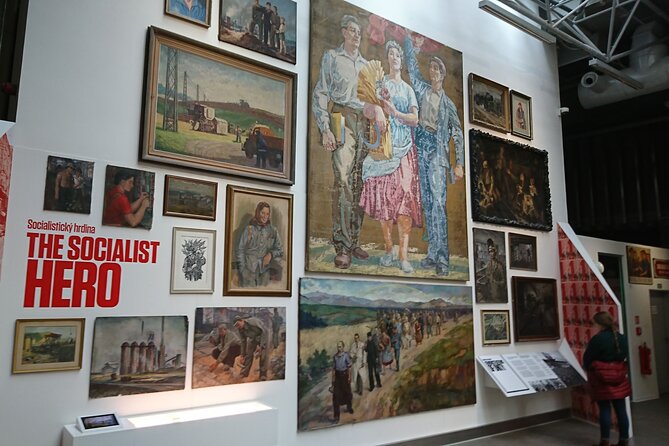
- Socialist Realism in art, including how culture was shaped by ideology
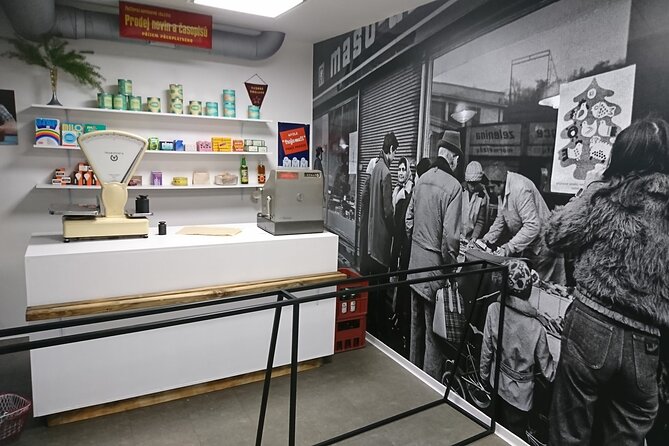
Even better, the museum includes reconstructed spaces such as an old communist-era classroom, factory, and interrogation room. Those recreated rooms do two useful things at once. First, they make abstract history feel physical. Second, they help you notice how surveillance and fear were built into daily routines, not just dramatic events.
A practical note before you go
Because the museum covers repression, censorship, police violence, and show trials, it’s emotionally heavy. Plan your pacing. If you’re the type who needs a break after intense topics, you’ll be glad the city walk follows, with options for viewpoints and outdoor space at Letna Park.
Albertov: where the Velvet Revolution demonstrations began
You start with a short stop at Albertov, tied to the peaceful student demonstrations of the Velvet Revolution in 1989. It’s only about 10 minutes, but that quick timing is smart. You get the spark point early, so the rest of the day has a clear origin story.
This stop works best when you treat it like a “timeline anchor.” The real value isn’t in lingering—it’s in using it to understand what came next: how peaceful protest turned into confrontation and how the city became a stage for change.
Rainy afternoon covered. More Prague museums and galleries.



Wenceslas Square and the National Museum bullet holes
Next comes Vaclavske NamEsti (Wenceslas Square), around 30 minutes, and it’s one of the most historically packed parts of central Prague.
Here’s what makes this stop memorable:
- In 1968, it saw clashes with Soviet armored units during the Prague Spring.
- You can see preserved bullet holes in the walls of the National Museum, kept as a reminder after the square’s renovation.
- In November 1989, a protest rally against police brutality helped fuel the Velvet Revolution and the overthrow of communism.
- The square’s shape and buildings reflect its long life, from an old horse market to today’s mix of hotels, restaurants, clubs, and shops.
- You’ll also pass the Jalta Hotel area, which connects to STB secret police eavesdropping on foreign diplomats and businessmen.
Wenceslas Square can feel like motion and noise in the present day. The guide helps you slow it down and read it like a text. Even if you’re not a “bullet holes tourist,” this stop gives you a physical sense of how close politics was to ordinary movement.
Where the National Museum fits in
Right after the square, you’ll pass the National Museum again as part of the same theme: August 1968 and the Soviet occupation clashes. Keeping your eyes on the bullet holes helps you connect the 1968 story to the later 1989 protests without getting lost in dates.
Narodni Trida: the street of the hardest beatings
Stop three is at the Hands reaching out of the wall on Narodni Trida, about 20 minutes. This is where the tour turns darker and more direct.
Your guide points out that the worst beating by the police during the Velvet Revolution in 1989 took place here. The description is stark: police blocked side streets, created a narrow cordon, and anyone trying to escape had to pass through—meaning the violence followed people down the same funnel.
This stop is short, but it’s powerful. It helps you understand that the Velvet Revolution wasn’t only about speeches or posters. It was about physical risk—and about how people pushed forward anyway.
If you’re sensitive to accounts of police brutality, this is the moment to brace yourself.
Museum and city viewpoints: Letna Park and the Stalin base
After the museum, the tour shifts outdoors with Letna Park for about 30 minutes.
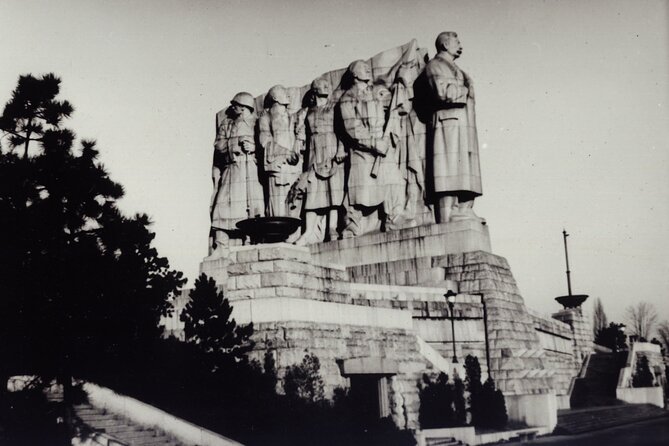
Letna is where you get a panoramic view of Prague, and your guide ties that viewpoint to the communist era through one very specific detail: there used to be a giant statue of Josip Stalin overlooking the city. After Nikita Chruscev revealed Stalin’s atrocities, the monument was removed. What remains is the base—repurposed with a large metronome installed where the statue once stood.
In modern times, the spot also became popular with young people for dating and showing off skills like skateboarding, depending on what you find when you arrive.
Why this stop is useful
A viewpoint stop isn’t just a photo break. It gives you a “mental reset” after the museum’s heavy content. Plus, it shows how regimes try to control meaning through monuments—and how time repurposes that meaning once power changes.
The walking plan: how the 4 hours usually feel
This tour runs about 4 hours total and includes a moderate amount of walking. That means:
- you’ll be on your feet enough to need comfortable shoes
- you won’t be sprinting between sites
- you’ll still get the feeling that you’re seeing the city up close, not only riding past it
Weather is handled in the sense that it operates in all weather conditions. So bring the basics: a light rain layer if needed, and clothes you can move in.
One detail I appreciate is the structure: short stops (10–30 minutes each) plus one longer museum segment (about 1 hour). That timing helps you stay focused rather than mentally dragging all day.
Guide style and flexibility: why private matters
The private nature of the tour changes the whole experience.
Your guide isn’t working off a rigid script designed for a busload of people. The tour description gives you a clue: you can list special interests when booking, and the guide can prepare your private route around that.
It’s also where personal storytelling can make the history feel real. In past groups, guides such as Iva, Hanna, Hana, and Pavel have shared personal or family experiences tied to living under communism and political change. Drivers have included people like Piotr and Petr, and their professionalism shows up in how smoothly the day runs and how easily they can adapt to your curiosity.
That flexibility is especially helpful when you want to understand why a square, a building, or a street mattered—not only what happened there.
Transport, timing, and comfort: the Mercedes part you’ll feel
Yes, it’s just a car. But on a short tour, comfort and timing are big deals.
You’re in a private Mercedes Benz with a driver, plus bottled water in the vehicle. Those sound small until you’ve had a day where you’re rushing from tram to tram while trying to keep up with museum entry times. Here, your day is staged so you spend energy on the sites—not on logistics.
The tour also ends with drop-off at your hotel or another central place if you’d like to continue exploring alone. That matters in Prague, where a short distance can still feel like a big deal once you’re tired.
Price and value: is $221.60 per person worth it?
At $221.60 per person for roughly 4 hours, this isn’t a budget tour. But the value argument is pretty clear if you check what’s included:
- professional guided museum visit with admission included
- skip-the-line museum entry
- private hotel pickup and drop-off
- private Mercedes Benz transport and driver
- bottled water in the car
- the city walk guided around communist-era context points
What’s not included is food and drinks, so you’ll want to plan lunch on your own afterward.
So who should feel good about this price? People who:
- don’t want to navigate logistics during a short Prague visit
- care about the Museum of Communism enough to go beyond quick sightseeing
- value a guide who can explain the “why” behind the locations
If you’re traveling with limited time or you dislike group dynamics, private here actually helps the topic land.
Who should book this tour, and who might skip it
This tour is a great fit if you:
- are a history enthusiast who wants the communist story connected to everyday life
- prefer guided structure over self-guided wandering
- want a clear timeline from 1968 and 1989 up through the Velvet Revolution
- like a mix of indoor museum learning and outdoor city viewpoints
You might consider another style of tour if you:
- want a lighter, purely scenic Prague day
- dislike emotionally intense historical topics about repression and violence
- prefer long, unstructured walking without set stops (this one is guided and time-boxed)
Should you book the Prague Private Tour + Museum of Communism?
I’d book it if your Prague trip includes a “serious history” day and you want it done efficiently. The mix of skip-the-line museum access and hotel pickup makes it easier to commit to the museum without feeling rushed. The street stops—Albertov, Wenceslas Square, and Narodni Trida—help the museum themes connect to real places, not just facts on a page.
If you’re even mildly curious about how communist power showed up in education, police control, propaganda, and daily routines, this tour is a strong choice. Just go in with the right mindset: parts of the story are grim, but the tour is built to explain it clearly and keep you moving at a human pace.
FAQ
How long is the tour?
The tour lasts about 4 hours.
Is hotel pickup included?
Yes. Your guide picks you up from your hotel lobby or another place you choose in Prague, and you’re dropped back at your hotel or a central location afterward.
Do I need to buy museum tickets separately?
No. Museum of Communism admission is included.
Does the tour include skip-the-line admission?
Yes. You get skip-the-line museum admission.
What language is the tour offered in?
The tour is offered in English.
How much walking is involved?
A moderate amount of walking is involved, so comfortable walking shoes are recommended.
Are food and drinks included?
No. Food and drinks are not included.
Where does the tour visit?
You’ll visit stops including Albertov, Vaclavske NamEsti (Wenceslas Square) and the National Museum area, the Hands reaching out of the wall on Narodni Trida, the Museum of Communism, and Letna Park.
What are the museum hours/days the tour operates?
It operates Monday through Sunday, from 8:00 AM to 2:00 PM (for the listed date range).
Is the tour private?
Yes. It’s a private tour/activity, with only your group participating.
More Private Tours of Prague
More Prague Museums & Galleries
More Communism & Wartime History
More Prague tours we have written up lately


Communism & WWII History Tours, compared.
 ★ 4.7Communism History and Nuclear Bunker Guided TourFrom $442,417 reviews
 ★ 5.0Prague Communism History and Nuclear Bunker TourFrom $451,742 reviews
 ★ 5.0Communism & Nuclear Bunker Tour + 70s Canteen Lunch (own expense)From $351,036 reviews
 ★ 4.7WWII Guided Tour & The Crypt of Operation AnthropoidFrom $421,030 reviews
 ★ 5.0WWII in Prague Tour & The Crypt of Operation AnthropoidFrom $43817 reviews
 ★ 4.8Communism and Bunker Tour with 70s Canteen LunchFrom $34269 reviews
 ★ 5.0Small-Group World War 2 & Operation Anthropoid Tour in PragueFrom $33231 reviews
 ★ 4.8World War 2 and Operation Anthropoid Walking TourFrom $32193 reviews
Browse the lists this tour appears in