
REVIEW · COMMUNISM & WWII HISTORY TOURS
Prague: Communism History and Nuclear Bunker Guided Tour
Prague’s communist past is heavy, but fascinating. You’ll see a real 1950s nuclear bunker (about 50 feet underground) and you’ll hear firsthand-style stories from guides such as Stan and Ladislav who lived through the era. One drawback: this is a walking-and-stairs tour, and it’s not a fit if you have claustrophobia, heart issues, or mobility limitations (also, there are no toilets at the starting point).
This tour doesn’t just point at landmarks. It connects places you’ll recognize—like the Velvet Revolution Memorial and Wenceslas Square—to the day-to-day fear of spying, political control, and propaganda. Along the way, you’ll also get a chance to take the tram out to the bunker area with a guide keeping the group together.
Once you reach the bunker, the tone changes fast—from city politics to survival thinking. Expect cold war exhibits, genuine equipment, and a gasmask workshop at the museum, plus time underground with a guided explanation that makes the scale feel real.
Key highlights worth your attention
- A genuine Cold War bunker from the 1950s, designed to shelter up to 5,000 people
- 50 feet underground, with guided access to the real spaces and equipment
- Gasmask workshop included at the bunker museum
- City stops tied to communist power, including stories linked to Stalin-era symbolism and the secret police
- Guides with lived context, including Stan, Ladislav, Pavel, and Maki
- Not for everyone: walking, stairs, and confined spaces mean you should read the restrictions carefully
In This Review
- Walking Communist Prague: From Secret Police Power to Everyday Fear
- Velvet Revolution Memorial and the Idea of Turning Points
- Wenceslas Square Through a Cold War Lens
- The Tram Transfer: Getting Out to Where the Threat Became Physical
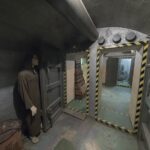
- Entering a Nuclear Bunker 50 Feet Underground
- What you should expect underground
- Cold War Exhibits and Genuine Equipment: How the Propaganda Looked
- The Gasmask Workshop: Learning the Safety Mindset the Hard Way
- The Built-In City Context: Why the Stops Are Linked
- Guides Matter: Stan, Ladislav, Pavel, and Maki’s Different Voices
- Price and Value for a 150-Minute Communist Prague and Bunker Tour
- Who Should Book This Tour, and Who Should Skip It
- Should You Book This Prague Communism History and Nuclear Bunker Tour?
- FAQ
- How long is the Prague Communism History and Nuclear Bunker guided tour?
- What languages are the guided tours offered in?
- What’s included in the ticket price?
- What will I do at the nuclear bunker museum?
- Is the tour suitable for wheelchair users or people with mobility impairments?
- Can I cancel if plans change?
Walking Communist Prague: From Secret Police Power to Everyday Fear
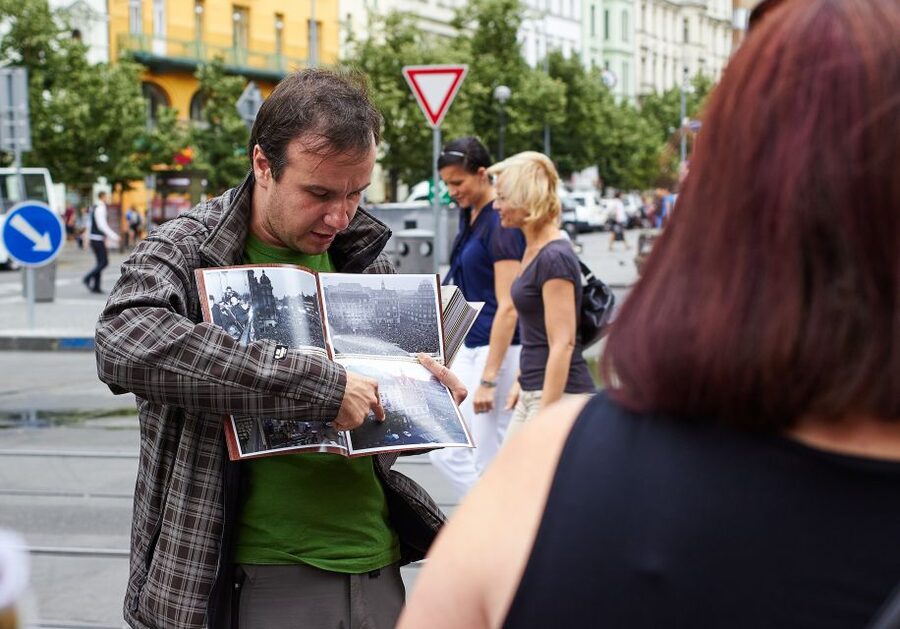
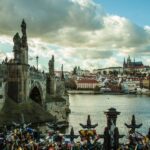
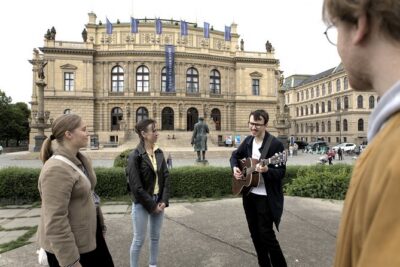
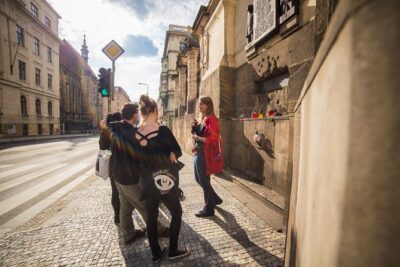
If you only do the postcard Prague route, you’ll miss the part of the city that shaped people’s daily lives for decades. This tour starts with a short guided walk through key central spots tied to communist rule and its aftershocks. You’ll spend those first minutes getting oriented, then the guide turns the historical background into human stories.
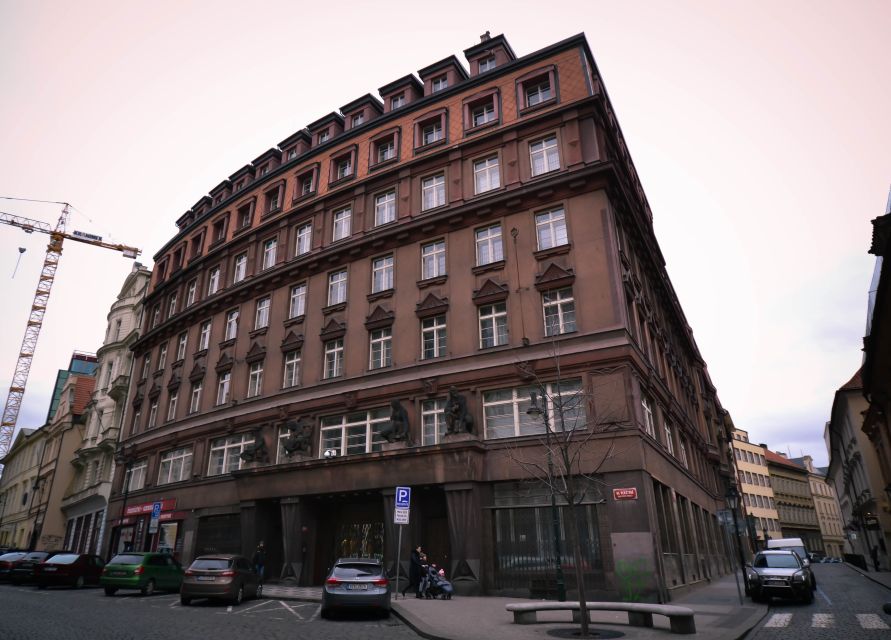
What I like most is how the city walk sets the mindset before you ever go underground. You’re not just collecting dates—you’re learning how surveillance and fear worked in practical life. Your guide will also connect bigger symbols to real people, like the biggest statue of Stalin ever built and the former headquarters of the communist secret police.
One thing to be ready for: the walk portion is short, but it still counts. Wear comfortable shoes, because you’ll be back on your feet later for the transfers and the bunker visit.
The 20th century left its mark here. More of that history, on foot.
- Prague: Communism History and Nuclear Bunker Guided Tour★ 4.7 · 2,417 reviews
- Prague Communism History and Nuclear Bunker Tour★ 5.0 · 1,742 reviews
- Communism & Nuclear Bunker Tour + 70s Canteen Lunch (own expense)★ 5.0 · 1,036 reviews
- Prague: WWII Guided Tour & The Crypt of Operation Anthropoid★ 4.7 · 1,030 reviews
Velvet Revolution Memorial and the Idea of Turning Points
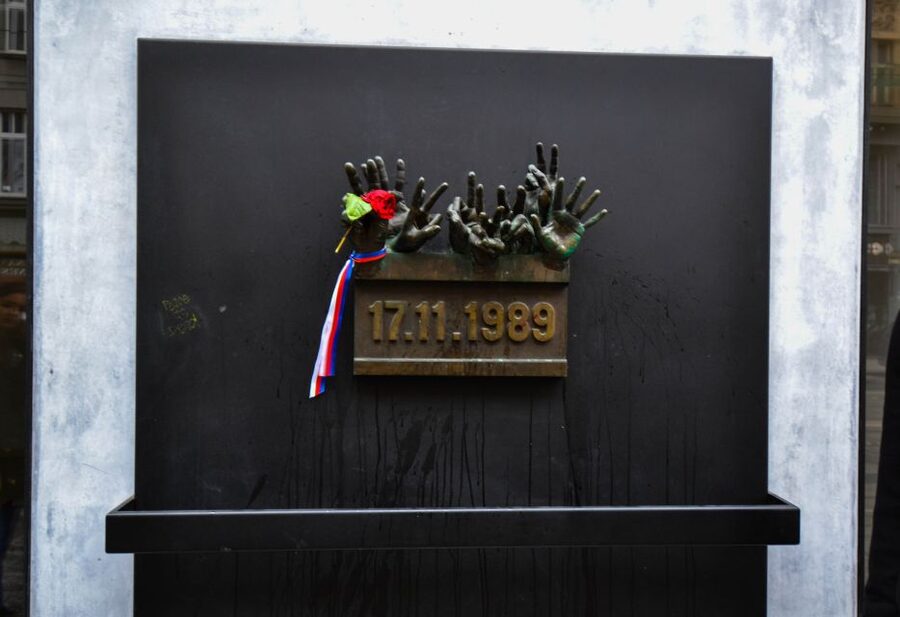
The Velvet Revolution Memorial stop matters because it frames what comes next: not just communism as an idea, but the shift people fought for. You’ll get the story explained in plain terms, and the guide keeps tying past pressure to the moment when change became possible.
This is where the tour helps you avoid a common trap: thinking history is only what governments did. The memorial setting is the reminder that change had a social cost and that ordinary people pressed for something better.
The short guided time here means you should listen closely. The guide is packing the context fast so you can understand why the bunker later feels so grim.
Wenceslas Square Through a Cold War Lens
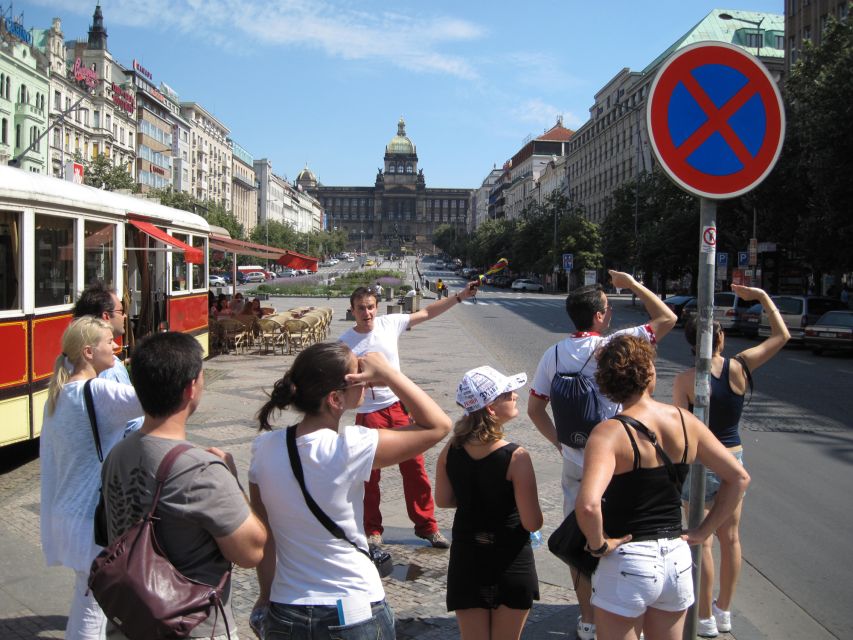
Wenceslas Square is one of those places you can easily treat like scenery. Here, it becomes a stage where political messages and public life collided. Your guide brings in communist-era framing so the square stops feeling like just a busy address and starts feeling like a public space under pressure.
You’ll also hear about the paranoia side of the system—spying, fear of neighbors, and the way violence could stay both hidden and close. That’s the tour’s clever trick: it makes you look at familiar Prague and ask, what did this look like when people lived with consequences for speaking the wrong way?
If you like history explained as cause-and-effect, this part will land well. If you prefer only museum-style facts with no emotion, be aware the guide uses human stories to make the message stick.
The Tram Transfer: Getting Out to Where the Threat Became Physical
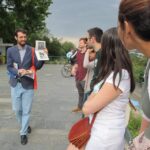
Between the city center and the bunker, you’ll take public transportation. In practice, that often means a tram ride out to the bunker area, with the guide staying on top of the group so no one gets left behind. It’s a useful break in the pacing: you get moving time, city-to-suburb contrast, and a moment to reset before the underground portion.
This transfer also helps you feel the geography of the era. Communist history in Prague isn’t only on one street. It reaches outward—into planning, infrastructure, and the civilian imagination about what might happen.
Pay attention to the guide’s timing here. Once the tour leaves the start area, you’re not guaranteed to join back later—so treat meeting points and re-grouping cues as serious.
Entering a Nuclear Bunker 50 Feet Underground
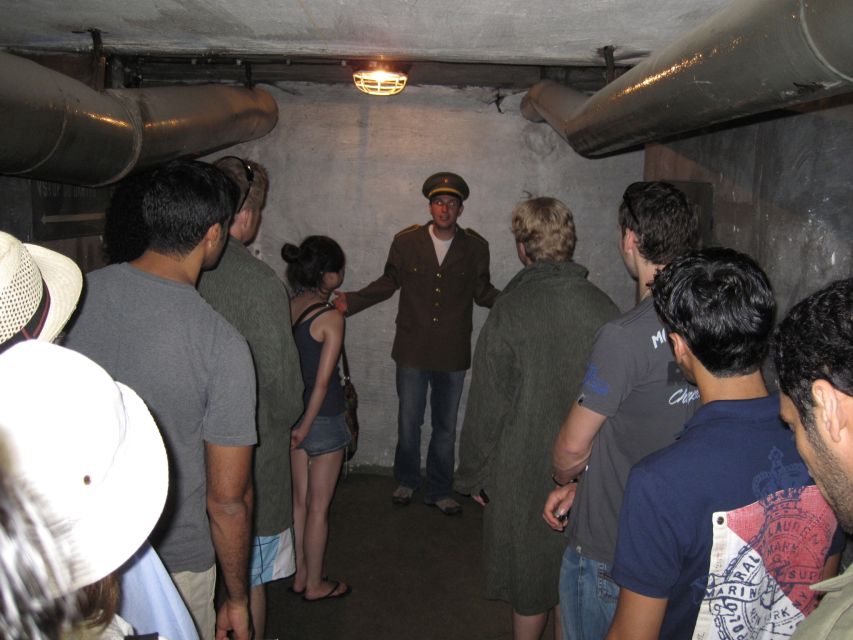
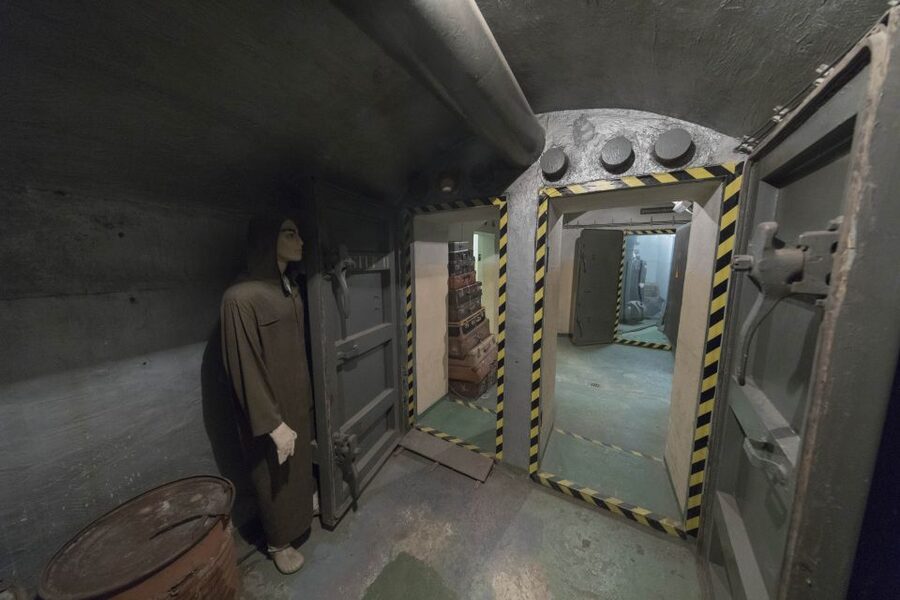
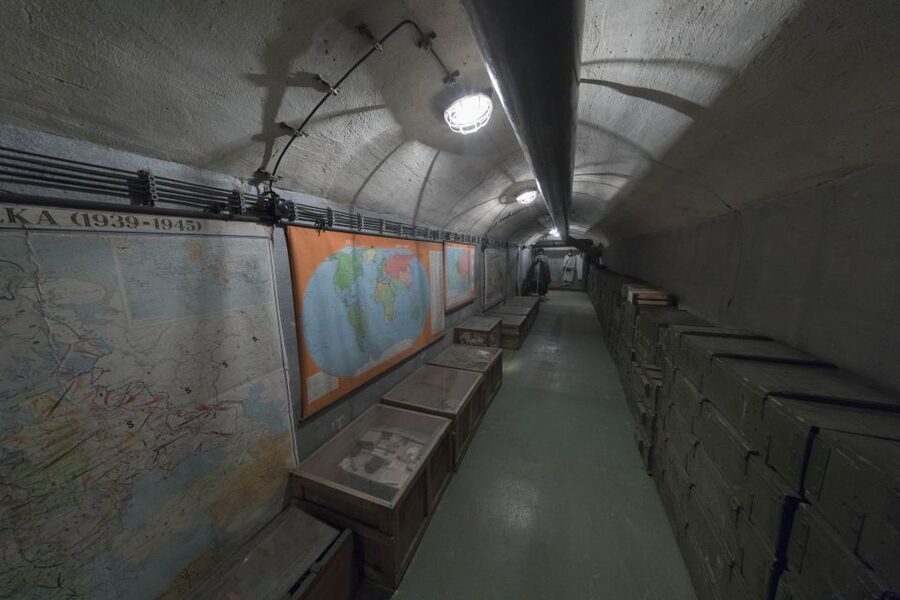
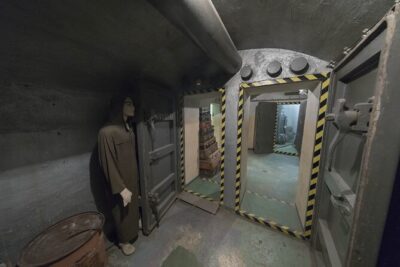
Now the real gravity starts. The tour leads you to Prague’s largest nuclear bunker, built in the 1950s and designed to accommodate up to 5,000 people. You’re going underground to a space engineered for survival, and it’s not presented like a thrill ride. It’s presented as a window into how governments prepared for catastrophe and how civilians were expected to accept it.
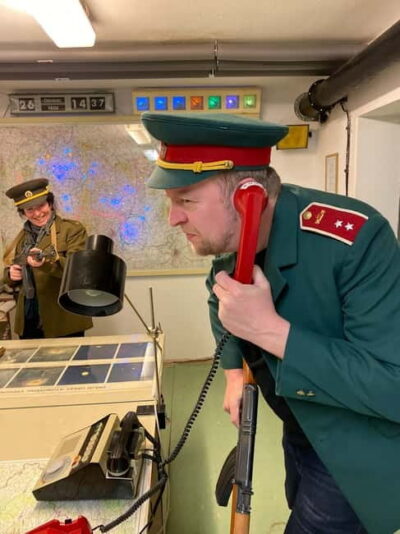
You’ll tour parts of the bunker with a guide explaining the cold war logic behind the design. The emphasis is on how the bunker worked as an environment, not just as an object. Expect cold war time expositions, genuine equipment, and interpretation that connects those objects to the anxiety of the era.
More guided tours across Prague.
What you should expect underground
- The bunker is deep, about 50 feet underground, so the atmosphere can feel confined
- You’ll follow a guided route through exhibits and equipment areas
- You’ll hear how civilian shelter planning fit into the larger Cold War context
This is where you should be honest about fit. The tour isn’t for people with claustrophobia, heart issues, or serious mobility limits. Even if you’re okay with enclosed spaces, it’s still a bunker—breathing space is not the point.
Cold War Exhibits and Genuine Equipment: How the Propaganda Looked
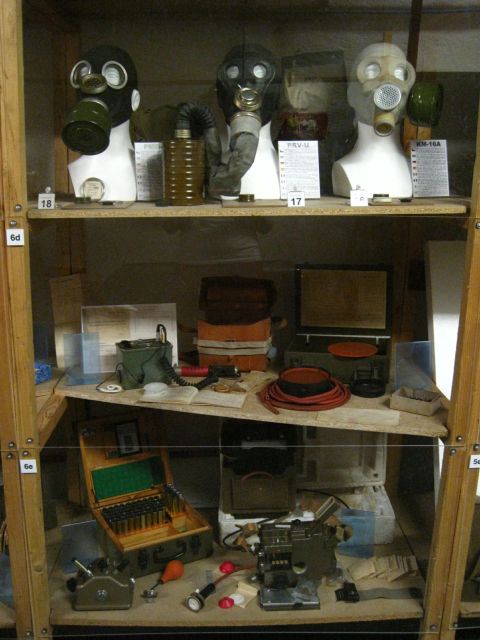
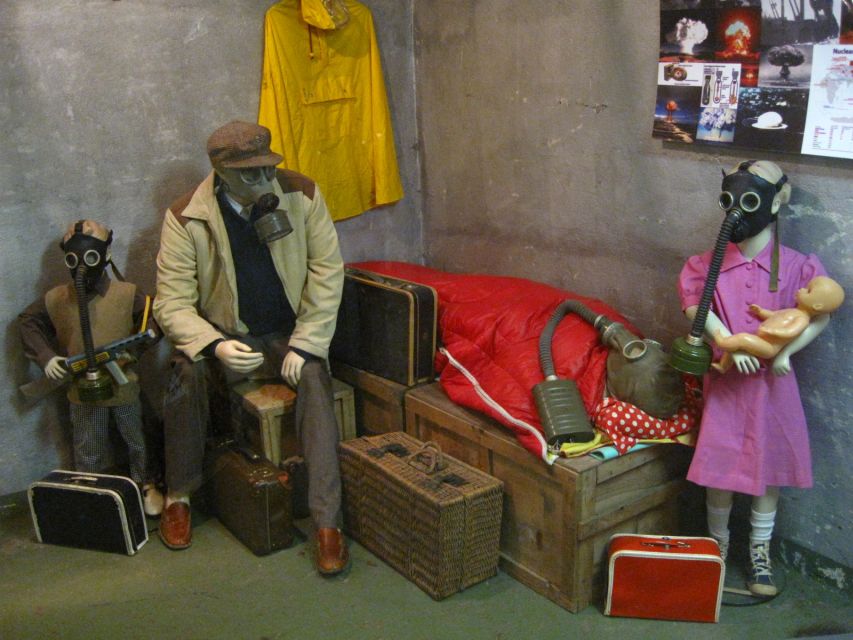
Inside, the exhibits do a big part of the work. You’re seeing Cold War period displays and artifacts meant to communicate safety, readiness, and authority. That’s a key theme: the bunker didn’t just protect people from disaster. It also shaped how people understood disaster.
What I take from this style of presentation is that it isn’t trying to shock you for sport. It’s showing you how official narratives turned fear into procedures. You’ll also hear the guide’s storytelling about spies, political prisoners, cold war refugees, and dissidents—people who lived inside that same system of pressure.
A practical note: one caution that comes up is that some bunker exhibits may look a bit worn or in need of maintenance. If you’re the type who expects everything to look freshly restored, you might notice that the realism can include a little fatigue in the presentation.
The Gasmask Workshop: Learning the Safety Mindset the Hard Way
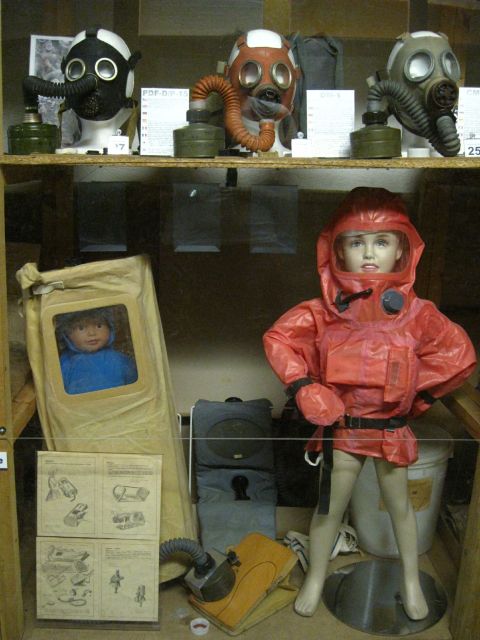
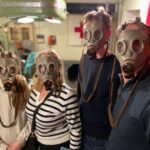
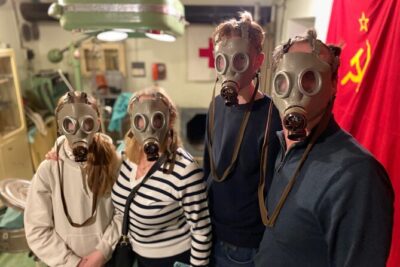
After the bunker visit, the tour includes time at the nuclear bunker museum, where the Cold War expositions continue—and then comes the gasmask workshop. This is the interactive piece, and it’s one of the most memorable parts because it takes you from theory to equipment.
The workshop format matters for your understanding. Instead of just hearing that people feared chemical or nuclear threats, you get a hands-on experience tied to how preparedness was taught. It’s also a great way to make the tour feel less like a lecture and more like a lesson you can physically remember.
You don’t need to be a tech person to enjoy it. The guide’s job is to connect the practical steps of the workshop to the broader history of how people prepared for worst-case scenarios.
The Built-In City Context: Why the Stops Are Linked
Some Prague history tours throw landmarks at you and call it a day. This one works because the route keeps the story connected.
- Early city stops give you the political atmosphere: surveillance, control, and symbols of power
- The tram transfer brings you into the “infrastructure” layer of history
- The bunker visit gives you the survival layer, with genuine equipment and Cold War-style exhibits
- The museum and gasmask workshop add a practical layer, showing how readiness was meant to work
That layered approach is what makes the whole thing worth your time. You leave with a clearer picture of how the system operated—not just who ruled, but what daily life felt like under the pressure.
Guides Matter: Stan, Ladislav, Pavel, and Maki’s Different Voices
What really pushes this tour above basic history viewing is the guide. Multiple guides are referenced in the experience stories, including Stan, Ladislav, Pavel, and Maki. They’re not just reciting facts. They’re bringing perspective that makes the era feel less abstract.
You’ll also hear guides use humor at points, without turning the topic into comedy. That balance helps because the subject matter is grim—spying, political prisoners, and the constant threat behind public life. When the guide mixes personal anecdotes with clear explanations, the tour becomes easier to follow and harder to forget.
If you’re hoping for an experience led by someone who can answer questions as you go, this format fits. You’re moving, learning, and asking in real time.
Price and Value for a 150-Minute Communist Prague and Bunker Tour
At about $44 per person for roughly 150 minutes, this is not priced like a casual walking tour. The value comes from what you get stacked together:
- a live guide
- public transport to and from the bunker area
- entry to the nuclear bunker museum and exhibitions
- guided time inside a real 1950s nuclear bunker
- a gasmask workshop
You’re paying for guided access to a specialized site that most visitors don’t stumble upon on their own, plus transportation that bridges central Prague with the bunker location. If you’re the type who likes your sightseeing paired with meaning, the cost feels reasonable for what’s included.
On the other hand, if you only want surface-level Prague highlights—architecture, river views, classic neighborhoods—this may feel too heavy for the time you have.
Who Should Book This Tour, and Who Should Skip It
This tour is a strong match if you want a deeper look at Prague under communist rule, and if you’re curious about Cold War civilian life beyond the usual monuments. It’s also a good fit for anyone who learns best from stories tied to real places—especially when those places are as unusual as a 1950s nuclear bunker.
Skip it if any of these are true for you:
- You’re not comfortable in confined spaces (claustrophobia is a deal-breaker here)
- You have mobility or stamina limits that make walking and stairs difficult
- You’re dealing with heart issues
- You’re traveling with very young children (infants or the smallest children under school age aren’t allowed)
Also, you should plan ahead for basics. The starting point doesn’t have toilets, so be ready before you meet up.
Should You Book This Prague Communism History and Nuclear Bunker Tour?
I’d book it if you want your Prague history lesson to include the fear and planning people lived with, not just the political headlines. The combination of central Prague context plus a real bunker—50 feet underground—creates a “from street to shelter” story line that sticks.
If you’re on the fence, decide based on two things: your comfort with walking and enclosed spaces, and your interest in Cold War daily life (spies, dissidents, political pressure, and the survival mindset behind the bunker). If both are true, this tour is one of the more memorable ways to understand Prague’s 20th-century reality.
If they still have spots when you’re ready, reserve sooner rather than later—this is the kind of experience that benefits from choosing the guide and time that works for your schedule.
FAQ
How long is the Prague Communism History and Nuclear Bunker guided tour?
The tour duration is about 150 minutes, and it can vary by about ±10 minutes depending on group size.
What languages are the guided tours offered in?
The live guide offers German and English.
What’s included in the ticket price?
You get a live guide, public transportation to and from the bunker, entry to the nuclear bunker museum and exhibitions, and the guided portion through the bunker site.
What will I do at the nuclear bunker museum?
The museum visit includes Cold War expositions and a gasmask workshop.
Is the tour suitable for wheelchair users or people with mobility impairments?
No. It isn’t possible for wheelchair users (and it’s not suitable for people with walking disabilities or mobility issues) due to walking and stairs.
Can I cancel if plans change?
Yes. You can cancel up to 24 hours in advance for a full refund.
More Tours in Prague

More Tour Reviews in Prague


More Communism & Wartime History
More Prague tours we have written up lately


Communism & WWII History Tours, compared.
 ★ 5.0Prague Communism History and Nuclear Bunker TourFrom $451,742 reviews
 ★ 5.0Communism & Nuclear Bunker Tour + 70s Canteen Lunch (own expense)From $351,036 reviews
 ★ 4.7WWII Guided Tour & The Crypt of Operation AnthropoidFrom $421,030 reviews
 ★ 5.0WWII in Prague Tour & The Crypt of Operation AnthropoidFrom $43817 reviews
 ★ 4.8Communism and Bunker Tour with 70s Canteen LunchFrom $34269 reviews
 ★ 5.0Small-Group World War 2 & Operation Anthropoid Tour in PragueFrom $33231 reviews
 ★ 4.8World War 2 and Operation Anthropoid Walking TourFrom $32193 reviews
 ★ 4.7World War II and Communist History TourFrom $34130 reviews
Browse the lists this tour appears in