
REVIEW · COMMUNISM & WWII HISTORY TOURS
Communism & Nuclear Bunker Tour + 70s Canteen Lunch (own expense)
Cold War history in Prague has teeth. This small-group walk adds a real nuclear bunker and a 70s canteen break to the usual Old Town sights. You get a clear timeline, but also the human stuff: how politics seeped into daily life.
What I like most is the pacing: you’re not just hearing dates, you’re seeing the places where power was performed. The other big win is the max 10-person group, which makes questions and side conversations easy. One heads-up: it’s not for claustrophobia, and some parts are tight underground.
In This Review
- Why This Prague Communism Tour Feels Different
- Start at Powder Tower: old streets, new context
- Republic Square and Old Town Square: independence, occupation, and 1948
- Narodni Street and Wenceslas Square: Prague Spring and the Velvet Revolution
- The 70s worker’s canteen stop: kofola, beer, and proper comfort food
- Inside the 1950s nuclear bunker: underground reality, not just props
- Guides and small-group Q&A: why the history sticks
- Price and value: $35.07 with a bunker ticket in the mix
- Who should book this Prague Cold War walk
- Should you book this communism and bunker tour?
- FAQ
- How much does the Prague Communism & Nuclear Bunker tour cost?
- What’s the duration of the tour?
- Is it in English?
- What’s included in the price?
- Do I pay extra for lunch or drinks?
- Where do I meet the guide, and where does the tour end?
- Is the nuclear bunker experience suitable for everyone?
Why This Prague Communism Tour Feels Different
- Small-group size (max 10) so your guide can actually answer questions while you walk.
- A guided route through key Cold War sites around Old Town and the Wenceslas Square area.
- A real 1950s nuclear bunker visit (included), with time set aside to experience it properly.
- A 70s worker’s canteen stop where you can try Czech staples and drinks like kofola.
- English commentary throughout, with a meeting point you can find without drama (Powder Tower).
- Interactive touches and props can be part of the bunker experience, depending on the guide and the day.
The 20th century left its mark here. More of that history, on foot.
- Prague: Communism History and Nuclear Bunker Guided Tour★ 4.7 · 2,417 reviews
- Prague Communism History and Nuclear Bunker Tour★ 5.0 · 1,742 reviews
- Communism & Nuclear Bunker Tour + 70s Canteen Lunch (own expense)★ 5.0 · 1,036 reviews
- Prague: WWII Guided Tour & The Crypt of Operation Anthropoid★ 4.7 · 1,030 reviews
Start at Powder Tower: old streets, new context
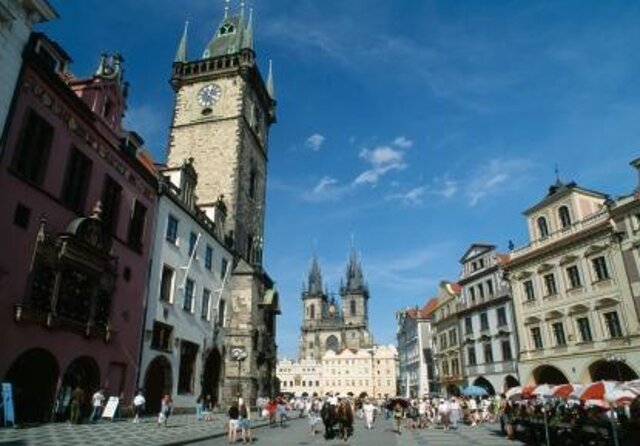
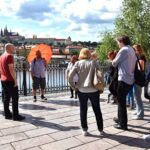
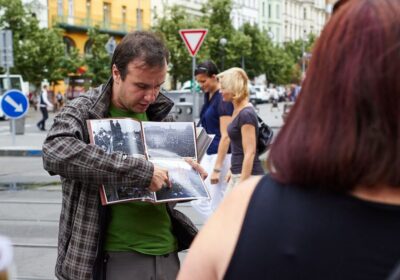
You’ll meet at Powder Tower (Nám. Republiky 5), right where Prague’s Old and New Town energy meets. It’s a smart launch point. You can immediately connect the city’s grand architecture to the smaller, tougher story of the 20th century.
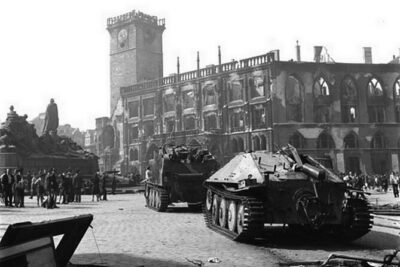
From the start, the guide frames Czechoslovakia as something shaped by forced choices: independence in 1918, the heavy weight of Nazi occupation, and liberation in 1945. Even if you’ve seen Prague’s highlights before, you’ll notice how the same streets can mean different things in different eras.
There’s also a practical tip that matters here: look for the guide holding a blue umbrella. With a history-heavy tour, you want to start on time and stay focused instead of hunting.
Republic Square and Old Town Square: independence, occupation, and 1948
Your first stop centers on Republic Square, a place where national identity gets put on display. You’ll hear how Czechoslovakia declared independence in 1918, and why Adolf Hitler was so interested in the state. That sets up a key idea for the tour: this wasn’t a country that lived in isolation—it was pulled into the machinery of bigger powers.
Then you’ll shift into the World War II years and what followed. The guide explains how events after 1945 shaped the post-war state, so the Cold War doesn’t feel like it drops from the sky. You’ll also learn why the communist party won the elections in 1946, which helps you understand that the story isn’t only about tanks and uniforms.
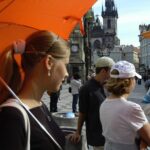
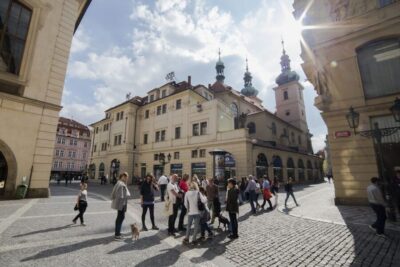
Next comes Old Town Square (Staroměstské náměstí), where the geography is grand and the politics were loud. In 1948, Communist Party leaders celebrated victory here, and you’ll connect the square’s monumental feel to the pressure that followed. This is where the tour turns from headline history to lived experience.
Expect talk about the 50s era of fear: working camps, manipulated trials, collectivization, and the secret police. You’ll also hear about where the biggest monument of Stalin used to stand. It’s the kind of detail that changes how you see a famous Prague landmark, because you realize what stood there before the tourist postcard version.
A small drawback to know: you’ll cover a lot of heavy material in a short window. If you prefer lighter sightseeing, this stop can feel intense. If you like history with real consequences, it’s a strong match.
Narodni Street and Wenceslas Square: Prague Spring and the Velvet Revolution
After Old Town Square, the tour moves toward the heart of modern Prague memory: Wenceslas Square. This part matters because it connects democracy hopes to Soviet control—and then to the public pushback that ended the regime.
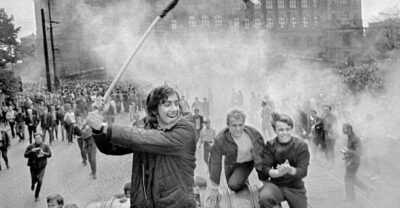
You’ll stand where the Prague Spring occupation took place in August 1968, and the guide frames it as more than a military event. It’s also about crushed expectations—Soviet force stopping Czechoslovakia’s democratic momentum. You’ll also hear about the wider context, including the idea of Soviet help, and why that label didn’t match what people experienced on the ground.
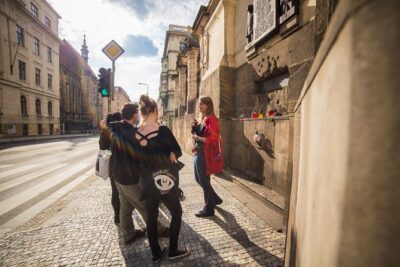
Then the story moves forward to November 1989. You’ll walk past Narodni Street, linked to the student massacre on 17 November 1989, and you’ll connect that moment to the Velvet Revolution. Vaclav Havel and other major modern figures come up here, so the guide helps you understand how a public movement turned into political change.
Wenceslas Square is a big, open place, which helps the pace after earlier tighter streets. But the meaning is heavy. You’ll end up seeing a broad avenue as a stage—where crowds gathered, regimes asserted control, and history shifted.
If you’re short on time in Prague, this route is still efficient. You cover multiple “must-know” milestones without turning it into a march through every museum on the map.
The 70s worker’s canteen stop: kofola, beer, and proper comfort food
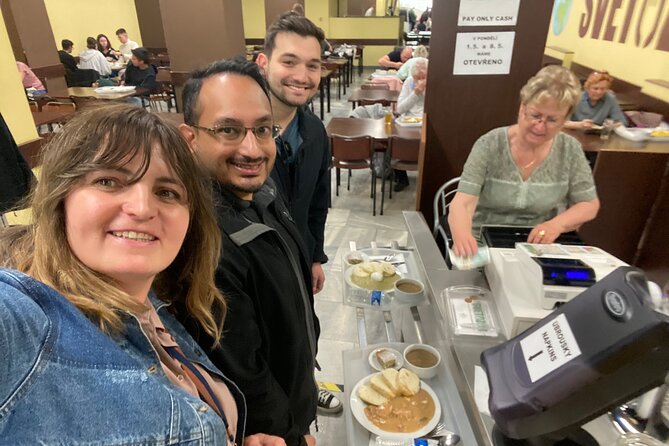
At some point during the Wenceslas Square portion, you’ll get a break at a local worker’s canteen designed to feel like the 70s. This is where the tour becomes less lecture and more taste-and-sound reality.
You can sip a beer or try Czech soda, kofola. Lunch itself is your own expense, so you’re free to keep it simple or go for a more filling working-class meal. One of the most helpful parts: the guide can help you choose what to order, and you’ll get a sense of what “everyday” food looked like when people didn’t treat meals as entertainment.
What makes this stop valuable is the tone. It’s not about getting a trendy photo spot. It’s about experiencing the social setup: a canteen atmosphere, the ordering style, and the idea that even under pressure, routine food still had to happen.
A practical note: if you’re hungry early, you might want to plan snacks so you don’t burn energy before lunch. The tour timing gives you a set meal window, but the history content can build appetite fast.
Other Prague tours and experiences that reward a closer look


Inside the 1950s nuclear bunker: underground reality, not just props
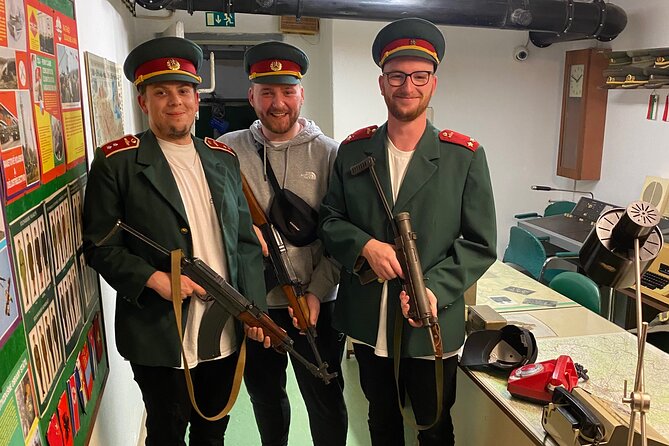
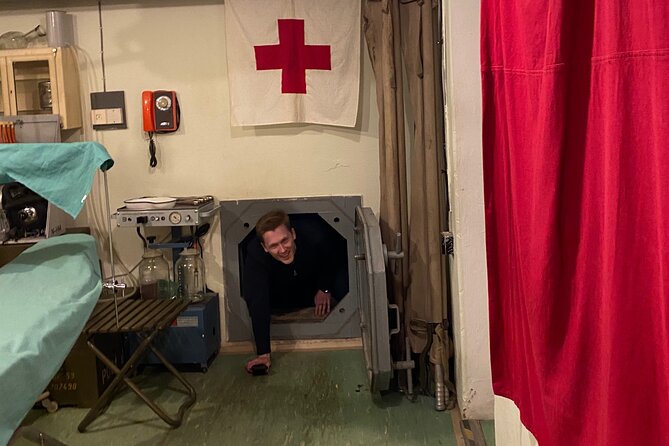
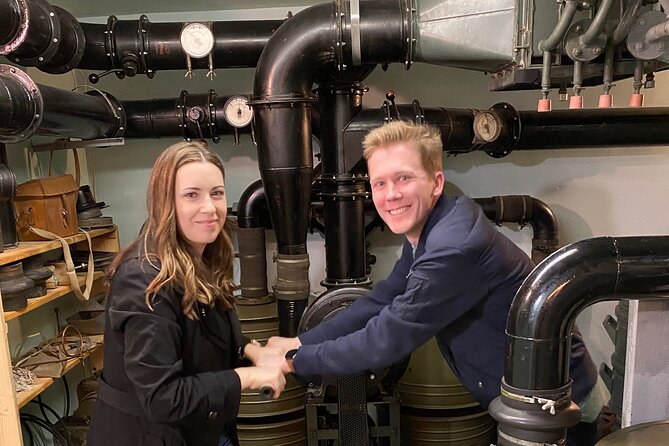
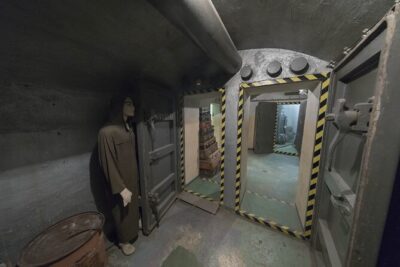
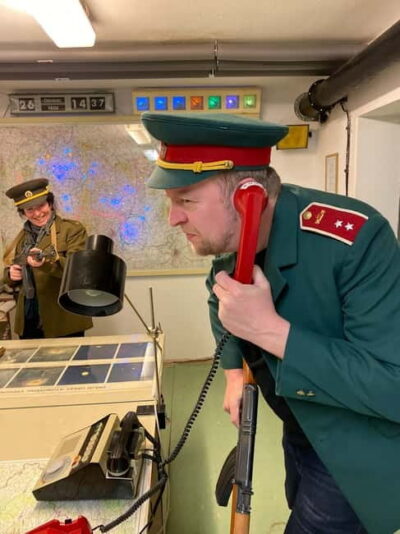
The finale is the big reason people book this tour: a visit to a real nuclear bunker dating from the 1950s, with the admission fee included. The bunker is in the upper part of Vaclavské náměstí area, but the experience itself is strictly below street level.
Here’s the important physical reality. It’s not just a dramatic hallway. You’ll take an elevator one level down, then walk about 30 steps to the next level. That means you’ll want shoes you trust, and you should mentally prepare for narrow, underground spaces.
Because of that, the tour is not recommended for claustrophobic travellers. Also, if you have mobility constraints, don’t assume this will be easy just because the elevator handles the first step. You’ll still have stair steps after.
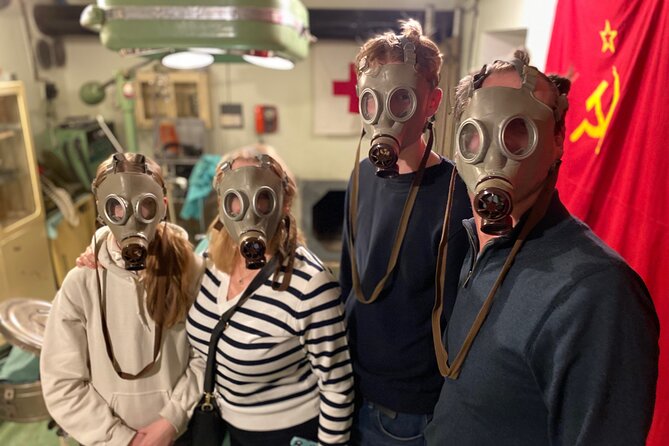
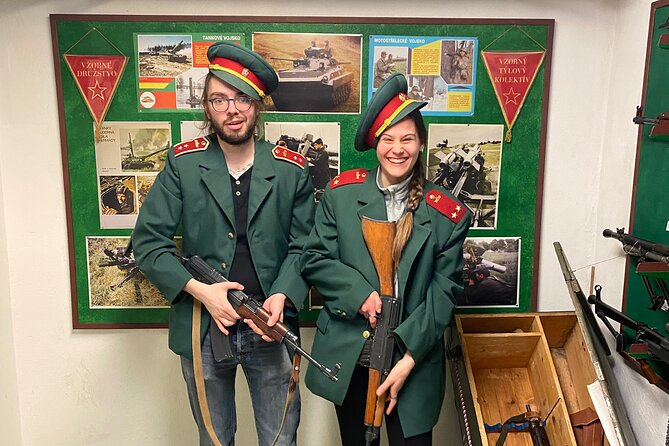
What people seem to love is how the guide turns the bunker into a story space. Depending on the day and guide, you might get interactive touches such as trying on a gas mask or being part of a more theatrical secret-police-style moment. One visitor even described being able to handle items connected to the military atmosphere. Even if you don’t get every “extra,” the bunker visit still carries real weight because it’s not a recreated set.
This is also where the tour earns its depth. Above ground, you can point at buildings and squares. Underground, you feel the logic of fear: systems built for worst-case scenarios, and how that changes daily life when power is always watching.
Guides and small-group Q&A: why the history sticks
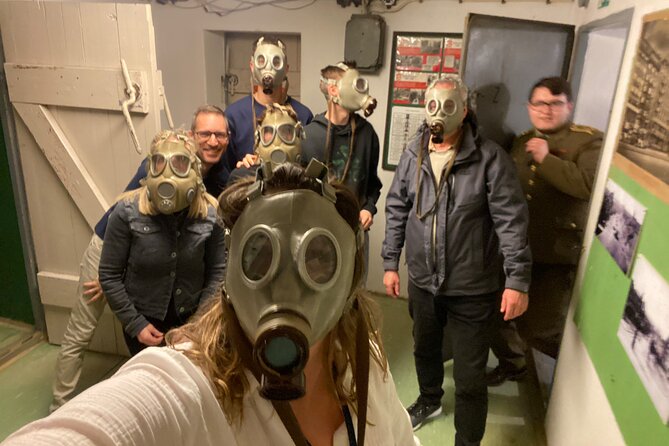
The tour’s best reviews share a pattern: the guide makes the story readable and human, not just factual. Different guides are mentioned, including Klara and Leo, and the consistent theme is explanation that matches how real people lived under communist rule.
Because the group is limited to 10 people, the guide can steer the walk based on your questions. That matters when you’re learning a dense period of history in a short time. You don’t have to guess what you missed; you can ask.
I also like that the tour doesn’t stick only to the big squares. You’ll pass places like the Kotva shopping mall and the former headquarters of the secret police on Bartolomejska Street. You’ll walk Narodni Street and get a guided connection to protests and state violence. That side-street approach keeps Prague from feeling like it’s frozen in postcards.
You’ll likely leave with a clearer timeline and a stronger sense of cause-and-effect: elections, fear tactics, foreign occupation, crackdowns, then the public pressure that helped end the regime.
Price and value: $35.07 with a bunker ticket in the mix
At $35.07 per person for about 3 hours 30 minutes, the value comes from what’s included. The key included cost is the Cold War bunker museum admission fee (10 EUR). On a budget day, that alone offsets a big chunk of the ticket.
You also get a local guide and a max 10-person format. This is not the kind of tour where you fade into a crowd while someone reads a script. The small-group setup is the difference between a passive walk and an experience where you can actually talk.
Food is the trade-off. Lunch and drinks at the canteen are not included, and kofola/beer are your choice. But that’s also why the meal feels optional instead of forced. If you skip extra drinks, you can keep spending controlled.
If you’re comparing alternatives in Prague, think of this as a guided Cold War story with one major ticketed feature. If you want either a pure museum visit or pure architecture sightseeing, you might feel this is too political. If you want Prague with context, it’s a strong deal.
Who should book this Prague Cold War walk
Book it if you:
- Want real-world history connected to specific Prague streets, not a generic timeline.
- Like guided discussion and Q&A, especially with a small group.
- Are curious about everyday life under communism, including fear, surveillance, and regime control.
- Don’t mind an experience that ends underground with tight spaces.
Skip it (or consider alternatives) if you:
- Are claustrophobic or dislike underground environments.
- Need step-free access beyond what the elevator provides.
- Want a light, casual walking tour with mostly upbeat stories.
One more practical point: this tour is often booked in advance (on average 40 days). If your dates are fixed, lock it in early so you can match it with your other Old Town and New Town planning.
Should you book this communism and bunker tour?
Yes, if you want Prague to make sense beyond postcards. This tour connects the squares you already see—Old Town and Wenceslas—with the political turning points that shaped modern Czech life. The nuclear bunker stop is the practical payoff: it’s rare, it’s included, and it gives the Cold War story a physical setting you won’t forget.
If you’re on the fence, the decision comes down to two things. First, are you comfortable with underground spaces and some stairs after the elevator? Second, do you want your walking tour to carry real political weight? For the right kind of traveler, it hits a sweet spot of place + story + unforgettable finale.
FAQ
How much does the Prague Communism & Nuclear Bunker tour cost?
The tour price is $35.07 per person.
What’s the duration of the tour?
The tour runs for about 3 hours 30 minutes.
Is it in English?
Yes, the tour is offered in English.
What’s included in the price?
You’ll get a local guide, a maximum group size of 10 people, and the Cold War bunker museum admission fee of 10 EUR is included. Food and drinks are not included.
Do I pay extra for lunch or drinks?
Yes. Lunch and drinks at the worker’s canteen are for your own expense, including options like kofola and beer.
Where do I meet the guide, and where does the tour end?
You meet at the Powder Tower at Nám. Republiky 5. The tour ends in the upper part of Václavské náměstí.
Is the nuclear bunker experience suitable for everyone?
No. The tour is not recommended for claustrophobic travellers, and the bunker involves an elevator plus about 30 steps to reach a lower level.
More Tours in Prague

More Tour Reviews in Prague
More Communism & Wartime History
More Prague tours we have written up lately


Communism & WWII History Tours, compared.
 ★ 4.7Communism History and Nuclear Bunker Guided TourFrom $442,417 reviews
 ★ 5.0Prague Communism History and Nuclear Bunker TourFrom $451,742 reviews
 ★ 4.7WWII Guided Tour & The Crypt of Operation AnthropoidFrom $421,030 reviews
 ★ 5.0WWII in Prague Tour & The Crypt of Operation AnthropoidFrom $43817 reviews
 ★ 4.8Communism and Bunker Tour with 70s Canteen LunchFrom $34269 reviews
 ★ 5.0Small-Group World War 2 & Operation Anthropoid Tour in PragueFrom $33231 reviews
 ★ 4.8World War 2 and Operation Anthropoid Walking TourFrom $32193 reviews
 ★ 4.7World War II and Communist History TourFrom $34130 reviews
Browse the lists this tour appears in