
REVIEW · COMMUNISM & WWII HISTORY TOURS
Small-Group World War 2 & Operation Anthropoid Tour in Prague
Prague gets heavy fast on this WWII walk. You’ll trace the Nazi occupation through real buildings and streets, ending in a memorial site tied to the Heydrich assassination.
I love how the route mixes major story moments with practical, walkable geography, so you don’t waste time hunting for clues. I also like that the tour feels tightly timed—about 3 hours—so it works even when your Prague days are packed. Operation Anthropoid and the final Heydrich Terror crypt are the big emotional payoffs.
One heads-up: this is dark history, with executions and reprisals built into the story. So go if you want facts with weight, not if you’re looking for a light stroll.
In This Review
- Key Takeaways Before You Go
- WWII Prague Through the Heydrich Plot (Not a Museum Lecture)
- A 3-Hour Small-Group Walk That Actually Works With Your Day
- From Týnská Square Into Occupation-Era Prague
- Stop 1: The start point and the first context
- Stop 2: Consequences of WWI that set up WWII
- Stop 3: The Sudeten crisis and the Protectorate setup
- The Gothic Old Town church viewpoint
- Old Town Hall and Celetná Street: Life Under Occupation, Up Close
- Stop 4: Staroměstská radnice (Old Town Hall) and the 1945 uprising
- Stop 5: Celetná Street and the 17 November 1939 crackdown
- Melantrichova and the Resistance Network Behind Anthropoid
- Stop 6: Melantrichova and key resistance hideouts
- Stop 7: The Baťa building and the presentation of evidence
- Stop 8: Wenceslas Square and Lidice’s destruction
- Stop 9: Esplanade Hotel Prague, a Nazi favorite
- Petschek Palace and the Gestapo Headquarters Reality Check
- Stop 10: Petschek Palace and the Gestapo HQ
- Stop 11: Vodičkova and lesser-known resistance operations
- Stop 12: Karlovo náměstí and the 1945 bombing of Prague
- The Included Cathedral Visit and the Heydrich Terror Memorial Crypt
- Stop 13: St Cyril and St Methodius Cathedral (included)
- Stop 14: National Memorial to the Heroes of the Heydrich Terror (included)
- What You’ll Appreciate Most (and What Might Frustrate You)
- Price and Value: $33.88 for a Focused WWII Story
- Who This Tour Is Best For
- Should You Book This WWII Prague Tour?
- FAQ
- How long is the small-group WWII and Operation Anthropoid tour in Prague?
- What time does the tour start, and where does it meet?
- Where does the tour end?
- Is the tour offered in English?
- Does the price include any entrance tickets?
- Is this tour okay for children?
Key Takeaways Before You Go
- Real sites, not just names: You’re guided to occupation-era locations tied to the resistance and retaliation.
- Operation Anthropoid explained on the ground: The assassination of Reinhard Heydrich and the daring plan behind it are put into place.
- 3 hours that fit a city schedule: The pacing is designed for a full narrative without swallowing your whole afternoon.
- The end visit is unforgettable: The cathedral stop plus the memorial crypt give the story a physical, atmospheric finish.
- A guide who can tell the story well: Guides like Daniel, Allen, and Dana are noted for strong storytelling and clear explanations.
The 20th century left its mark here. More of that history, on foot.
- Prague: Communism History and Nuclear Bunker Guided Tour★ 4.7 · 2,417 reviews
- Prague Communism History and Nuclear Bunker Tour★ 5.0 · 1,742 reviews
- Communism & Nuclear Bunker Tour + 70s Canteen Lunch (own expense)★ 5.0 · 1,036 reviews
- Prague: WWII Guided Tour & The Crypt of Operation Anthropoid★ 4.7 · 1,030 reviews
WWII Prague Through the Heydrich Plot (Not a Museum Lecture)
If you only know Prague’s WWII story from a textbook outline, this tour gives you the missing “where” and “how.” The focus isn’t vague: it’s centered on Nazi control in the Czech lands, the resistance’s struggle to survive, and the 1942 assassination of Reinhard Heydrich. From there, you follow the trail to the brutal crackdown that followed.
I like that the tour doesn’t treat Prague as a backdrop. It treats the streets and buildings as part of the plot—because in 1939–1945, that’s exactly how it worked. People moved, hid, communicated, and gambled their lives across these same Old Town lanes and New Town streets.
A 3-Hour Small-Group Walk That Actually Works With Your Day
This is designed as a short walking experience: about 3 hours, with a maximum of 30 people. The tour starts at 1:30 pm and finishes in central Prague near the Orthodox Cathedral of Saints Cyril and Methodius (Resslova 9a). That matters because you can plan dinner, a museum, or a river stroll without needing a full-day commitment.
The “small-group” aspect also helps on a story like this. WWII history is heavy enough without feeling like you’re shouting over other people. If you prefer to ask questions when something clicks (or doesn’t), this format gives you that chance.
Practical note: you’ll do a fair amount of standing and walking. The experience calls for moderate physical fitness, so if you’re sensitive to long periods on your feet, plan accordingly.
From Týnská Square Into Occupation-Era Prague
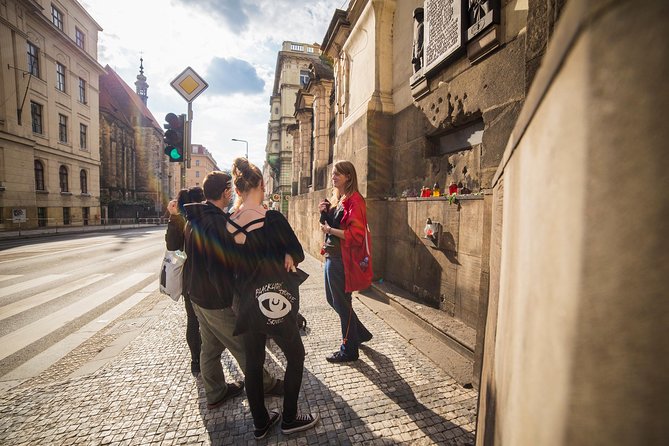
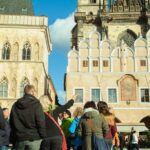
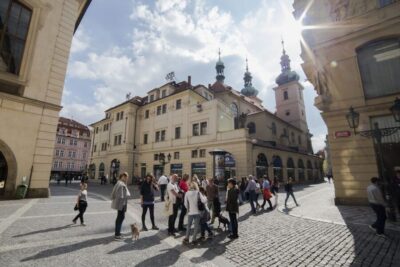
Your meeting point is at Týnská 627/7, Staré Město (Old Town). The tour kicks off with a quick orientation near a shopfront meeting spot, then moves into the heart of Prague’s historic core—where it’s easiest to understand how the city’s geography shaped everyday life under occupation.
Stop 1: The start point and the first context
You begin at Týnská 627/7. This early moment is about framing: you’re not just visiting landmarks, you’re building a timeline. That’s important because the rest of the walk depends on understanding what came before Heydrich.

Stop 2: Consequences of WWI that set up WWII
Next you’re at U Budovce, where the tour connects the dots from WWI outcomes to the rise of extremist politics. You’ll hear about the Treaty of Versailles, the break-up of major powers, the creation of new nations (including Czechoslovakia), runaway inflation, and the economic instability that fueled nationalism. For many visitors, this is the real value-add: it explains why the occupation wasn’t sudden chaos—it was enabled by a long fuse.
A drawback you should consider: the tour is explanation-heavy. Some stops don’t have a dramatic “look what happened here” visual, so the guide’s storytelling becomes the main attraction.
Stop 3: The Sudeten crisis and the Protectorate setup
At the Stone Bell House, you’ll learn about the Sudeten Deutsche Party, the Munich Agreement, and how the Protectorate of Bohemia and Moravia came into being. This is one of those moments where Prague’s WWII story becomes more than a single event—it becomes a chain of political choices.
The Gothic Old Town church viewpoint
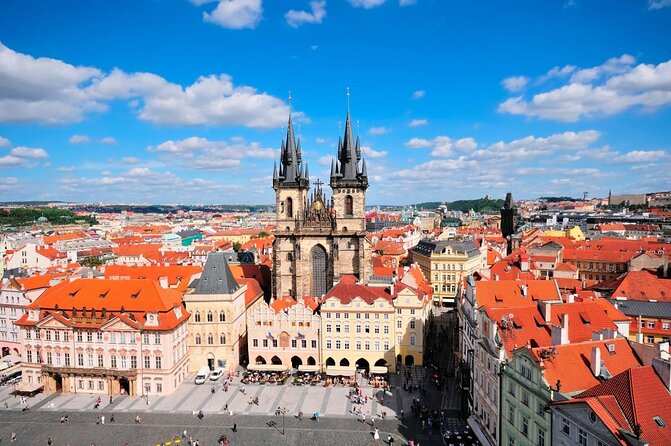
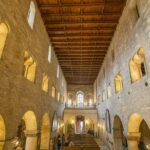
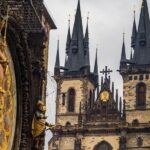
Between stops, you get a view of a Gothic church that’s been a main fixture of the Old Town since the 14th century. Even if you’re not there for church architecture, the point is smart: you see the timeless city while the guide explains how, underneath, the political world was changing fast.
Old Town Hall and Celetná Street: Life Under Occupation, Up Close
As the walk moves deeper into the central streets, the narrative tightens around occupation control and the escalating resistance.
Stop 4: Staroměstská radnice (Old Town Hall) and the 1945 uprising
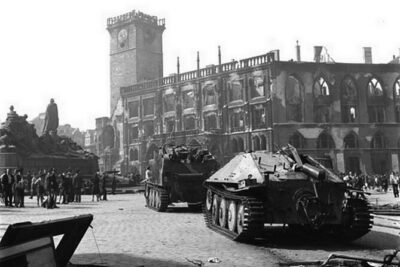
At Staroměstská radnice, you’ll see the wing of the Old Town Hall damaged during the Prague Uprising. The guide ties this to what life meant during the occupation and then to the uprising that helped push the war toward the end in May 1945.
This part is useful even if you’re not a WWII-nerd. You get a sense of how the conflict ended locally—not only how it ended on paper.
Stop 5: Celetná Street and the 17 November 1939 crackdown
At Celetná Street, you’ll hear about the 17th of November 1939 execution of Czech students, the closure of Czech universities, and how the country’s position changed under Konstantin von Neurath. Then the story turns to a major turning point: the appointment of Reinhard Heydrich on September 27, 1941.
If you want a moment to imagine the fear of daily life, this is it. Education, public space, and momentum were targeted. You start to understand why people risked everything for resistance work.
Melantrichova and the Resistance Network Behind Anthropoid
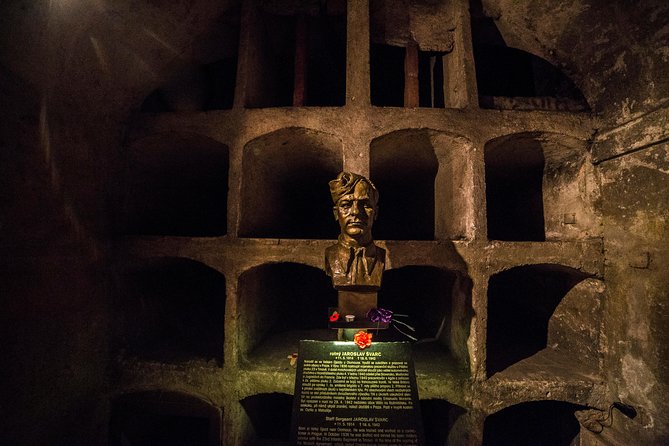
Here the tour starts moving from political history into the practical reality of survival and planning.
Stop 6: Melantrichova and key resistance hideouts
At Melantrichova, you’ll hear about what preceded Operation Anthropoid, including the role of the exiled government in London and operations such as Operation Benjamin and the Silver A and Silver B efforts. The tour also points out a building connected to Josef and Marie Svatoš, and explains why this place mattered as a resistance hideout.
What I like about this stop is how it makes resistance feel human and specific. It isn’t just “there was resistance.” It’s “these were the spaces people used.”
A small caution: if you’re expecting to see obvious remnants of secret activity, you might be disappointed. Many sites are quiet today. The “proof” is in the story the guide tells.
Stop 7: The Baťa building and the presentation of evidence
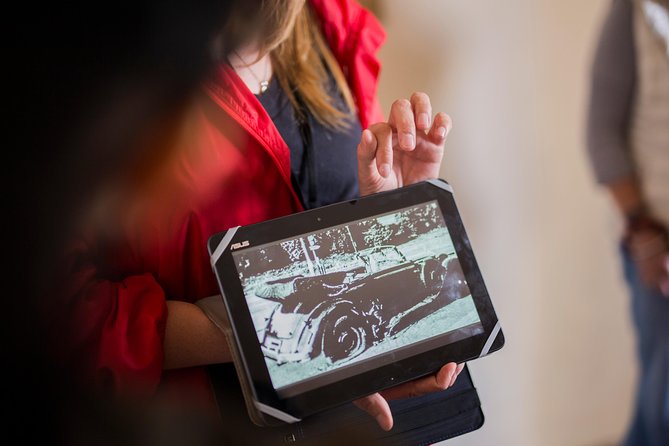
At Baťa, you’ll learn how the assassination is connected to a display of objects found at the scene. Even without a deep background, this helps you grasp how the Nazis controlled information after Heydrich was killed.
Stop 8: Wenceslas Square and Lidice’s destruction
At Wenceslas Square, the tour centers on Lidice—the village destroyed after Heydrich’s assassination, with men executed and women deported to concentration camps. Lidice ceased to exist.
This is the most emotionally demanding segment of the walk. The guide’s job here is not just to report facts, but to show the logic of terror as retaliation—how punishment was used to crush resistance.
Stop 9: Esplanade Hotel Prague, a Nazi favorite
Next is the Esplanade Hotel Prague, described as a favorite hotel of the Nazis during the occupation. This stop works well if you’re trying to understand occupation power as something visible and “comfortable,” not just brutal in the background.
Petschek Palace and the Gestapo Headquarters Reality Check
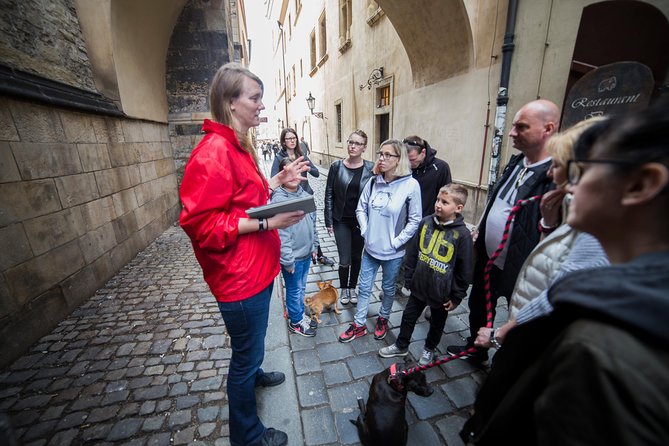
Now you go from ideology and punishment to the machinery of fear.
Stop 10: Petschek Palace and the Gestapo HQ
At Petschek Palace, the tour explains that it functioned as a Gestapo headquarters. The guide describes interrogation, torture, and executions, and how thousands were killed there. You’ll also learn about a key betrayal connected to the search for Heydrich’s assassins: Karel Čurda entering the building on June 16, 1942 and turning the investigation.
This is one of the stops where the guide’s balance matters. You get the facts without turning it into spectacle. Still, it’s heavy content, and it helps to remind yourself that people lived through these systems.
Stop 11: Vodičkova and lesser-known resistance operations
At Vodičkova, the tour mentions covert operations that were attempted but not successful—Tin a Bioscop. The purpose here is to show that resistance wasn’t one heroic story. It was messy, risky trial-and-error.
Stop 12: Karlovo náměstí and the 1945 bombing of Prague
At Karlovo náměstí, you hear about the bombing of Prague in 1945. This ties the end of the war back to the city’s experience—so you’re not only seeing the resistance side, but also the physical damage and chaos that followed.
The Included Cathedral Visit and the Heydrich Terror Memorial Crypt
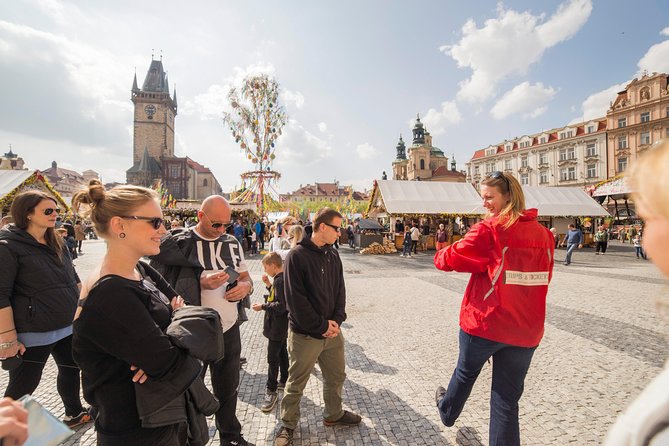
The last stretch is where the tour turns from narrative to place-based remembrance.
Stop 13: St Cyril and St Methodius Cathedral (included)
You visit the Church/Cathedral of St Cyril and St Methodius with the guide, with admission included. This stop helps set a more reflective tone after the street-level brutality in earlier segments.
Stop 14: National Memorial to the Heroes of the Heydrich Terror (included)
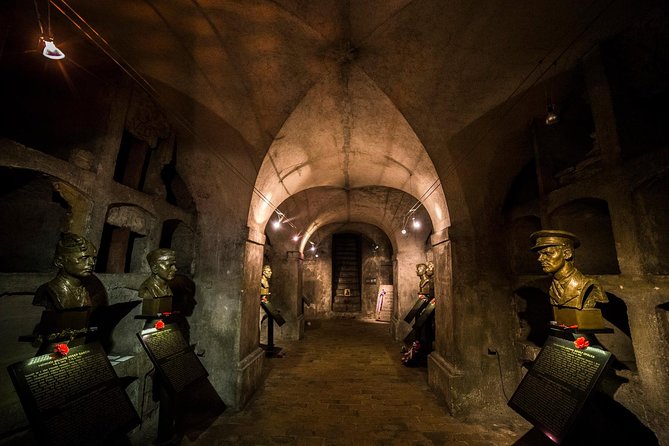
Then you end at the National Memorial to the Heroes of the Heydrich Terror, including the crypt where Czech paratroopers paid the ultimate price. This is described as a standout moment for many people, and the “why” is clear: you reach the end of the plot—then you see what it cost.
If you want one reason to book this exact tour instead of piecing together sites on your own, it’s this ending. The crypt visit is not just an extra stop. It’s the moment where the story stops being abstract.
What You’ll Appreciate Most (and What Might Frustrate You)
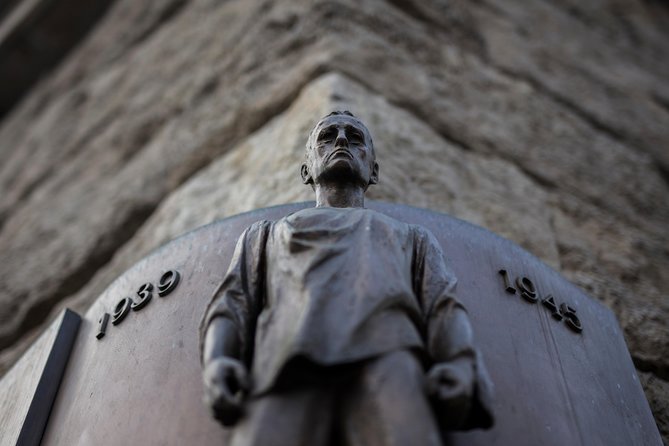
This tour earns its high recommendation rate for a few reasons. First, the guide-led format reduces guesswork. You’re walking in a city where history is everywhere, but the WWII threads aren’t always obvious.
Second, the story centers on specific turning points: Heydrich’s assassination, the lead-up to Operation Anthropoid, and the Prague Uprising that helped bring the occupation to an end in May 1945. That timeline makes the walk feel like a coherent movie instead of random stops.
Third, the emotional endpoint—the cathedral and the memorial crypt—adds real closure to the narrative.
Now the possible drawbacks:
- You may hear more than you see. Some stops are architectural or contextual, not dramatic battle sites.
- This is not a light-topic stroll. If you hate execution-and-retaliation content, it’s not your kind of tour.
- Walking is real. There’s no mention of long breaks, so plan to stay steady on your feet.
One more thing I’ll flag from the overall pattern: when guides are dynamic, the tour feels alive. When delivery is flat, the same facts can feel slower. If you value storytelling style, show up ready to listen—this is the kind of tour where your attitude matters.
Price and Value: $33.88 for a Focused WWII Story
At $33.88 per person, this isn’t a bargain-level price, but it also isn’t a tourist-trap fee. For the money, you get:
- A guided walk that strings together multiple WWII-related locations across Prague
- Included admission for the cathedral and the Heydrich Terror memorial crypt
- A small-group cap of 30 (helpful for questions and pacing)
- A tour length that won’t hijack your entire afternoon
If you tried to do this on your own, the challenge wouldn’t be finding buildings—it would be connecting each place to the correct WWII moment without turning your day into a scavenger hunt. Paying for a guide mainly buys time, clarity, and a tighter narrative thread.
Who This Tour Is Best For
This works best if:
- You want a WWII-focused Prague walk rather than a general Old Town tour
- You care about Czech resistance and the Operation Anthropoid story
- You like guides who connect political history to everyday life under occupation
- You’re comfortable with heavy historical material and can handle emotionally difficult topics
It may be a poor fit if:
- You want a cheerful itinerary
- You prefer WWII tours with lots of visible ruins or battle scenes (Prague’s wartime experience is different)
- You need very low walking or very short standing periods
Should You Book This WWII Prague Tour?
Yes, if you want Prague’s WWII story to feel specific. The best reason to book is the combination of real locations plus a guided narrative that links the lead-up to Heydrich’s assassination, the consequences, and the resistance’s end-of-story memorial crypt.
Skip it if you’re hoping for an easy sightseeing loop or a light intro to WWII. This tour is focused, somber, and built around facts that carry weight.
If you decide to go, come with one simple mindset: you’re not collecting landmarks. You’re following a real plot through the city.
FAQ
How long is the small-group WWII and Operation Anthropoid tour in Prague?
It lasts about 3 hours.
What time does the tour start, and where does it meet?
It starts at 1:30 pm. You meet at Týnská 627/7, Staré Město, Praha-Praha 1.
Where does the tour end?
The tour ends at the Orthodox Cathedral of Saints Cyril and Methodius (Resslova 9a, Praha 2-Nové Město).
Is the tour offered in English?
Yes. It’s offered in English, and you receive a mobile ticket.
Does the price include any entrance tickets?
Yes. Admission is included for the visit to St Cyril and Methodius, and for the National Memorial to the Heroes of the Heydrich Terror (including the crypt).
Is this tour okay for children?
It includes historical facts connected to WWII and is not recommended for small children. Children up to 6 are free of charge, but children must be accompanied by an adult.
More Tours in Prague
More Tour Reviews in Prague
More Communism & Wartime History
More Prague tours we have written up lately


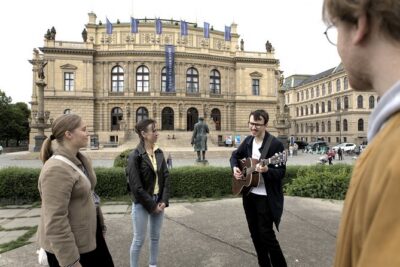
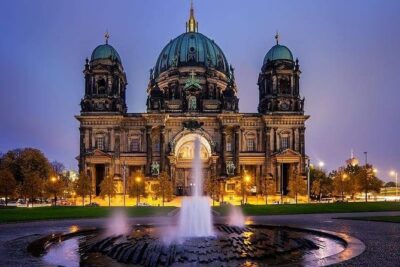

Communism & WWII History Tours, compared.
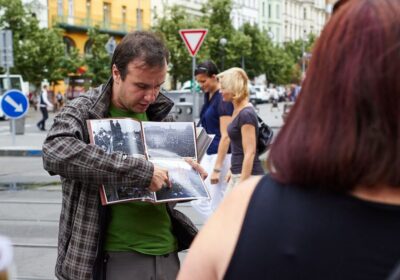 ★ 4.7Communism History and Nuclear Bunker Guided TourFrom $442,417 reviews
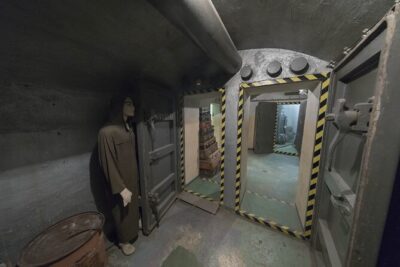 ★ 5.0Prague Communism History and Nuclear Bunker TourFrom $451,742 reviews
 ★ 5.0Communism & Nuclear Bunker Tour + 70s Canteen Lunch (own expense)From $351,036 reviews
 ★ 4.7WWII Guided Tour & The Crypt of Operation AnthropoidFrom $421,030 reviews
 ★ 5.0WWII in Prague Tour & The Crypt of Operation AnthropoidFrom $43817 reviews
 ★ 4.8Communism and Bunker Tour with 70s Canteen LunchFrom $34269 reviews
 ★ 4.8World War 2 and Operation Anthropoid Walking TourFrom $32193 reviews
 ★ 4.7World War II and Communist History TourFrom $34130 reviews
Browse the lists this tour appears in