
Prague’s WWII streets still have scars. This small-group walk with a local historian connects the city’s landmarks to real moments from occupation, resistance, and aftermath. You get a tight route that feels close-up, not textbook.
What I like most is Hanna’s storytelling style: warm, clear, and built around the human cost. I also love the way the tour threads major events through specific places, from Operation Anthropoid to Nicholas Winton’s rescue trains.
One drawback to consider: you’re going to spend real time on dark events, including the violence around Reinhard Heydrich, so it may be heavy if you prefer lighter history.
In This Review
- Key highlights worth your time
- A short walk that covers Prague’s WWII turning points
- Wenceslas Square: where the occupation story starts
- Prague National Theater area: liberation in 1945 and the Prague Uprising
- Praha hlavní nadrazi and Nicholas Winton: the rescue-train story
- The Heydrich memorial: bullet holes, the hiding church, and Operation Anthropoid
- Dancing House: American bombing and what war does to a city
- Petschkův palác: Gestapo headquarters and the machinery of fear
- Price and logistics: what $62.47 really buys
- Who this tour is best for (and who should skip it)
- Should you book this WWII Prague tour?
- FAQ
- How long is the WWII Prague tour?
- What’s the group size for this experience?
- Is the tour offered in English?
- Where does the tour start and end?
- Is admission included?
- Do I need public transportation to do this tour?
- Is a mobile ticket provided?
- What happens if the weather is bad?
- Are service animals allowed?
Key highlights worth your time
- Small group, maximum 6 people so the pace and questions actually work
- Hanna’s personal, engaging delivery that keeps complex events understandable
- Nicholas Winton at Praha hlavní nadrazi with a story tied to One Life and the rescued children
- Heydrich-focused stop with bullet holes and the resistance hiding church/crypt (this is the emotional centerpiece)
- Two Allied angles in 1945: U.S. Army movement and the American bombing narrative
- Most stops have free admission, so your money goes mainly to the guide and the included memorial ticket
The 20th century left its mark here. More of that history, on foot.
- Prague: Communism History and Nuclear Bunker Guided Tour★ 4.7 · 2,417 reviews
- Prague Communism History and Nuclear Bunker Tour★ 5.0 · 1,742 reviews
- Communism & Nuclear Bunker Tour + 70s Canteen Lunch (own expense)★ 5.0 · 1,036 reviews
- Prague: WWII Guided Tour & The Crypt of Operation Anthropoid★ 4.7 · 1,030 reviews
A short walk that covers Prague’s WWII turning points
This is a 2 hours 30 minutes guided walk through central Prague, and the trick is that it stays focused. You’re not bouncing between random plaques. You’re moving through places tied to the Nazi occupation, Czech resistance, liberation in 1945, and the consequences people lived with afterward.
The group stays small, with a maximum of 6 travelers, which matters more than you’d think. In a big tour, you get swept along. Here, it’s easier to ask follow-up questions, adjust the route’s emphasis, and keep the story coherent as you move from square to church to station.
The practical setup is straightforward: you’ll start at Statue of Saint Wenceslas (Václavské náměstí) and end at the Dancing House area (Jiráskovo náměstí). You should also plan for some uphill and uneven sidewalks typical of Prague centers, even if the route isn’t described as an all-day hike.
Wenceslas Square: where the occupation story starts
Your tour begins at Wenceslas Square, the kind of place where history isn’t behind glass. You spend about 25 minutes here, using the square and its surrounding area as a launch point for stories from the start of the Nazi occupation.
This stop works well because it gives you orientation fast. You learn how propaganda, power, and public space mixed together during that era. The tour credits accounts centered on the square and historic surroundings, connected to Czech historian Jiří Klůc—so you get research-based context, not just impressions.
What to watch for: Wenceslas Square can feel like a normal city landmark if you visit casually. During this walk, the same streets start to read differently. You’re basically learning how to look at the city through a 1940s lens.
Prague National Theater area: liberation in 1945 and the Prague Uprising
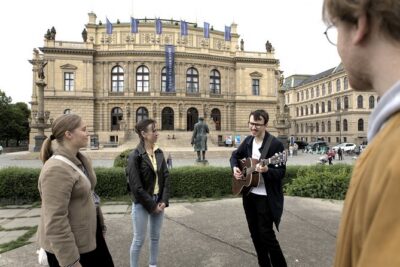
Next is the Prague National Theater Opera area for about 20 minutes. Here the tone shifts toward liberation and what that meant on the ground in 1945.
You’ll hear stories about Czechoslovakia’s liberation in 1945, including the advance of the U.S. Army linked to General George S. Patton in western Bohemia. Then the tour brings the timeline back into the city with the dramatic events of the Prague Uprising in 1945.
Why this stop is valuable: it helps you connect international military movement to what Prague residents actually endured. It’s easy to think of WWII as something that happened far away. This portion keeps it local and specific to timing and pressure in the capital.
A small practical note: because this is a theater-opera zone, you may see people milling around like it’s any other evening in Prague. Keep your focus on the guide’s story beats, because that contrast is part of what makes the history stick.
Praha hlavní nadrazi and Nicholas Winton: the rescue-train story
About 30 minutes take you to Praha hlavní nadrazi (Prague Main Train Station). This is one of the most moving parts of the entire experience, because the story is about rescue and risk, not just occupation.
Here the tour focuses on Nicholas Winton, a man who saved 669 children, mainly Jewish, through train transports. The tour also ties the story to the film One Life.
What makes this stop especially memorable is the added personal detail the guide brings: she shares that she had a rare opportunity to interview some of the children he rescued. That type of firsthand connection changes the feeling of the stop. Instead of hearing numbers, you feel the weight behind them.
If you like history that has a clear human outcome, you’ll appreciate this. It’s not only about surviving one era—it’s about what people did when the world was collapsing.
Rather have the guide to yourself? More private tours of Prague.

The Heydrich memorial: bullet holes, the hiding church, and Operation Anthropoid
Then comes the biggest emotional centerpiece: the National Memorial to the Heroes of the Heydrich Terror. You’ll spend about 45 minutes here, and this is the stop with an admission ticket included.
The focus is Operation Anthropoid and the assassination of Reinhard Heydrich, described here as the founder of the Holocaust and the third-highest-ranking Nazi. The memorial is built for people who want details you can see: the tour points out bullet holes and takes you to the church where resistance members hid after the assassination.
This is where the tour’s tone is at its most direct. You’re not just learning about tactics; you’re seeing the physical evidence that violence leaves behind, and hearing how resistance networks survived in the aftermath.
Why I think this stop is worth the extra ticket: most other stops on the route are listed as free admission, so the tour saves its paid portion for the place where the environment and artifacts matter most. It’s a very clear value choice.
Dancing House: American bombing and what war does to a city
After the memorial, you head to the Dancing House area for about 15 minutes. This is a shorter stop, but it carries an important theme: stories from the American bombing of Prague in 1945.
It’s a useful balance point. A WWII tour can sometimes feel one-sided or stuck in a single storyline. Here, you get a reminder that liberation could also mean destruction for the city and its people.
The Dancing House area also helps you transition back to Prague as a living city. You’ll likely notice how modern the surroundings feel. The guide’s story is the bridge between today’s architecture and the wartime reality that shaped the city.
Petschkův palác: Gestapo headquarters and the machinery of fear
The tour finishes at Petschkův palác for about 15 minutes, described as Gestapo headquarters. This stop is brief, but it adds a sharp edge to everything you’ve already heard.
You’ve covered occupation, resistance, and liberation. Now you see where repression was organized. Even without heavy theatrics, the message is clear: systems of control don’t just happen. People build them. People run them. People suffer because of them.
This is also a strong “close the loop” moment. After hearing about resistance hiding in a church and the chaos around Heydrich, Petschkův palác gives you the other side of the equation.
Price and logistics: what $62.47 really buys
At $62.47 per person for about 2.5 hours, this tour sits in the midrange for guided history in Prague. The value comes from two places.
First, it’s priced like a guide-led experience rather than an attraction-hopping ticket. Most stops are free admission, so you’re paying mainly for the storytelling, the routing, and the time spent at the sites that do require ticket access.
Second, the maximum 6 travelers helps you feel the guide’s attention. In a small group, you’re more likely to get your questions answered and to have the tour adjust to what you care about. The reviews tied to this tour highlight that flexibility and the guide’s warmth, which is exactly what you want in history that can get intense.
One more practical point: public transport (€1.30 per person) isn’t included. Since the tour starts near the Wenceslas Square area and ends near the Dancing House, you’ll likely use trams/metro to connect between your hotel and the start point, and possibly to return after.
Finally, this tour is popular enough that it’s booked on average about 49 days in advance. If your dates are fixed, I’d lock it in earlier rather than gambling on last-minute availability.
Who this tour is best for (and who should skip it)
This is a great fit if you:
- want WWII Prague through real places, not just indoor museums
- care about Operation Anthropoid, Heydrich, and the resistance side of the story
- like history with strong human stakes, especially the Nicholas Winton rescue angle
- enjoy asking questions and getting answers instead of holding your questions until the end
You might think twice if:
- you don’t want to spend significant time on atrocities and coercion
- you’re looking for a light, scenic walk with minimal weight
Should you book this WWII Prague tour?
If your idea of a good Prague day includes walking from Wenceslas Square to the Heydrich memorial and ending at the Dancing House, then yes, book it. The route is tight, the group is small, and the guide’s style is built for making complicated events understandable without sanding off the hard parts.
The biggest reason to choose it is the way it balances different WWII threads in a short time: occupation context, resistance action, liberation, the bombing story, and the Gestapo headquarters piece. That combination is hard to replicate on your own, and it’s exactly the kind of structure that turns a city walk into a real learning experience.
If that sounds like your pace, you’ll likely leave with a clearer sense of how Prague changed—and how people responded—during one of Europe’s darkest chapters.
FAQ
How long is the WWII Prague tour?
The tour lasts about 2 hours 30 minutes.
What’s the group size for this experience?
The tour has a maximum of 6 travelers.
Is the tour offered in English?
Yes. It’s offered in English.
Where does the tour start and end?
It starts at the Statue of Saint Wenceslas on Václavské náměstí and ends near the Dancing House at Jiráskovo náměstí.
Is admission included?
Admission is free at the stops listed as free, and the National Memorial to the Heroes of the Heydrich Terror includes an admission ticket.
Do I need public transportation to do this tour?
Public transportation is not included. You may need it since the tour starts and ends in different parts of the center; it costs €1.30 per person.
Is a mobile ticket provided?
Yes, the tour uses a mobile ticket.
What happens if the weather is bad?
This experience requires good weather. If it’s canceled due to poor weather, you’ll be offered a different date or a full refund.
Are service animals allowed?
Yes, service animals are allowed.
More Tour Reviews in Prague


More Private Tours of Prague
More Communism & Wartime History
More Prague tours we have written up lately



Communism & WWII History Tours, compared.
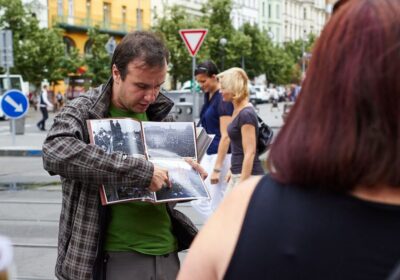 ★ 4.7Communism History and Nuclear Bunker Guided TourFrom $442,417 reviews
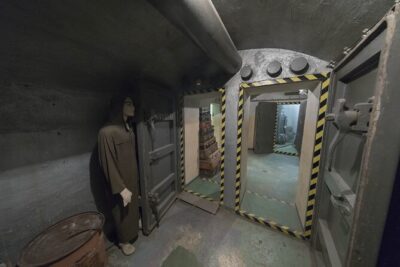 ★ 5.0Prague Communism History and Nuclear Bunker TourFrom $451,742 reviews
 ★ 5.0Communism & Nuclear Bunker Tour + 70s Canteen Lunch (own expense)From $351,036 reviews
 ★ 4.7WWII Guided Tour & The Crypt of Operation AnthropoidFrom $421,030 reviews
 ★ 5.0WWII in Prague Tour & The Crypt of Operation AnthropoidFrom $43817 reviews
 ★ 4.8Communism and Bunker Tour with 70s Canteen LunchFrom $34269 reviews
 ★ 5.0Small-Group World War 2 & Operation Anthropoid Tour in PragueFrom $33231 reviews
 ★ 4.8World War 2 and Operation Anthropoid Walking TourFrom $32193 reviews
Browse the lists this tour appears in