
REVIEW · TEREZíN MEMORIAL DAY TRIPS
Terezin Concentration Camp – A town of rich and painful history
Two fortresses. One painful lesson. This visit to Terezin pulls together the Nazi ghetto system and the prison side of the camp in a way that feels grounded, specific, and sobering.
I like that the tour focuses on the most significant places you’d want to understand, including the Gestapo prison, the crematorium, and major barracks areas. I also like the human touch in the way the guides handle the subject: Tatiana’s explanations (and her patience with questions) are repeatedly called out, including with a family traveling with kids.
The one real drawback is that this is heavy history. You’ll want moderate physical fitness for the walking, and the experience depends on good weather.
In This Review
- Key Points That Make This Tour Worth Your Time
- Terezin: More Than One Camp Story
- What You’ll See in a 6-Hour Private Day From Prague
- Main Fortress Stops: Where the Ghetto System Took Shape
- The Gestapo Prison and the Small Fortress: Fear With a Different Purpose
- The Crematorium: Understanding the Death Machinery Without Numbers Overload
- Transportation and Private Group Value: Why This Format Works
- Language and Question Time: The Real Benefit of an English Guide
- Who This Tour Suits (and Who Might Want to Think Twice)
- Tips to Get the Most From the Day
- Price and Value: What $236.59 Per Group Really Buys You
- Should You Book This Terezin Tour?
- FAQ
- How long is the Terezin concentration camp tour?
- What does the tour price include?
- Is pickup from my hotel available?
- What language is the tour offered in?
- Is this a private tour?
- Are service animals allowed?
- What is the cancellation policy?
Key Points That Make This Tour Worth Your Time
- Hotel pickup and private transport mean you lose less time to logistics and more time to context
- Two different camp roles are connected: ghetto transit (Main Fortress) and Gestapo imprisonment (Small Fortress)
- Important clarity on what Terezin was: not an extermination camp, but a transit and detention system
- Tatiana’s calm, question-friendly pacing helps you process what you’re seeing
- Driver Victor’s on-time, family-friendly professionalism keeps the day running smoothly
A sobering hour north. More Terezin memorial visits.
- Terezin Concentration Camp Day Tour from Prague★ 4.0 · 1,007 reviews
- From Prague: Terezín and Ghetto Museum Guided Tour★ 4.3 · 571 reviews
- Terezin & Bohemian Switzerland from Prague: Bastei, Narnia & Café★ 5.0 · 445 reviews
- From Prague: Terezin Concentration Camp & Memorial Tour★ 4.5 · 310 reviews
Terezin: More Than One Camp Story
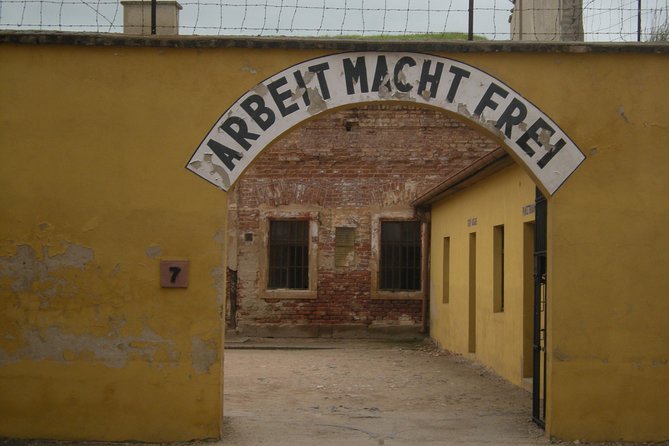
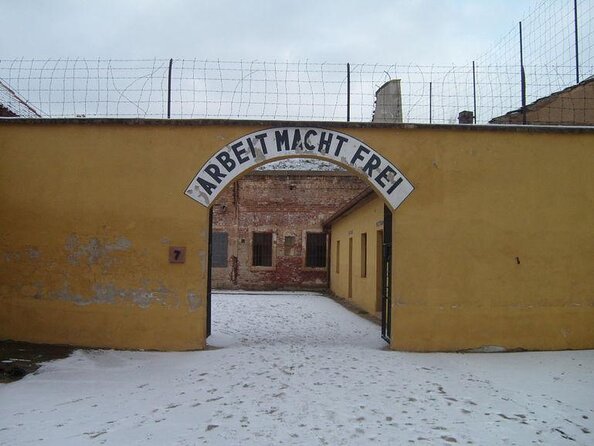
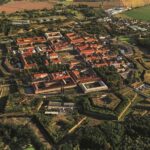
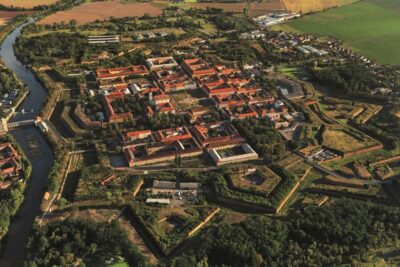
Terezin is often described in one breath as a ghetto or a concentration camp. The key is that it was built as a fortress town, then reused again and again for Nazi aims. That change-over matters, because it explains why the site feels like more than one kind of place.
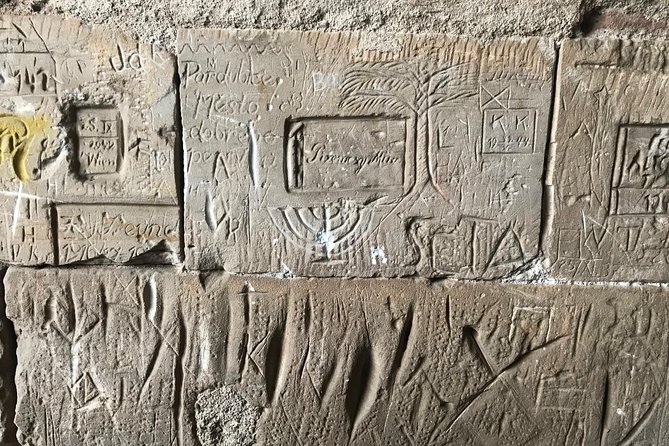
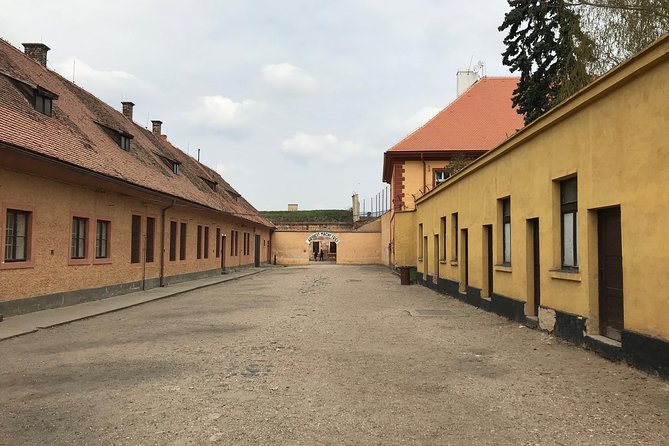
The Nazis used the Main Fortress after the occupation to create a “special” Jewish ghetto, holding people in desperate conditions while they awaited transport further east. In the same overall system, the Small Fortress served a cruel purpose: it became a prison for the Reich’s secret police, the Gestapo. So you’re not just seeing one uniform exhibit. You’re seeing how power operated through separate spaces.
One detail I’d treat as essential for your expectations: Terezin was not Auschwitz-style extermination. It was primarily a transit camp and holding site. That does not make it less horrifying. In fact, it can feel worse in a different way, because people were processed, confined, and transported under a machinery designed to erase lives.
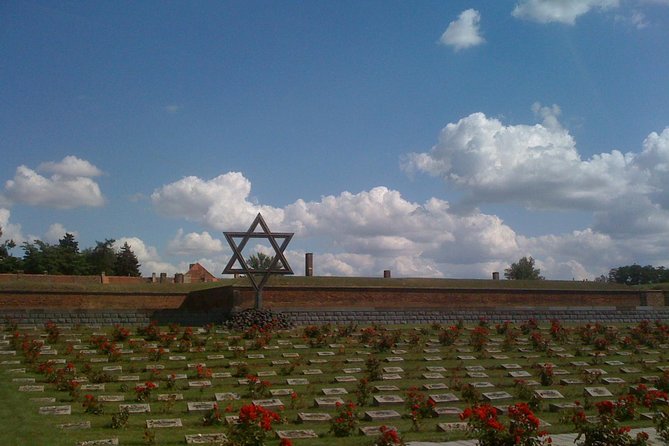
Historically, the numbers given here are stark: around 155,000 people were held during the war, and many—including children—died in Terezin itself. If you come expecting a “tourist-style” day, you’ll miss what this place demands: quiet attention and careful understanding.
What You’ll See in a 6-Hour Private Day From Prague
This tour is about 6 hours long, starting at 9:00 am. It’s private, so it’s built for your group only, not a mixed crowd. That changes the whole feel of a sensitive site like this. You can ask questions without waiting for the slowest walker to catch up.
The ride from Prague matters too. On the way, Tatiana’s style is noted as helpful: you’re not dropped into the site with no footing. You’re given enough historical and cultural context so the places you see later make sense as parts of one system.
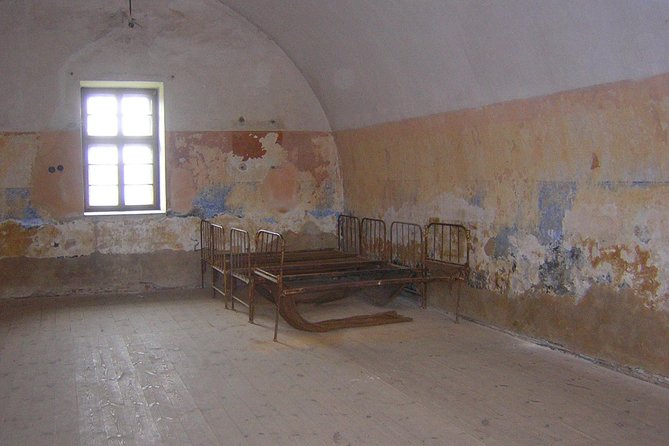
Once you arrive in Terezin, you’ll spend time at the major locations that explain how life worked under Nazi control. The tour highlights the Gestapo prison, the crematorium, and the Magdeburg Barracks among other premises. Those aren’t random stops. Each one points to a different piece of the story: punishment and fear, death machinery, and day-to-day conditions inside the ghetto.
A practical note for your planning: this is not an all-museums, all-seated day. You should expect some walking and standing, and the pace will depend on your group. The info calls for moderate physical fitness, which is a good warning label here. If you need frequent breaks, build them in.
Main Fortress Stops: Where the Ghetto System Took Shape
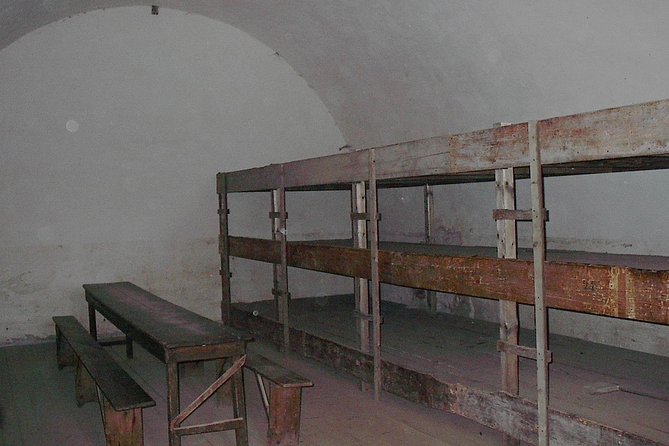
The Main Fortress is where the story often starts to feel most familiar—though nothing about it is comfortable. After Nazi occupation, this fortress area became the “special” Jewish ghetto.
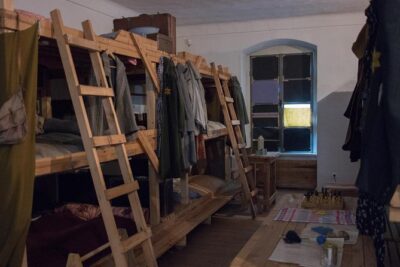
In a good tour experience, the Main Fortress doesn’t turn into a wall-of-photos scenario. Instead, it becomes a map of how confinement worked. The Magdeburg Barracks are included for a reason: barracks help you picture overcrowding, routine, and how space was used to control people.
This is also where you’ll want your guide to keep explaining the timeline logic. Terezin was initially a fortress town and then repurposed for different roles over time. That background helps you understand why you see military architecture and institutional layouts. Nazi planners weren’t building from scratch as much as they were reusing what was there—then intensifying the purpose into imprisonment.
If you’re bringing kids or traveling as a family, this part can be the hardest to manage. One of the standout bits from the experiences shared here is that Tatiana was described as patient and able to handle questions with clarity, even with a child present. That doesn’t make the subject light. It just helps children (and adults) stay oriented.
The Gestapo Prison and the Small Fortress: Fear With a Different Purpose
Then comes the part that changes the emotional temperature fast: the Small Fortress, tied to the Gestapo and its prison function.
The difference matters. The tour information makes it clear that the Small Fortress was a prison for the Reich’s secret police. That wording isn’t just historical trivia. It helps you understand why the atmosphere in this section feels different from the ghetto side.
I like how this tour uses geography to teach. Instead of asking you to memorize a list, it lets you connect a place with an institutional role. In other words, you’re seeing how the Nazi system used separate spaces for separate mechanisms of control—confinement in one, interrogation and imprisonment in another.
This stop is also where your guide’s tone is crucial. The reviews point to Tatiana handling the material with care and patience, which you’ll really feel when questions come up. If you’re the kind of person who needs context before you accept what you’re seeing, the guide approach here is designed for that.
Other Prague tours and experiences that reward a closer look
The Crematorium: Understanding the Death Machinery Without Numbers Overload
Another key stop is the crematorium. This is one of those locations where you have to balance two needs: you want the truth, and you don’t want to drown in details.
A transit camp still has death. The provided context is blunt: many prisoners died in Terezin while awaiting transport, and many of those were children. When you stand in a place connected to a crematorium, it’s hard to keep those facts abstract.
This is where I’d suggest you rely on your guide rather than trying to read everything on your own. The best tours help you connect what you’re seeing to the larger system: a camp that held people, broke them down, and then moved them onward—or didn’t. That’s why the transit-camp clarification from the tour overview is so important. Without it, you might misread the function of what you’re witnessing.
Transportation and Private Group Value: Why This Format Works
The price is $236.59 per group (up to 3), which makes this tour feel closer to a private historical outing than a budget add-on. To put it into human terms: if you’re a party of three, your cost per person is roughly under $80. If you’re two people, it’s roughly $118 each. Taxes and any extra fees aren’t included, so keep that in mind.
What you’re paying for isn’t just a ride. You’re paying for:
- Private transport to reduce time loss
- A private guide (instead of fitting into someone else’s schedule)
- Hotel pickup and drop-off, which matters in a city where “easy” can become “lost”
For a site like Terezin, that extra control is worth something. You’re not wrangling your own route, and you’re not listening to a rushed explanation while staring at the clock.
The experiences here also highlight professionalism. One booking mentioned pickup on time with Tatiana and driver Victor, along with an easy, friendly presence from both. That doesn’t change the horrors you’ll learn about, but it does make the day calmer from the start.
Language and Question Time: The Real Benefit of an English Guide
The tour is offered in English, and that affects more than comfort. Holocaust-era history and daily-life details have lots of nuance. When you have a guide who can answer questions patiently, you get clarity instead of confusion.
In the experiences shared here, Tatiana is specifically praised for explaining complex history in a way that helps people understand what they’re seeing. She’s also described as accommodating when timing changed for a family’s schedule—moving the tour so their son could join after he arrived late.
That kind of flexibility is a quiet quality. It tells you the guide isn’t just reading prepared lines. She’s thinking about your group’s reality.
And for a topic that can feel overwhelming, the ability to ask one more question is not a luxury. It’s how you keep your understanding accurate.
Who This Tour Suits (and Who Might Want to Think Twice)
I think this tour suits you best if you want structured historical context and specific site coverage. The stops named here—Gestapo prison, crematorium, Magdeburg Barracks—are enough to build a coherent picture without turning the day into endless walking.
It’s also a good fit if you’re traveling with kids or teens who can handle difficult themes with support. One family described how Tatiana handled the somber tone while still keeping the explanations age-appropriate and patient. If your kids are curious but sensitive, that guidance style can help.
Where you might want to think twice is if you know you struggle with heavy subjects or you strongly prefer a lighter atmosphere. This is a site that carries real suffering. Even with a skilled guide, the emotional weight doesn’t disappear. If you’re unsure, consider whether you’re ready for history that doesn’t let you step back.
Tips to Get the Most From the Day
Keep expectations practical. This is not a checklist tour where you snap photos and move on. Treat it like a learning day with emotional impact.
Here are a few ways to make the experience more manageable:
- Wear comfortable shoes and plan for walking and standing
- Bring a bottle of water and take breaks if you need them
- Use your guide’s question time early, so you don’t leave with unanswered confusion
- Give yourself quiet time afterward in Prague. You’ll likely need it.
Also, take the weather factor seriously. The experience depends on good weather, so if conditions look rough, you may need to adjust plans.
Price and Value: What $236.59 Per Group Really Buys You
For many people, the price looks like a lot until you factor in how the day is structured.
You’re not paying per person for a van full of strangers. You’re paying per group for a private guide, private transportation, and hotel pickup and drop-off. That matters when you’re going to a single out-of-town destination and you want your day to stay smooth.
Value is also about depth. The named stops here are meaningful. If you tried to do Terezin on your own without a guide, you might see the sites but miss the connective tissue: how the Main and Small Fortresses fit together, why Terezin functioned as a transit system, and how “ghetto” and “prison” roles differed in practice.
In short, you’re buying time saved, plus interpretation that helps the history land accurately.
Should You Book This Terezin Tour?
If you want a private, English-speaking guide to help you understand the most important parts of Terezin—the ghetto transit role, the Gestapo prison side, and the crematorium—this tour is a strong choice. The guide flexibility described here, along with the calm, question-friendly approach, is exactly what you want for a day this heavy.
I’d skip it only if you’re looking for a light, casual outing or you know you can’t handle the emotional weight of concentration-camp and ghetto history. Otherwise, book it with comfortable shoes, a quiet mind, and the willingness to learn carefully.
FAQ
How long is the Terezin concentration camp tour?
It lasts about 6 hours.
What does the tour price include?
The price includes services of a private tour guide, private transportation, and hotel pickup and drop-off.
Is pickup from my hotel available?
Yes. Pickup is offered, and you meet your group at the registration desk of your chosen hotel. Pickup time is arranged in advance.
What language is the tour offered in?
The tour is offered in English.
Is this a private tour?
Yes. It is private, and only your group participates.
Are service animals allowed?
Yes, service animals are allowed.
What is the cancellation policy?
You can cancel for a full refund up to 24 hours before the experience starts. If it’s canceled due to poor weather, you’ll be offered another date or a full refund.
More Historical Tours in Prague

More Tour Reviews in Prague



More Terezin Memorial Trips

More Prague tours we have written up lately



Terezín Memorial Day Trips, compared.
 ★ 4.6From Prague: Terezin Concentration Camp Guided Tour w/ AudioFrom $692,248 reviews
 ★ 4.0Terezin Concentration Camp Day Tour from PragueFrom $781,007 reviews
 ★ 4.3From Prague: Terezín and Ghetto Museum Guided TourFrom $86571 reviews
 ★ 5.0Terezin & Bohemian Switzerland from Prague: Bastei, Narnia & CaféFrom $145445 reviews
 ★ 4.5From Prague: Terezin Concentration Camp & Memorial TourFrom $57310 reviews
 ★ 4.7From Prague: Terezín Concentration Camp Day TourFrom $1,354246 reviews
 ★ 4.5Terezin Concentration Camp Day Tour Including Admission From PragueFrom $96179 reviews
 ★ 5.0Terezin In-Depth Holocaust Tour From Prague’s Center (max 7 pax)From $145170 reviews
Browse the lists this tour appears in