
REVIEW · COMMUNISM & WWII HISTORY TOURS
Second World War & Communism (Tip-based 3 hour tour)
Prague history reads like a thriller. In this tip-based 3-hour walk, you connect the fate of Czech Jewish communities in WWII to the rise and fall of communism, finishing with entry to the Museum of Anthropoid Operation. My favorite part is how the story lands at real places like Pinkas Synagogue and ends in the Anthropoid crypt, not just on a plaque. The main catch is the walking pace: it’s not a sit-down tour, and it’s not recommended if you have mobility limits.
I also like how the tour is guided in clear, chronological order by in-person English guides such as Kamil, Vaclav, and Katerina. One guide approach that really works is the way the narration builds suspense as you move through squares and memorials, so the 20th century doesn’t feel like a blur of dates.
You’ll get a strong mix of personal human stories and political turning points, from the Prague Uprising to Warsaw Pact forces in 1968, plus cultural side-stories like Kafka’s public art connection. It’s a smart choice if you want more than the usual Prague highlights and you actually care about what happened in the last 100 years.
In This Review
- Key highlights worth planning for
- A 3-hour route through WWII, communism, and the Velvet Revolution
- Klárov: the resistance story and the shape of Czechoslovak independence
- Pinkas Synagogue: the fate of Czech Jewish communities in WWII
- Old Town Square: Prague Uprising, then the stage for communism
- Wenceslas Square: 1968, Warsaw Pact forces, and Jan Palach
- OC Quadrio and the Rotating Head of Kafka: art under pressure
- Národní třída and the wall hands: the human signal of revolution
- The National Theater and Václav Havel: leadership during change
- Dancing House and the Valentine’s Day bombing story
- St Cyril and St Methodius Cathedral: Operation Anthropoid ends the story for a reason
- Price and value: $3.60 plus the tip-based model
- Who this tour suits best
- Should you book this Prague WWII and Communism tour?
- FAQ
- FAQ
- How long is the tour?
- What language is the tour offered in?
- Where does the tour start?
- Where does the tour end?
- What is included in the price besides the guide?
- Do I need to buy separate tickets for stops?
- Is it a private tour?
- Is a mobile ticket used?
- Is it suitable for someone with mobility problems?
- Are service animals and other animals allowed?
- Is free cancellation available?
Key highlights worth planning for
- Pinkas Synagogue focus on the fate of Czech Jewish people, including who could emigrate and who could not
- Museum of Anthropoid Operation entry tied directly to the resistance story at the end of the tour
- WWII to Cold War flow that explains how the Prague Uprising and the postwar settlement fed communism
- Wenceslas Square context on Jan Palach and the 1968 Warsaw Pact invasion
- Communism-era art signal at OC Quadrio, including the Rotating Head of Kafka
- Velvet Revolution stops around Národní třída and the National Theater, including Václav Havel
The 20th century left its mark here. More of that history, on foot.
- Prague: Communism History and Nuclear Bunker Guided Tour★ 4.7 · 2,417 reviews
- Prague Communism History and Nuclear Bunker Tour★ 5.0 · 1,742 reviews
- Communism & Nuclear Bunker Tour + 70s Canteen Lunch (own expense)★ 5.0 · 1,036 reviews
- Prague: WWII Guided Tour & The Crypt of Operation Anthropoid★ 4.7 · 1,030 reviews
A 3-hour route through WWII, communism, and the Velvet Revolution
This is a short-but-dense Prague history tour. The format is simple: a certified English guide leads you on foot from one emotionally loaded site to the next, keeping the timeline moving from Czechoslovakia’s earlier independence story through WWII, then into the Cold War years, and finally the fall of communism.
The value here isn’t the number of stops. It’s the way the stops act like chapters. You start with the wartime resistance story, then shift to what happened to Czech Jews, then to the Prague Uprising, and then you keep going until you hit the Velvet Revolution and the leadership role connected to Václav Havel.
At each stop, you’re not just told what happened. You’re helped to understand why that event mattered next. That makes the politics easier to follow, even if you do not know much Czech or Central European history going in.
Klárov: the resistance story and the shape of Czechoslovak independence
The tour starts at Metrocafe Klárov on the Malá Strana side of Prague. This first stretch sets the tone: Czechoslovakia is introduced through the long arc of independence, then quickly back to the harsh reality of what Hitler’s occupation meant in practice.
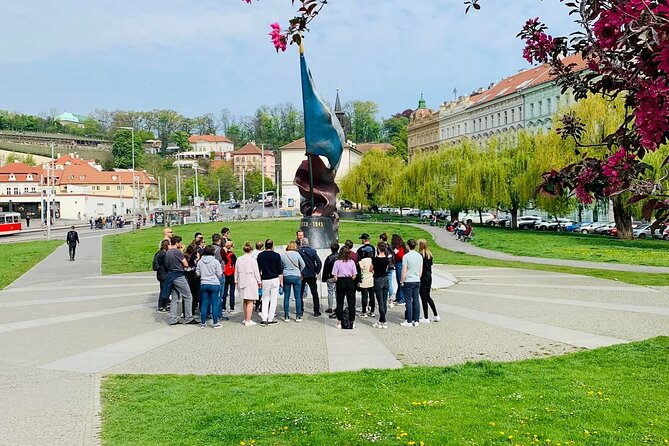
Two memorial points in Klárov anchor this opening. First is the Memorial to the Second Resistance, and next is the Winged Lion Memorial. The guide connects these monuments to the bigger wartime story, including what happened to Czechoslovak soldiers during WWII.
Why this start works: you get context before the heavy sites. Instead of jumping straight to the tragedy of the Holocaust, you begin with the idea that people resisted, organized, and tried to protect a future. It’s a useful contrast as the tour moves forward.
If you’re the kind of person who gets frustrated by “war history” that stays abstract, you’ll probably appreciate this. The memorials are physical, and the guide uses them as waypoints for a clearer narrative.
Pinkas Synagogue: the fate of Czech Jewish communities in WWII
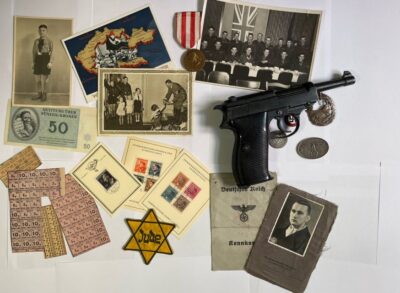
One of the strongest stops is the visit at the Pinkas Synagogue. Here, the focus turns to the fate of Czech Jewish people. You learn how many managed to emigrate and what happened to those who did not.
This is the kind of stop where the emotional weight is real. Even if you’ve read about WWII before, you’ll likely feel the difference between general facts and a focused, local story. The guide keeps it grounded in Prague and in Czech Jewish history, not in distant headlines.
Practical note: the tour uses short time blocks here, so you’ll want to bring your attention. This is not a slow museum linger. It’s more like a guided compression of a major chapter of history into a small, specific setting.
Old Town Square: Prague Uprising, then the stage for communism
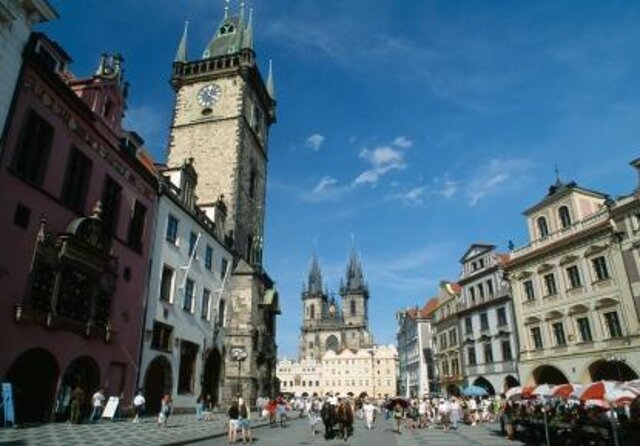
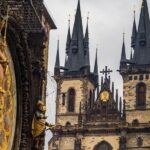
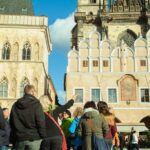
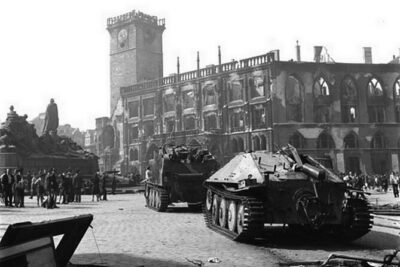
Next comes Staroměstské náměstí, by the Old Town Hall. The story moves from WWII resistance and uprising into the immediate aftermath: the Prague Uprising, then how the end of WWII set the stage for the rise of communism in Czechoslovakia.
This is a key transition moment in the tour. It teaches you to think about what happened after liberation, and how power shifted in the vacuum that followed. The guide doesn’t treat communism as a random evil that appeared overnight. Instead, you get the sense of cause-and-effect.
If you’ve ever wondered how the same region that suffered Nazi occupation could later be pulled under Soviet-style control, this stop is built for that question. You walk away understanding that history is often “the next chapter,” not a clean break.
Other Prague tours and experiences that reward a closer look
Wenceslas Square: 1968, Warsaw Pact forces, and Jan Palach
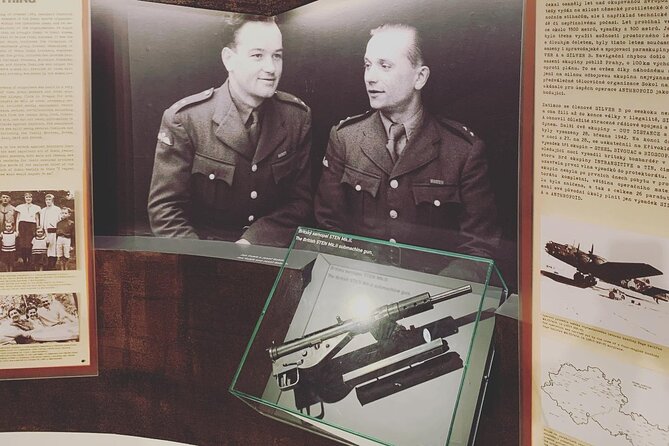
At Wenceslas Square, the tour flips from WWII into the Cold War era with a blunt kind of clarity. You learn what happened after communism started in Czechoslovakia, why Warsaw Pact armies invaded in 1968, and where Jan Palach’s self-immolation took place.
This is one of those Prague locations where the present-day city energy can fool you into thinking nothing major happened here. The guide does the opposite. He or she points to the meaning of the site in the middle of political pressure and public fear.
Why I think this stop matters: you see how dissent turned into visible, painful action. Jan Palach becomes part of the story of how people responded when normal political channels weren’t working. That makes the Velvet Revolution later feel more earned, not magically instant.
OC Quadrio and the Rotating Head of Kafka: art under pressure
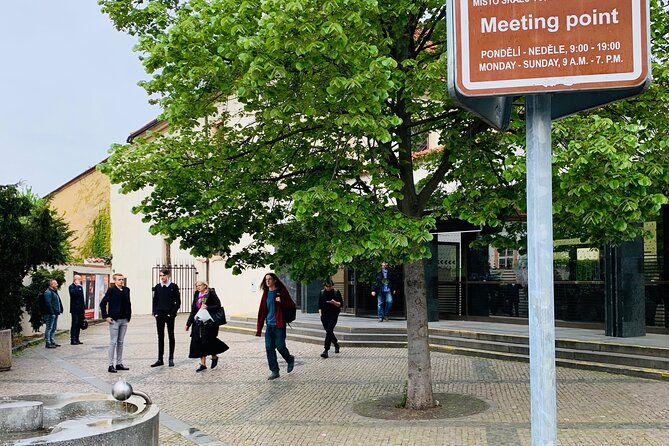
The tour then touches OC Quadrio for a connection that feels different from memorials and squares: the Rotating Head of Kafka. The guide uses this to talk about art during communism.
This matters because it shows you that politics didn’t only operate through arrests and armies. It also shaped culture, what could be said, and how artists had to navigate power.
This stop can be a palate cleanser. After heavy WWII and resistance material, you get a more reflective look at how ideas and language lived under a restrictive system. Even if you’re not a Kafka expert, this is a way to understand communism through everyday public life.
Národní třída and the wall hands: the human signal of revolution
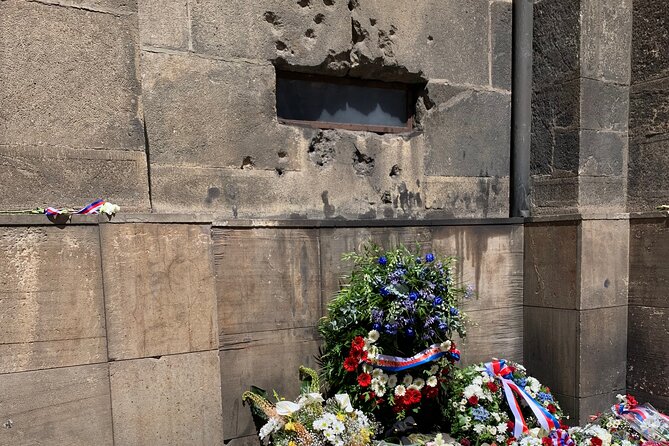
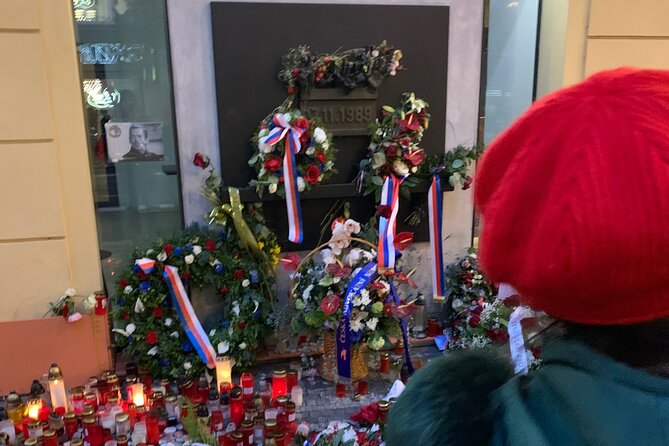
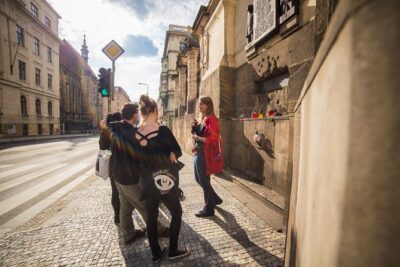
At Národní třída, the tour directs you to the hands reaching out of the wall. The explanation ties this spot to the Velvet Revolution and the idea of people refusing to accept the system as permanent.
This stop is effective because it gives you a symbol to remember. You don’t just hear political slogans or dates; you connect the revolution to a visible, emotional image.
And that’s the tour’s broader strength: it keeps bringing you back to people. The Velvet Revolution doesn’t feel like an abstract “change of government.” It feels like a moment where public pressure and courage finally converged.
The National Theater and Václav Havel: leadership during change
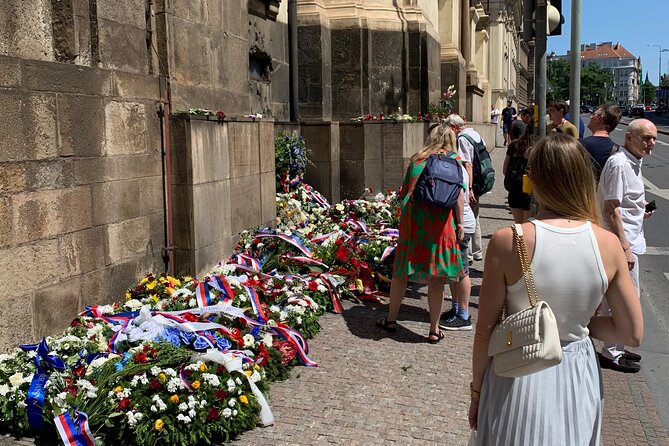
From there, you go to the National Theater. This section introduces Václav Havel, including his role during the Velvet Revolution and his position as the first president of Czechoslovakia after the fall of communism.
This is another transition stop: it turns from mass action to leadership and political aftermath. It helps you understand why Havel mattered, not as a celebrity, but as a figure connected to how the revolution translated into governance.
If you like your history with clear characters, this is where it becomes easier to follow. You don’t just remember events; you remember people who shaped decisions.
Dancing House and the Valentine’s Day bombing story
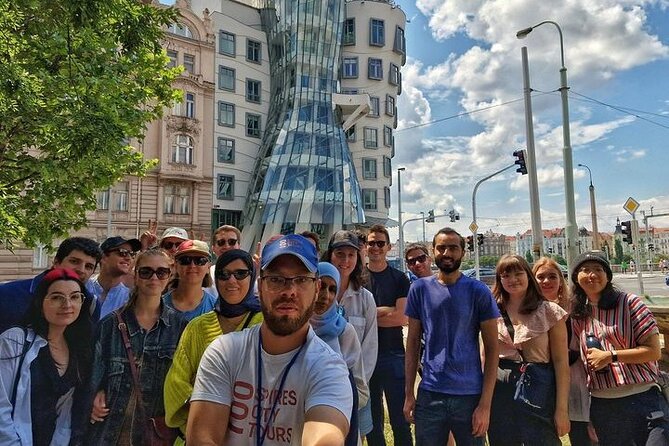
The Dancing House gets a short but meaningful stop. The guide shares the story of the Valentine’s Day bombing, linking a dramatic WWII episode to one of Prague’s most recognizable modern buildings.
This works because Prague is layered. One moment you’re thinking about destruction and survival. The next, you’re standing near a building that represents later Prague identity and rebuilding. The contrast is sharp, and the guide makes sure it stays connected to real wartime consequences.
St Cyril and St Methodius Cathedral: Operation Anthropoid ends the story for a reason
The tour finishes at St Cyril and St Methodius Cathedral. The focus is the most important achievement of Czechoslovak resistance during WWII: Operation Anthropoid.
You get included entry to the Museum of Anthropoid Operation, and the experience ends in the crypt connected to the hideout of the soldiers involved in the operation. This is where the story “clicks shut” in a way that feels logical: earlier resistance is no longer just an idea, and the end is tied to a physical space where the plan happened.
One practical detail you’ll appreciate: the crypt is about a one-minute walk from the Dancing House or Charles Square. That makes it easier to plan what you do next, especially if you want to keep exploring after the tour without a long relocation.
Price and value: $3.60 plus the tip-based model
The listed price is $3.60 per person for a roughly 3-hour, in-person English tour. Since the tour is tip-based, the real cost depends on how you feel about your guide and the way the material was presented.
This model can be a win when you get a great guide who keeps the pace tight and the story understandable. In the guide experience on this route, names like Kamil and Vaclav show up for a reason: the narration is described as clear and linear, with storytelling energy that makes the hours pass fast.
If you enjoy history but tend to dislike lectures, this tip-based setup is worth considering. You can reward the person who turns politics into something you can actually track in your head.
Who this tour suits best
You’ll likely love this tour if:
- You want WWII and Cold War context beyond the standard Old Town route
- You like walking guided tours where the city itself is the textbook
- You enjoy cultural history too, like the Kafka art connection during communism
- You want a clear storyline from the Prague Uprising through the Velvet Revolution
It may not be your best fit if you:
- Need a mostly seated experience or have mobility constraints, since the walking is part of the format
- Plan to bring pets, since animals are not allowed inside the war memorial you visit at the end of the tour (service animals are allowed)
Also, it’s a good idea to wear comfortable shoes. This is a “pay attention as you go” kind of tour, not a casual stroll.
Should you book this Prague WWII and Communism tour?
If you’re aiming to understand Prague in the 20th century, I think this is an easy yes. The route is built so you can follow cause-and-effect: resistance to persecution in WWII, then the shift into communist control, then the public pressure that leads to the Velvet Revolution.
The included Museum of Anthropoid Operation entry gives the ending weight. It’s not just another stop; it’s a payoff tied to one of the most important resistance achievements of the period.
I’d book it if you value a guided narrative, want a local lens on WWII, and are the type of person who remembers stories better than timelines.
FAQ
FAQ
How long is the tour?
It’s about 3 hours.
What language is the tour offered in?
The tour is offered in English.
Where does the tour start?
The tour starts at MetrocafeKlárov 51, 118 00 Prague 1-Malá Strana, Czechia.
Where does the tour end?
It ends at the Orthodox Cathedral of Saints Cyril and Methodius, Resslova 9a, 120 00 Prague 2-Nové Město, Czechia, in the crypt hideout connected to the Anthropoid operation.
What is included in the price besides the guide?
You get free entry to the Museum of Anthropoid Operation.
Do I need to buy separate tickets for stops?
Admission tickets at the listed stops are free, and the tour includes the Anthropoid museum entry.
Is it a private tour?
Yes. It’s a private tour/activity, and only your group participates.
Is a mobile ticket used?
Yes, you receive a mobile ticket.
Is it suitable for someone with mobility problems?
It’s not recommended for travelers with mobility problems, and it requires a moderate physical fitness level.
Are service animals and other animals allowed?
Service animals are allowed. Animals are not allowed inside the war memorial visited at the end of the tour.
Is free cancellation available?
Yes. You can cancel up to 24 hours in advance for a full refund.
More Tours in Prague

More Tour Reviews in Prague
More Communism & Wartime History
More Prague tours we have written up lately

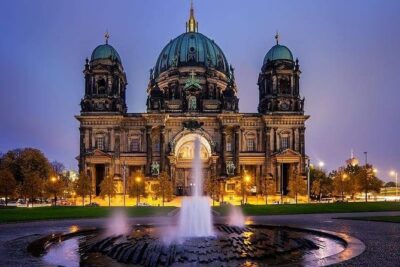

Communism & WWII History Tours, compared.
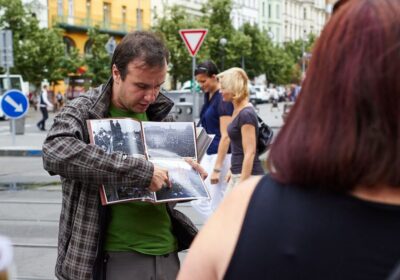 ★ 4.7Communism History and Nuclear Bunker Guided TourFrom $442,417 reviews
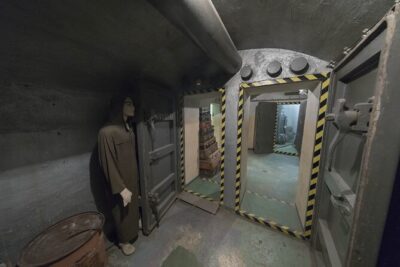 ★ 5.0Prague Communism History and Nuclear Bunker TourFrom $451,742 reviews
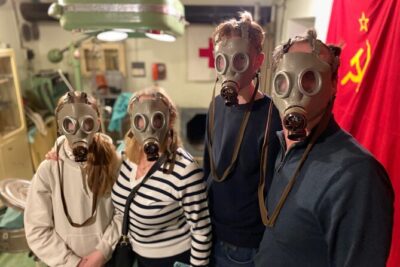 ★ 5.0Communism & Nuclear Bunker Tour + 70s Canteen Lunch (own expense)From $351,036 reviews
 ★ 4.7WWII Guided Tour & The Crypt of Operation AnthropoidFrom $421,030 reviews
 ★ 5.0WWII in Prague Tour & The Crypt of Operation AnthropoidFrom $43817 reviews
 ★ 4.8Communism and Bunker Tour with 70s Canteen LunchFrom $34269 reviews
 ★ 5.0Small-Group World War 2 & Operation Anthropoid Tour in PragueFrom $33231 reviews
 ★ 4.8World War 2 and Operation Anthropoid Walking TourFrom $32193 reviews
Browse the lists this tour appears in