
REVIEW · COMMUNISM & WWII HISTORY TOURS
Private Prague Cold War Walking Tour
Cold War Prague hits differently once you walk it. This private 3-hour tour threads Soviet-era sites through the city, with time to understand what people lived through from 1948 to 1989. I like that your historian guide (often people such as Alzbeta or Vadim) brings the landmarks to life with clear, human-scale stories.
I also really like the set-piece stops: the National Monument at Vitkov and the former mausoleum connected to Klement Gottwald. And you get a tight mix of propaganda-era design and protest-era graffiti, not just one side of the story.
One thing to plan for: there’s a steep climb of about 20 minutes up Vitkov Hill. If you have mobility issues, you’ll want to let the operator know early, since you can leave out Vitkov Hill and keep the focus on other Cold War sites.
In This Review
- Key things that make this tour worth your time
- Cold War Prague on a private historian-led route
- Where you start: Náměstí Republiky and how the day flows
- Karlin–Žižkov pedestrian tunnel: the Cold War’s locked-door reality
- Vitkov Hill: the National Monument, the Hall of the Soviet Soldier, and Gottwald’s mausoleum
- Žižkov Television Tower: brutalist structure meets the Cold War viewpoint
- John Lennon Wall and Letná Hill: protest art and the propaganda shadow
- Wenceslas Square: from occupation to the Velvet Revolution
- The upside-down King Wenceslas: irony as political language
- Price and value: what you’re paying for (and what to budget extra)
- Who this tour is best for (and who should consider alternatives)
- Should you book this private Prague Cold War walking tour?
- FAQ
- How long is the Private Prague Cold War Walking Tour?
- Is this tour private or shared?
- What’s included in the tour price?
- Are admissions included for all stops?
- Is pickup available?
- Where do I meet the guide?
- Is the tour in English?
- Is the tour physically demanding?
Key things that make this tour worth your time
- Undivided attention on a private route, with a guide who can tailor questions as you go
- Vitkov Hill’s scale: the Hall of the Soviet Soldier and Gottwald’s mausoleum complex
- Real Cold War infrastructure at the Karlin–Žižkov pedestrian tunnel, tied to nuclear shelter corridors
- Protest and symbolism in places like the John Lennon Wall and the political art around Wenceslas Square
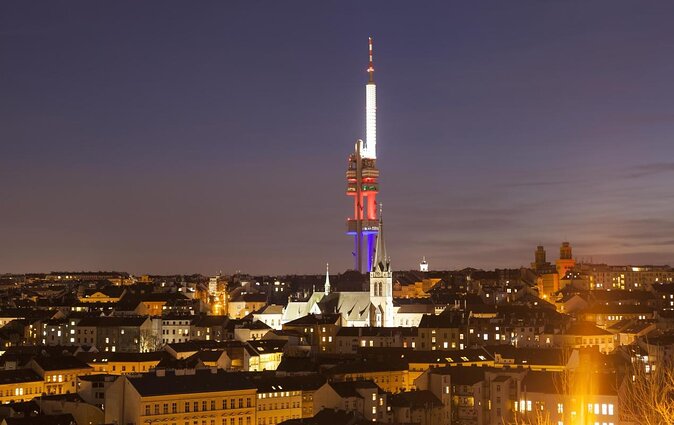
- Citywide perspective from the National Monument area, with views toward the Žižkov TV tower
- Tram tickets included, so you’re not scrambling for transport mid-walk
The 20th century left its mark here. More of that history, on foot.
- Prague: Communism History and Nuclear Bunker Guided Tour★ 4.7 · 2,417 reviews
- Prague Communism History and Nuclear Bunker Tour★ 5.0 · 1,742 reviews
- Communism & Nuclear Bunker Tour + 70s Canteen Lunch (own expense)★ 5.0 · 1,036 reviews
- Prague: WWII Guided Tour & The Crypt of Operation Anthropoid★ 4.7 · 1,030 reviews
Cold War Prague on a private historian-led route
Prague’s Soviet-era story isn’t hidden. It’s built into the city’s stone, statues, street names, and even its walkways. This tour is useful because it gives you the missing map in your head: who had power, what got enforced, and how everyday people responded.
Because it’s private, the pace makes sense for real learning. Your guide can slow down when you have questions, and speed up when you’re a fast walker and just want the next major site. That personal pacing matters when you’re covering heavy topics like occupation and censorship.
And while the tour is focused on the Cold War, it also shows how Cold War power used public space. You’ll see how monuments and design were meant to persuade you. You’ll also see counter-messaging in the form of protest art and street-level defiance.
Where you start: Náměstí Republiky and how the day flows
You’ll meet at Náměstí Republiky 1077/2, near Kostel Svatý Josef. Plan to arrive about 15 minutes early if you’re meeting at that default spot (unless hotel pickup is arranged). The meeting point is convenient because it’s near public transportation, so you’re less dependent on taxis.
The tour lasts about 3 hours. That sounds short until you realize you’re stacking major landmarks plus walking time plus a climb. The key is that the route is arranged so you get a clear progression: Cold War infrastructure and symbols early, then viewpoints and major political squares later.
Also, you’ll get tram tickets included. Even if you mainly walk, that little transport support helps you keep the flow without wasting time at kiosks or fumbling with apps.
Karlin–Žižkov pedestrian tunnel: the Cold War’s locked-door reality
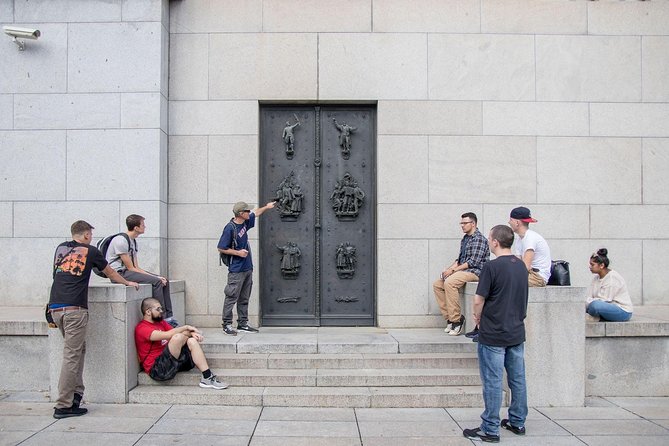
One of the most memorable parts is the Stop 1: the Pedestrian Tunnel Karlin–Žižkov. This isn’t just a pleasant shortcut. You’ll walk through the tunnel and pay attention to the locked doors that once led toward nuclear bomb-shelter corridors that were maintained over time.
What I like here is the contrast. Prague is famous for charm, bridges, and old-world lanes. In this tunnel you get the other side: preparedness, fear, and control made physical. It’s the kind of detail that changes how you read the city afterward.
Practical note: this segment is short—about 10 minutes—but you’ll want to take your time looking at details your eyes might otherwise skip. Your guide can point out what matters so you’re not just passing through.
Vitkov Hill: the National Monument, the Hall of the Soviet Soldier, and Gottwald’s mausoleum
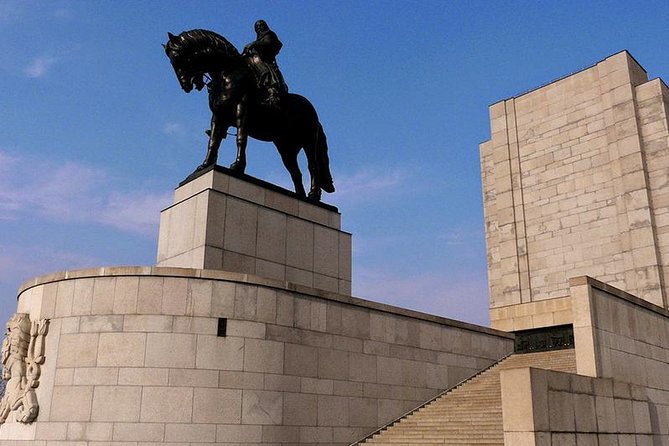
Stop 2 is the tour’s heavyweight: the National Monument at Vitkov. This is where you feel how Cold War messaging worked—through scale, symbolism, and carefully designed spaces meant to honor Soviet soldiers and Soviet-aligned authority.
You’ll spend about 30 minutes in this area. That includes the Hall of the Soviet Soldier, plus the former mausoleum connected to Klement Gottwald, who was president from 1948 to 1953. The guide will also help explain the chilling behind-the-scenes element: the laboratory and temperature-control center where staff attempted to maintain the embalmed body.
This is where the tour becomes more than sightseeing. You start seeing the Cold War as an organized system, not just an era. Monuments honored heroes from one narrative. Meanwhile, the mausoleum preserved a key figure in another, turning politics into something you could almost visit like a shrine.
A heads-up on logistics: the admission here is listed as not included. So budget a bit more. Also, Vitkov Hill involves that steep 20-minute climb. If you think it’ll be hard, tell the operator before you arrive. You can leave out Vitkov Hill and keep other Cold War-related stops.
Prefer to cover it on foot? More Prague walks across the old lanes.

Žižkov Television Tower: brutalist structure meets the Cold War viewpoint
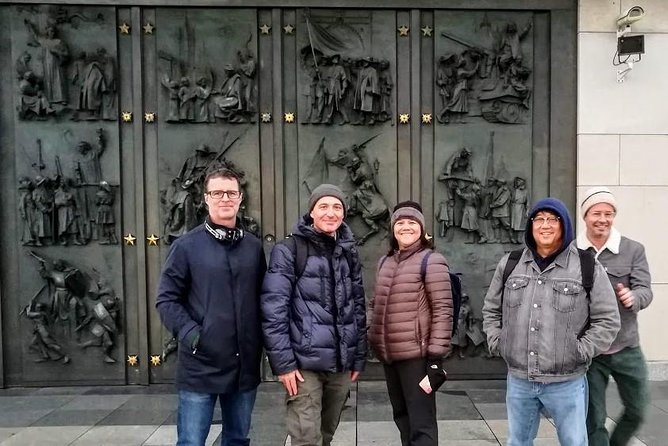
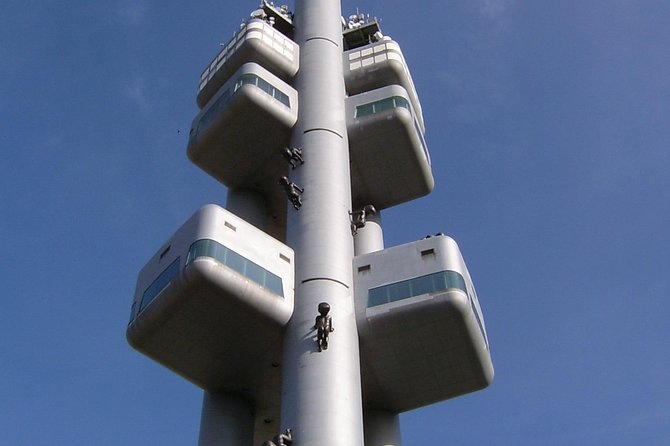
Stop 3 is the Prague TV tower, specifically Zizkov Television Tower. This part is quick—around 5 minutes—but it gives you something important: a view anchor and a style contrast.
Even if you’ve seen the tower in photos, the on-the-ground framing helps. Your guide can point out the brutalist design character and how it sits in the skyline. Then you tie it back to how the Cold War era shaped not only politics but also how cities built the future.
If you’re the type who likes visuals, this stop is great. It’s also a reminder that the Cold War didn’t just end. It left architecture, and architecture sticks around.
John Lennon Wall and Letná Hill: protest art and the propaganda shadow
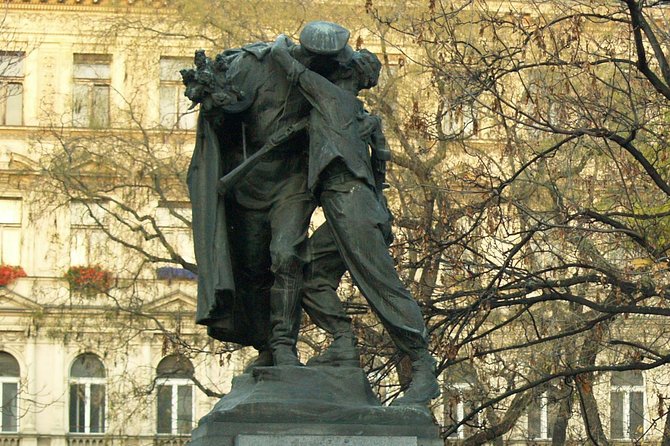
After Vitkov, the route moves into the city center and toward places that show daily life under communist rule—and the desire for Western-style freedom.
You’ll visit the John Lennon Wall, known for Cold War protest graffiti messages of hope and revolution. What’s useful about having a guide here is context. Street art can look random until you understand the political pressure behind it. Then you start noticing why certain slogans and symbols mattered.
You’ll also hear about Letná Hill, where one of the world’s largest statues of Josef Stalin once stood. Even if that statue isn’t the point you’re staring at today, the location tells the story. It shows how rulers used public space to dominate the skyline, meaning they weren’t just controlling people in the workplace. They were trying to control what you felt when you looked outward.
This portion of the tour is especially good if you want both sides: propaganda and pushback. One without the other can feel one-note. Together, they show how regimes try to shape culture, and how people respond by creating their own messages in public.
Wenceslas Square: from occupation to the Velvet Revolution
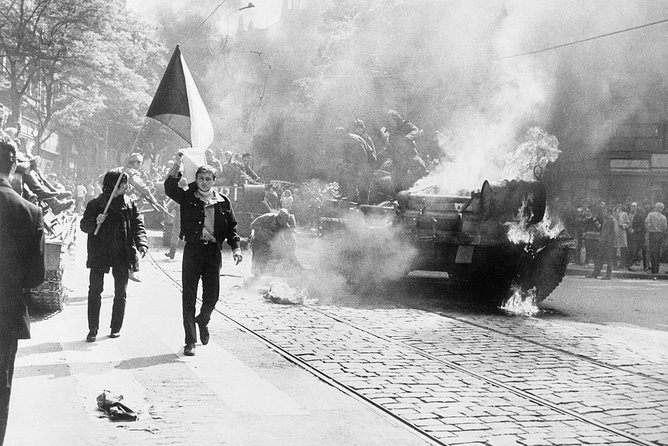
Stop 4 centers on Wenceslas Square. This isn’t just a famous Prague square. It’s a timeline you can walk through.
Your guide will walk you through its history starting from its 14th-century origins, then through periods of military parades tied to occupying powers. You’ll connect those darker chapters to later moments like the Prague Spring and the tragic crackdown that followed.
Two events matter most in this tour story:
- In 1968, Warsaw Pact tanks converged here to crush the Prague Spring and end an 8-month window for freer speech and an independent press.
- In 1989, the square became a setting for demonstrations that fed into what’s known as the Velvet Revolution, which ended communist rule.
Standing in a place like this with a guide helps you see why history sticks to geography. You stop thinking of dates as facts on a page. You start understanding how people used the same spaces to pressure change.
If you’re traveling with students or you just like political history, this is a strong stop. You’ll come away with a clearer sense of why Prague’s change felt both sudden and hard-earned.
The upside-down King Wenceslas: irony as political language
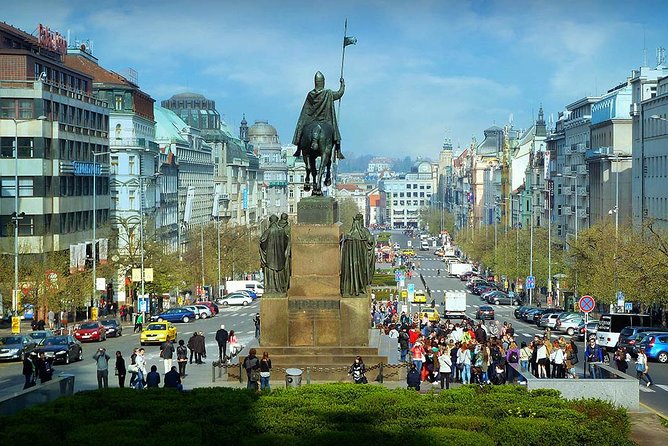
Stop 5 is the Upside-Down Statue of King Wenceslas Riding a Dead Horse. It’s short—about 5 minutes—but it’s memorable because it’s political in a smart, slightly uncomfortable way.
The idea is irony. Your guide will help you consider how this sculpture fits into Central Europe’s political atmosphere, where authority can be portrayed as outdated, dead, or out of step with real life.
This kind of stop works well after Wenceslas Square. First you absorb a place where crowds demanded change. Then you look at art that comments on authority itself. Together it makes the Cold War story feel less like a straight line and more like a cycle of power, reaction, and reinterpretation.
Price and value: what you’re paying for (and what to budget extra)
The price is $390.37 per group (up to 10 people) for about 3 hours. That sounds steep until you break down what you actually get: a private historian guide, a structured route across key Cold War sites, and tram tickets included.
If you’re traveling with family or friends, the math improves fast. Even a small group can feel like a bargain compared to multiple separate tours. The real value is the private setup: you aren’t waiting for other people to catch up, and you aren’t competing with a large group for guide attention.
Two things to budget for:
- The National Monument at Vitkov has admission not included, so check pricing closer to your date since fees can change.
- Food and drinks are not included. You’ll want to plan where to eat before or after, especially if you want the tour to stay focused instead of breaking for snacks.
If you’re the type who prefers a guide to translate sites into meaning, this is a solid use of money. If you only want pretty photos and minimal walking, you might find the price hard to justify.
Who this tour is best for (and who should consider alternatives)
This tour suits you if you want a guided, coherent story of communist-era Prague. It’s also a great fit if you like political symbolism—statues, squares, and public art—because the route is built around how those signals worked.
It’s also smart for:
- history-minded travelers who want context, not just names
- people traveling in small groups who want private attention
- visitors who appreciate a mix of propaganda sites and protest sites
It might be less ideal if you want a leisurely city stroll. The route includes walking plus that steep climb on Vitkov Hill. While the operator can potentially adjust for mobility issues, you’ll still want to be honest about your limits.
Should you book this private Prague Cold War walking tour?
Yes, if your goal is understanding, not just ticking off sights. The biggest reason to book is the pairing: Soviet-era power housed in monuments and mausoleums, plus the counterpoint of protest in places like the John Lennon Wall and the symbolic political art around Wenceslas Square.
I’d especially consider it if you like tours with a clear narrative. This one has a structure that moves you from fear and control, to ideology in stone, to the public pressure that actually changed the system.
If you dislike climbs or you’re short on time for budgeted admissions, you can still make it work by planning around Vitkov Hill’s effort and the fact that admission there is not included.
FAQ
How long is the Private Prague Cold War Walking Tour?
The tour is about 3 hours.
Is this tour private or shared?
It’s private. Only your group participates.
What’s included in the tour price?
It includes a historian guide and tram tickets. A mobile ticket is also offered.
Are admissions included for all stops?
Not all admissions are included. The National Monument at Vitkov lists admission as not included.
Is pickup available?
Pickup is offered, but hotel pickup and drop-off are not included. If you arrange it in advance, your meeting plan may change; otherwise you’ll meet at the default meeting point.
Where do I meet the guide?
The start point is Náměstí Republiky 1077/2, Nové Město, and the default meeting spot is near Kostel Svatý Josef at Náměstí Republiky 1077/2, Prague 1.
Is the tour in English?
Yes, it’s offered in English.
Is the tour physically demanding?
You should have moderate physical fitness. There is a steep climb of about 20 minutes up Vitkov Hill. If mobility is an issue, you should let the operator know so Vitkov Hill can potentially be left out.
More Tour Reviews in Prague

On Foot Through Prague, Continued
More Communism & Wartime History
More Prague tours we have written up lately


Communism & WWII History Tours, compared.
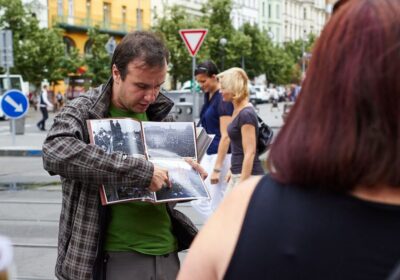 ★ 4.7Communism History and Nuclear Bunker Guided TourFrom $442,417 reviews
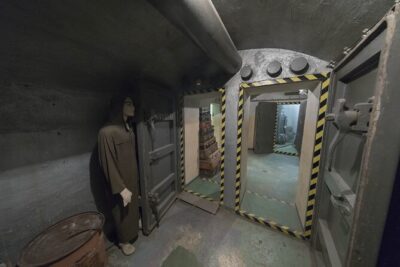 ★ 5.0Prague Communism History and Nuclear Bunker TourFrom $451,742 reviews
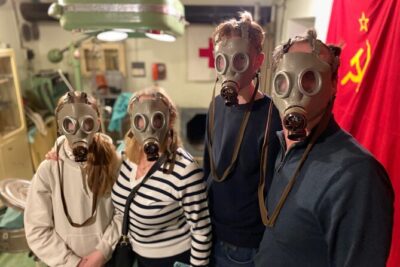 ★ 5.0Communism & Nuclear Bunker Tour + 70s Canteen Lunch (own expense)From $351,036 reviews
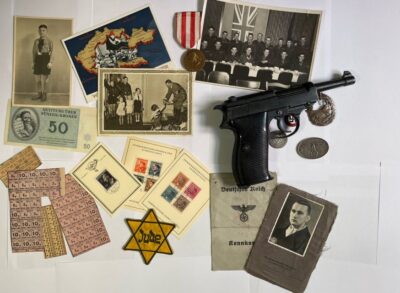 ★ 4.7WWII Guided Tour & The Crypt of Operation AnthropoidFrom $421,030 reviews
 ★ 5.0WWII in Prague Tour & The Crypt of Operation AnthropoidFrom $43817 reviews
 ★ 4.8Communism and Bunker Tour with 70s Canteen LunchFrom $34269 reviews
 ★ 5.0Small-Group World War 2 & Operation Anthropoid Tour in PragueFrom $33231 reviews
 ★ 4.8World War 2 and Operation Anthropoid Walking TourFrom $32193 reviews
Browse the lists this tour appears in