
REVIEW · PRAGUE PRIVATE TOURS
Private Half-Day Tour To Terezin Concentration Camp
Terezín is heavy history, explained with care. This private, 5-hour tour is a focused way to understand how a military fortress became both a Gestapo prison and a Jewish ghetto during WWII. I love the structure of the route, starting in the Small Fortress and moving to the Big Fortress, so the story builds in the right order. I also love that you get a local, live guide who can translate facts into human meaning. One possible drawback: it’s emotionally intense, and the pace is still a tour pace—if you want extra time in every gallery, you may wish there were more room to linger.
You’re in good hands with private logistics too. Pickup from your chosen spot in Prague (hotel, square, airport) plus a dedicated driver and car/minivan keeps the day from feeling like a stressful commute. If you’re sensitive to enclosed spaces (mass cells, solitary cells, tunnels), plan for that going in, and take breaks when you can.
In This Review
- Key things you’ll notice on this Terezín tour
- Entering Terezín with the right context
- Small Fortress: the Gestapo prison route through cells and courtyards
- Big Fortress: from ghetto gates to the Museum of the Ghetto for boys
- Hidden chapel and synagogue: seeing religion erased on purpose
- Magdeburg barracks: dorm life and culture under constraint
- Crematorium and mass graveyard: the final timeline anchor
- Private guide from Prague: how the day actually runs
- Price and value: what $316 buys on a private 5-hour route
- Emotion, pacing, and practical considerations
- Who should book this private half-day tour
- Should you book this tour?
- FAQ
- How long is the private Terezín tour?
- Where does the tour start?
- Is this a private tour or shared group?
- What sites are included during the tour?
- Which languages are available for the live guide?
- What’s included in the price?
- Is the tour wheelchair accessible?
- Is free cancellation available?
- Can I reserve without paying right away?
Key things you’ll notice on this Terezín tour
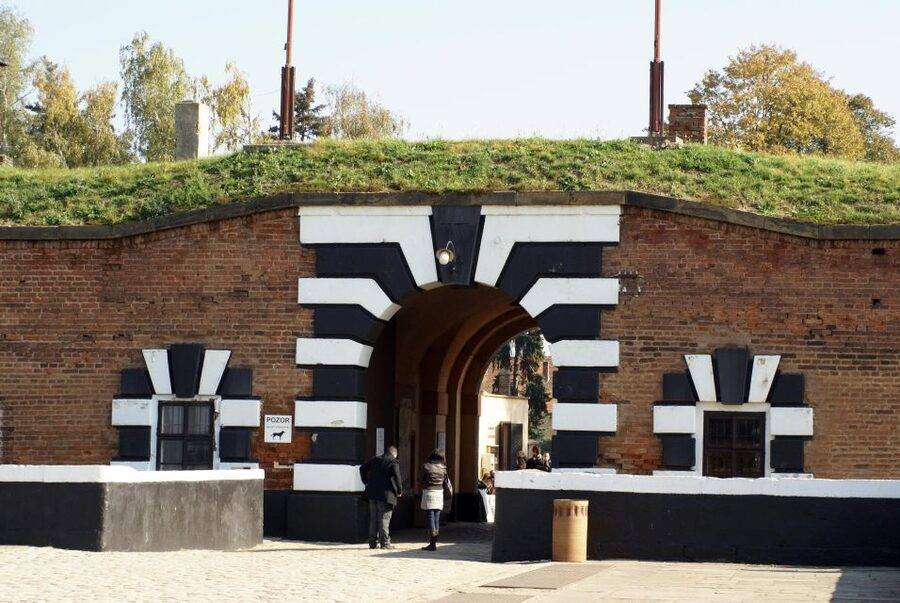
- Small Fortress route through the prison spaces: administrative court, commander’s office, mass and solitary cells, wall tunnels, and courtyards
- Big Fortress visit with the Ghetto Museum for boys: strong focus on children and how life worked inside the ghetto
- A 10-minute Nazi propaganda film: created for the International Red Cross, shown as part of the prison museum narrative
- The hidden synagogue/chapel: concealed in a storage room after Jewish religious signs were banned
- Crematorium and mass graveyard outside the walls: a final stop that grounds the timeline in what followed
- Private guide + languages: English, Spanish, French, Russian, Italian, Czech, German, with a true Q&A feel
Rather have the guide to yourself? More private tours of Prague.
- Prague Old Town: Private Tour★ 5.0 · 1,223 reviews
- Discover Prague Private Tour – 3 hours★ 5.0 · 705 reviews
- Prague: City Highlights Private Walking Tour★ 4.8 · 635 reviews
- Winter Charm of Prague – private tour with PERSONAL PRAGUE GUIDE★ 5.0 · 479 reviews
Entering Terezín with the right context
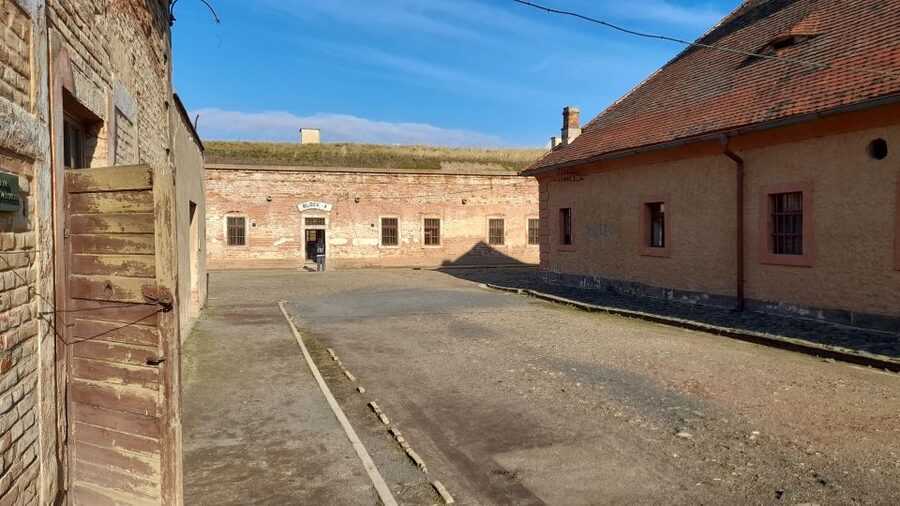
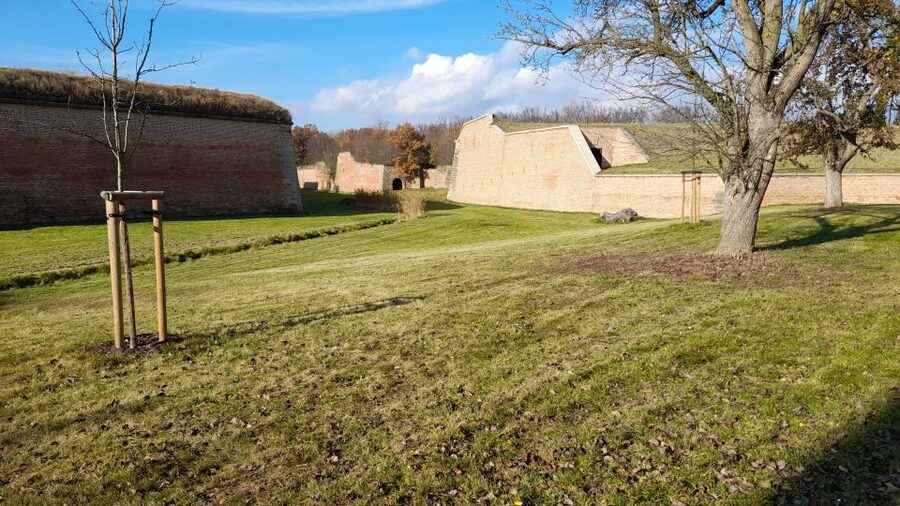
Terezín (Theresienstadt) wasn’t built as a camp. It started as an 18th-century military fortress, then was repurposed during WWII in ways that were both calculated and brutal. The key idea you’ll hear early is that Terezín functioned on two levels: the Small Fortress as incarceration and terror, and the Big Fortress as a ghetto where Jews were trapped under Nazi control.
What makes this tour worth your time is the sequencing. You don’t get random stops; you get a guided walk that helps you connect rooms, documents, and stories to what happened next. And you’ll see how the Germans used space—fortress walls, courtyards, barracks—to create control while pretending, at times, that everything was something else.
The route also gives you numbers you can actually place in your head. For example, around 155,000 Jews passed through the Big Fortress, and 63 transports left for extermination camps in Poland. In the Small Fortress, about 35,000 prisoners went through the Gestapo prison gates over nearly five years. Those figures hit harder when you’re standing in the physical locations they relate to.
Small Fortress: the Gestapo prison route through cells and courtyards
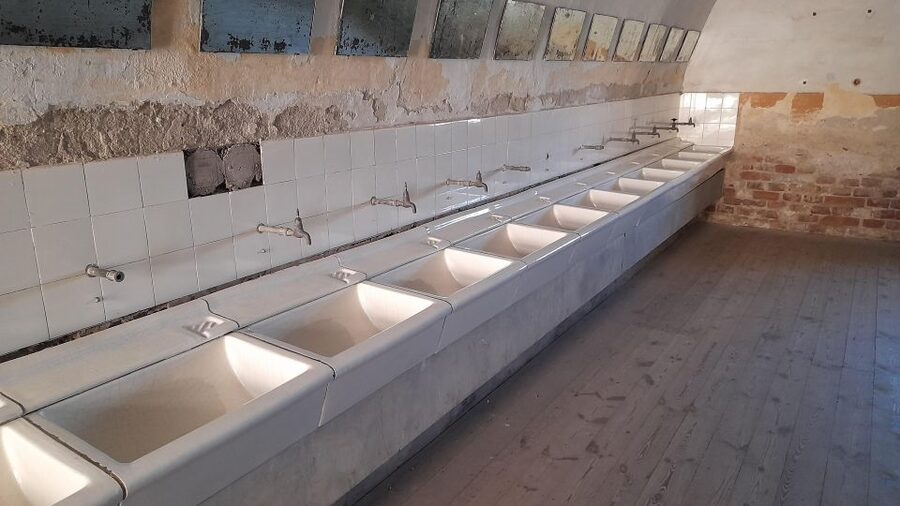
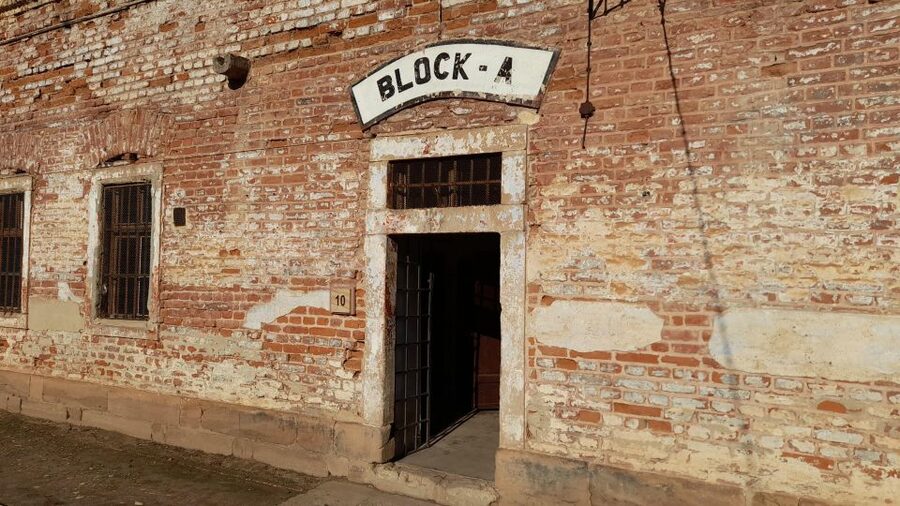
The Small Fortress is where you’ll feel the prison’s purpose in a very direct way. Since June 1940, it served as a Gestapo prison because Prague’s main Gestapo prison had become overcrowded. The prison lasted until May 8, 1945, and during those five years around 35,000 prisoners came through.
Your guide typically starts you at the administrative court, the point where prisoners arrived. That matters because it frames the whole place as a system, not just a backdrop. From there, you’ll see the commander’s office, which helps you understand the chain of authority behind the violence.
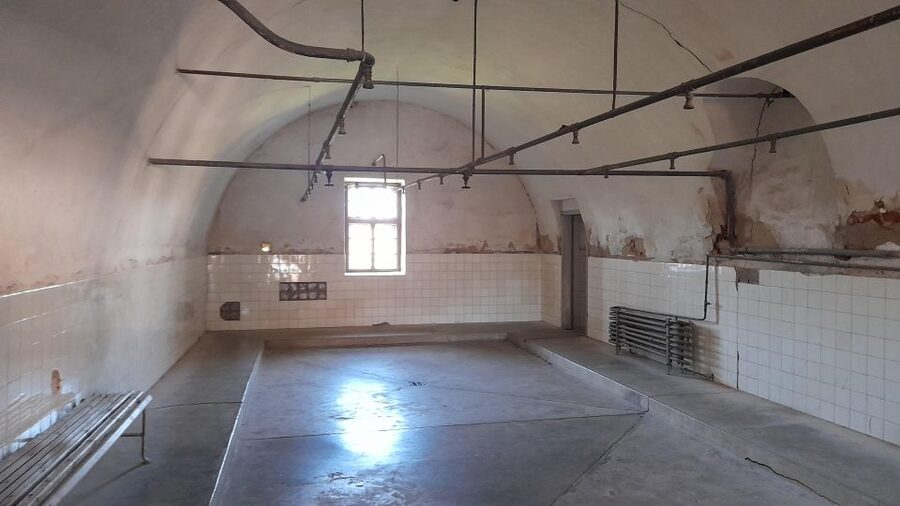
Next comes the men’s section and the cell blocks. You’ll walk past the mass cells, the Jewish cell, and the solitary cells. Even when you know the terms, standing in those spaces makes the scale more real. Solitary confinement is one of those things that sounds abstract until you’re looking at the conditions that were designed for isolation and control.
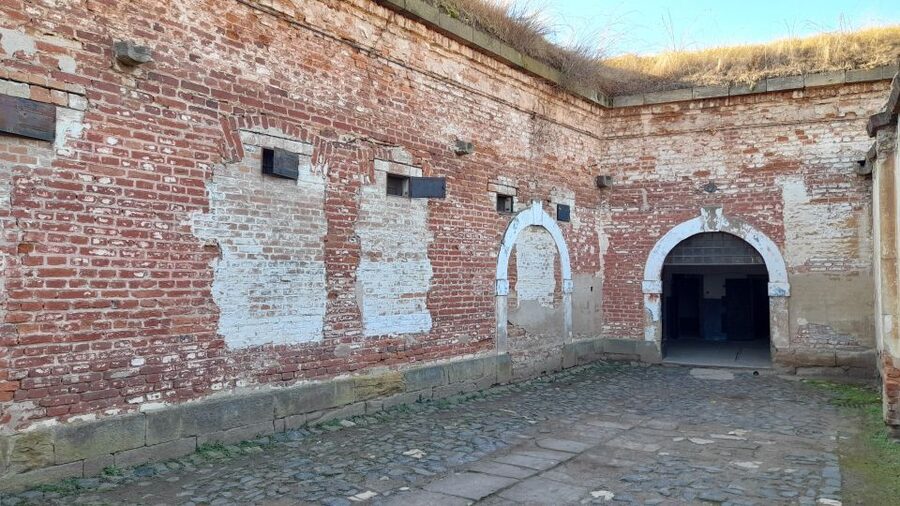
From cells, the tour shifts to movement and enforcement. You’ll go through wall tunnels and see the shooting range area tied to execution. Then you’ll see the fourth courtyard, including larger mass cells that the Nazis built later as the prison became too crowded. That “built later” detail is a clue: the system didn’t slow down when it failed. It expanded to keep going.
One especially important moment is the short 10-minute Nazi propaganda film created for the International Red Cross. The point isn’t the movie itself as entertainment. It’s how the Nazis tried to shape what outsiders believed, even while the prison’s reality was the opposite.
Big Fortress: from ghetto gates to the Museum of the Ghetto for boys
About a mile separates the Small Fortress from the Big Fortress, so the day naturally shifts gears. The Big Fortress served as a ghetto for Jews starting November 24, and over roughly 3.5 years, around 155,000 Jews passed through. For you, the practical value is that the tour gives you both sides of Terezín: the prison machinery and the ghetto machinery.
Your guided stop at the Museum of the Ghetto is housed in former barracks for boys. That setting isn’t just convenient—it adds emotional weight because the museum isn’t operating in an empty, neutral building. The ground floor is dedicated to the children who lived and perished in Terezín, and the final section focuses on the extermination camps.
This museum section is one of the strongest reasons to book a private guide instead of just walking through alone. A guide can help you read what you’re seeing—how display choices connect to the bigger story, and what to pay attention to when the exhibits become overwhelming.
You’ll also get numbers that sharpen the timeline. From the Big Fortress, 63 transports left for extermination camps in Poland carrying about 87,000 prisoners. Only about 3,600 survived the war. Around 35,000 people died inside the ghetto itself, mostly from diseases and lack of nutrition. Hearing those figures while you’re still in the ghetto context changes how they land.
The tour’s overall pacing matters here. You’re moving from a prison where people were held, to a ghetto where people were exploited, starved, and processed. That contrast is the point, and it helps you understand why Terezín is spoken about as both suffering and forced survival.
Hidden chapel and synagogue: seeing religion erased on purpose
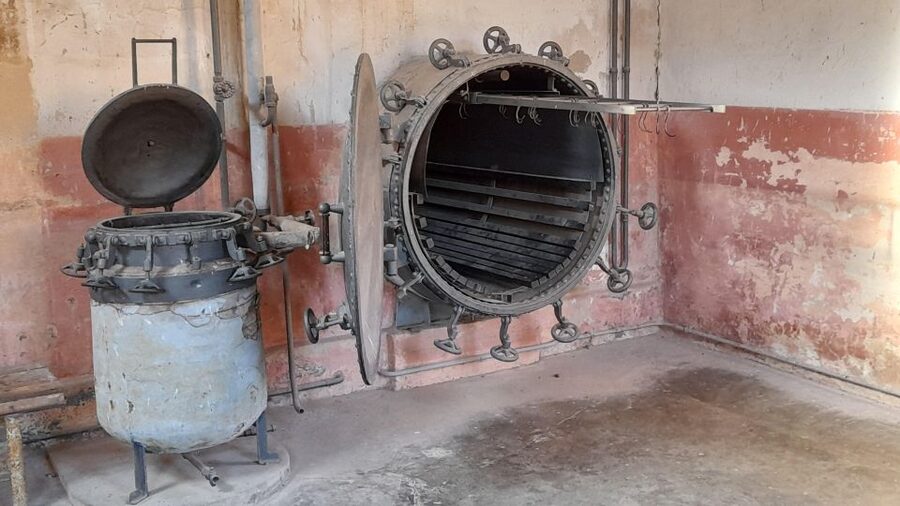
After the ghetto museum, you’ll visit the hidden chapel—the tour’s quieter, more unsettling stops. The hidden synagogue you’ll see was one of six hidden synagogues in Terezín. The one on your route is concealed in a storage room because Jewish religious signs were banned by the Nazis.
This part matters because it shows resistance through concealment. The Nazis weren’t only controlling bodies; they were trying to control identity. When you see where and how religion was hidden, the story shifts from “what happened” to “how people tried to keep being people.”
Your guide will likely place this in the broader context of Terezín’s attempts to manipulate what the world thought it was seeing. It’s easy to miss this thread if you’re rushing. With a private guide, you can slow down just long enough to connect the dots between the propaganda film, the controlled spaces, and the banned symbols.
A sobering hour north. More Terezin memorial visits.
Magdeburg barracks: dorm life and culture under constraint
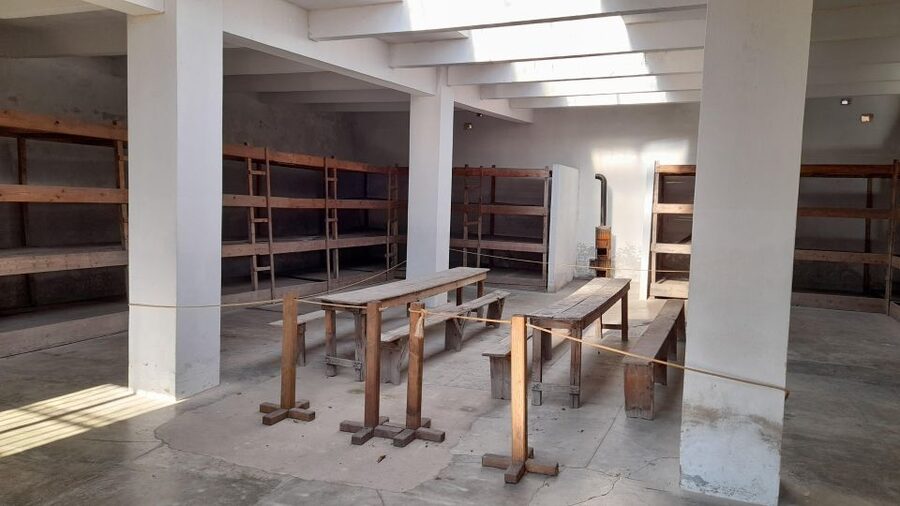
Next you’ll head to the Magdeburg barracks. This stop helps you picture everyday life inside the ghetto, beyond the big moments of transport and death. You’ll see what the dormitories looked like and learn about culture in the ghetto.
The culture piece is especially important. Many of the Jewish prisoners were accomplished artists, and the tour uses that fact to show that creativity didn’t stop because conditions were impossible. It didn’t magically fix anything, of course. But it did become another form of human persistence.
This is also where a guide’s tone makes a difference. You want someone who can talk about art and education without turning them into a feel-good sidebar. A good private guide keeps the focus on what it meant to create under coercion, and it makes the information land more accurately.
If you’ve ever wished a museum had a “then what?” section, this part delivers it. It helps you connect living conditions with the choices people made inside them.
Crematorium and mass graveyard: the final timeline anchor
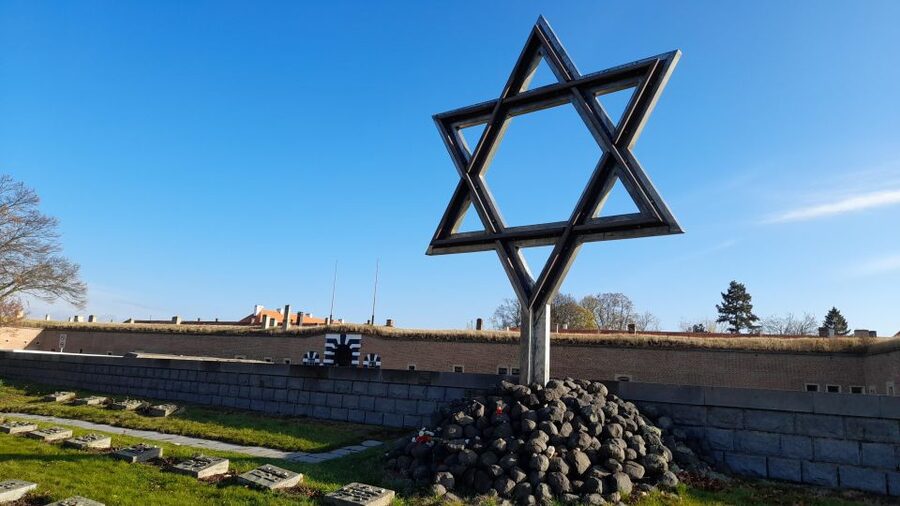
The last part of the tour takes you to the Krematorium outside the walls of Terezín. It was built in 1942, and the tour explains that victims’ bodies were cremated there. Next to it is a mass graveyard.
This stop functions like a timeline anchor. Earlier you learn about arrivals, prison organization, ghetto life, transports, and the museum’s focus on children and extermination. Here, the physical place makes the end of the story feel unavoidable.
It’s also the moment when you’ll be glad you booked a private tour rather than cramming it into a quick walk. You can ask questions, get clarifications, and adjust your pace if the moment hits you harder than you expected. In experiences like this, control over your timing is value—especially when the subject is so emotionally demanding.
Private guide from Prague: how the day actually runs
This is designed as a true private group tour, not a shared “line-up-and-go” situation. You’re not just getting a headset and a script; you’re getting a live guide who can respond to questions and follow the tempo of your group.
Pickup is included, and the guide can meet you at any place that works for you—hotel, square, airport, and more. A driver and car/minivan handle the route between Prague and Ústí nad Labem area stops, which keeps the day from turning into an exercise in public transit navigation.
Duration is listed as 5 hours, so you’re not committing a whole day. In that time, the tour covers both fortresses, museum spaces, the hidden synagogue/chapel, barracks, and the crematorium area. That’s a lot of ground, and it’s why you’ll want sensible shoes and a calm mindset.
Guide names from real experiences show what you can expect. Eva is described as warm, personable, and full of information. Peter is described as friendly and patient with questions. One guide also offered personal Czech perspective around daily life before, during, and after the Velvet Revolution—an extra layer that helps you connect WWII-era history with later European change.
Price and value: what $316 buys on a private 5-hour route
At $316 per person for a private 5-hour tour, this isn’t a budget add-on. But value here isn’t just “you paid for a ticket.” You’re paying for a guided route through two major sections of the site, plus transport support from Prague and the entrance fee to the Terezín Memorial.
Where the value really shows: you’re getting time. Not in the sense of extra hours, but in the sense that the guide is spending their attention on your questions and on turning the site into something understandable. With a private setup, you can ask why specific rooms mattered, or what the propaganda film attempted to conceal, without feeling rushed.
Also, the language options are broad. If you’re comfortable in one of the listed languages—English, Spanish, French, Russian, Italian, Czech, or German—this tour is set up so you don’t have to compromise on comprehension.
Wheelchair accessibility is included too, which is a practical advantage if mobility needs are part of your planning.
Emotion, pacing, and practical considerations
Terezín isn’t a “sightseeing” stop. It’s a Holocaust-related site that deals with suffering, imprisonment, and death. Plan for that mentally. Keep water handy. Build in a little flexibility in your day so you’re not rushed afterward.
Pacing is worth considering. One guest wanted more emphasis on the museum’s upstairs areas, which is a reminder that every guided route has priorities. If you’re the type who reads every label and wants more standalone time, you might find the tour’s focus is on the key rooms and exhibits rather than a total unguided free-for-all.
On the other hand, because the subject is complex and the site is physically structured, a guide’s selection is often a benefit. They help you avoid missing the story thread that connects the Small Fortress to the Big Fortress and then to what happened beyond the walls.
Who should book this private half-day tour
I’d point you toward this tour if you want:
- A private guide who can explain both the Small Fortress and Big Fortress in one coherent sweep
- A route that includes the Ghetto Museum, the hidden synagogue/chapel, Magdeburg barracks, and the crematorium
- Pickup from Prague handled with a dedicated driver and car/minivan
- Language support in multiple major European languages
It’s also a strong pick if your group includes people who want to ask questions. The tone in the guide experiences is repeatedly described as warm, personable, friendly, and patient—exactly what you want when the answers matter.
If you’re visiting with very young kids or you know your group struggles with emotionally heavy content, you might rethink the format or consider a shorter, more selective approach. The tour duration and the intensity of the stops aren’t designed as light education.
Should you book this tour?
Book it if you want a guided, structured understanding of Terezín in a single 5-hour window from Prague, with transport support and entrance fees handled. The private format is the big differentiator: it helps you connect what you see (cells, tunnels, barracks, hidden rooms, the crematorium) to what it meant, without turning the visit into a checklist.
Skip it or adjust your expectations if your priority is spending unlimited time reading every museum section at your own pace. This is a guided story with key stops, not a self-guided marathon. If that sounds like you, add time on your schedule for extra museum wandering where possible.
If you choose it, go in with comfortable shoes, a bit of emotional space, and a willingness to let the site teach you step by step. That’s where the value lands.
FAQ
How long is the private Terezín tour?
The tour duration is listed as 5 hours.
Where does the tour start?
It’s described as a tour from Prague, with pickup included from any place you choose (hotel, square, airport, etc.).
Is this a private tour or shared group?
It’s a private group tour.
What sites are included during the tour?
You’ll visit the Small Fortress prison area, the Big Fortress area, the Museum of the Ghetto, the hidden chapel/synagogue, the Magdeburg barracks, and the Krematorium and nearby mass graveyard.
Which languages are available for the live guide?
Live guide languages listed are English, Spanish, French, Russian, Italian, Czech, and German.
What’s included in the price?
Included items are a private tour guide, a driver, a car/minivan, and the entrance fee to the Terezín Memorial.
Is the tour wheelchair accessible?
Yes, the tour is listed as wheelchair accessible.
Is free cancellation available?
Yes, free cancellation is offered up to 24 hours in advance for a full refund.
Can I reserve without paying right away?
Yes, it’s offered as reserve now & pay later, so you can book your spot and pay nothing today.
More Tour Reviews in Prague



More Terezin Memorial Trips

More Private Tours of Prague

More Prague tours we have written up lately


Prague Private Tours, compared.
 ★ 5.0Prague Old Town: Private TourFrom $541,223 reviews
 ★ 5.0Discover Prague Private Tour – 3 hoursFrom $133705 reviews
 ★ 4.8City Highlights Private Walking TourFrom $210635 reviews
 ★ 5.0Winter Charm of Prague – private tour with PERSONAL PRAGUE GUIDEFrom $113479 reviews
 ★ 5.0Best of Prague Private Walking Tour (Left and Right Riverbank)From $134431 reviews
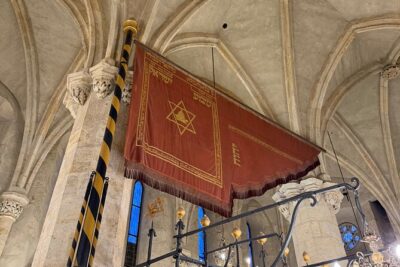 ★ 5.0Prague Jewish Quarter & All Synagogues Indepth Semi-Private TourFrom $108411 reviews
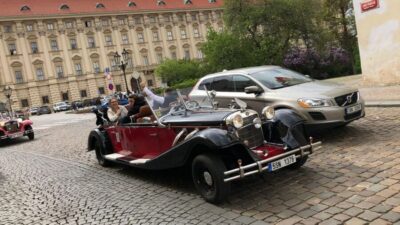 ★ 4.61-Hour Private Tour in Vintage CarFrom $194344 reviews
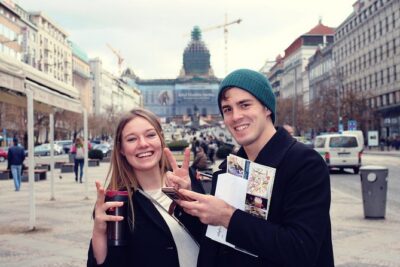 ★ 5.0Private city discovery tour – A Historical Treasure HuntFrom $33146 reviews
Browse the lists this tour appears in