
REVIEW · COMMUNISM & WWII HISTORY TOURS
Prague: Historical Walking Tour with Focus on World War 2
Prague tells its WWII story on foot. What I like most is how this tour pairs a clear lecture with real WWII sites you can stand in front of, not just read about. It gives you the Czech point of view while still connecting the dots to major Nazi decisions and violence.
I particularly enjoyed the moment-by-moment focus on key events, especially the Heydrich assassination and what happened in the days around it. I also liked how the guide uses lots of photos to make the history feel concrete. One drawback to keep in mind: the tour is information-heavy, so you’ll want comfortable shoes and the stamina to keep up with a fast, story-driven pace.
In This Review
- Key things to watch for
- WWII in Prague starts with Czech history, not just Germany
- Skautský Institut meeting point and how the tour flows
- The lecture moment: what the guide sets up for you
- Former Gestapo headquarters and the pause for victims
- A hotel tied to Nazi leaders: recognizing power in plain sight
- The Prague Uprising battle stops: Old Town Square, Wenceslas Square, Czech Radio
- Heydrich’s assassination: the story, the stakes, and the chain reaction
- The crypt beneath a church: final resistance and death
- Photos in the field: why the guide’s visuals matter
- Price and value: is $58 worth it?
- Who this tour suits best
- Should you book this WWII-focused walking tour?
- FAQ
- How long is the Prague WWII walking tour?
- What language options are available?
- Where do I meet the guide?
- What sites are included during the walk?
- Is the tour suitable for children?
- What should I bring?
Key things to watch for
- WWII context built around Czech history before you hit the streets
- Former Gestapo headquarters and a minute of silence for victims
- Prague Uprising battle sites you can actually see in daylight
- Reinhard Heydrich’s assassination explained with stop-by-stop context
- A crypt beneath a church marking the final resistance stand
- Photo-led commentary that helps you recognize what you’re looking at
The 20th century left its mark here. More of that history, on foot.
- Prague: Communism History and Nuclear Bunker Guided Tour★ 4.7 · 2,417 reviews
- Prague Communism History and Nuclear Bunker Tour★ 5.0 · 1,742 reviews
- Communism & Nuclear Bunker Tour + 70s Canteen Lunch (own expense)★ 5.0 · 1,036 reviews
- Prague: WWII Guided Tour & The Crypt of Operation Anthropoid★ 4.7 · 1,030 reviews
WWII in Prague starts with Czech history, not just Germany
This is a walking tour that treats World War II as something that happened to Czechs first, not just as a backdrop to European politics. Before you move, you get a theoretical introduction that frames the period and explains how Czech history ties into Nazi rule and resistance. If you’ve ever felt like Prague’s WWII story gets simplified into a few famous names, this is a stronger approach: you’re given the timeline so the streets make sense.
You’ll also get a guide-led way to track responsibility and cause-and-effect. That matters because the tour doesn’t treat events like random dramatic movie scenes. Instead, you learn how Nazi leadership escalated pressure and how the resistance responded under brutal conditions.
Skautský Institut meeting point and how the tour flows
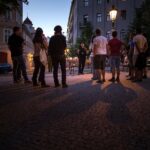
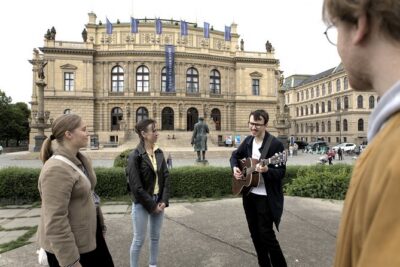
The tour meets outside the entrance door to Skautský Institut, tucked in an archway. The guide holds a paper sign that says Spectrum Tours, so it’s easy to spot once you’re on the right spot.
From there, you work through the city on foot for about three hours, finishing at Resslova 9a in Prague 2-Nové Město. Since it’s a walking format, bring comfortable shoes and expect a steady rhythm. There’s no long sit-down museum time built in; you’re out in the streets, pausing where history happened.
Also, this tour runs in German, Czech, and English, with a licensed local guide. If you’re the type who likes asking questions as you go, you’ll probably appreciate how the guide connects the lecture to what you’re seeing right then.
The lecture moment: what the guide sets up for you
The tour begins with a full, structured explanation of World War II. You’re not just told facts; you’re guided through the problem and the stakes, including Czech historical specifics. It’s the kind of framing that helps you connect multiple stops into one story.
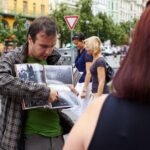
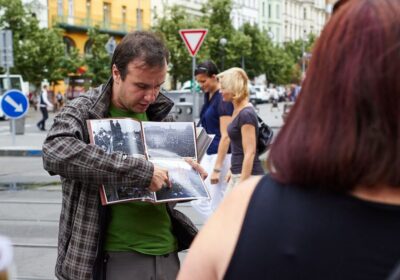
A big part of the value here is that the guide uses lots of photographs as you learn. These images aren’t decoration. They help you understand what the places used to look like, what the Nazi presence meant locally, and why certain locations carried risk for civilians and resistance members.
This is also where you get the names and roles you’ll need later. Once you reach the assassination-related stops, you’ll already know why Reinhard Heydrich mattered so much during the early 1940s and why his targeting caused immediate shock and retaliation.
Former Gestapo headquarters and the pause for victims
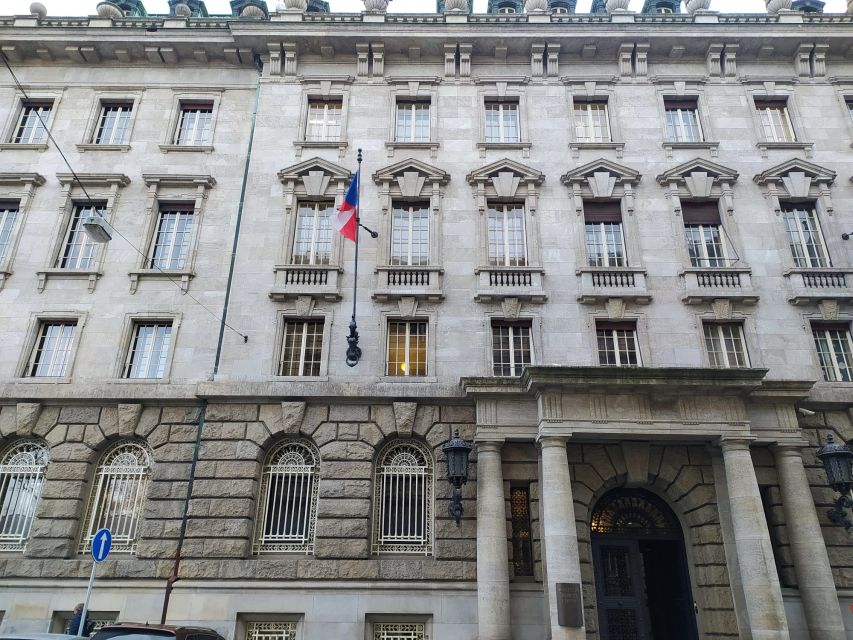
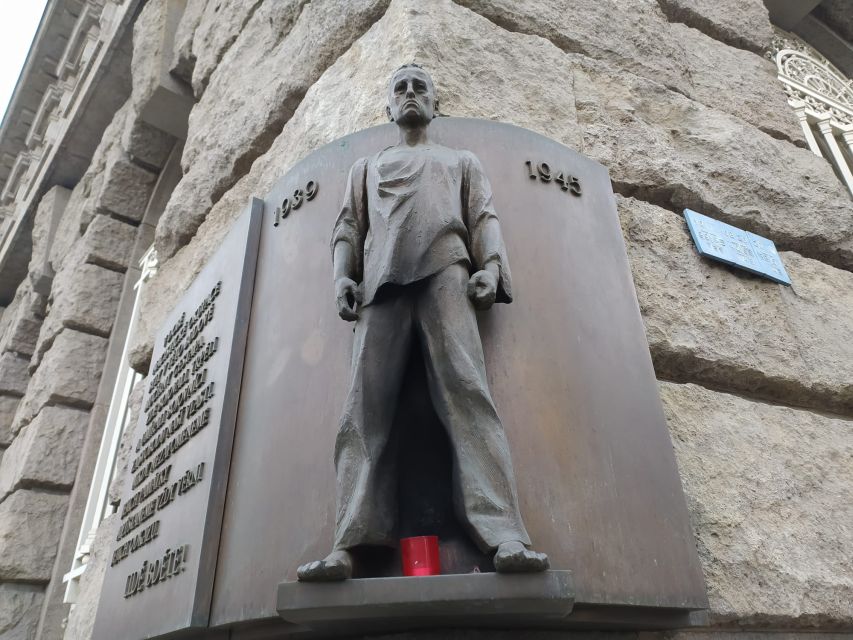
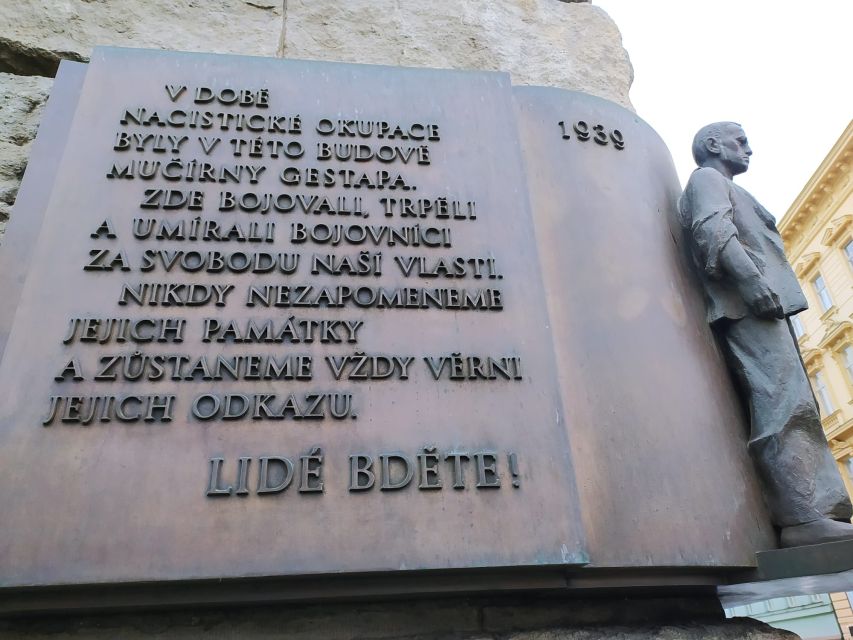
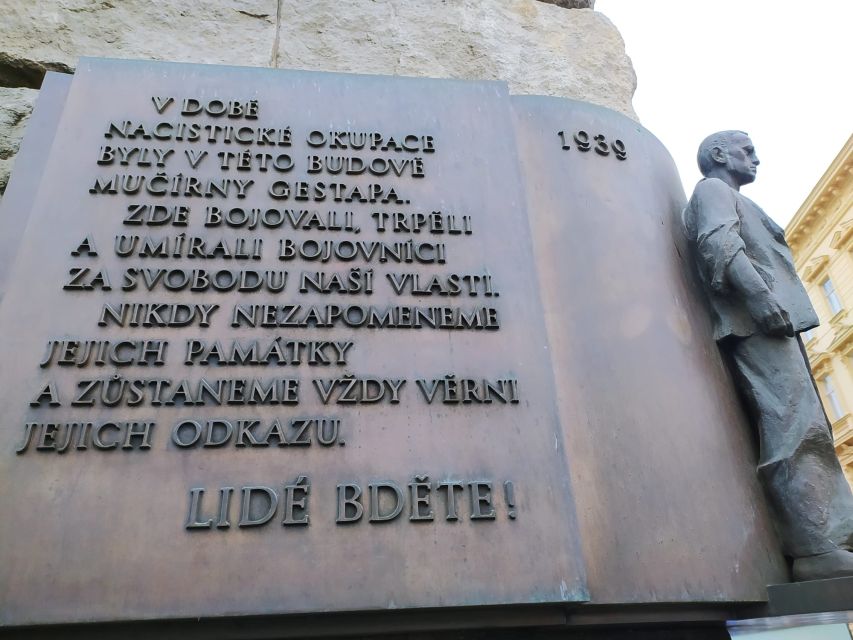
One of the most serious parts of the tour is the visit to a former GeStaPo headquarters, tied to a memorial for victims of Nazism. The guide leads a minute of silence there, which changes the tone of the whole experience. It’s not a “look and move on” stop. It’s a deliberate pause that reminds you this is not history in the abstract.
This stop also helps you understand how power operated. Nazi terror wasn’t just speeches and posters. The Gestapo symbolized investigation, imprisonment, and fear. Standing at the former headquarters, you start to see why resistance work was so dangerous and why the city’s conflict in 1945 had such a grim cost.
If you prefer tours that stay mostly in lecture mode, this stop might feel like a strong emotional shift. But if you can handle sober moments, it’s one of the most meaningful parts of the program.
Prefer to cover it on foot? More Prague walks across the old lanes.

A hotel tied to Nazi leaders: recognizing power in plain sight
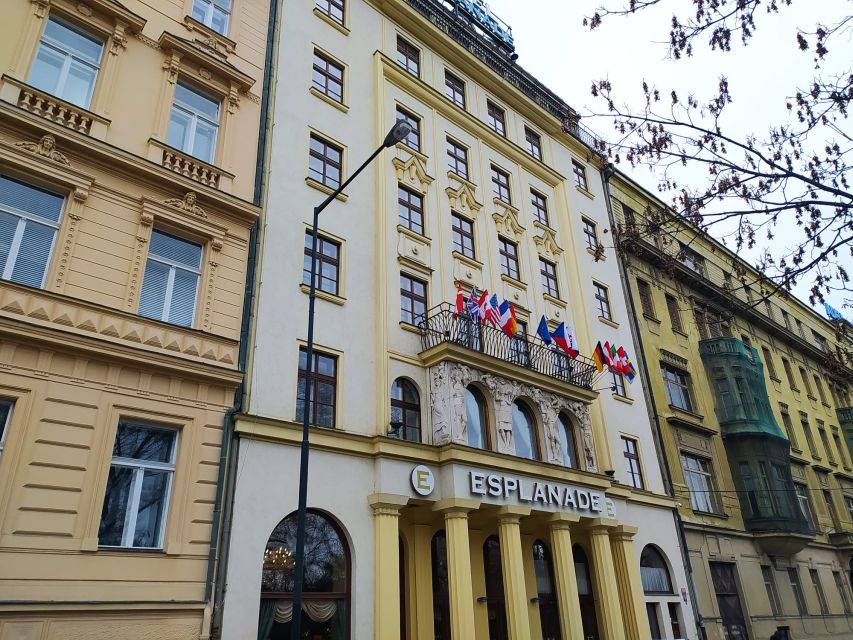
Another stop involves a hotel that was once extremely popular with Nazi leadership. You’ll look at a place that still exists in the modern city, which is exactly what makes it unsettling. You’re essentially doing “architecture as evidence”: seeing how elite, comfortable spaces coexisted with brutal repression nearby.
This kind of stop works best when you listen to the guide’s explanation rather than just snapping photos and moving on. The point isn’t the hotel as a tourist object. The point is what it represented socially—how Nazi prominence could take over everyday city life, including where people stayed and met.
You might find this part less visually dramatic than the memorial sites. Still, it’s a useful reminder that occupation didn’t only happen in camps and war zones; it also happened through routines, lodging, and authority.
The Prague Uprising battle stops: Old Town Square, Wenceslas Square, Czech Radio
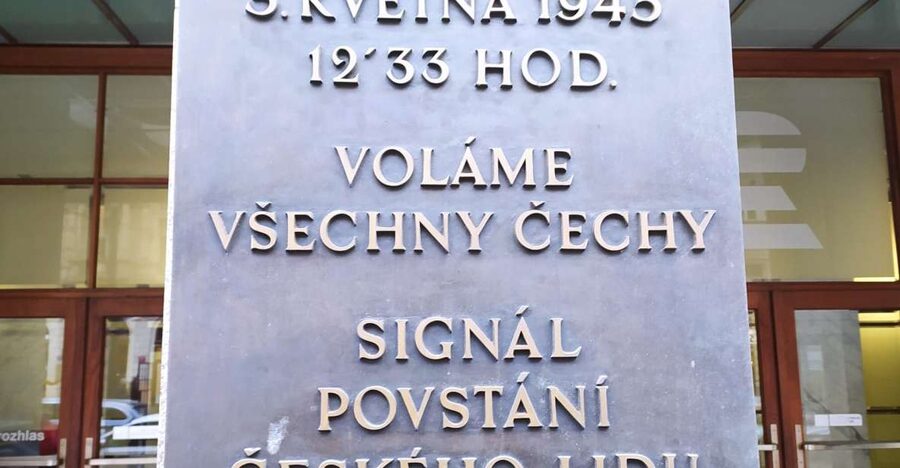
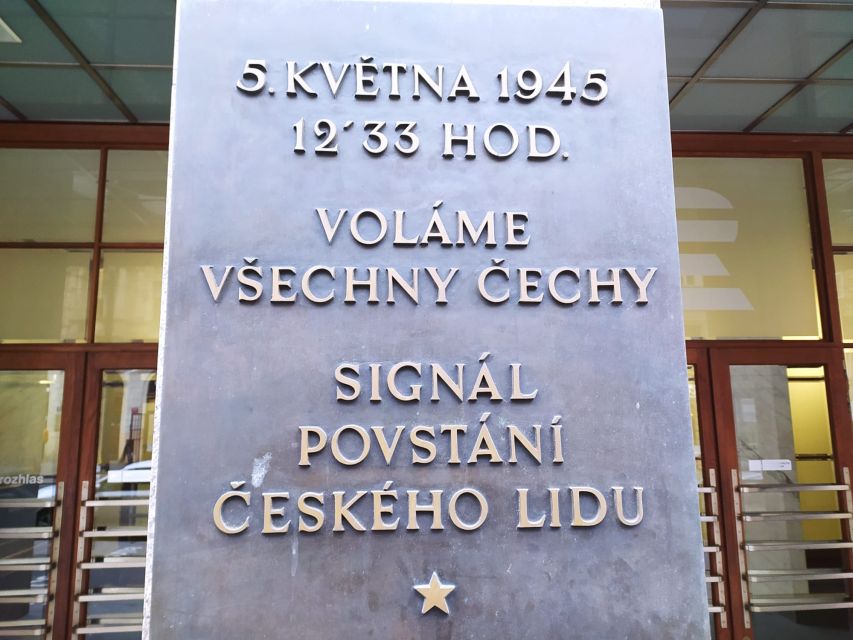
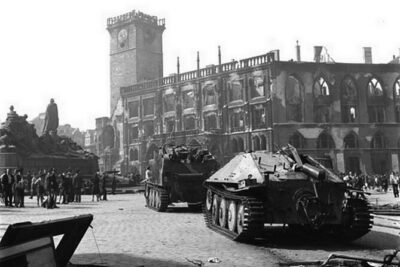
The tour then focuses on the heaviest fights during the Prague Uprising in May 1945, using real, central locations to bring those moments into view.
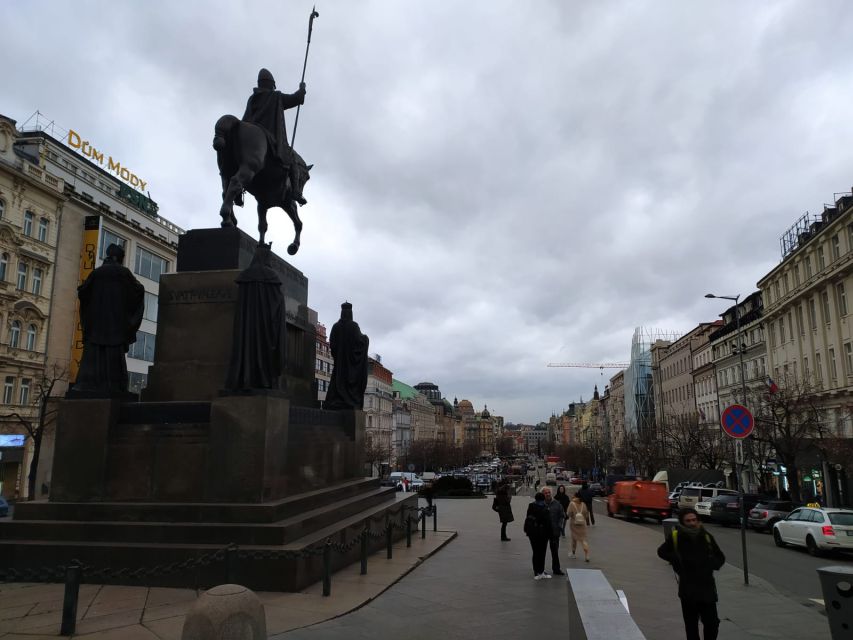
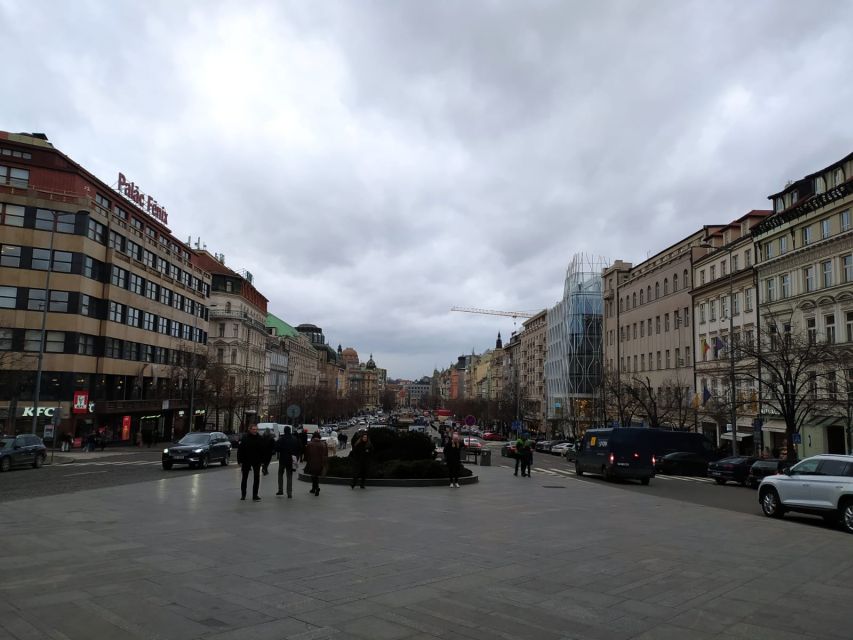
You’ll visit Old Town Square and Wenceslas Square, both of which help you understand why the city center mattered so much during the fighting. When street-level power and communication lines are contested, central squares aren’t just landmarks—they become stage areas for clashes, movement, and control.
You’ll also go to the Czech Radio Headquarters, which is an especially meaningful site in a story about resistance and messaging. Communication can be as critical as weapons, and this stop helps you see how control of information played a role in the uprising.
One practical tip: because you cover several major sites in one session, you’ll want to stay focused during the guide’s photos-and-explanation segments. They’ll help you recognize what you’re seeing and avoid turning the day into a simple checklist of famous squares.
Heydrich’s assassination: the story, the stakes, and the chain reaction
The tour dedicates specific time to the assassination of Reinhard Heydrich, described as one of the highest-ranked Nazi leaders up to 1942. You don’t just hear what happened. You get the “why it mattered” explanation that makes the follow-up stops land with weight.
This is one of the most talked-about parts of the experience because Heydrich’s targeting changed the situation on the ground. When you understand his role, the later stops about resistance members’ final stand don’t feel like disconnected tragedy—they feel like the result of escalation.
The tour’s format helps here. You’re learning in a tight sequence: lecture setup, then the Uprising sites, then the Heydrich focus, then the last-resistance location. By the time you reach the memorial-type ending, you already have context for the events and the consequences.
The crypt beneath a church: final resistance and death
A highlight—and it’s described as incredibly impressive—comes at a crypt beneath a church. This is connected to the last resistance members involved in the Heydrich assassination story, including their final resistance and death.
This stop is different from the big public squares. It shifts the scale from citywide events to individual sacrifice. Even without getting too graphic, the setting is designed to make you feel the seriousness of what happened and how resistance work ended for some people.
If you’re someone who likes history that doesn’t float above reality, you’ll likely appreciate the way this stop grounds the narrative. It’s not about heroic mythology. It’s about what it cost.
Photos in the field: why the guide’s visuals matter
Across the tour, the guide shows many photos and adds professional comments. That can change your experience more than you might expect. Prague’s WWII story includes locations that look normal today, which can make it hard to picture what was there during the war.
The photo segments act like time machines, but without turning the tour into sci-fi. They help you see patterns: where central power sat, what the resistance context looked like, and how Nazi leadership shaped daily spaces. If you’ve ever walked through a historic city and felt like you missed the invisible context, this is built to fix that.
Also, from what I’ve seen emphasized in guide feedback, the delivery tends to be engaging and friendly. If your guide is Petr, for example, you may get an extra layer from personal perspective growing up in Prague and connecting history to current politics—something that can make the storytelling feel more human.
Price and value: is $58 worth it?
At $58 per person for about three hours, this sits in the mid-range for a specialized walking tour. The value isn’t just the number of stops. It’s the combination of a full WWII lecture, multiple major sites tied to the uprising, and a clear focus on Heydrich and Czech resistance.
If you’re the kind of traveler who wants a guided storyline—especially one grounded in Czech history—this price starts to look fair. You’re buying structure: what to pay attention to, what connects to what, and how to interpret each location without guessing.
If you already know a lot of WWII history and prefer lighter, more casual sightseeing, the intensity might feel like too much for the money. One note of balance: some people have felt that certain tourist sites got less explanation than expected. So if you’re coming mainly for famous sights and only light WWII context, you’ll want to be ready for a history-first approach rather than a typical highlights tour.
Who this tour suits best
This tour is a great fit if you:
- want the Czech angle on WWII, not only the general European story
- like guided history with photos and clear explanations
- feel drawn to resistance history, including the Prague Uprising
- are comfortable walking and standing through a 3-hour schedule
It may be less suitable if you:
- prefer short stops and minimal lecture
- are visiting with kids under 10 (it’s not intended for that age group)
- want a purely visual sightseeing day with minimal historical depth
Should you book this WWII-focused walking tour?
Yes, if you want Prague to feel real during the war years. This tour is strongest when you show up ready to learn and pay attention, because the guide’s mix of lecture, photos, and site visits turns central city locations into a coherent story. The minute of silence at the Gestapo site and the crypt stop bring the topic down to human consequences, not just dates.
If you only want quick “top sights” with minimal context, you might feel overloaded. But if WWII history is part of what you came to Prague for, this is an effective, value-for-time way to understand the city’s role and the resistance’s risks—on foot, with meaning in every stop.
FAQ
How long is the Prague WWII walking tour?
It lasts 3 hours.
What language options are available?
The live guide offers tours in German, Czech, and English.
Where do I meet the guide?
Meet outside the entrance door to Skautský Institut in an archway. The guide will be holding a paper sign with Spectrum Tours on it.
What sites are included during the walk?
You’ll see WWII-related places tied to Czech history, including a former Gestapo headquarters memorial site, areas connected to the Prague Uprising (including Old Town Square, Wenceslas Square, and Czech Radio Headquarters), and locations connected to the Reinhard Heydrich assassination, including a crypt beneath a church.
Is the tour suitable for children?
It’s not suitable for children under 10.
What should I bring?
Bring passport or ID, and wear comfortable shoes.
More Tour Reviews in Prague

On Foot Through Prague, Continued
More Communism & Wartime History
More Prague tours we have written up lately


Communism & WWII History Tours, compared.
 ★ 4.7Communism History and Nuclear Bunker Guided TourFrom $442,417 reviews
 ★ 5.0Prague Communism History and Nuclear Bunker TourFrom $451,742 reviews
 ★ 5.0Communism & Nuclear Bunker Tour + 70s Canteen Lunch (own expense)From $351,036 reviews
 ★ 4.7WWII Guided Tour & The Crypt of Operation AnthropoidFrom $421,030 reviews
 ★ 5.0WWII in Prague Tour & The Crypt of Operation AnthropoidFrom $43817 reviews
 ★ 4.8Communism and Bunker Tour with 70s Canteen LunchFrom $34269 reviews
 ★ 5.0Small-Group World War 2 & Operation Anthropoid Tour in PragueFrom $33231 reviews
 ★ 4.8World War 2 and Operation Anthropoid Walking TourFrom $32193 reviews
Browse the lists this tour appears in