
REVIEW · COMMUNISM & WWII HISTORY TOURS
Prague Communism and World War II Walking Tour
Communism left fingerprints on every corner. This tour makes the big events feel real as you walk, with a clear timeline and stories that come from a local perspective. One thing to consider: the subject matter gets heavy, and this is mostly a street-and-monuments tour rather than an add-on to see underground sites.
I like how the route is short enough to keep your focus, but broad enough to give you city orientation for history buffs. You’ll get the why behind Prague’s shifts in power, not just a list of dates. And since the tour is in English with a small maximum group size, it tends to feel conversational instead of lecture-only.
Start at Křižovnické náměstí near the Old Town Bridge area, then move through key districts that connect the Nazi years, Soviet influence, and the road to 1989. If you’re the type who wants context for what you’re seeing in Prague, this is one of the best value ways to spend a morning.
In This Review
- Key highlights to watch for
- The 20th-century route that turns Prague into a classroom
- Stop 1 Křižovnické náměstí and the Prague Castle viewpoint
- Stop 2 New Town: democracy, Nazis, and Operation Anthropoid
- Stop 3 Wenceslas Square: 1968 tanks, 1969 students, 1989 Velvet Revolution
- Guides, pacing, and what you’ll understand after the walk
- Should you book this Prague communism and WWII walking tour?
- FAQ
- How long is the Prague Communism and World War II Walking Tour?
- What language is the tour offered in?
- Where does the tour start and end?
- What’s included in the price?
- Do I need an admission ticket for the stops?
- Is there a limit on group size?
- Can I get a refund if I cancel?
Key highlights to watch for
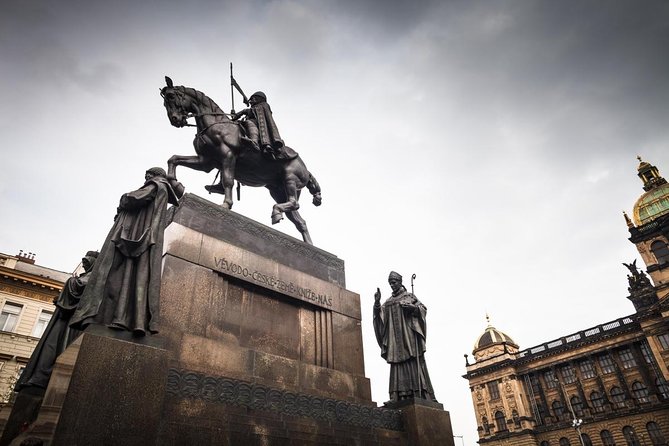
- Stalin’s statue connection explained from a viewpoint near the Prague Castle panorama
- Operation Anthropoid context tied to everyday consequences of the Nazi occupation
- 1968 to 1989 storyline anchored at Wenceslas Square and the surrounding landmarks
- Local guide energy that can include first-hand style details from communist-era life
- Small group feel with a maximum of 25 people and a professional guide
The 20th century left its mark here. More of that history, on foot.
- Prague: Communism History and Nuclear Bunker Guided Tour★ 4.7 · 2,417 reviews
- Prague Communism History and Nuclear Bunker Tour★ 5.0 · 1,742 reviews
- Communism & Nuclear Bunker Tour + 70s Canteen Lunch (own expense)★ 5.0 · 1,036 reviews
- Prague: WWII Guided Tour & The Crypt of Operation Anthropoid★ 4.7 · 1,030 reviews
The 20th-century route that turns Prague into a classroom
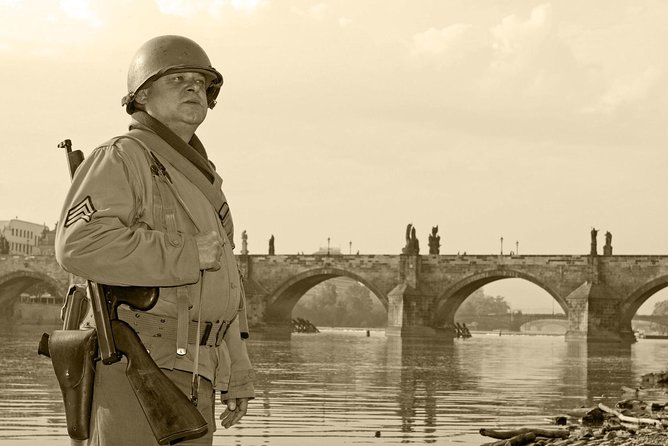
This walk is designed like a story with momentum. You start in the Old Town bridge area, then shift to New Town, and finish at Wenceslas Square where the decades visibly collide. By the time you’re done, you won’t just know what happened in Prague under Nazism and communism—you’ll understand how political decisions shaped daily life and public spaces.
What makes it work is the pacing: about 2 hours, with time set aside for each major period. The narration moves chronologically, so big events like the end of World War II, the arrival of Soviet power, the crushing of democracy, and later uprisings don’t feel like random chapters. You also get a sense of how Prague’s identity kept changing, even when the city’s stones stayed the same.
I especially like that the tour doesn’t only focus on leaders. It points at methods of control and the lived reality of dictatorship, which makes the later breakthroughs—like the Velvet Revolution—feel earned rather than sudden.
Stop 1 Křižovnické náměstí and the Prague Castle viewpoint
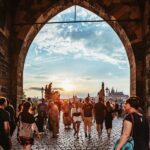
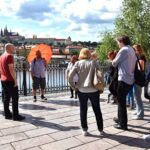
Your morning begins at Křižovnické náměstí, a central starting point near the Old Town Bridge Tower area. From here, the tour quickly sets visual context: you get a panoramic view toward the Prague Castle, the long-running seat of Czech rulers and presidents. Even if you’ve seen the Castle from photos a dozen times, this angle helps your brain lock onto the city’s geography.
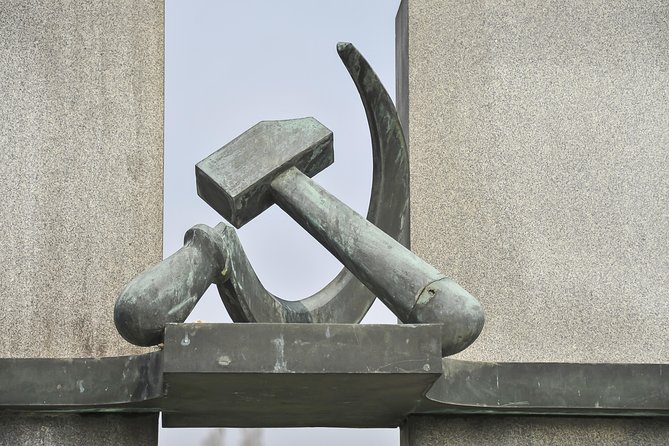
Then comes the part that sticks. Near this viewpoint, you hear how an enormous Joseph Stalin statue once stood not far from the area. The point isn’t just shock value. It’s a way to show how Soviet power was made visible—literally cast in stone—so control felt permanent.
This stop is relatively short (around 15 minutes), which is good. It gives you orientation fast and prevents the tour from starting too slowly. If you want photos, this is a solid moment to grab them, because the Castle view gives you an easy framing reference for what you’ll hear next.
Stop 2 New Town: democracy, Nazis, and Operation Anthropoid
The tour shifts to Nové Město (New Town), and the tone widens. You start with how Czech lands moved from the grip of the Austrian monarchy toward an independent Czechoslovak democratic state. You also hear how Czechoslovakia was viewed as strong economically for its time and how it remained one of the last functioning democracies in Eastern and Central Europe after 1933.
From there, the story turns hard—World War II under the Nazi Protectorate of Bohemia and Moravia. This is where you get explanations of what occupation meant in practice, not just the headline. You also learn about Operation Anthropoid, described as the only successful assassination of a senior Nazi leader during World War II. It’s one of those moments where history becomes personal in the telling: you can feel the risk and the stakes behind the strategy.
Then the tour moves into the communist takeover. You hear about the methods and strategies used by the communist regime and how the USSR’s influence reshaped the former democracy into a tough dictatorship. The tour makes the transformation feel step-by-step, so you’re not left trying to connect abstract political terms with real consequences.
This stop takes about 30 minutes. That’s long enough to grasp the logic of the era, but short enough that you’ll still have energy for the emotional climax later.
Stop 3 Wenceslas Square: 1968 tanks, 1969 students, 1989 Velvet Revolution
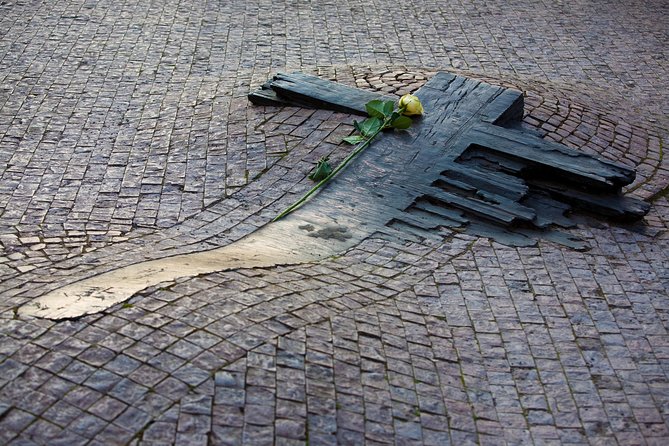
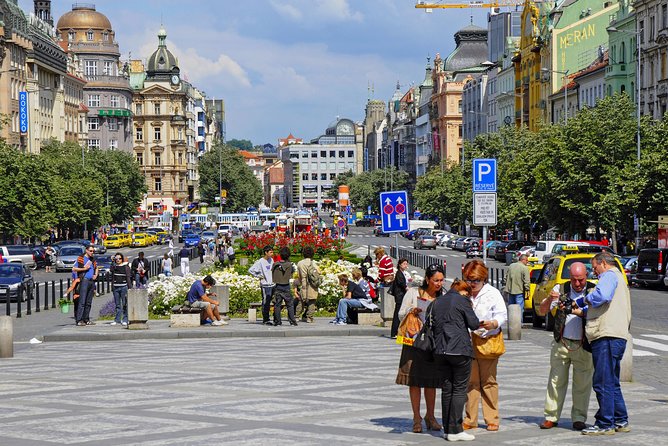
Finishing at Václavské náměstí (Wenceslas Square) is smart. It’s one of Prague’s biggest public stages, and it fits what the tour wants to dramatize: political hope, brutal suppression, and eventual change.
First, you get the whiplash of Prague Spring in 1968 followed by Soviet tanks invading Prague. The narration includes the moment when shots hit the National Museum building area on Wenceslas Square, so the geography becomes a timeline. Then you move to 1969, when young students protested by burning themselves alive in an effort to unite the nation against a common enemy. This is not the kind of history you brush past. The tour treats it with weight.
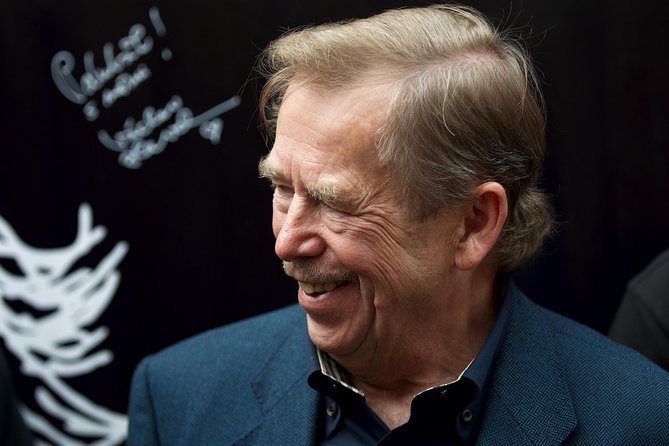
Next comes the long march toward 1989. The guide describes how the decades under communism set up the Velvet Revolution, and you hear stories involving figures like Václav Havel, courageous students, and brutal police forces. The walk also references clashes at Narodní třída, which helps you connect the famous 1989 moment to the pressure building underneath it.
One nice touch: the tour includes some humorous, obscure stories from the early days of freedom. That balance matters. It prevents the last part from becoming a wall of tragedy without relief.
This final segment is about 1 hour, and it’s the part history-lovers usually remember most—because the square itself feels like a living witness.
Prefer to cover it on foot? More Prague walks across the old lanes.

Guides, pacing, and what you’ll understand after the walk
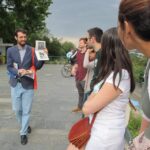
The tour lives or dies by the guide, and that’s where this one shines. You might meet Tomas, Martin, Maria, Dominik, or Zdenek on different days. What they tend to share is a command of the timeline and a habit of answering questions without shutting the conversation down.
I love that some guides bring in personal-style context from communist-era life. One example from guide accounts: a theme of childhood drills and growing up under constant reminders of danger. Even when the story shifts from public events to personal memory, it stays tied to what was happening in the country. That makes the history feel less like it happened to somebody else.
You also get practical help in how to look at Prague. If you’re walking here anyway, this tour helps you notice plaques and monuments you might otherwise miss. And at the end, many guides are happy to point you toward what to do next in the city (food and beer recommendations came up in multiple guide experiences).
Pacing is also a real part of the value. The tour is short, but it covers a lot. Wear comfortable shoes—this is a walking tour through real city streets, and the review pattern strongly suggests it adds up.
Should you book this Prague communism and WWII walking tour?
Book it if you want a fast, focused way to understand why Prague looked the way it did across the Nazi and communist eras—and how 1989 wasn’t magic but pressure reaching a breaking point. It’s also a great choice if you like asking questions. The small group size (up to 25) makes the conversation easier.
Skip it or add something else if your priority is hands-on WWII details like tunnels, hideouts, or deep-dive specialty sites. This tour is built around major stories and public landmarks, so you may want a different add-on if you’re chasing that kind of topic.
If your morning includes Wenceslas Square anyway, this tour gives those stones a backbone.
FAQ
How long is the Prague Communism and World War II Walking Tour?
It lasts about 2 hours. The schedule is structured in segments: roughly 15 minutes at the first stop, about 30 minutes at the second, and about 1 hour at the final area.
What language is the tour offered in?
The tour is offered in English. You’ll be able to follow the stories and ask questions during the walk.
Where does the tour start and end?
The meeting point is Křižovnické náměstí, Praha 1 (near the Old Town Bridge Tower area). The tour ends in Prague city centre, though the exact final spot isn’t listed in detail.
What’s included in the price?
The only included item is a professional guide. The tour does not include food or drinks.
Do I need an admission ticket for the stops?
No paid admission tickets are listed for the stops. Each stop notes admission ticket free in the tour details.
Is there a limit on group size?
Yes. The tour has a maximum of 25 travelers.
Can I get a refund if I cancel?
Yes. You can cancel up to 24 hours before the experience starts for a full refund. If you cancel less than 24 hours before, the amount paid isn’t refunded.
More Tour Reviews in Prague
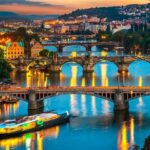
On Foot Through Prague, Continued
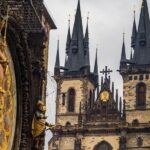
More Communism & Wartime History
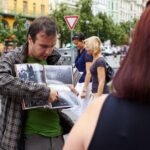
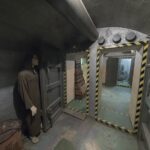
More Prague tours we have written up lately


Communism & WWII History Tours, compared.
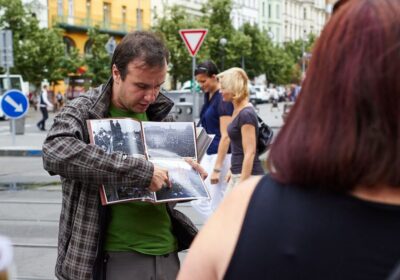 ★ 4.7Communism History and Nuclear Bunker Guided TourFrom $442,417 reviews
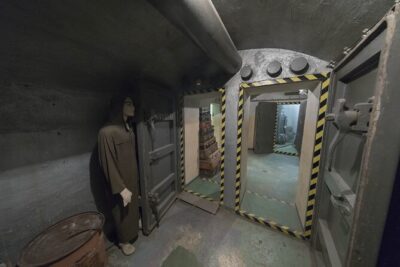 ★ 5.0Prague Communism History and Nuclear Bunker TourFrom $451,742 reviews
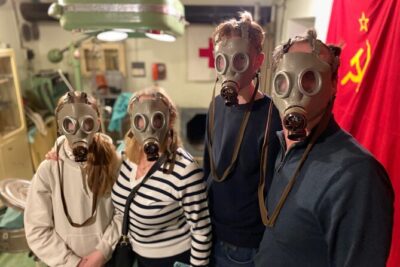 ★ 5.0Communism & Nuclear Bunker Tour + 70s Canteen Lunch (own expense)From $351,036 reviews
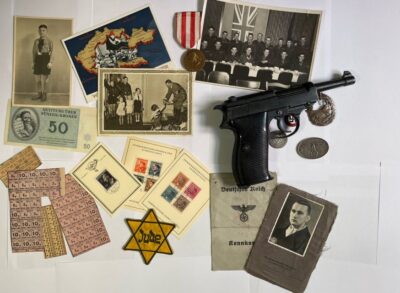 ★ 4.7WWII Guided Tour & The Crypt of Operation AnthropoidFrom $421,030 reviews
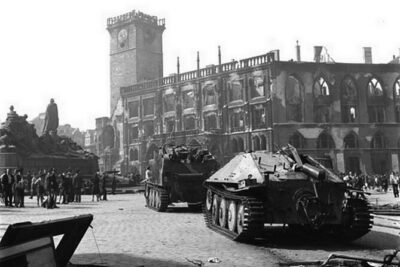 ★ 5.0WWII in Prague Tour & The Crypt of Operation AnthropoidFrom $43817 reviews
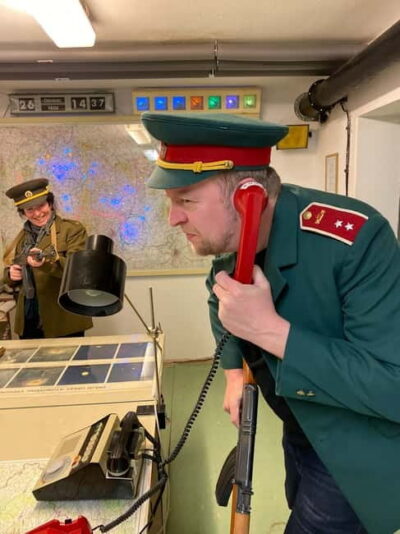 ★ 4.8Communism and Bunker Tour with 70s Canteen LunchFrom $34269 reviews
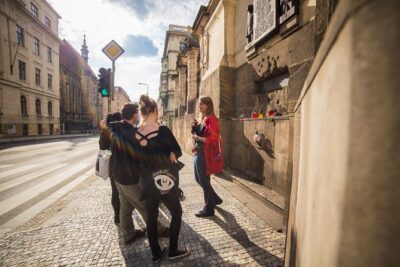 ★ 5.0Small-Group World War 2 & Operation Anthropoid Tour in PragueFrom $33231 reviews
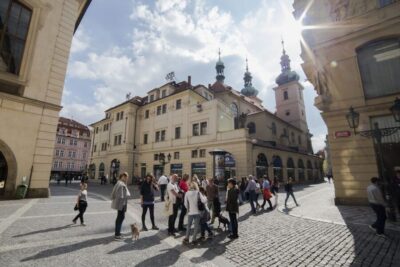 ★ 4.8World War 2 and Operation Anthropoid Walking TourFrom $32193 reviews
Browse the lists this tour appears in