
REVIEW · COMMUNISM & WWII HISTORY TOURS
Prague: 3–Hour Communism and World War 2 E-Bike Tour
An e-bike makes hard history rideable. This Prague Communism and World War 2 tour strings together major WWII and Soviet-era sites so you see the story on real streets, not slides. You also get free entrance to the Museum of Communism, plus an end-of-tour cold beer.
I especially like the way the route mixes famous landmarks with less-obvious political ground—places tied to the Velvet Revolution student march and the Nazi occupation. I also like the practical pacing: short rides, frequent stops, and a guide who helps you connect what happened in the past to what you’re looking at right now.
One thing to consider: parts of the ride can involve cobblestones and moments where you’ll need to walk your e-bike through busier areas. If you hate uneven pavement or slow crowd navigation, plan for that.
In This Review
- Key things to know before you go
- How this e-bike tour turns political history into something you can see
- Starting in Malá Strana: finding your bearings fast
- Old Town hits differently when you know what came next
- John Lennon Wall and the Velvet Revolution: hope with fingerprints on the pavement
- Kafka Museum as a counterpoint: culture under pressure
- Communist Memorial and the Victims of Communism: remembering without losing focus
- SS Headquarters and the Jewish Old Town: confronting occupation and consequences
- Where Anthropoid fits into the route: old war story, new location trail
- Museum of Communism stop: what the free entry does for your day
- E-bikes, cobblestones, and how not to overthink comfort
- Guides and group size: you’ll feel the benefit of small numbers
- Price check: is $74 good value for what you get?
- Who this tour suits best (and who might want a different style)
- Should you book Prague’s Communism and World War 2 e-bike tour?
- FAQ
- What’s the duration of the Prague Communism and World War 2 e-bike tour?
- What’s included in the price besides the e-bike?
- Is the tour offered in English?
- How big is the group?
- Where do we meet for the tour?
- What should I bring?
Key things to know before you go
- Free Museum of Communism entry is built in, so you get more than a photo-stop tour
- Small group of up to 10 means you can ask questions and keep up with the story
- Stops spanning WWII to Communism to 1989 connect major chapters in one ride
- E-bikes keep the energy high so most people can handle 3.5 hours without burning out
- Helmet and poncho are available (poncho if requested)
- Beer at the end turns a heavy topic into a well-earned Prague moment
The 20th century left its mark here. More of that history, on foot.
- Prague: Communism History and Nuclear Bunker Guided Tour★ 4.7 · 2,417 reviews
- Prague Communism History and Nuclear Bunker Tour★ 5.0 · 1,742 reviews
- Communism & Nuclear Bunker Tour + 70s Canteen Lunch (own expense)★ 5.0 · 1,036 reviews
- Prague: WWII Guided Tour & The Crypt of Operation Anthropoid★ 4.7 · 1,030 reviews
How this e-bike tour turns political history into something you can see
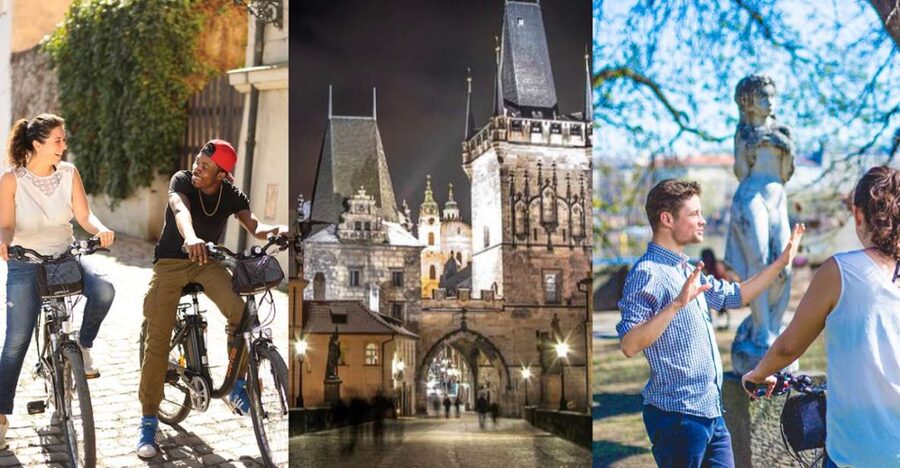
Prague’s modern history is not tucked away in a museum only. It’s written into buildings, squares, and memorials—if you know what you’re looking at. This 3.5-hour e-bike tour is designed for exactly that. You cover over 30 sites by electric bike, so you spend your time on locations instead of commuting between them.
The big win here is the balance of topics. You move from Nazi occupation themes into the machinery of Soviet Communism, then finish with how the Velvet Revolution helped topple the system. It’s not just dates. It’s the geography of power—and resistance.
Also, because the ride is electric, you can keep your momentum even on a warmer day. You’ll still feel the walk-ups and stops (history tours aren’t made to be lazy), but the bike takes the sting out of the longer distances.
Starting in Malá Strana: finding your bearings fast
You meet at Prague by E-Bike, Besední 440/2, close to tram station Újezd in Prague 1 (Malá Strana). This matters because you’re starting in the part of town where you can pivot quickly into the Old Town area.
From the beginning, the guide sets expectations: you’re not riding to tick off stops. You’re riding to understand what each place meant. That gives the route a clear thread as you move.
And since the group is kept small (up to 10 people), the guide can slow down when someone asks a question. In a city like Prague, where street names and eras can blend together in your head, that flexibility helps.
Old Town hits differently when you know what came next
The tour includes Old Town—but with a different lens than the usual sightseeing loop. Instead of treating the Old Town like just a pretty postcard, you’re meant to notice the “then and now” contrast: what looks timeless today had a history of control, fear, and propaganda not that long ago.
Your route also connects to sites linked to World War II and the Nazi period. That’s important because it shapes how you interpret later Communist-era references. The story doesn’t restart in 1948; the framework of occupation and repression echoes forward.
If you like your tours to feel structured, you’ll appreciate the way the stops build. You learn why certain locations matter before you reach them, so you don’t end up standing in front of a point on a map with no emotional context.
John Lennon Wall and the Velvet Revolution: hope with fingerprints on the pavement
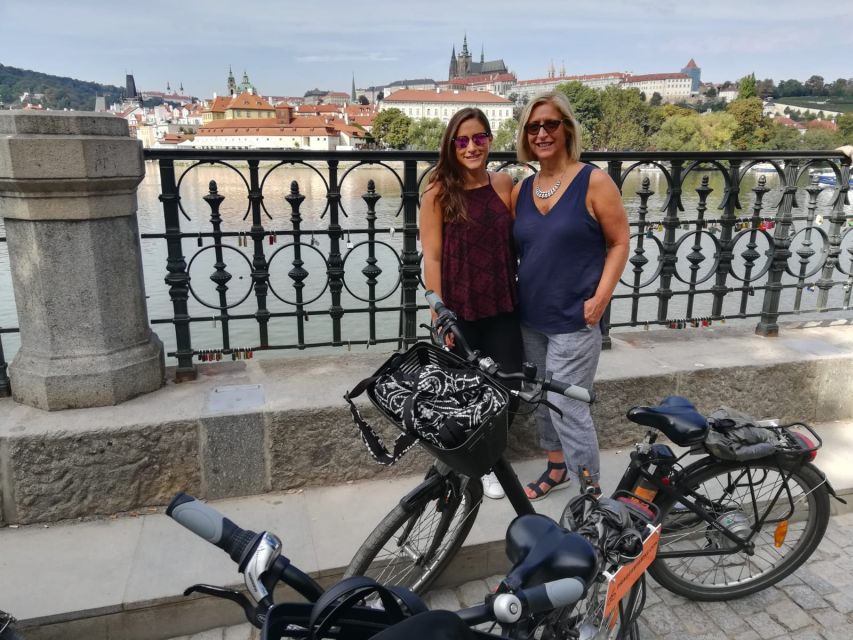
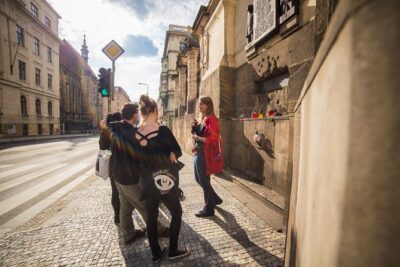
One of the most memorable stops is the John Lennon Wall. It’s easy to romanticize that wall as art. On this tour, it’s treated more like a signal—part of a wider wave of dissent that marks the late Communist years.
Then you follow the footprints of the student march that helped spark the Velvet Revolution. This is where the tour earns its name. You’re not just hearing that 1989 happened. You’re tracing how people pushed back in a system that tried to restrict speech, movement, and organizing.
The guide’s job here is to connect street-level events to a national turning point. When it clicks, you start seeing the city as a set of scenes—squares and streets where ordinary people took risks.
And if you’re a film fan, you may get extra context at certain stops. The tour includes a filming location for the 2016 war film Anthropoid at the Cyril and Methodius Church, which adds a modern layer to the older resistance story.
Two wheels through the centre. More Prague bike tours, compared.

Kafka Museum as a counterpoint: culture under pressure
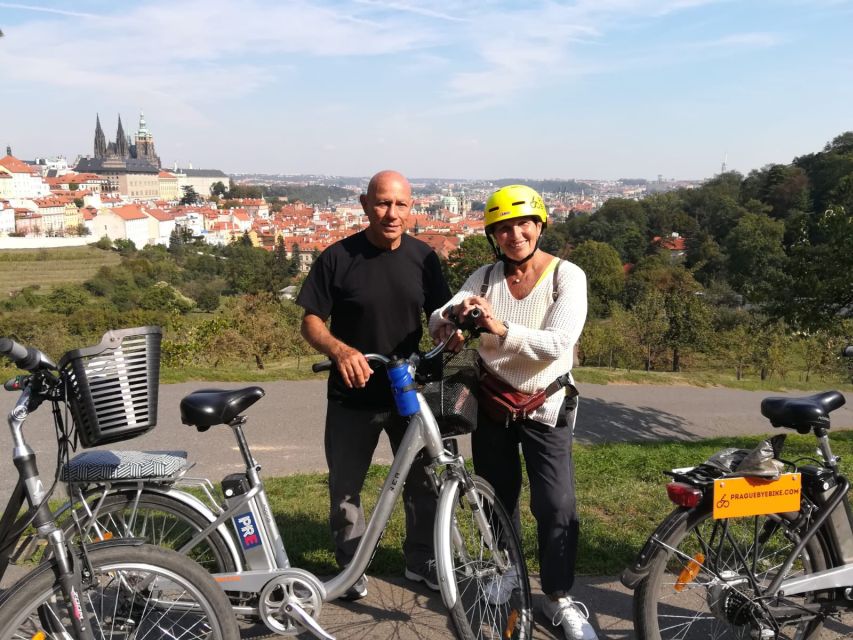
You’ll also stop at the Kafka Museum. Even if you’re not a hardcore literature person, this visit works because it reinforces a theme: the arts were never separate from politics in Prague.
The guide ties it into the bigger picture—how life and expression shifted under occupation and Communist governance. If you’ve ever wondered why cultural figures still feel so present in Czech life, this stop helps answer that. It’s not just about one author. It’s about what cultural identity means when regimes try to control narratives.
Communist Memorial and the Victims of Communism: remembering without losing focus
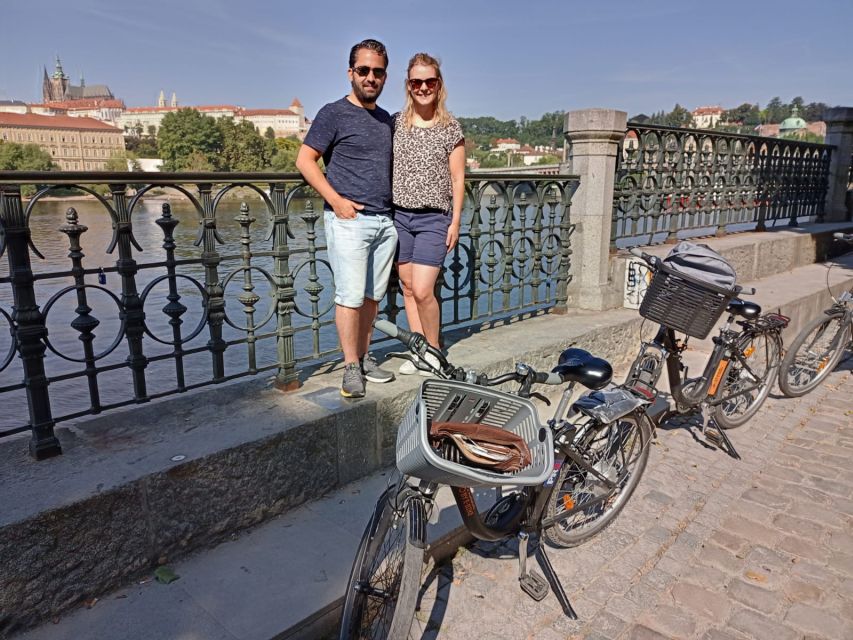
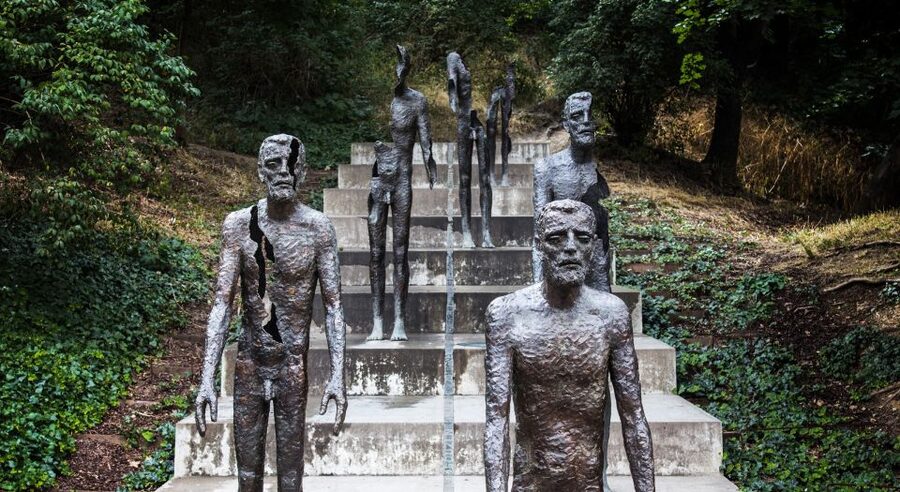
The tour includes the Communist Memorial and the Victims of Communism memorial. These places can feel heavy. That’s the point. But what makes them workable on an e-bike tour is timing and framing: you get enough background to understand what you’re seeing, then you’re not left to guess.
A good guide here matters, because memorials can become just another stone surface if the context is vague. The tour is set up to avoid that problem. You get explanation before (and often while) you’re at the site, so the memorial’s meaning stays connected to the broader political story.
You should be ready for emotions. This isn’t a lighthearted “Communism 101” tour. It’s a practical walking-through-time experience, and these memorial stops anchor the reality underneath the themes.
SS Headquarters and the Jewish Old Town: confronting occupation and consequences
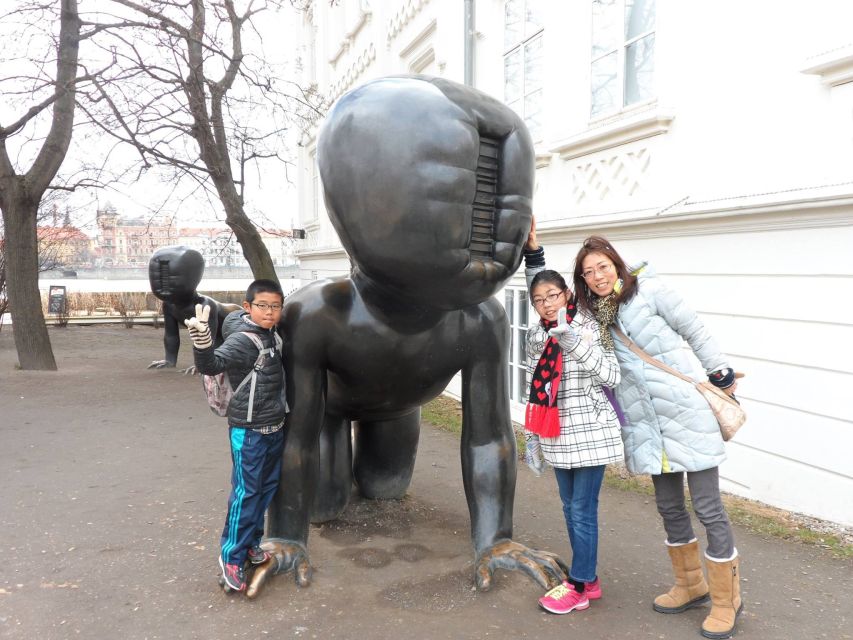
Later, the tour brings you to key WWII sites, including SS Headquarters and the Jewish Old Town. These stops are essential because they keep the Nazi period specific. This is not abstract history; it’s tied to real institutions and communities that suffered.
The tour also includes second world war bombing locations and points related to anti-Nazi resistance. When you cover these stops in one connected route, you start to see how different forms of resistance and survival shaped Prague’s neighborhoods.
The guide’s role is to keep the story accurate and human-scale. With the way the stops are grouped, it’s also easier to understand how later Communism propaganda borrowed methods and attitudes from earlier periods of control and violence.
If you want history that doesn’t just name events but shows you where those events happened, these sections are a strong reason to book.
Where Anthropoid fits into the route: old war story, new location trail
One of the tour’s “wow, that’s specific” inclusions is the filming location for Anthropoid at the Cyril and Methodius Church. War films can sometimes feel like entertainment-only. On this tour, you’re using the film as a map back to real places where resistance stories unfolded.
This is also a good moment to slow down mentally. The camera location is a reminder that history still shows up in modern culture—not as trivia, but as a living reference point.
If you’ve ever wished a tour would connect the past to how Prague gets portrayed today, this part delivers.
Museum of Communism stop: what the free entry does for your day
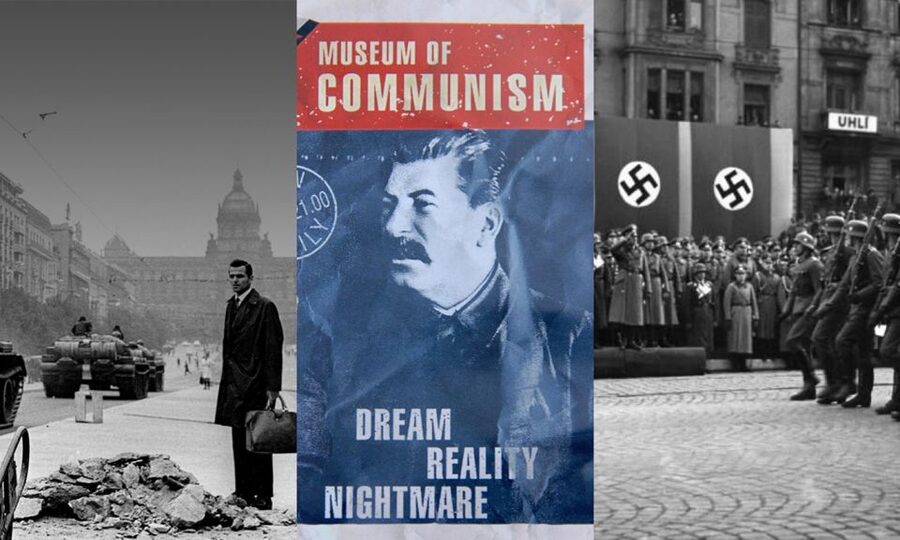
The tour includes free entrance to the Museum of Communism, which is more than a perk. It’s your structured break from riding and a chance to see how the Communist era was presented through objects, rooms, and staged atmosphere.
People who take this tour often say the museum is worth your time, and that it’s set up with care—rooms styled to Communist-era life, with displays that help you picture daily reality instead of only hearing concepts. You also get water during the tour, which helps when you’re switching from outdoor walking and biking to indoor reading.
There’s also a practical angle: this museum stop gives your body a reset. Even on an e-bike, a few hours of stopping, starting, and weaving through city streets adds up. The museum functions like a planned pause, not an optional detour.
E-bikes, cobblestones, and how not to overthink comfort
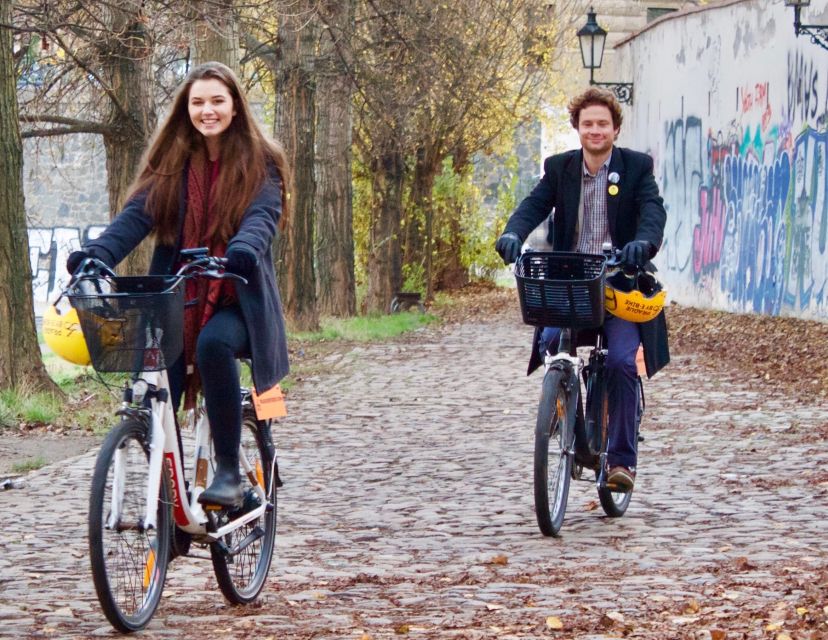
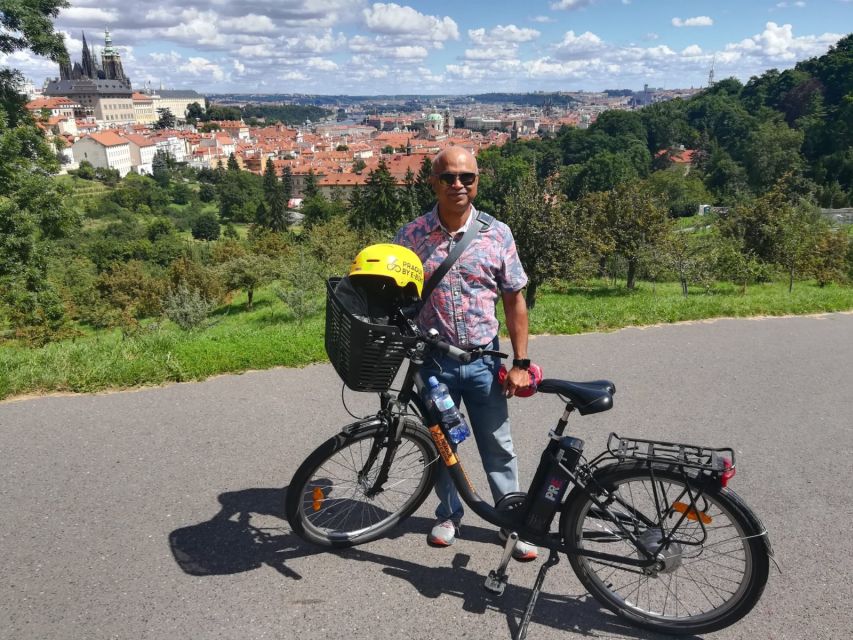
The e-bike is the reason this tour works for a wide range of ages. You cover a lot of ground without feeling like you’ve earned every mile with sweat.
That said, keep expectations grounded. You’ll still be on Prague’s streets, and Prague has cobblestones. One thing I’d prepare for is frequent changes in surface and occasional bike-handling through busier areas. You might have to walk your e-bike for stretches when the route funnels through crowds.
The upside: the e-assist helps you glide between stops, and the guide keeps the pace tied to the story, not just to distance. Helmets are provided, and you can request a poncho if the weather turns.
Guides and group size: you’ll feel the benefit of small numbers
The tour runs with a live English guide and a small group limited to 10. In practice, that usually means you’re not stuck shouting over chatter. It also means your guide can shape the explanation to your interests—whether you want more on WWII resistance or more on everyday life under Communism.
Several guide names show up in the materials and feedback for this experience, including Michal, Marek, Tatiana, Nayeem, and Niam. What connects them is the ability to teach history in an engaging, understandable way, using the city as your classroom.
Price check: is $74 good value for what you get?
At $74 per person for about 3.5 hours, this isn’t the cheapest thing on Prague’s activity menu. But it also isn’t just a bike rental with a voiceover.
You’re paying for:
- A local guide handling context across more than 30 sites
- Electric bikes with helmet support
- Free entrance to the Museum of Communism
- A bottle of water
- A cold beer at the end
- Extra help like a poncho if requested
For many people, the museum visit alone would justify a chunk of the price. Add in the e-bike (which keeps the day comfortable and efficient) and the structured route linking WWII, Communist rule, anti-Nazi resistance, and the Velvet Revolution, and the value starts to make sense.
If you’re already planning to visit a handful of these areas independently, doing it in one guided sweep can save time and reduce the mental load of connecting eras yourself.
Who this tour suits best (and who might want a different style)
This is a strong fit if you:
- Want a story-driven Prague visit, not a highlight-only checklist
- Like history that connects to specific locations like SS Headquarters, bombing sites, and memorials
- Prefer a tour where you can ask questions without feeling lost in a big crowd
- Want a comfortable sightseeing method, especially if you’re not in “long walk” mode
It may feel less ideal if you:
- Get bothered by cobblestones or dislike navigating busy pedestrian areas
- Want mostly about day-to-day life under Communism through lots of building interiors and artifacts, rather than the political timeline and key landmarks
- Prefer a lighter tone on topics like WWII occupation and repression (this tour is serious even if it has breaks and a beer at the end)
Should you book Prague’s Communism and World War 2 e-bike tour?
I’d book it if you want to understand Prague as a city of turning points. The e-bike format makes the route doable, and the free Museum of Communism stop gives the day a real payoff beyond street-level viewing.
If your time is tight, this tour is one of the most efficient ways to cover major WWII and Communist-era touchpoints while still seeing famous Prague places like Old Town and the John Lennon Wall in a new light. And if you’re the type who likes to walk away with a clearer mental map, you’ll probably leave with it.
Just go in expecting a blend of beauty and weight, and bring a little patience for cobblestones. Then you’ll get the best kind of Prague experience: history you can actually ride through.
FAQ
What’s the duration of the Prague Communism and World War 2 e-bike tour?
The tour lasts about 3.5 hours. You can check availability to see starting times.
What’s included in the price besides the e-bike?
The price includes a guided tour covering over 30 sites, free entrance to the Museum of Communism, a bottle of water, helmet use, and a poncho if requested. You also get one cold beer at the end.
Is the tour offered in English?
Yes, the tour guide is listed as speaking English.
How big is the group?
The group is small, limited to 10 participants.
Where do we meet for the tour?
You meet at Prague by E–Bike, Besední 440/2, 118 00 Praha 1-Malá Strana, close to the tram station Újezd.
What should I bring?
Bring your passport or ID card. Also plan to arrive about 15 minutes before the tour starts.
More Tour Reviews in Prague

More Prague by Bike
More Communism & Wartime History
More Prague tours we have written up lately


Communism & WWII History Tours, compared.
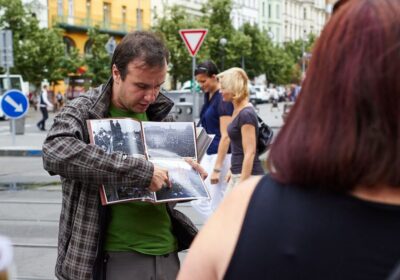 ★ 4.7Communism History and Nuclear Bunker Guided TourFrom $442,417 reviews
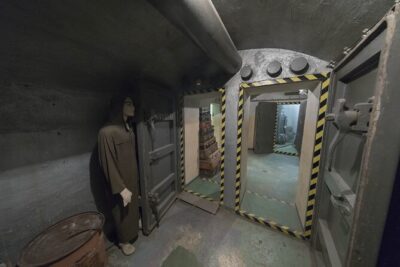 ★ 5.0Prague Communism History and Nuclear Bunker TourFrom $451,742 reviews
 ★ 5.0Communism & Nuclear Bunker Tour + 70s Canteen Lunch (own expense)From $351,036 reviews
 ★ 4.7WWII Guided Tour & The Crypt of Operation AnthropoidFrom $421,030 reviews
 ★ 5.0WWII in Prague Tour & The Crypt of Operation AnthropoidFrom $43817 reviews
 ★ 4.8Communism and Bunker Tour with 70s Canteen LunchFrom $34269 reviews
 ★ 5.0Small-Group World War 2 & Operation Anthropoid Tour in PragueFrom $33231 reviews
 ★ 4.8World War 2 and Operation Anthropoid Walking TourFrom $32193 reviews
Browse the lists this tour appears in