
REVIEW · COMMUNISM & WWII HISTORY TOURS
Prague: 2-Hour Back to Communism Walking Tour
One of Prague’s quiet streets can carry big weight. This Back to Communism walk turns Cold War ideology into street-level reality, with a local guide who knows how it felt, not just how it ended. I love the way the tour starts with clear history and theory, so the buildings and statues stop being random. I also like the human stories about what life looked like under the system. One possible drawback: the experience depends heavily on your guide’s communication in your chosen language and how smoothly they run the walk.
Expect to walk for about 1 to 2 hours through key sites tied to Prague and former Czechoslovakia, from the former secret communist police headquarters to the changing face of communist power. You’ll also hear about protests, demonstrations, rebellions, revolutions, and the Soviet occupation, plus how some places still feel heavy today.
In This Review
- Key things to know before you walk
- Why Prague’s Communist Sites Hit Different in Person
- The 19th-Century Theory Setup That Makes Everything Click
- Former Secret Police Headquarters and the Architecture of Control
- The Stalin Statue Spot and How Symbols Moved Power
- Party Seats, Protests, and Revolutions on Foot
- How Daily Life Under Socialism Comes Through
- Price, Time, and Walking Expectations (What $50 Really Buys)
- Language Choice and Group Style: Getting the Most Out of Your Guide
- Who This Tour Suits Best (And Who Might Want a Different Focus)
- Should You Book the Back to Communism Walking Tour?
- FAQ
- How long is the Prague Back to Communism walking tour?
- How much does the tour cost?
- Where is the meeting point?
- What languages are available for the live guide?
- Is the tour wheelchair accessible?
- Is a private group available?
- What should I bring?
- Are luggage or large bags allowed?
- Can I cancel for a refund?
Key things to know before you walk
- Local, lived-in perspective: you’re guided by people who remember the era firsthand
- A theory warm-up first: you get an intro to socialism/communism before you hit the streets
- Real power centers on the route: former communist party seats and the secret police HQ are part of the story
- Symbols and statues matter: you’ll visit places linked to the Stalin statue and what it represented
- Discussion is part of the deal: you’re encouraged to ask questions and react to what you’re hearing
The 20th century left its mark here. More of that history, on foot.
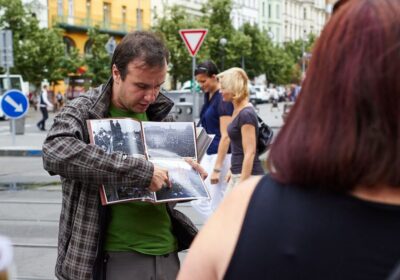
- Prague: Communism History and Nuclear Bunker Guided Tour★ 4.7 · 2,417 reviews
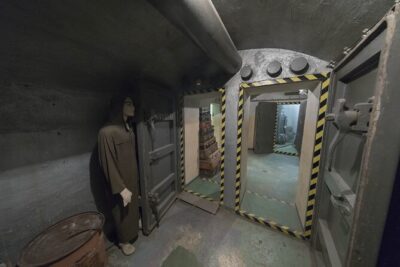
- Prague Communism History and Nuclear Bunker Tour★ 5.0 · 1,742 reviews
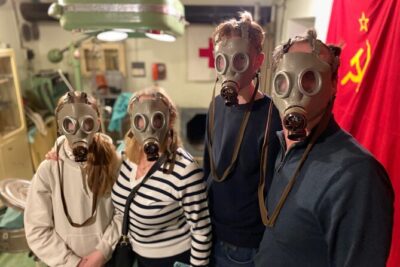
- Communism & Nuclear Bunker Tour + 70s Canteen Lunch (own expense)★ 5.0 · 1,036 reviews
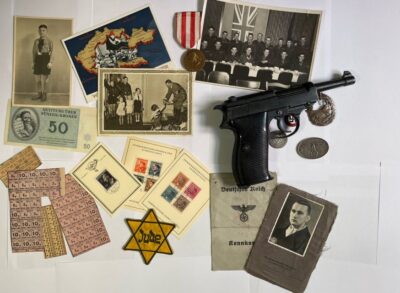
- Prague: WWII Guided Tour & The Crypt of Operation Anthropoid★ 4.7 · 1,030 reviews
Why Prague’s Communist Sites Hit Different in Person
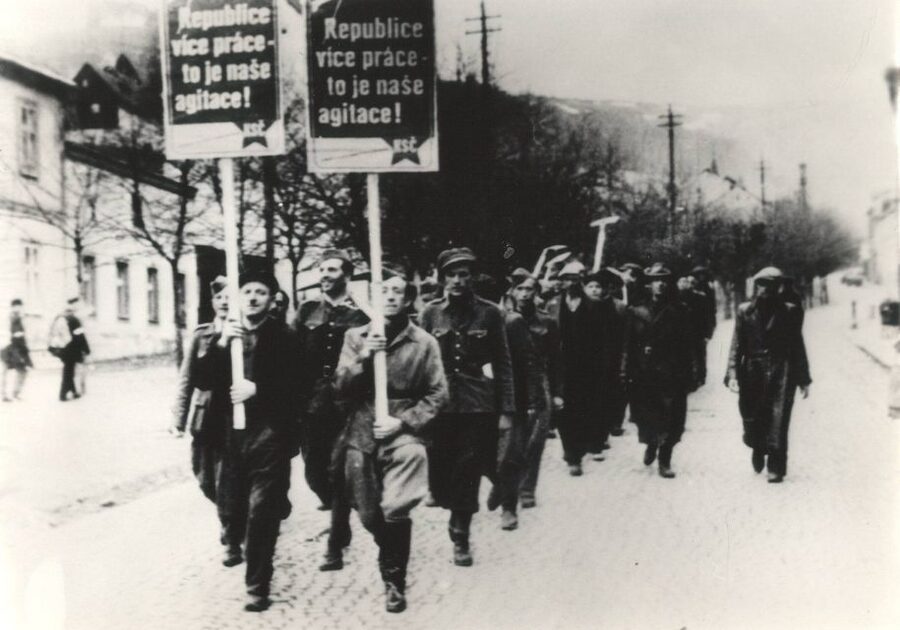
Prague can feel like a postcard. This tour makes sure you also see the other layer: the power structures, fear, and propaganda that shaped daily life. The sites aren’t just “historic.” They’re the kind of places where people had to choose their words carefully, watch who they knew, and live with the expectations of the system.
I like that the walk doesn’t treat communism as a single, abstract idea. It’s presented as something built, enforced, and constantly defended. When you’re standing near former seats of power and control, the story clicks into place fast.
Also, the tour leans into the emotional atmosphere. Even if you’re not from the region, you can sense that some areas still hold a gloomy residue from that era, and your guide explains why.
The 19th-Century Theory Setup That Makes Everything Click
Before you even reach the main stops, you get a guided introduction to socialism and communism—how it rose in the 19th century and how those ideas spread into Central and Eastern Europe.
That matters because Prague’s communist-era history isn’t just about dates and names. It’s about the logic behind a system: what it promised, what it claimed to protect, and what it actually produced in real life. By the time you start seeing the physical landmarks, you’re not just collecting trivia. You’re building a mental framework.
You’ll also hear pros and cons, not only the dramatic parts. The guide makes room for questions and discussion, which is where this type of tour can become more than sightseeing. If you’re the kind of person who asks why people supported the system or why it changed over time, this format is a good fit.
Former Secret Police Headquarters and the Architecture of Control
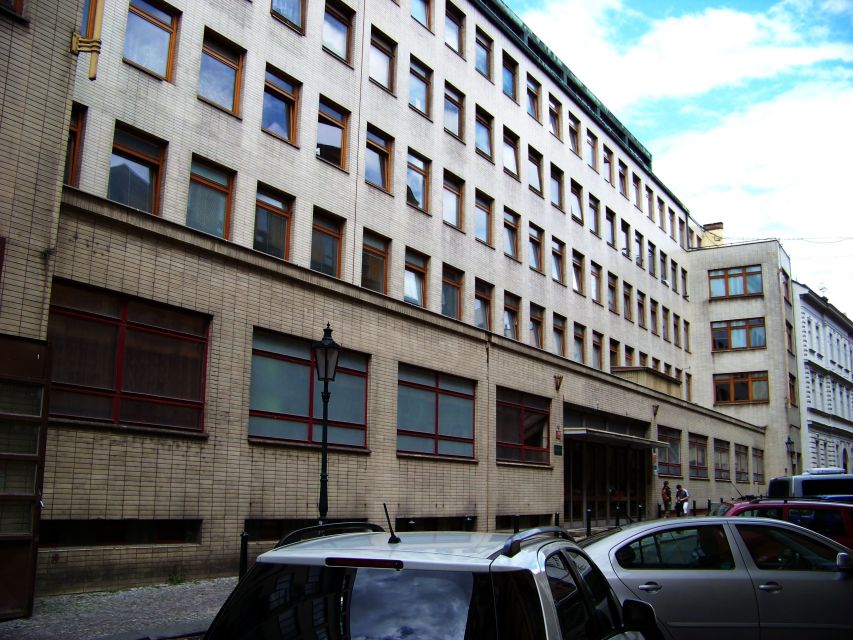
One of the biggest draws is the former secret communist police headquarters. You can learn history by reading. But standing near the place where surveillance and pressure were organized gives the story a sharper edge.
Even without fancy staging, buildings like these communicate power. Your guide’s job is to connect the architecture and location to what happened there: how control worked, what people feared, and how political systems can turn daily routines into checkpoints. You’re not only told what the secret police did—you get the “how” behind it: how the system shaped behavior.
This is also a stop where the guide’s lived memory can be especially valuable. The tour’s described as being led by someone who lived through the era, and that perspective tends to turn big political events into practical, human consequences. If you care about understanding the mechanics of fear—how it operates and why it lasts—this section will likely be one of your favorites.
The Stalin Statue Spot and How Symbols Moved Power
You’ll also visit the former spot of the Stalin statue. Symbols can be propaganda in 3D: they broadcast who’s in charge and what the future is supposed to look like.
What makes a stop like this interesting is the contrast. A statue doesn’t just sit there; it defines the public mood and what citizens are expected to respect. Your guide connects the statue’s presence to the broader communist narrative—and then to what happened when that narrative faced resistance and change.
I think this part is worth it even if you’re not a statue person. It’s a quick way to see how regimes use visibility and ritual to control public thinking. And because the tour is time-limited, it’s the kind of stop that gives you a lot of meaning in a short span.
Prefer to cover it on foot? More Prague walks across the old lanes.

Party Seats, Protests, and Revolutions on Foot
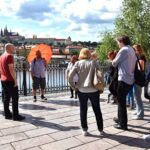
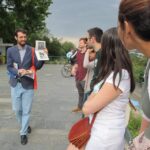
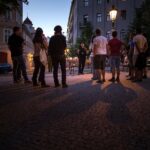
As the walk continues, you’ll see places tied to the Communist Party—current and former seats—and you’ll move through locations associated with protests, demonstrations, rebellions, and revolutions.
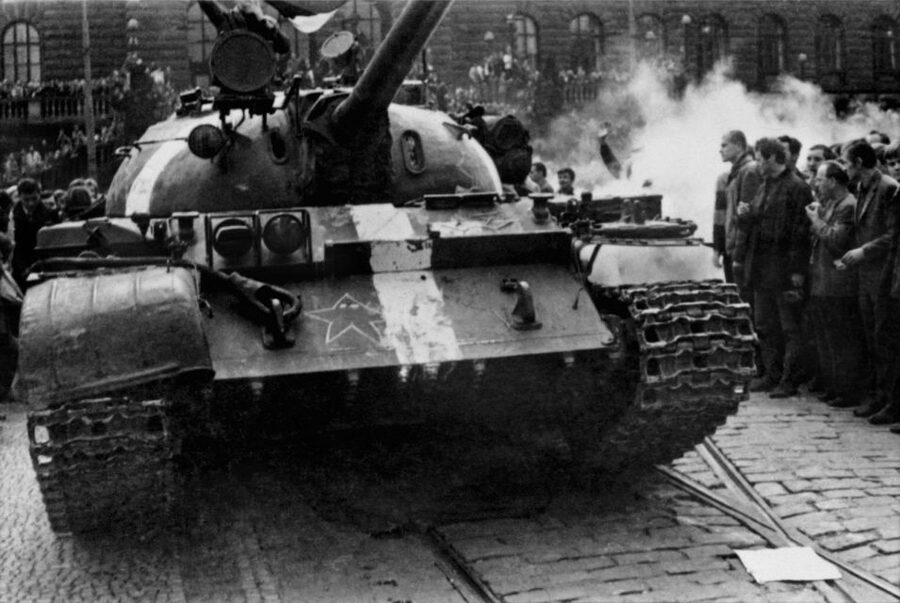
This is where the tour feels most “alive.” Instead of only focusing on officials and institutions, the story shifts to public reaction: how people organized, how unrest spread, and how the power structure responded. Your guide also explains the Soviet occupation and its influence on the region after World War II, which ties the local situation to larger Cold War pressure.
One nice touch is that the tour doesn’t pretend the communist era was one smooth storyline. It’s presented as shifting phases—periods of tightening control, periods of resistance, and moments when the system was tested. If you like cause-and-effect history, you’ll probably appreciate how the stops link together like chapters.
A practical note: this is a walking tour. So while you’re getting a lot of context, you’ll also want to pace yourself. If your legs tire easily, bring water and slow down early rather than waiting until you’re standing in the middle of a longer explanation.
How Daily Life Under Socialism Comes Through
The tour isn’t only about official politics. Your guide also describes what common life looked like during the era, including the advantages and disadvantages people experienced.
That’s the part that makes this tour feel different from a museum visit. Museums show artifacts. This walk aims to show conditions—how the system affected choices, routines, and the emotional weight of living under it. If your goal is to understand the lived reality, this route’s framing is strong.
It’s also where you’ll likely feel the value of having locals guide the conversation. The tour is described as being full of stories and discussion, and the best moments tend to be when your guide connects events to everyday consequences.
Do keep your expectations realistic: it’s still a 1–2 hour walk. You won’t leave with a full textbook understanding of every political nuance. But you will leave with a clearer picture of how the ideology translated into daily experience.
Price, Time, and Walking Expectations (What $50 Really Buys)
At $50 per person for about 1 to 2 hours, this isn’t the cheapest way to do Prague history. You’re paying for a specific kind of value: a guided, topic-focused route where a local guide can connect multiple sites into one coherent story.
If you were to do this type of research on your own, you’d likely spend time piecing together context from different sources. The tour gives you that context up front and then uses the walking route to keep it organized in your mind.
Timing-wise, the tour is designed to cover the most important communist-era-related places in Prague within a compact window. That’s great if you have limited time. Just don’t assume it’ll feel like a quick photo-op. This is explanation-heavy history, and you’ll want to stay present so you don’t miss the links between stops.
Meeting point can vary depending on the option booked. Two starting location options are listed as Na Příkopě 28 and Na Příkopě 864, so it’s worth double-checking what you booked before you head out. Bring passport or ID, and plan to travel light: luggage or large bags aren’t allowed.
Language Choice and Group Style: Getting the Most Out of Your Guide
This tour runs with live guides in Czech, English, and German. That matters because communism history isn’t just facts—it’s interpretation, tone, and the way questions get answered.
One thing I’d watch: communication quality. In the available feedback, there are hints that when a guide has trouble managing delivery (for example, juggling distractions during the walk), the presentation can suffer. If you’re booking in German, choose the language you’re most comfortable with so you don’t lose nuance.
Group type is another factor. Private group availability is listed, and the experience can be different depending on whether you join a group or get more personal attention. If you like asking questions and hearing clarifications, a private format often works better for that kind of back-and-forth.
Also, the tour supports wheelchair access. Still, it’s a walking route, so be ready for uneven city surfaces. If you have mobility concerns, plan your pace and consider bringing supportive footwear.
Who This Tour Suits Best (And Who Might Want a Different Focus)
This is a good match if you:
- Want a guided look at Prague’s communist-era power centers, not just famous landmarks
- Enjoy story-driven history that connects ideology to real daily life
- Like discussion and Q&A rather than passive listening
- Want a local perspective on what people lived through
It may be less ideal if:
- You’re hoping for a strictly neutral, purely academic lecture. This tour is presented through a real-world, Soviet-influenced Central European lens.
- You’re looking for lots of communist history outside the Soviet impact zone. The route is tied to how Soviet power shaped Europe after WWII, and your guide will likely keep that focus.
- You want something that feels like casual sightseeing. This is more “thinking with your guide” than “wander and snack.”
Should You Book the Back to Communism Walking Tour?
If you’re spending even a day in Prague and you want one experience that explains the city’s 20th-century layer without getting lost in research, I’d recommend booking this tour. The big value isn’t only the sites like the secret police headquarters and the Stalin statue spot—it’s the way a local guide ties those stops to daily life, plus the time to ask questions.
Skip it if you’re allergic to political history or you prefer a lighter, more purely visual walk. Also reconsider if you know your language choice isn’t your strongest—history like this relies on tone and clarity.
If you book, go in ready to listen and to ask good questions. You’ll end the walk with Prague looking different in your head, not just on your phone.
FAQ
How long is the Prague Back to Communism walking tour?
The duration is listed as 1 to 2 hours.
How much does the tour cost?
The price is listed as $50 per person.
Where is the meeting point?
The meeting point may vary depending on the option booked. Two starting options are Na Příkopě 28 and Na Příkopě 864.
What languages are available for the live guide?
The tour is available with live guides in Czech, English, and German.
Is the tour wheelchair accessible?
Yes, the tour is listed as wheelchair accessible.
Is a private group available?
Yes, private group availability is listed.
What should I bring?
You should bring a passport or ID card.
Are luggage or large bags allowed?
No, luggage or large bags are not allowed.
Can I cancel for a refund?
Yes. Free cancellation is available up to 24 hours in advance for a full refund.
More Tour Reviews in Prague
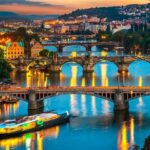
On Foot Through Prague, Continued
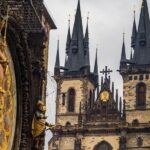
More Communism & Wartime History
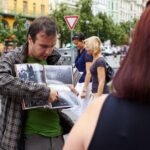
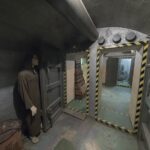
More Prague tours we have written up lately


Communism & WWII History Tours, compared.
 ★ 4.7Communism History and Nuclear Bunker Guided TourFrom $442,417 reviews
 ★ 5.0Prague Communism History and Nuclear Bunker TourFrom $451,742 reviews
 ★ 5.0Communism & Nuclear Bunker Tour + 70s Canteen Lunch (own expense)From $351,036 reviews
 ★ 4.7WWII Guided Tour & The Crypt of Operation AnthropoidFrom $421,030 reviews
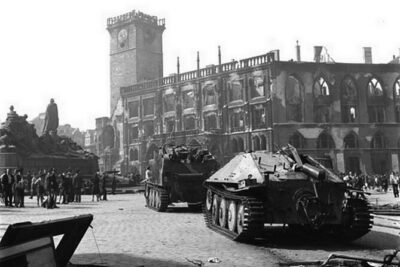 ★ 5.0WWII in Prague Tour & The Crypt of Operation AnthropoidFrom $43817 reviews
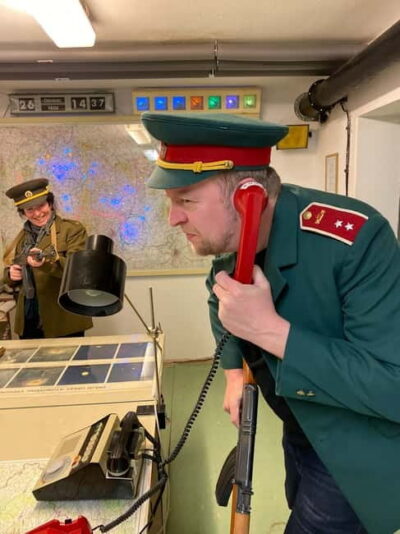 ★ 4.8Communism and Bunker Tour with 70s Canteen LunchFrom $34269 reviews
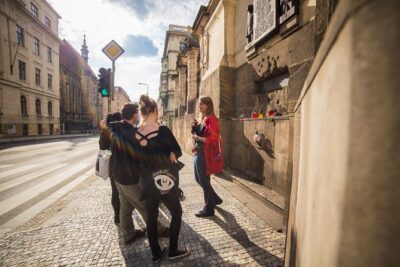 ★ 5.0Small-Group World War 2 & Operation Anthropoid Tour in PragueFrom $33231 reviews
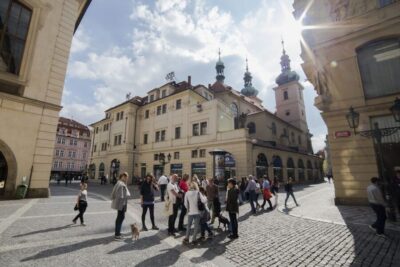 ★ 4.8World War 2 and Operation Anthropoid Walking TourFrom $32193 reviews
Browse the lists this tour appears in