
REVIEW · COMMUNISM & WWII HISTORY TOURS
Half-Day WWII Prague Walking Tour
Prague remembers its darkest days, up close. This half-day WWII walking tour threads together the Czech capital’s most important wartime locations, including the assassination of Reinhard Heydrich, with a museum stop and public transport built into the route.
You’ll walk with a professional local guide and follow a story that turns ordinary streets into places with weight. For many people, that change in perspective is the point of the whole tour.
What I like most is that it feels “done for you”: museum entry is included, and public transportation fees are included, so you do not lose time on logistics. The one watch-out is that it is a fast, cobblestone-heavy walk, so if your legs are limited, you may want to check with the operator or choose a gentler option.
In This Review
- Key highlights to look for
- A WWII story routed through Prague streets: what you actually see
- Meeting near Charles Bridge and the pacing plan for 3.5 hours
- Heydrich, Anthropoid, and the memorial sites tied to the Czech resistance
- From SS and Gestapo headquarters to Old Town Square: reading Nazi-era power
- Museum entry, photos, and the coffee break that keeps the walk human
- Getting around: why included transit fees make the tour feel smoother
- Value at $47.06: what’s included and how to decide it’s worth it
- Who this WWII Prague tour suits best (and who should consider another option)
- Should you book this Half-Day WWII Prague Walking Tour?
- FAQ
- What time does the tour start?
- Where does the tour start?
- How long is the tour?
- Where does the tour end?
- Is the tour in English?
- What’s included in the price?
- Is a mobile ticket provided?
- How big are the groups?
- What’s the cancellation policy?
- When will I get confirmation after booking?
Key highlights to look for
- Operation Anthropoid focus in the places tied to it: you’ll see memorial sites connected to the Czech resistance and the aftermath.
- Reinhard Heydrich assassination route: the tour explains how events played out in Prague, not just what happened.
- Museum stop where the Czechs made their final stand: you’ll visit a memorial/museum tied to the last battle.
- Short coffee break included: a real pause in a local café with coffee, tea, or a soft drink.
- Mix of walking plus public transport: fewer long distances on foot, and the transit costs are covered.
- Small group size (max 15): guides like Matt, Michal, Jack, Martin, and Honza show up with photos and strong storytelling.
The 20th century left its mark here. More of that history, on foot.
- Prague: Communism History and Nuclear Bunker Guided Tour★ 4.7 · 2,417 reviews
- Prague Communism History and Nuclear Bunker Tour★ 5.0 · 1,742 reviews
- Communism & Nuclear Bunker Tour + 70s Canteen Lunch (own expense)★ 5.0 · 1,036 reviews
- Prague: WWII Guided Tour & The Crypt of Operation Anthropoid★ 4.7 · 1,030 reviews
A WWII story routed through Prague streets: what you actually see
This tour gives you a structured way to understand how World War II landed in Prague. Instead of trying to cover every war-related fact in the city, it follows a clear storyline: Nazi control, Czech resistance, and the consequences. That focus is useful. It helps you connect names, places, and dates without feeling lost.
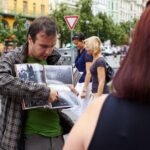
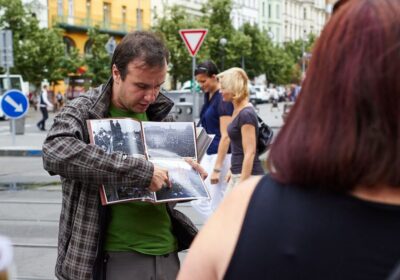
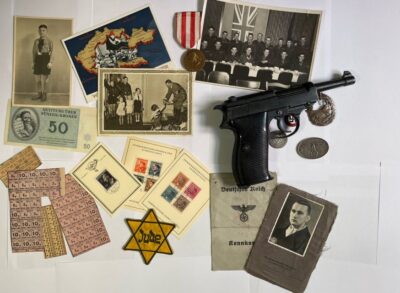
You’ll walk through central areas that matter for the wartime narrative, then layer in context along the way. Expect stops connected to the assassination of Reinhard Heydrich (often called the Butcher of Prague), the Czech resistance network, and the tight, dangerous reality of life under Nazi occupation. Along the route, your guide uses photos from the era to make the past feel less abstract.
Even if you know the headline events, the real payoff is seeing how Prague’s geography supports the story. Streets, squares, and bridges become wayfinding tools for history. It also makes it easier to remember what you saw, because the tour ties each place to a specific moment.
Meeting near Charles Bridge and the pacing plan for 3.5 hours
The tour starts at 1:30pm in the central area around Charles Bridge. The exact meetup point is listed as Křižovnické náměstí (Staré Město), which is in the Prague 1 core and convenient for getting oriented. You’ll want to arrive a few minutes early, especially if you’re navigating on your phone and pulling up maps.
Duration is about 3 hours 30 minutes, and the tour keeps moving. There is a planned coffee break, which helps a lot, but you still cover ground on foot. One key detail from the experience vibe: it can feel like a brisk walk even though the breaks are thoughtful.
What this means for you: if you like guided momentum and clear stop-by-stop storytelling, this format works well. If you prefer slow sightseeing with lots of wandering time, you might find the pace tight because the route is designed to hit several wartime locations in one afternoon.
Heydrich, Anthropoid, and the memorial sites tied to the Czech resistance
This is where the tour earns its title. You’ll visit the places connected to Operation Anthropoid and the assassination of Reinhard Heydrich, with a guide who puts the events into human terms. The story is not just dates. It explains how the resistance acted, what it cost, and what followed afterward in Prague.
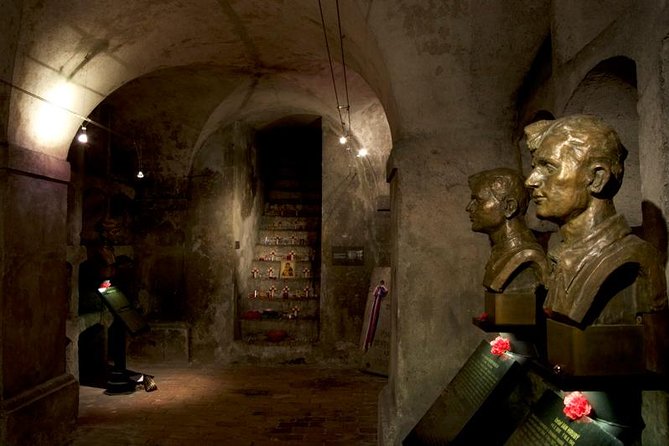
One standout stop is at a site tied to what’s described as the Czechs’ last battle, now a museum/memorial. In Prague, that maps strongly to the Church of St Cyril and Methodius complex area. The church memorial is especially powerful because it connects the resistance’s last days to a physical space you can stand in, not just a text you read.
You’ll also hear about the aftermath and the broader impact of the operation. Guides often add specific details like how the men held out there for weeks, and they reinforce it with historical visuals. The effect is sobering. It also gives you a better sense of why Czech resistance is remembered so intensely here.
If you’re a WWII buff, this portion is the core. If you’re a casual history traveler, it still works because the guide builds the context as you go. Either way, it’s the part most people find memorable because it ties major events to a very concrete setting.
From SS and Gestapo headquarters to Old Town Square: reading Nazi-era power
After the resistance-focused stops, you shift to the wider wartime landscape. The tour includes time at the former SS and Gestapo headquarters area, and it uses that location to explain how occupation power operated locally. This is one of the smartest parts of the itinerary because it prevents the story from becoming purely dramatic.
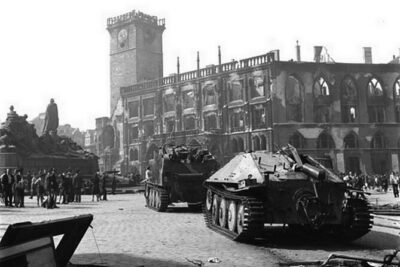
Then you move through Old Town Square, which is one of the easiest places in Prague to recognize even if you’ve never studied local history. The tour helps you look at the square differently, linking everyday landmarks to the pressure and control of the occupation. It’s a good reminder that power structures don’t float in the abstract. They sit in buildings, offices, and routes people have to navigate.
Your guide’s commentary is what makes these transitions click. The best versions of the tour include authentic photos and careful explanations of what you’re looking at now versus what it meant then. If you like learning by seeing, this is where the walking format pays off. You don’t just hear history; you point at the city and understand why it mattered.
Prefer to cover it on foot? More Prague walks across the old lanes.

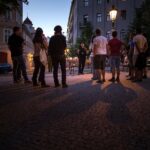
Museum entry, photos, and the coffee break that keeps the walk human
Several parts of this tour are designed to prevent history overload. First, museum entry is included, which saves you the mental math of whether you should pay extra or squeeze it into your schedule. Second, the tour builds in a short coffee break in a local café, with coffee, tea, or a soft drink included.
That break matters more than it sounds. WWII stories can get heavy, especially around resistance and aftermath. A short pause gives you a chance to re-set your brain and still keep the tour’s timeline moving. It also gives you a moment to talk with your guide and ask questions in an easier setting than standing in a crowd.
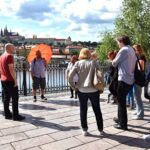
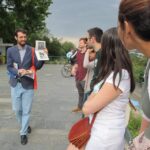
The guides are a big part of what makes this experience work, and names like Michal, Jack (Honza), Martin, and Matt show up repeatedly in the praise. People consistently note English that’s easy to follow, plus a strong habit of answering questions. Many guides also bring historical photos to help you picture what you’re seeing, which is a huge help when the city has changed a lot since the war.
One practical tip for you: if you have even a small interest in the topics, bring curiosity and questions. The tour is set up for Q and A, and the guides seem happy to go a layer deeper when you ask.
Getting around: why included transit fees make the tour feel smoother
This tour uses a mix of walking and public transportation, and the transit fees are included. That’s a quiet value-add because Prague’s transit is easy to navigate—but it still costs time if you have to buy tickets mid-journey or troubleshoot where to go next.
What you’ll feel on the ground is a more efficient route. You cover key locations without trying to power through every distance on foot. It’s also helpful if you’re staying in the Old Town area, since the tour keeps you anchored in central Prague while still reaching sites that are not just a straight line from one landmark to the next.
If you prefer public transport over long walks, this design fits you. If you dislike transit in general, you’ll still get a lot of walking, but the included rides can reduce fatigue and keep the story moving.
Value at $47.06: what’s included and how to decide it’s worth it
At $47.06 per person, the price is not just for storytelling. It’s for the structure: professional guide, museum entry, public transportation fees, and a coffee break. Those inclusions add up quickly when you travel, especially in a city where museum tickets and transit costs can be easy to underestimate.
The tour is also timed well: an afternoon slot lets you pair it with a morning of sights or an evening of food and music. Because it ends in the Old Town area near Čechův bridge and the Old Town Square zone, you can roll right into your next plan without backtracking across the city.
Group size is capped at 15, which usually means you get a more personal experience than mega-coach tours. You can ask questions without feeling like your guide is talking to a megaphone.
My value take: if you plan to visit at least one museum or memorial during your WWII-focused day, you’ll likely appreciate that entry is included. And if you would otherwise figure out transit on your own mid-route, the included transport keeps the tour feeling less like logistics and more like history.
Who this WWII Prague tour suits best (and who should consider another option)
This tour is ideal if you want a guided path through specific wartime stories. WWII buffs will like the focus on major Czech-connected events and the way the narrative moves from resistance action to consequences. People also mention that guides tailor the pacing and add broader WWII context, including perspectives before the war and related political context.
It’s also a strong pick for travelers who learn well through visuals. The tour often uses period photos and references to help you interpret what you see around you today. If you like understanding how a place looked and functioned in the past, the walking format is a good match.
The one mismatch risk is physical comfort. The route involves walking over cobblestones, and the pace can be fast. Even with the coffee break, it can feel like a lot for anyone with limited mobility or balance issues. The tour notes that most travelers can participate, but individual comfort varies, so plan honestly based on how you handle uneven pavement and sustained walking.
If you’re traveling with kids, this tour can work when the guide adjusts the way they explain things. One family mentioned a 10-year-old and a guide who kept the tour engaging and informative.
Should you book this Half-Day WWII Prague Walking Tour?
If you’re in Prague for just a few days and you want WWII history that feels grounded in real places, this is a very good bet. The inclusion of museum entry, public transport, and a coffee break makes it practical, not just impressive on paper. And the consistent praise for guides like Michal, Jack (Honza), Martin, and Matt suggests you’re likely to get clear explanations plus room for questions.
I’d hesitate only if you need a slow, low-effort tour. Between the cobblestones and the packed 3.5-hour structure, this is best for travelers who are comfortable walking and want their afternoon to be purposeful.
FAQ
What time does the tour start?
The tour starts at 1:30pm.
Where does the tour start?
The meetup is listed near Charles Bridge in central Prague, and the start point is given as Křižovnické náměstí (Praha 1, Staré Město).
How long is the tour?
It runs about 3 hours 30 minutes.
Where does the tour end?
It ends around the Old Town area, with the end point listed as Old Town Square and the description noting Čechův bridge as the final area after the 3.5 hours.
Is the tour in English?
Yes, it’s offered in English.
What’s included in the price?
The tour includes a professional local guide, a coffee break (coffee, tea, or soft drink), museum entry, and public transportation fees.
Is a mobile ticket provided?
Yes, the tour offers a mobile ticket.
How big are the groups?
The tour has a maximum of 15 travelers.
What’s the cancellation policy?
You can cancel for a full refund up to 24 hours in advance of the experience’s start time.
When will I get confirmation after booking?
Confirmation is received at the time of booking, unless you book within 2 days of travel. In that case, confirmation is received within 48 hours, subject to availability.
More Tour Reviews in Prague

On Foot Through Prague, Continued
More Communism & Wartime History
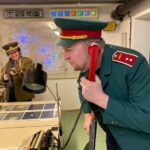
More Prague tours we have written up lately
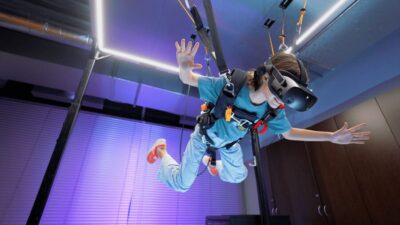

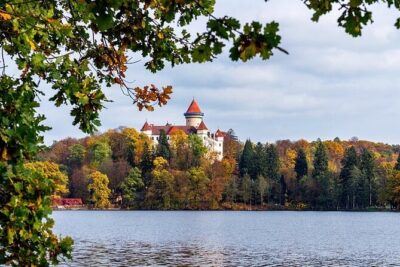
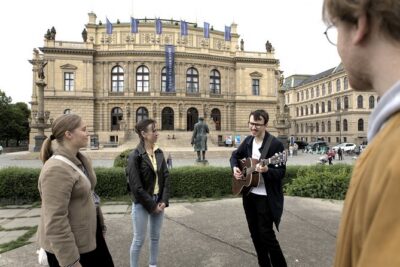

Communism & WWII History Tours, compared.
 ★ 4.7Communism History and Nuclear Bunker Guided TourFrom $442,417 reviews
 ★ 5.0Prague Communism History and Nuclear Bunker TourFrom $451,742 reviews
 ★ 5.0Communism & Nuclear Bunker Tour + 70s Canteen Lunch (own expense)From $351,036 reviews
 ★ 4.7WWII Guided Tour & The Crypt of Operation AnthropoidFrom $421,030 reviews
 ★ 5.0WWII in Prague Tour & The Crypt of Operation AnthropoidFrom $43817 reviews
 ★ 4.8Communism and Bunker Tour with 70s Canteen LunchFrom $34269 reviews
 ★ 5.0Small-Group World War 2 & Operation Anthropoid Tour in PragueFrom $33231 reviews
 ★ 4.8World War 2 and Operation Anthropoid Walking TourFrom $32193 reviews
Browse the lists this tour appears in