
REVIEW · COMMUNISM & WWII HISTORY TOURS
Back to Communism Walking Tour
Prague’s past gets scary fast. This 2-hour walk connects the big headlines of European communism to real places you can stand in today, including the former stomping ground of Czechoslovak secret police. I especially like the small-group feel and the way you can ask questions instead of just listening.
What I also like is the direct, human angle from guides who have lived through parts of the Cold War era, like Petr, Daniel, and Marek (names that show up across the tour). One thing to plan for: the route is outdoors and can feel cold, so dress for winter chill even when the stories are the main event.
In This Review
- Key Things You’ll Notice on This Back to Communism Walk
- Why This Walk Hits Harder Than a Usual History Tour
- Price, Time, and Group Size: What You’re Really Paying For
- Meeting Point, Walking Pace, and How to Prep
- Stop 1: Bartolomějská and the Weight of a Secret Police HQ
- Stop 2: Wenceslas Square, a Stage for Recent Past
- Stop 3: Narodni třída’s Wall Memorial and the Velvet Revolution
- The Best Part: Guides Who Can Answer Your Real Questions
- Who This Tour Is Best For (And Who Might Skip It)
- How to Make the Most of Your 2 Hours
- Should You Book Back to Communism in Prague?
- FAQ
- FAQ
- How long is the Back to Communism walking tour?
- How much does the tour cost?
- Where does the tour meet, and does it end nearby?
- Is the tour offered in English?
- Are admissions included for the stops?
- How big is the group?
- What’s the cancellation policy?
- Are service animals allowed, and are children able to join?
Key Things You’ll Notice on This Back to Communism Walk
- Small group (max 15) for real back-and-forth instead of a lecture line
- Former Czechoslovak secret police HQ that turns abstract politics into street-level reality
- Wenceslas Square as a place that has carried a lot of recent history
- A memorial tied to the Velvet Revolution that puts a human face on political change
- English mobile ticket and a smooth start/end at the same meeting spot
- Multiple guides with personal Cold War context (Petr, Daniel, Marek)
The 20th century left its mark here. More of that history, on foot.
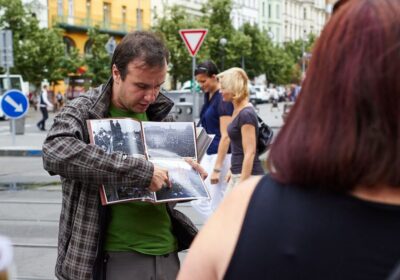
- Prague: Communism History and Nuclear Bunker Guided Tour★ 4.7 · 2,417 reviews
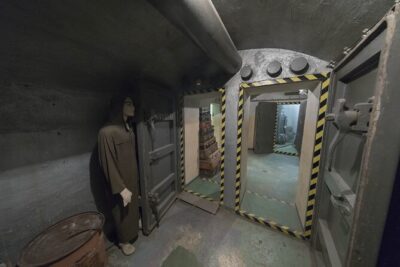
- Prague Communism History and Nuclear Bunker Tour★ 5.0 · 1,742 reviews
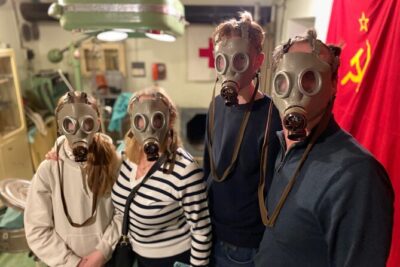
- Communism & Nuclear Bunker Tour + 70s Canteen Lunch (own expense)★ 5.0 · 1,036 reviews
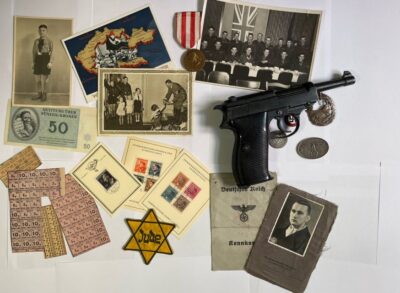
- Prague: WWII Guided Tour & The Crypt of Operation Anthropoid★ 4.7 · 1,030 reviews
Why This Walk Hits Harder Than a Usual History Tour
This isn’t just a list of dates and monuments. You’re looking at three locations in Prague that are tightly linked to the story of communism in Europe, then hearing the interpretation through a guide who can speak from lived experience. That makes the whole thing feel less like school and more like a street conversation with history.
You’ll also get the sense that context matters. One stop isn’t enough to understand what the system did, so the tour builds a path: power and surveillance, public space and tension, then remembrance tied to political change. If you like your history grounded in where it happened, this format is exactly your speed.
Price, Time, and Group Size: What You’re Really Paying For
At $44.22 per person for about 2 hours, you’re paying for two main things: a guide who can answer questions and time spent walking with a small crew. With a maximum of 15 travelers, you’re not lost in a crowd, and that matters on a topic that often triggers debate, curiosity, and strong reactions.
The stops themselves are free to enter, so your money goes toward the guided storytelling and on-the-ground interpretation. In other words, you’re not paying for museums at each location—you’re buying clarity, perspective, and the ability to ask why people experienced things the way they did.
One practical note: this tour tends to sell ahead (on average booked about 78 days in advance). If you’re traveling in busy seasons or want a specific day/time, I’d treat that as a sign to plan early rather than hope.
Meeting Point, Walking Pace, and How to Prep
You’ll start at Na Příkopě 864/28 in Prague 1 (New Town area) and the tour ends back at the same meeting point. That “return to start” setup is convenient when you’re making the rest of your day—no wandering across town at the end.
It’s offered in English, and you’ll receive a mobile ticket after booking. The tour also lists “most travelers can participate,” and it’s near public transportation, so you should be able to slot it in even if your schedule is tight.
And yes, bring layers. More than one review describes the experience as freezing, which usually means you’ll want warm clothes and a hat even if you’re used to Prague days.
Stop 1: Bartolomějská and the Weight of a Secret Police HQ
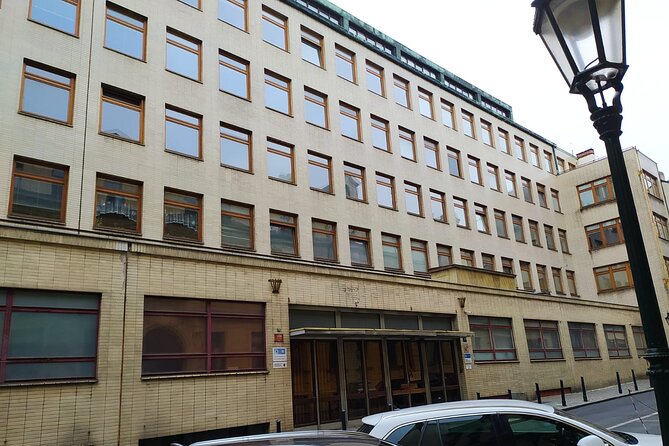
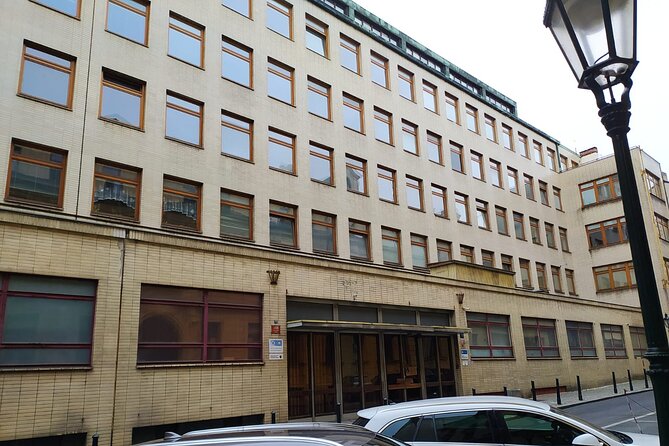
The first stop is Bartolomějská, described as the former headquarters of the Czechoslovak Secret Police. Standing there is a blunt reminder that communism in this region was enforced through systems that reached into daily life, not just government buildings on paper.
The value of this stop is not only the location—it’s what the guide can connect around it. A lot of history tours point at structures; this one pushes you to connect the structure to human experience and fear, and it invites questions so you don’t have to sit with confusion.
A consideration: if you’re sensitive to politically charged topics, this first location can set a serious tone. The tour frames it as learning from those who lived it, which is respectful, but it’s still heavy material right at the start.
Prefer to cover it on foot? More Prague walks across the old lanes.

Stop 2: Wenceslas Square, a Stage for Recent Past
Next you’ll reach Wenceslas Square, a place the tour describes as having experienced a lot. Even without getting lost in detail, the location itself helps explain why public squares matter—because they’re where power becomes visible and where people notice what’s changing.
This stop is also where the tour’s “ask questions” approach becomes especially useful. If you want to understand how the system affected public life, you’ll have plenty to discuss with your guide while you’re standing in the real setting.
Potential drawback: Wenceslas Square can be busy and changeable depending on the day and time. That can mean more background noise around you, so focus on the guide’s points and don’t expect a quiet museum-like atmosphere.
Stop 3: Narodni třída’s Wall Memorial and the Velvet Revolution
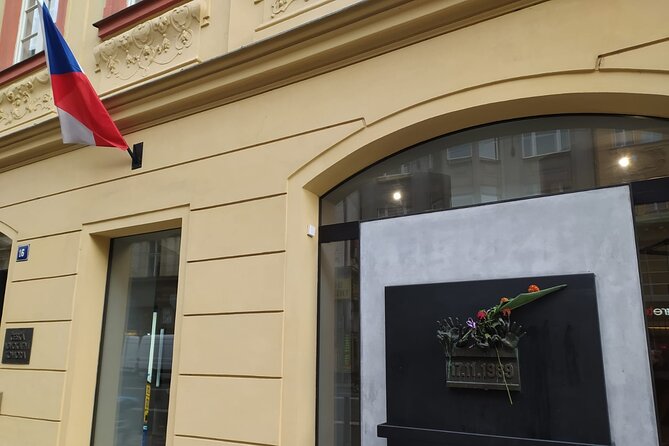
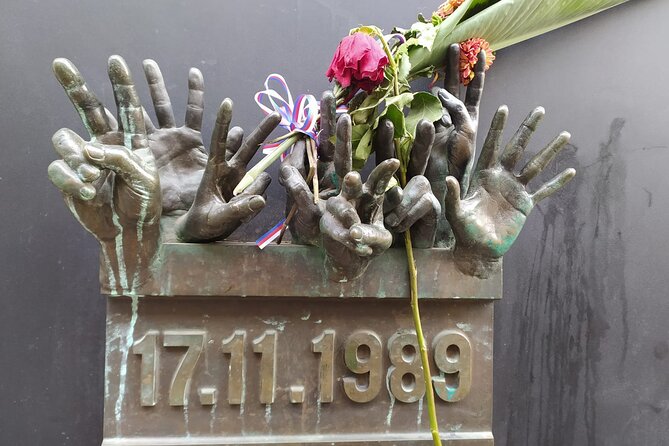
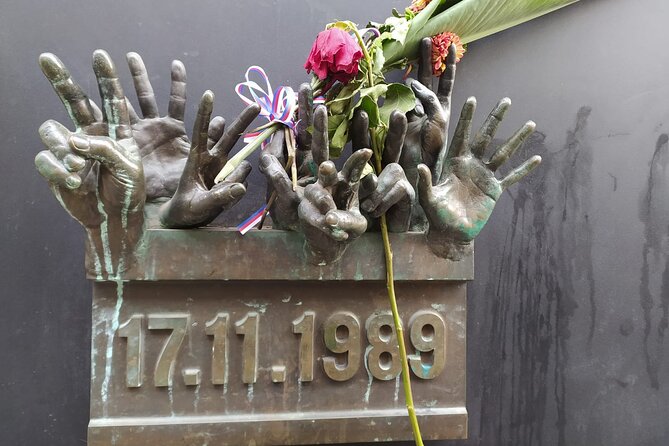
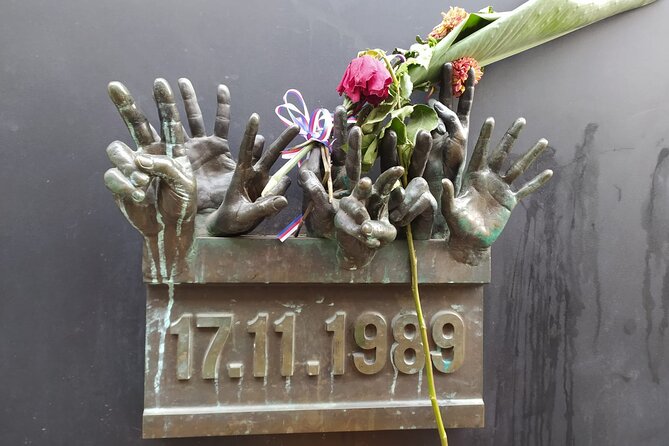
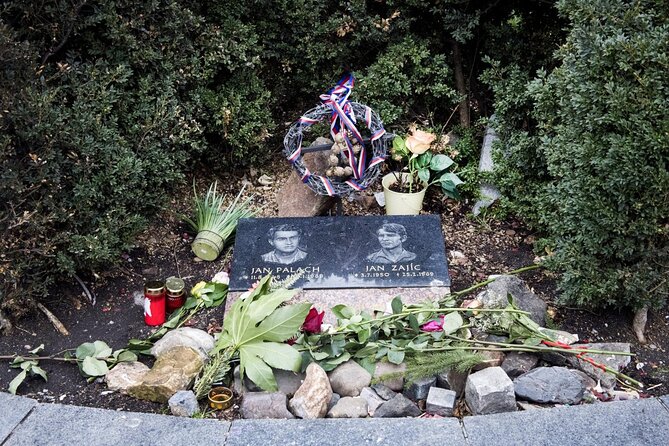
The final stop is the memorial with hands reaching out of the wall on Narodni třída. The tour connects this directly to the victims of the so-called Velvet Revolution and calls it one of the strongest moments of Czech modern history.
This is the emotional center of the walk. After the earlier stops dealing with control and public pressure, you end with remembrance—something that helps you process the story beyond abstract politics. If you like tours that don’t just tell what happened, but also help you understand why it still matters, this ending lands well.
Another practical point: because it’s a memorial stop, it’s worth taking a moment to slow down rather than rushing to the next photo. The story here is the point, and the guide’s narration is clearly designed to make the memorial feel like more than a backdrop.
The Best Part: Guides Who Can Answer Your Real Questions
What consistently comes through is the quality of the guiding. The tone is professional and enthusiastic, and multiple named guides appear across the experience: Petr, Daniel, and Marek. That matters because it suggests the tour isn’t dependent on a single “star guide”—the core team can handle the topic in a way that sticks.
You’ll also hear personal framing from guides who have experienced part of that era. One review even notes Petr spoke very good German, which can be a nice bonus if your group includes German speakers and the moment calls for it.
One thing to keep in mind: there’s a lot of political emotion around communism and the Cold War. The tour stays focused on learning and warning context, not on turning into a debate night. That’s a good balance for most people, especially if you want insight rather than arguments.
Who This Tour Is Best For (And Who Might Skip It)
This walk is a great fit for active travelers who like to explore on foot and prefer their history in real-world locations. If you’re the type who asks questions at bus stops, reads signs slowly, and wants meaning behind the scenes, you’ll probably love the format.
You’ll also enjoy it if your interest is Europe under communism—how it felt, how it affected daily life, and what people carried forward into the present. The “from people who lived through it” angle is the whole point here.
I’d consider skipping if you’re looking for something purely upbeat or purely visual. This is a serious theme, and multiple reviews describe the experience as chilling and freezing—emotionally and physically. If you want a lighter introduction to Prague, you might choose a different walk first and come back to this topic later.
How to Make the Most of Your 2 Hours
Since the tour is short, come prepared with 2–3 questions you actually care about. You’ll get more out of the guide if you’re not trying to invent curiosity on the spot.
I’d also pace your day around it. Because it’s outdoors and tied to winter-like conditions in at least some cases, plan for comfort before and after—warm up after the walk, and don’t stack another long outdoor segment right after.
Finally, slow down at the memorial. If the guide gives you a strong takeaway, let it land before you move on. This ending is meant to stick.
Should You Book Back to Communism in Prague?
I’d book this tour if you want a small-group walk that turns Cold War history into something you can feel, question, and remember. The combination of free-entry stops, a guided storyline, and named guides like Petr, Daniel, and Marek gives you both structure and human perspective.
You might skip it if you’re tightly timeboxed for an outdoor activity on a cold day, or if you prefer lighter history content. But for most visitors who want real context behind Prague’s modern story, this is a strong use of your time.
FAQ
FAQ
How long is the Back to Communism walking tour?
It runs for about 2 hours.
How much does the tour cost?
The price is $44.22 per person.
Where does the tour meet, and does it end nearby?
The meeting point is Na Příkopě 864/28, Nové Město (Prague 1), and the tour ends back at the same meeting point.
Is the tour offered in English?
Yes, it’s offered in English.
Are admissions included for the stops?
Admission tickets are free for the listed stops.
How big is the group?
The tour has a maximum of 15 travelers.
What’s the cancellation policy?
You can cancel for a full refund up to 24 hours in advance of the experience start time.
Are service animals allowed, and are children able to join?
Service animals are allowed. Children must be accompanied by an adult.
More Tour Reviews in Prague

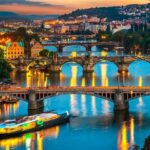
On Foot Through Prague, Continued
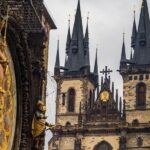
More Communism & Wartime History
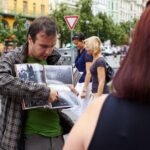
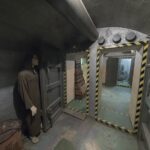
More Prague tours we have written up lately


Communism & WWII History Tours, compared.
 ★ 4.7Communism History and Nuclear Bunker Guided TourFrom $442,417 reviews
 ★ 5.0Prague Communism History and Nuclear Bunker TourFrom $451,742 reviews
 ★ 5.0Communism & Nuclear Bunker Tour + 70s Canteen Lunch (own expense)From $351,036 reviews
 ★ 4.7WWII Guided Tour & The Crypt of Operation AnthropoidFrom $421,030 reviews
 ★ 5.0WWII in Prague Tour & The Crypt of Operation AnthropoidFrom $43817 reviews
 ★ 4.8Communism and Bunker Tour with 70s Canteen LunchFrom $34269 reviews
 ★ 5.0Small-Group World War 2 & Operation Anthropoid Tour in PragueFrom $33231 reviews
 ★ 4.8World War 2 and Operation Anthropoid Walking TourFrom $32193 reviews
Browse the lists this tour appears in