
REVIEW · OLD TOWN & ASTRONOMICAL CLOCK
World War II History Tour of Prague’s Old Town
Prague changes tone when you talk WWII. This private walk uses Josefov and the Old Town Square as your timeline, linking names, orders, and resistance to the exact streets you’re standing on.
I like two things most. First, the History Expert-Guide keeps the story human—Hitler’s visit to Prague, Operation Anthropoid, the bombing of Prague, and the 1945 uprising all connect back to what happened in Czech lands. Second, you get to see how May 1945 physically marked the city: the Old Town Hall facade took heavy damage, and the Astronomical Clock still survives.
One consideration: the subject matter is heavy, and the 2-hour option won’t include the Heydrich Terror Memorial—that only comes with the 4-hour choice.
In This Review
- Key points to know before you go
- Why this WWII walk starts in Josefov
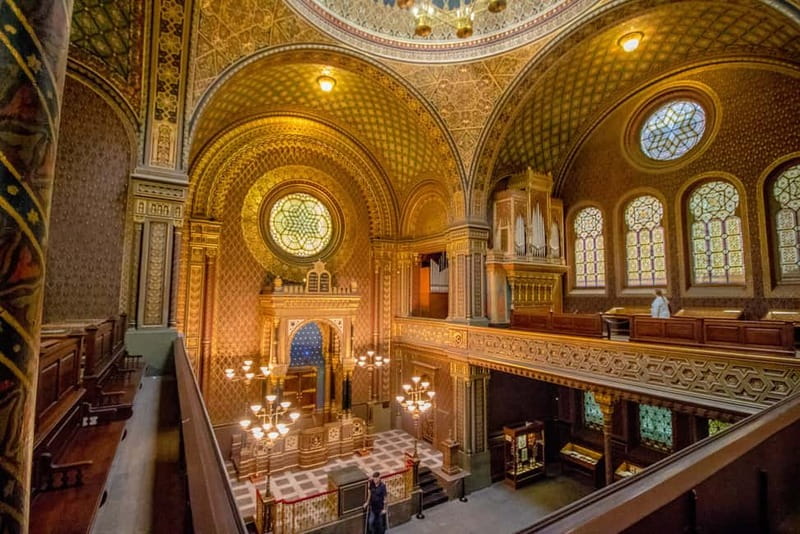
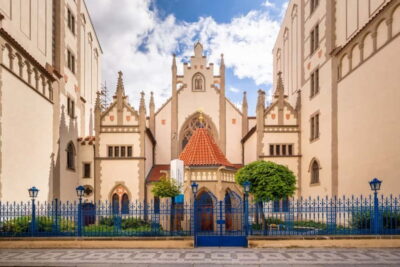
- Maisel and Spanish Synagogues: what the tour explains on-site
- Old Town Square landmarks you’ll connect to May 1945
- Petschek Palace and the Gestapo headquarters story
- Wenceslas Square: from ordinary boulevard to Nazi rally ground
- The 4-hour upgrade: Heydrich Terror Memorial in the crypt
- What the timing feels like: 2 hours vs 4 hours
- Price and value: is $104 per person fair
- Practical tips for a smoother, respectful visit
- Who should book this tour
- Should you book? My take
- FAQ
- Where does the tour start?
- How long is the tour?
- What is included in the 2-hour option?
- What’s included in the 4-hour option?
- Is the tour private and accessible?
- What languages are available?
- How much does it cost?
- What should I do the day before the tour?
- Can I cancel for a refund?
Key points to know before you go
- Josefov’s Nazi-era turning point in 1941: the area was deserted as Czech Jews were transported to Theresienstadt.
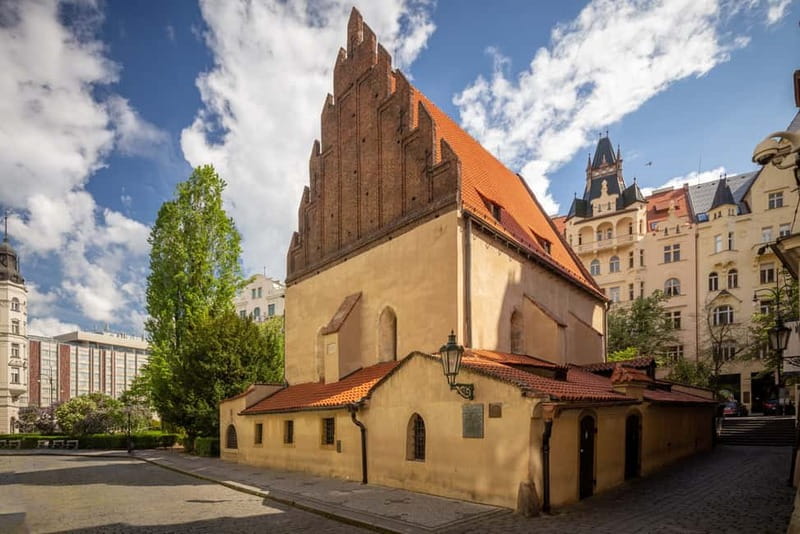
- Maisel and Spanish Synagogues used as storage sites: Jewish objects were kept with plans tied to Nazi propaganda.
- Old Town Square as a May 1945 witness: St Nicholas, Kinsky Palace, and Our Lady before Týn frame the uprising scars.
- Petschek Palace and the Gestapo: the former headquarters setting comes with a resistance memorial plaque on the corner.
- Wenceslas Square under Nazi mass demonstrations: you’ll learn why this broad boulevard matters to the occupation story.
- 4-hour option adds the Heydrich Terror Memorial crypt: the final hideout of seven SOE-trained Czechoslovak agents.
Still circling the Old Town? More of the square and its lanes, reviewed.
- Prague: Oldtown, Medieval Underground & Dungeon History Tour★ 4.3 · 10,277 reviews
- Prague: Old Town Hall Tower Entry Ticket★ 4.5 · 6,749 reviews
- Prague: 3-Hour Walking Tour of Old Town & Prague Castle★ 4.7 · 5,696 reviews
- Prague: 3-Hour Old Town and Prague Castle Tour in German★ 4.8 · 5,671 reviews
Why this WWII walk starts in Josefov
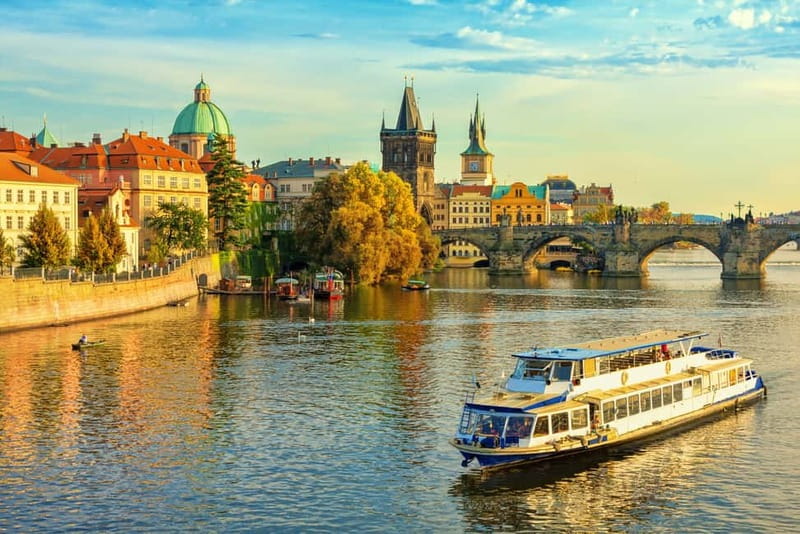
Josefov—the Old Jewish Quarter—sets the emotional and historical stakes fast. The tour begins with the idea that you can’t understand Nazi Prague without looking at what happened to Prague’s Jewish communities after the occupation tightened its grip.
You’ll learn how Nazi targeting wasn’t abstract. Josefov was a focal point for the regime, and in 1941 the neighborhood was effectively emptied when transports of Czech Jews began to Theresienstadt. That detail matters because it turns “history” into a sequence of decisions that moved real people.
Maisel and Spanish Synagogues: what the tour explains on-site
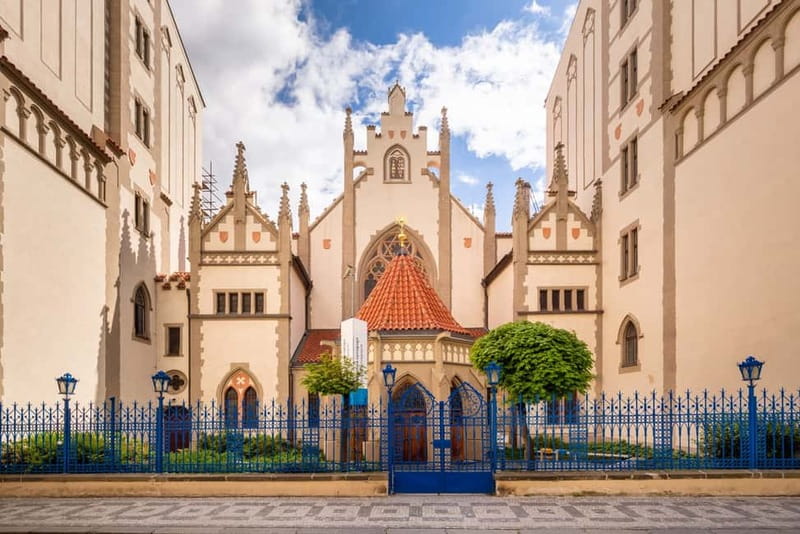
In Josefov, you’ll pass major landmarks that still feel “alive” today, but the guide frames them through WWII use and Nazi intentions. The Maisel Synagogue and Spanish Synagogue are part of what makes this stop practical: you get a location-based explanation, not just a lecture from a distance.
One of the more chilling points you’ll hear is what happened to Jewish objects. Some valuable items were stored at these synagogues with the intent to install them in a Nazi “museum of the extinct race.” Even if you’ve read about propaganda museums before, hearing it tied to the exact building helps you understand the cruelty of the plan.
If you’re sensitive to Holocaust-related topics, plan your pace accordingly. The tour covers occupation, persecution, and liberation, and it does so by connecting the story to place. That’s powerful, but you’ll want to be mentally ready.
Old Town Square landmarks you’ll connect to May 1945

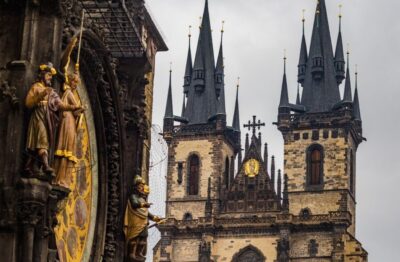
When the walk reaches the Old Town Square, the guide shifts from occupation tactics to the violence of resistance and retaliation. You’ll see landmarks that tourists often photograph without thinking about the war context, including Church of St Nicholas, Kinsky Palace, and the Church of Our Lady before Týn.
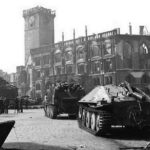
Then the guide brings it back to May 1945. The facade of the Old Town Hall suffered heavy damage during the Prague uprising, and the famous Astronomical Clock survived. That contrast—destruction in one part, survival in another—gives you a very “Prague” feeling: the city can be battered and still remain itself.
You’ll also get names and events tied to specific corners and facades. The key value here is interpretation. Instead of repeating the same dates, the expert-guide helps you see why these particular buildings mattered during the uprising and how the square functioned as a public stage.
Petschek Palace and the Gestapo headquarters story

Next comes a stop where the city’s architecture becomes evidence. Petschek Palace is described here as the former seat of the Gestapo headquarters, and the guide explains what that meant on the ground—interrogations, pressure, and the system that enabled terror.
On the corner of the building, you’ll find a memorial plaque dedicated to Czech resistance. This isn’t just a “remember them” marker; the guide ties it to offensive efforts and the human cost of clandestine work. That’s where the tour’s focus on a Czech perspective really shows: you’re not only learning about Nazi power, you’re learning about how Czech resistance tried to fight back under impossible conditions.
If you want to understand how resistance could still happen despite surveillance and brutal interrogation, this segment gives you the logic behind it. It’s also one of the most grounded parts of the walk because the story stays anchored to one specific location.
The 20th century left its mark here. More of that history, on foot.
Wenceslas Square: from ordinary boulevard to Nazi rally ground
The tour ends in Wenceslas Square, and the guide explains why that setting is more than just a famous shopping strip. You’ll hear how the Nazis used the square for mass demonstrations, turning a public space into a tool for spectacle and control.
This is one of those moments where your brain starts doing something useful. After Josefov and Old Town Square, you start noticing the city’s “staging.” Squares, boulevards, and prominent facades stop being neutral backdrops and become part of how power communicates itself.
Take a minute to look around without hurrying. Even if you’re just passing through Wenceslas Square later in your own plans, you’ll now know what kind of history was performed there.
The 4-hour upgrade: Heydrich Terror Memorial in the crypt
Choose the longer option if you want the story’s most specialized chapter. The 4-hour tour adds a visit to the National Memorial to the Heroes of the Heydrich Terror, located in the underground crypt of the Cathedral of Saints Cyril and Methodius.
Here’s why the stop is so important: this crypt served as the last hideout of seven SOE-trained Czechoslovak agents involved in the assassination of Reinhard Heydrich. The guide ties the location directly to Operation Anthropoid, so you’re not only learning what happened—you’re learning where the resistance team hid at the end of their mission.
The setting also changes the tone of the whole experience. Aboveground you’re seeing city landmarks. Underground, you’re in a space that matches the danger and secrecy of the story. If the Nazi occupation chapters felt heavy, this add-on can feel even sharper, but it also brings focus to resistance planning and execution.
What the timing feels like: 2 hours vs 4 hours
The tour is offered in two main lengths: 2 hours and 4 hours. Both are walking-based, and the pacing is built around keeping the story tied to the streets and buildings you see.
The 2-hour option covers Josefov and the Old Town Square area, along with the resistance-linked sites in the Old Town. The Heydrich memorial visit is not included here, so you’ll leave without that underground Operation Anthropoid piece.
The 4-hour option keeps the same core Old Town narrative and adds the crypt memorial stop, which is where you get the full arc into the Heydrich Terror story. If you’re the kind of person who wants the “why this operation matters” answer—not just where it happened—go for the longer time.
Price and value: is $104 per person fair
At $104 per person, this tour sits in the middle range for a private, WWII-themed experience in Prague. What makes it feel reasonable is the combination: a private group, an expert-guide fluent in your chosen language, and a route that connects multiple major WWII narrative points to specific locations.
You’re not just paying for a walking route. You’re paying for interpretation—how the guide explains Hitler’s Prague visit, the role of Nazi occupation structures, the Holocaust in Czech lands, and the details of the Prague uprising. When those details land while you’re standing in the right place (Old Town Hall scars, Gestapo headquarters setting, Wenceslas Square rallies), the value becomes clearer than it would in a generic city tour.
If you can handle emotional subject matter and want a guide to connect the dots, the price makes sense. If you only want the surface-level “big sights,” you’ll likely feel the cost more than the payoff.
Practical tips for a smoother, respectful visit
A tour like this is most rewarding when you prepare a little. Wear comfortable shoes. Even within 2 to 4 hours, you’ll be walking through several historic zones.
Bring a water bottle and a light layer, because Prague weather can shift. And mentally, come ready for Holocaust and occupation topics. The guide is there to explain, but you should still expect the story to be emotionally direct, especially around Josefov and the resistance material connected to torture and interrogations.
If you choose the 4-hour option, plan for an extra site visit with a different atmosphere. The underground crypt setting means you might feel the experience as more intense, not less.
Who should book this tour
This is a great fit if you:
- want a Czech perspective on WWII events rather than a purely general overview
- care about how specific buildings connect to big events like the Prague uprising and Operation Anthropoid
- prefer a private group with a guide who can answer questions in your language (English, Spanish, Russian, Italian, French, Czech, Polish, or German)
It’s also ideal if you’re traveling with someone who likes history but tends to get bored when the story stays at “dates and names.” Here, names and dates are tied to doors, facades, and street corners.
If you’re only browsing for relaxed sightseeing, this may feel intense. If you want a story with real stakes, this is the right kind of Prague tour.
Should you book? My take
I’d book it if you’re in Prague for a short time and want one tour that truly ties together WWII, occupation, and resistance in the Old Town. The route is strong: Josefov for the Holocaust in Czech lands, Old Town Square for uprising clues, Petschek Palace for Gestapo context, and Wenceslas Square for the occupation’s public theater.
If you’re choosing between lengths, my practical advice is simple: pick 4 hours if Heydrich and Operation Anthropoid are on your must-know list. Pick 2 hours if you mostly want Josefov and the Old Town uprising-era landscape and you’re watching your time.
Either way, you’ll leave with Prague feeling less like a postcard city and more like a place that remembers.
FAQ
Where does the tour start?
Meet your guide in front of the World of Franz Kafka at Nám. Franze Kafky 16/1, 110 00 Staré Město, Czechia.
How long is the tour?
The duration is 2 to 4 hours, depending on the option you select.
What is included in the 2-hour option?
The 2-hour option includes the Old Town walk stops such as Josefov and Old Town Square, but it does not include the Heydrich Terror Memorial.
What’s included in the 4-hour option?
The 4-hour option adds a visit to the National Memorial to the Heroes of the Heydrich Terror in the underground crypt of the Cathedral of Saints Cyril and Methodius.
Is the tour private and accessible?
Yes, it’s a private group, and it’s wheelchair accessible.
What languages are available?
You can choose from English, Spanish, Russian, Italian, French, Czech, Polish, or German.
How much does it cost?
The price is $104 per person.
What should I do the day before the tour?
Check your email the day before the tour to receive important information.
Can I cancel for a refund?
Yes. You can cancel up to 24 hours in advance for a full refund.
More Tour Reviews in Prague

More Communism & Wartime History
The Old Town, A Few More Ways
More Prague tours we have written up lately

Old Town & Astronomical Clock, compared.
 ★ 4.3Oldtown, Medieval Underground & Dungeon History TourFrom $3110,277 reviews
 ★ 4.5Old Town Hall Tower Entry TicketFrom $216,749 reviews
 ★ 4.73-Hour Walking Tour of Old Town & Prague CastleFrom $305,696 reviews
 ★ 4.83-Hour Old Town and Prague Castle Tour in GermanFrom $365,671 reviews
 ★ 4.5Prague Old Town, Medieval Underground and Dungeon Historical TourFrom $323,227 reviews
 ★ 4.8Old Town and Jewish Quarter Guided Tour in GermanFrom $293,143 reviews
 ★ 4.5Ghosts and Legends of the Old Town Evening TourFrom $213,091 reviews
 ★ 4.6Old Town and Jewish Quarter Guided Walking TourFrom $222,847 reviews
Browse the lists this tour appears in