
REVIEW · TEREZíN MEMORIAL DAY TRIPS
Private Former Concentration Camp Terezin Tour from Prague
Terezín hits fast, and then stays. This private tour from Prague turns a serious topic into a clear, paced visit with an English guide and included entry. You’ll move through the Small Fortress and the ghetto sites in a way that feels respectful, not rushed.
I love two things most: you get a private guide who can slow down when questions come up, and the day includes entrance tickets plus skip-the-ticket-line access. The route is built around the major places you should see, with realistic time blocks for each stop.
One consideration: this is a large, emotionally heavy complex, so expect a fair bit of walking and standing even on a private schedule.
In This Review
- Quick takeaways
- Why a private Terezín tour from Prague keeps the tone right
- Prague pickup and the 6-hour schedule (what to plan for)
- Stop 1: Mala Pevnost (Small Fortress) and the feeling of a “designed” prison
- Why this stop is worth your full attention
- Stop 2: Terezín Memorial National Cemetery and the work of reburial
- How a guide makes this stop easier to process
- Stop 3: Ghetto Museum in the former municipal school (1991) and the children’s memory
- What to do while you’re there
- Stop 4: The small Jewish prayer hall and the hidden room story of František Bubák
- Why this stop matters
- Stop 5: Magdeburg Barracks and the ghetto’s cultural life under SS control
- The balance to watch for
- Stop 6: Terezín Jewish Cemetery crematorium and how the system operated
- A reflective moment that hits for many people
- How the guide changes the experience (and why English matters)
- What you should look for from your guide
- Price and value: $356.42 for a private 6-hour day with tickets included
- Who should book this private Terezín tour (and who might reconsider)
- Should you book this Terezin private tour from Prague?
- FAQ
- Is the tour private, and is it offered in English?
- How long is the Private Former Concentration Camp Terezin Tour from Prague?
- Where does pickup happen in Prague?
- Are entrance tickets included?
- What should I wear?
- Can I cancel and get a full refund?
Quick takeaways
- Private guide, English: You control the pace and can ask questions as you move.
- Skip-the-line entry is included: Fewer logistics delays, more time for the story.
- Six meaningful stops: Small Fortress, ghetto museum, prayer hall, Magdeburg Barracks, cemetery crematorium, and the memorial cemetery.
- Pickup from your lodging: You can start from the Prague Marriott area or arrange hotel/Airbnb pickup with the operator.
- Built-in pauses for reflection: The time at each site is long enough to take it in without feeling herded.
A sobering hour north. More Terezin memorial visits.
- Terezin Concentration Camp Day Tour from Prague★ 4.0 · 1,007 reviews
- From Prague: Terezín and Ghetto Museum Guided Tour★ 4.3 · 571 reviews
- Terezin & Bohemian Switzerland from Prague: Bastei, Narnia & Café★ 5.0 · 445 reviews
- From Prague: Terezin Concentration Camp & Memorial Tour★ 4.5 · 310 reviews
Why a private Terezín tour from Prague keeps the tone right
A private Holocaust-era tour is not the place for speed-watching. With a guide, you can keep your attention where it belongs: on what you’re seeing, what the buildings were used for, and how the system worked.
This kind of private format matters because Terezín (also known as Theresienstadt) is not one stop. It’s a whole functioning “place”—fortress, town, museums, barracks, and the crematorium site. A good guide helps you stitch it together without turning it into a checklist.
I also appreciate the guide-led rhythm. You’re given time at each location, and you’re not stuck waiting for everyone else to decide whether they want to photograph another hallway. That makes it easier to keep a steady, quiet focus.
Prague pickup and the 6-hour schedule (what to plan for)
The tour runs about 6 hours, starting at 9:00 am and ending back where you meet. The departure point is the Prague Marriott Hotel (V Celnici 8), and pickup can also be arranged from your hotel or Airbnb if you provide the exact name and address.
What that means for you: you avoid the common problem of arriving late, hunting for tickets, and losing daylight time inside the sites. It’s also a practical win if you don’t want to manage buses and transfers on a day when your emotions will already be doing overtime.
Dress code is smart casual, and the tour uses a mobile ticket. Wear shoes you can stand in. Even with a private group, Terezín is spread out and you’ll be on your feet.
Stop 1: Mala Pevnost (Small Fortress) and the feeling of a “designed” prison
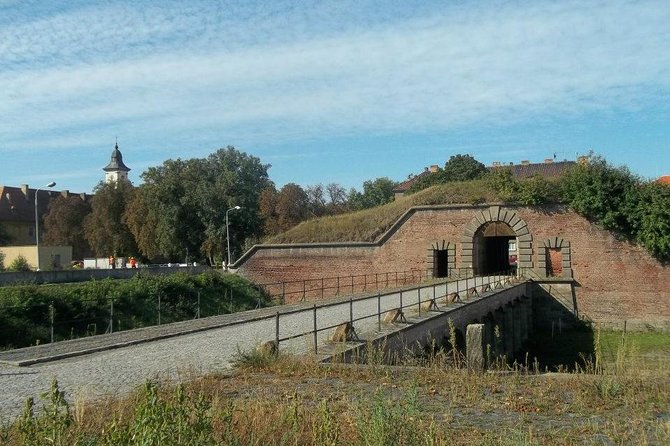
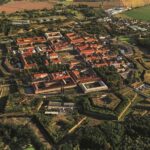
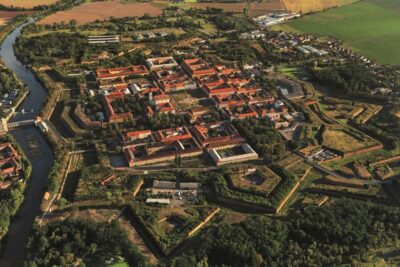
The first stop is Mala Pevnost, the Small Fortress, built in the late 18th century as a fortress system surrounded by walls and protected by flood trenches. The story behind it is already a warning: it was meant to defend, yet Terezín never really protected anyone. Over time, it turned into something far worse.
You’ll hear the timeline that transforms the place in layers. In the mid-19th century, Terezín became a jail. Its most famous prisoner was Gavrilo Princip, imprisoned here in 1914 after his role in the Sarajevo attack that set the First World War in motion.
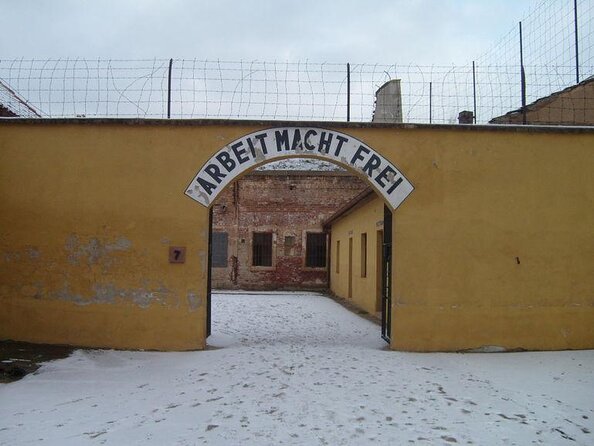
Then the Second World War changes everything. In 1940, the Small Fortress became a prison of the Prague Gestapo for political prisoners. Only a year later, the entire town was turned into a collective and pass-through camp for Jews. The fortress isn’t shown as a symbol; it’s shown as a tool that changed hands and purposes.
Why this stop is worth your full attention
This is where the walls, design, and restrictions start making sense. A guide helps you connect physical features (like the fortress layout and defenses) to what happened inside, so you’re not just looking at stone—you’re understanding intent.
The potential drawback is the emotional weight. This first stop sets a tone that doesn’t let go. If you’re sensitive to heavy spaces, you’ll want to pace your breathing and give yourself permission to take breaks.
More private, guide-to-yourself outings in Prague.



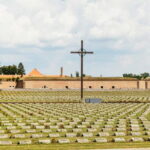
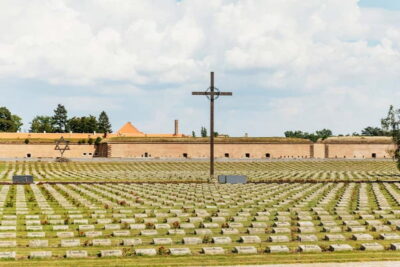
Stop 2: Terezín Memorial National Cemetery and the work of reburial
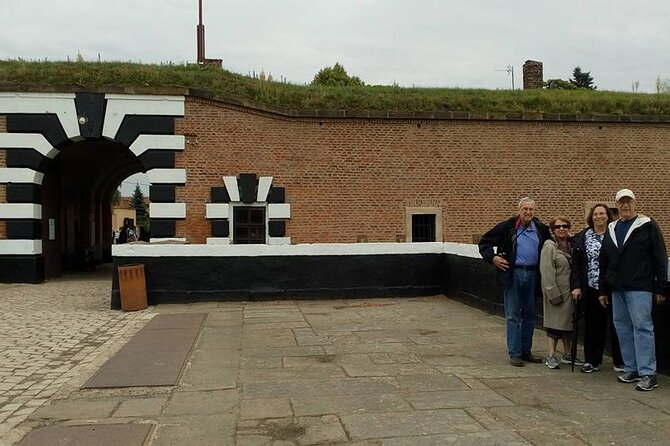
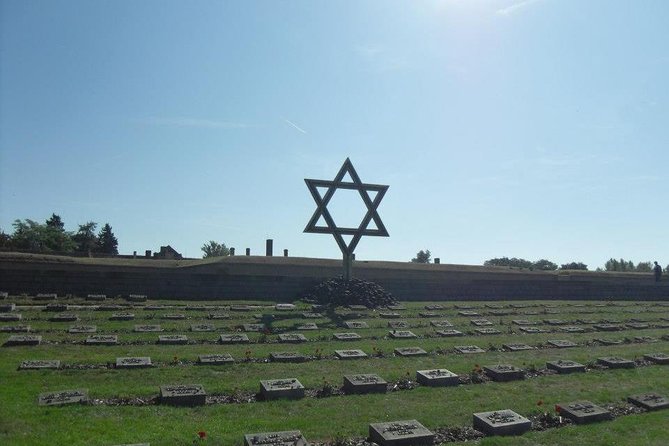
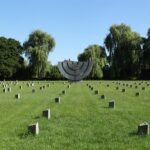
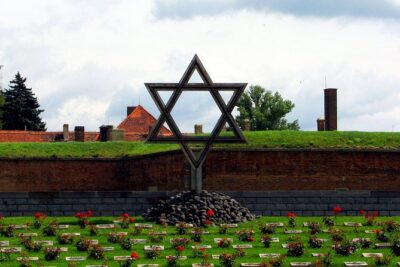
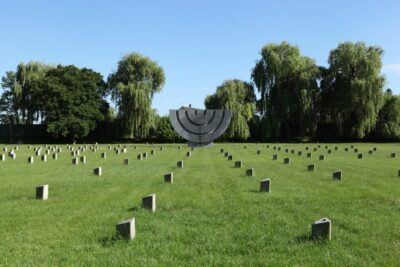
The National Cemetery is brief—about 15 minutes—but it lands hard. It was created artificially after liberation in 1945, shaped by requests from former prisoners and the heirs of people who died.
What makes this cemetery different from a typical memorial plot is the attention to remains. Physical remains were exhumed from six mass graves in the ramparts of the Small Fortress, used from March 1 to May 7, 1945. That includes people who arrived at the Small Fortress as part of a death march in May 1945.
How a guide makes this stop easier to process
A good guide doesn’t just point out the cemetery. They explain why the cemetery exists at all—because the end of the war didn’t instantly fix the reality of where people were buried. The explanation helps you understand the cemetery as part of postwar truth-making.
Stop 3: Ghetto Museum in the former municipal school (1991) and the children’s memory
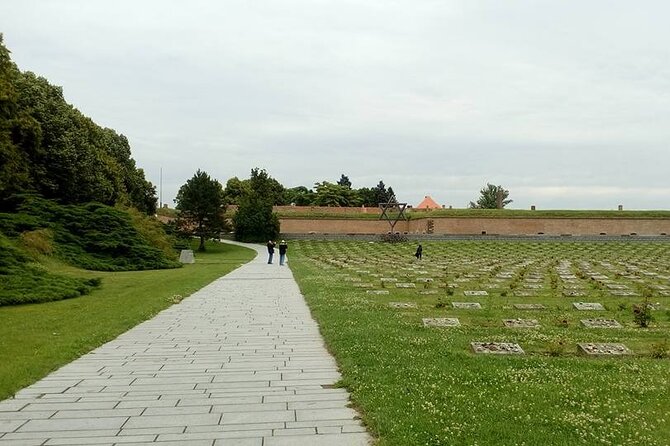
The Ghetto Museum takes about 45 minutes, and it’s one of the most important places to see. The museum opened in the former municipal school in 1991, built to give a dignified commemoration of ghetto victims and to explain history accurately.
The permanent exhibition’s theme covers Terezín in the Final Solution of the Jewish Question, 1941 to 1945, inaugurated in 2001. You’ll also find a Memorial Hall devoted to the ghetto’s children—its youngest victims—and a selection of drawings created by children from inside the ghetto.
You’ll see a scale model of the ghetto with an electronic orientation system that helps you understand where different thematic units sit. There’s also a local reading room and a cinema where documentary films are screened.
What to do while you’re there
Go slow through the children’s areas. This is where the emotional focus tightens, and it’s easy to rush because you feel you “should” keep moving. Don’t. If you need a minute, take it.
The museum is also where your guide’s context matters. They help connect what you’re seeing to the larger story without making it clinical.
Stop 4: The small Jewish prayer hall and the hidden room story of František Bubák
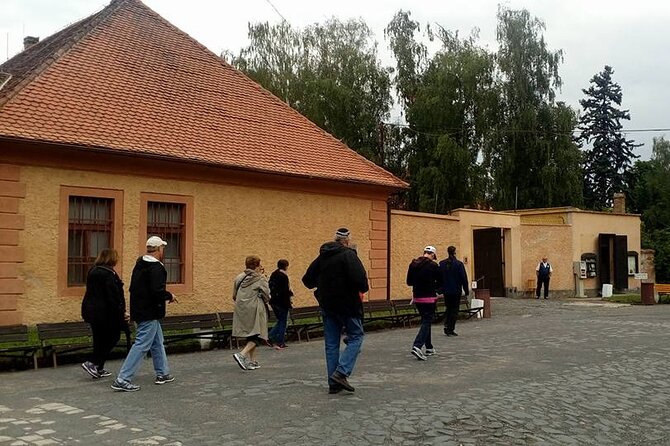
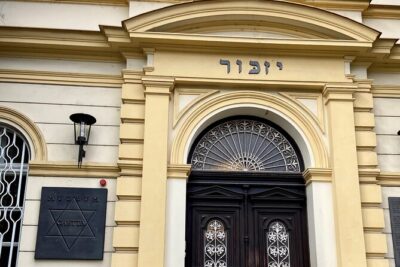
This stop is about 30 minutes and feels quietly different from the museums and barracks. The small Jewish prayer hall was founded during the ghetto period to meet spiritual needs of prisoners living in neighboring houses.
Owned by František Bubák, the space served as part of a funeral parlor before World War II. Bubák was forced to leave Terezín in 1942, but he reclaimed the property after the war.
Then comes the part that makes the site feel strangely human: because the family feared Communist-era repercussions, they kept the prayer room’s existence secret while using it as storage. The secret didn’t end until after the 1989 Velvet Revolution, when descendants notified the authorities. Visitors have been allowed to see the room since the late 1990s.
Why this stop matters
It shows something easy to miss in Holocaust history: continuity of faith and identity, even when survival systems were designed to erase normal life. It also shows how memory can be protected—quietly—until society is safer to speak.
Stop 5: Magdeburg Barracks and the ghetto’s cultural life under SS control
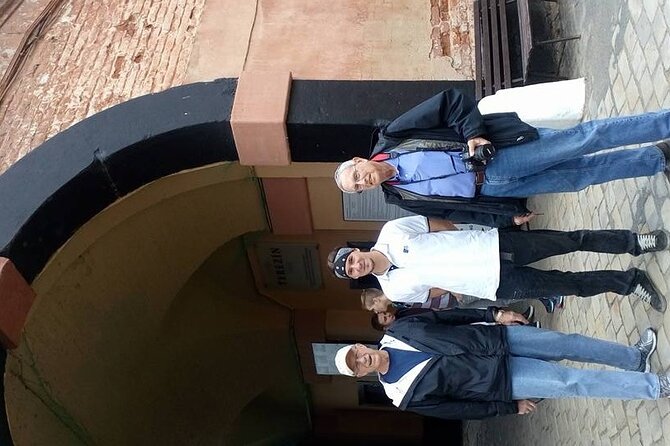
Magdeburg Barracks is another 30-minute stop. During the ghetto period, the building served as the headquarters of the local government, handling internal affairs. At the same time, the guide will remind you of the reality: the SS command controlled all the important issues.
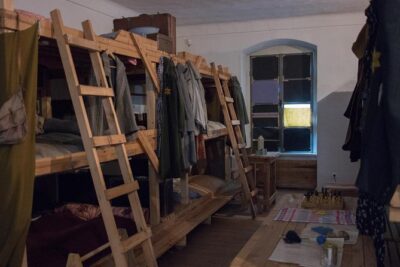
The building now houses a replica of prison barracks and an exhibition on the ghetto’s artistic and cultural life. You’ll see items tied to music, visual arts, literature, and theatre—evidence of a fierce desire for humanity and hope in camp conditions. The same space also includes an educational Meeting Centre.
The balance to watch for
This stop can feel different because the tone includes creativity. A good guide makes sure you don’t treat it like an inspiring side show. Instead, it’s presented as human expression operating under brutal constraints.
If you’re looking for places that feel purely “architectural and factual,” this might be emotionally sharper in a different way. But it’s still essential.
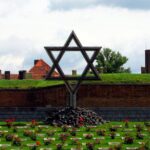
Stop 6: Terezín Jewish Cemetery crematorium and how the system operated
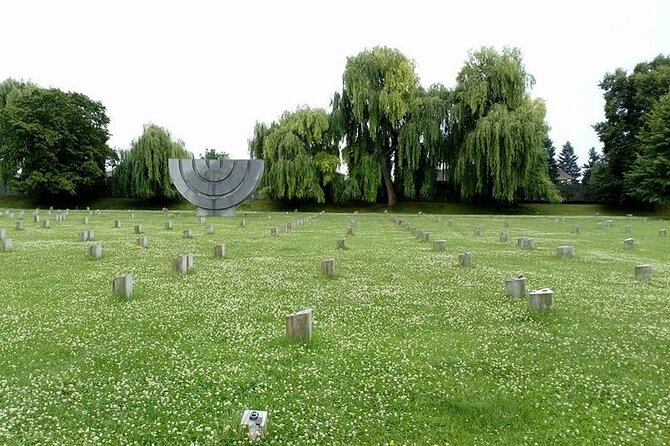
The Jewish Cemetery stop takes about 30 minutes, and it’s tightly focused on the crematorium. The crematorium was built by ghetto prisoners by order of the SS commanders, with operation beginning in early October 1942.
The central part of the crematorium included four oil-powered incinerators supplied by Ignis Hüttenbau from Teplice-Šanov. There was also a front section used for unloading corpses from coffins, plus an autopsy room connected nearby.
On one side was the autopsy area. On the other was an annex that housed guards made up of Czech police officers and prisoner workers assigned to the crematorium. At the highest mortality rate, there were up to eighteen prisoner workers rotating in permanent shifts. When mortality dropped, the number of workers decreased to four.
Supervision came from SS-Scharführer Heindl, one of the camp’s feared top officers, with routine checks also carried out by camp commanders.
A reflective moment that hits for many people
Some visits add space for reflection connected to what happened to remains at the end of the war. One recurring highlight for this tour style is time to understand how the final phase was handled, including the fact that ashes from over 20,000 people were dumped into a river area as war conditions deteriorated. If you feel you need a pause here, ask your guide for a minute before moving on.
How the guide changes the experience (and why English matters)
The most praised element of this tour style is the guide. In the stories connected to Eva Prague Tours, guides such as Eva have stood out for being easy to follow, bilingual (Czech/English), and willing to answer questions without treating the group like a lecture audience.
You also see how the guide affects pacing. People describe feeling like the visit becomes more controlled—less crowded, less “photo stop after photo stop”—and more like a guided walk through an unfolding system.
Even the driver can matter for tone. In one account, Jindra was described as attentive, which helps you start the day feeling looked after rather than hassled.
What you should look for from your guide
You’ll get the most value if your guide does three things:
- explains what you’re seeing before you move on
- keeps the story accurate and grounded
- gives you room to absorb hard material before the next site
If you’re the type who asks questions, a private English guide is a big advantage.
Price and value: $356.42 for a private 6-hour day with tickets included
At $356.42 per person, this isn’t a bargain-basement day trip. But it’s also not just a ride to a distant site. You’re paying for private guidance, round-trip transportation, and included admission.
That included access is important for value. The tour notes skip-the-ticket-line entry, and most stops have admission tickets included. The National Cemetery entry is free, but you’re still getting guided time there rather than figuring it out on your own.
Here’s how I’d think about value:
- If you try to DIY, you’ll spend time managing tickets, timing, and interpretation.
- If you do a group tour, you might lose time waiting and you may not get the pacing that lets you process.
- Here, the private format helps you stay on track, and the itinerary gives you dedicated time at each key location.
The other value piece is emotional logistics. When you’re walking into places like the Small Fortress and the crematorium, the last thing you want is stress.
Who should book this private Terezín tour (and who might reconsider)
This is a strong fit if you want:
- a private English guide
- a clear, paced route across the main Terezín sites
- included admission so you spend less time in admin lines
- pickup from your hotel or Airbnb in Prague
It’s also a good option if you’re the kind of person who reads quickly and still wants a guide to connect the dots.
You might reconsider if you’re looking for something lighthearted or purely casual. This day is heavy. You should also be comfortable with walking and standing across multiple sites in one morning-to-afternoon window.
Should you book this Terezin private tour from Prague?
If you care about understanding what you’re looking at, you should book it. The private format, included ticket access, and the way the day is organized around the most important sites make it feel efficient without being rushed.
I’d especially recommend it if you’re sensitive to crowds or you want your questions answered in plain English. And if you’re doing Terezín as a once-in-a-lifetime stop, private time is the best way to avoid turning it into a blur.
One final note: pick shoes you can walk in, bring a bottle of water, and give yourself permission to slow down. Terezín doesn’t reward rushing.
FAQ
Is the tour private, and is it offered in English?
Yes. It’s a private tour, and it’s offered in English.
How long is the Private Former Concentration Camp Terezin Tour from Prague?
It runs for about 6 hours.
Where does pickup happen in Prague?
Pickup is available from the Prague Marriott Hotel (V Celnici 8) and can also be arranged from your hotel or Airbnb address, as long as you provide the exact name and address.
Are entrance tickets included?
Yes. Admission tickets are included for the Small Fortress, the Ghetto Museum, the prayer hall, Magdeburg Barracks, and the Jewish Cemetery. The National Cemetery admission is free.
What should I wear?
Smart casual is the requested dress code.
Can I cancel and get a full refund?
Yes. You can cancel up to 24 hours in advance for a full refund. If you cancel less than 24 hours before the start time, the amount paid is not refunded.
More Tours in Prague

More Tour Reviews in Prague


More Terezin Memorial Trips

More Prague tours we have written up lately



Terezín Memorial Day Trips, compared.
 ★ 4.6From Prague: Terezin Concentration Camp Guided Tour w/ AudioFrom $692,248 reviews
 ★ 4.0Terezin Concentration Camp Day Tour from PragueFrom $781,007 reviews
 ★ 4.3From Prague: Terezín and Ghetto Museum Guided TourFrom $86571 reviews
 ★ 5.0Terezin & Bohemian Switzerland from Prague: Bastei, Narnia & CaféFrom $145445 reviews
 ★ 4.5From Prague: Terezin Concentration Camp & Memorial TourFrom $57310 reviews
 ★ 4.7From Prague: Terezín Concentration Camp Day TourFrom $1,354246 reviews
 ★ 4.5Terezin Concentration Camp Day Tour Including Admission From PragueFrom $96179 reviews
 ★ 5.0Terezin In-Depth Holocaust Tour From Prague’s Center (max 7 pax)From $145170 reviews
Browse the lists this tour appears in