
REVIEW · PRIVATE
Prague: Private Prague Art Nouveau and Cubism Tour
Prague has a talent for hiding big ideas in plain sight. This private tour traces Art Nouveau and Cubism across Prague in a way that feels local, not museum-dry. You start at the Central Train Station rebuilt in 1909, then move through the New Town, stopping for architecture you’d otherwise walk past.
I especially love how the story is explained as a chain reaction: 19th-century styles morph into Art Nouveau, then Cubism shows up as a revolt. The tour also uses a smart mix of known landmarks and quieter corners, so you get both the wow and the useful context. One thing to consider: it’s a full day of walking and repeated short stops, so if you want fewer site changes, you may find the pacing a bit dense.
In This Review
- Key points to know before you go
- Prague’s Art Nouveau starts at the station (and that’s the point)
- Art Nouveau in the New Town: you’ll notice details you missed before
- Jubilee Synagogue: a quick stop that sets the tone for Prague’s layers
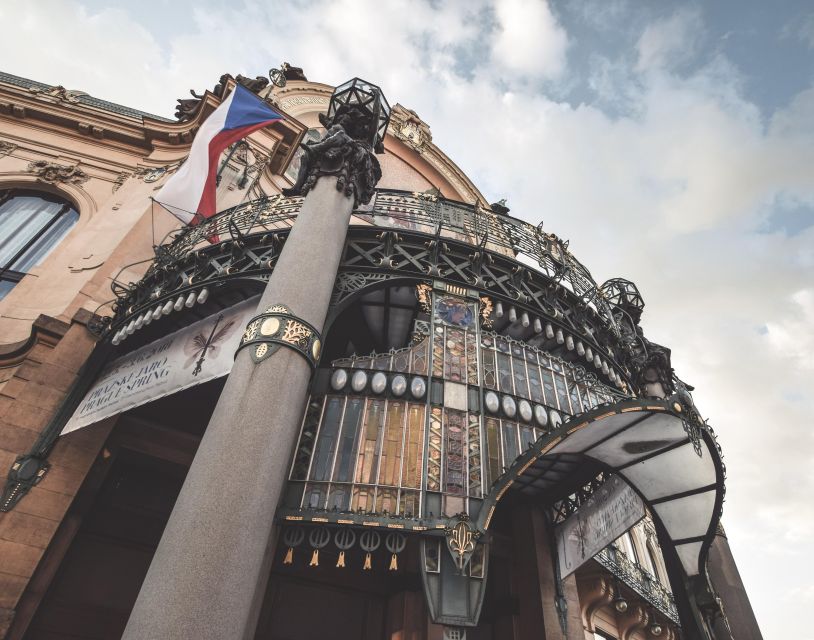
- Municipal House and the House of the Black Madonna: Prague icons with sharp context
- Wenceslas Square: a 20-minute reality check for your eyes and feet
- The less-famous stops that make the whole tour click
- Tram ride timing: why the route feels efficient instead of exhausting
- Vyšehrad under the fortress: where Cubism gets brave
- Three Cubist Houses, Kovařovicova vila, and cubist house Vyšehrad č. p. 98
- Price and value: $84 for a full day of architecture storytelling
- Who this tour is best for (and who should skip it)
- Before you go: simple prep that makes the day smoother
- Should you book the Prague Art Nouveau and Cubism private tour?
- FAQ
- FAQ
- Where does the tour meet?
- What’s the duration?
- How much does it cost?
- Is it a private tour?
- What languages are the guides?
- Are transportation tickets included?
- Is the tour wheelchair accessible?
- Is it suitable for children?
- What should I bring?
- Is there free cancellation?
Key points to know before you go
- 1909 Central Train Station sets the tone with the kind of Prague modernization that still shapes the city
- Art Nouveau-to-Cubism contrast turns architecture into a 20th-century story you can actually follow
- Quick stops with a guide’s narration means you see details without getting stuck in information overload
- Downtown on foot, Vyšehrad by tram keeps the route varied and practical
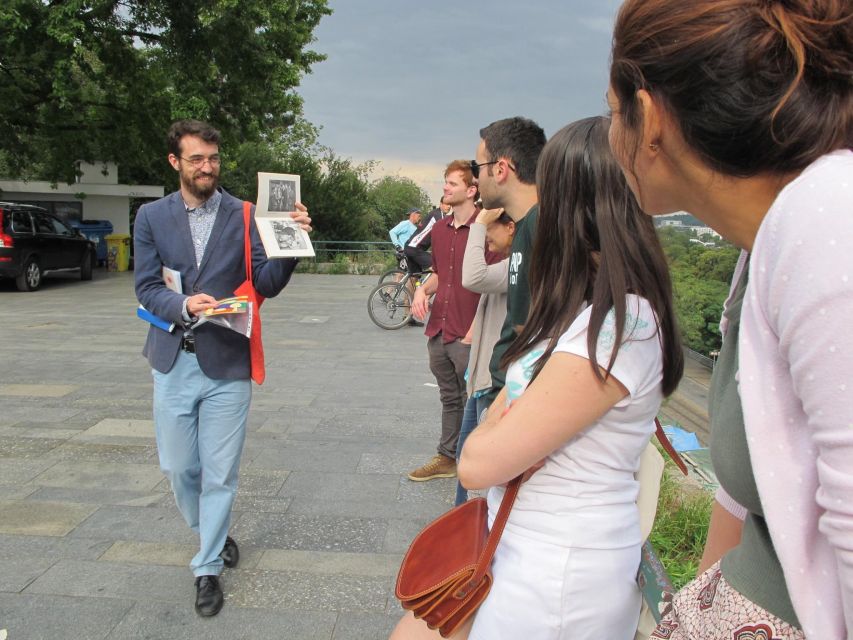
- Live guide in English or German with Q&A time during each building stop
- Three Cubist Houses plus Kovařovicova vila gives you real perspective on how Cubism looks when you’re standing in front of it
More private, guide-to-yourself outings in Prague.
- Prague Old Town: Private Tour★ 5.0 · 1,223 reviews
- Prague Airport Private Arrival Transfer★ 4.5 · 991 reviews
- Prague Airport Private Departure Transfer★ 4.5 · 780 reviews
- Discover Prague Private Tour – 3 hours★ 5.0 · 705 reviews
Prague’s Art Nouveau starts at the station (and that’s the point)
The tour begins at Prague’s Central Train Station on Platform No. 1, mid-platform, with your guide carrying a red folder. The starting location is not random. The station was reconstructed in 1909, and your guide uses that moment to talk about how Prague was changing right along with the wider European world.
You’ll get about 15 minutes at the station with guided context before the city walk starts. I like this approach because it helps you see buildings as part of a bigger shift, not as isolated photo backdrops. You’ll also be better prepared for what comes next: Art Nouveau wasn’t just decorative. It was a new way of thinking about form, style, and modern life.
One practical note: you’ll want comfortable shoes. The route moves in short hops—on foot for a lot of the time—with frequent changes of scene.
Art Nouveau in the New Town: you’ll notice details you missed before
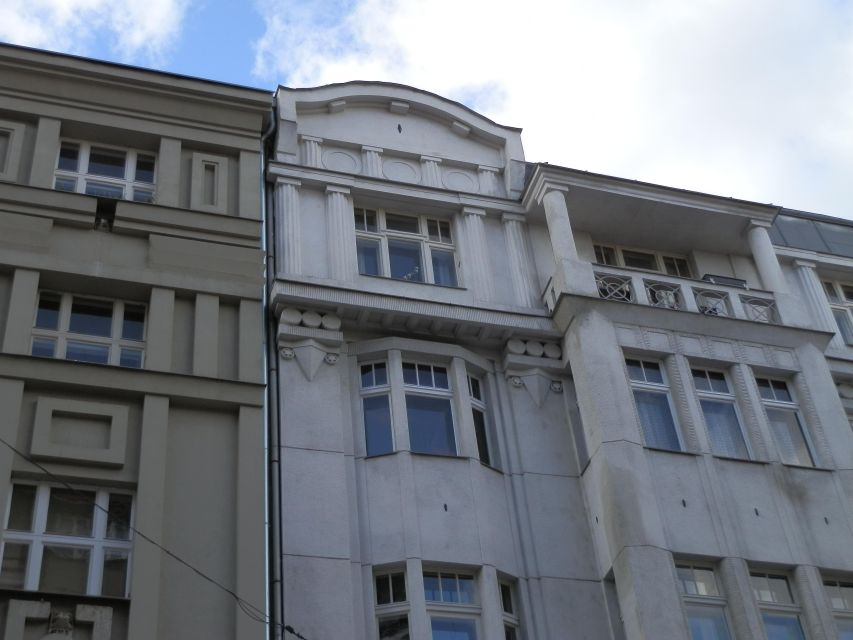
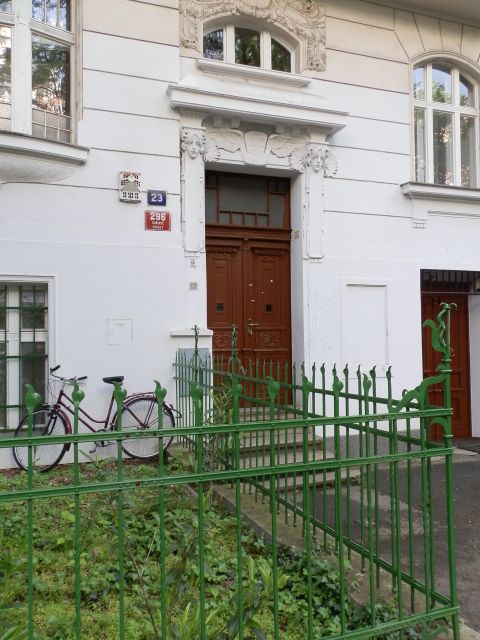
After leaving the station area, the tour heads into Prague’s New Town. This is where Art Nouveau shows up in many architectonic jewels from the Belle Epoque era. Your guide explains how the style evolved from 19th-century ideas—and why it felt so revolutionary when it appeared.
What I like about the narration is the cause-and-effect structure. Instead of listing styles, you learn what made Art Nouveau different: design language that tried to look forward, not just copy older models. When you start noticing that, facades stop being wallpaper. They become a readable argument.
Along the way, you’ll have several very short sightseeing moments—often 5 minutes—with walk-to-building rhythm. These are the stops where your guide trains your eye. Expect the kind of details you might otherwise breeze past: lines, curves, ornamental motifs, and the way the building’s surface works as a whole.
Jubilee Synagogue: a quick stop that sets the tone for Prague’s layers
A highlight early on is the Jubilee Synagogue. You’ll get a brief guided look—around 5 minutes—then move on. Even if it’s not your main target, the stop matters because it reinforces one of Prague’s big strengths: multiple cultures and eras sharing the same urban stage.
This isn’t a long museum visit. It’s a snapshot with interpretation. That’s useful when you only have a day and you want the city to stay understandable without turning the tour into a marathon.
Municipal House and the House of the Black Madonna: Prague icons with sharp context
Midway through the downtown-heavy part of the route, the tour slows down for two major architecture touchpoints.
First comes the Municipal House, where you’ll spend about 10 minutes sightseeing. This is one of those “yes, you’ve probably seen it from the outside” places where a guided moment helps you catch why it’s significant. Your guide uses this time to connect modern design ambition to the city’s longer architectural memory—showing how Prague’s older identity influenced what designers chose to build.
Then there’s the House of the Black Madonna, again about 10 minutes of sightseeing. The key value here is not just the building itself. It’s the way your guide frames the surrounding era: how these newer forms were being shaped at a time when Prague, like much of Europe, was dealing with rapid change.
If you like tours that explain how people thought in the past—not only what they built—these two stops are especially satisfying.

Wenceslas Square: a 20-minute reality check for your eyes and feet
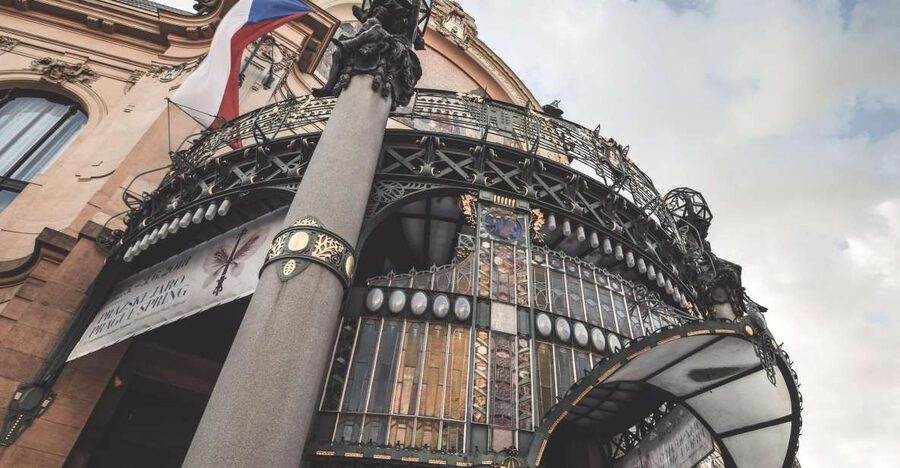
No Prague architecture day is complete without Wenceslas Square. You’ll spend about 20 minutes sightseeing there. This is longer than most stops, and it gives your guide space to talk about what it means for the city’s modern identity, right in the middle of an area that’s easy to treat as just a landmark.
Here’s the practical upside: Wenceslas Square is a good place to reset. You can orient yourself visually, check where streets lead, and re-sync your eyes after a stretch of ornate architecture. The tour keeps moving, but you’re not rushing blindly through one highlight after another.
Also, since the tour is private, you can ask quick questions right in the flow. If you want more detail on how Art Nouveau’s ideas changed the way buildings were made, this is a good moment to ask.
The less-famous stops that make the whole tour click
Between the big-name buildings, the route includes multiple hidden/lesser-seen sightseeing moments—each typically 3 to 5 minutes. The exact buildings aren’t spelled out in detail in the schedule data, but the idea is consistent: you’ll pause for modernist architecture details you’d miss without someone pointing them out.
I love this kind of structure because it changes the way you walk around Prague after the tour. You stop treating the city like a list. You start treating it like a pattern.
Your guide also explains how modern architects and their works helped cement the legacy of Prague’s ancient architecture—and helped with preservation. That’s a smart way to end the Art Nouveau part of your day: you understand not only what the styles were, but why the city still looks like it does today.
Tram ride timing: why the route feels efficient instead of exhausting
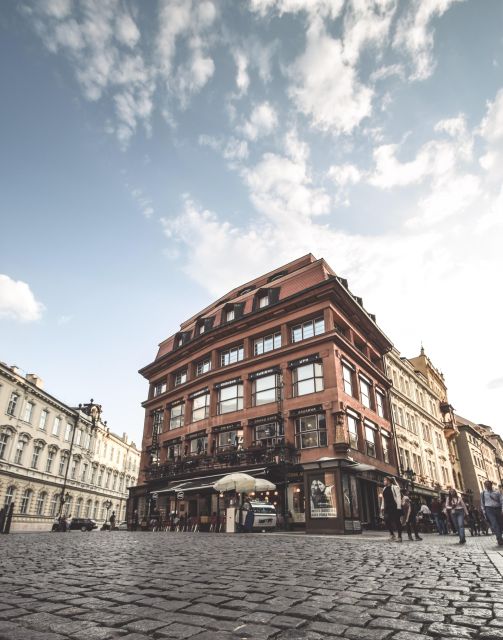
After spending substantial time around downtown, the tour switches gears. You’ll take public transportation for a short ride to a more remote area under Vyšehrad fortress. The tour includes public transportation tickets, and you’ll also have tram stops near the end for getting back toward the city center.
This matters because the tour is designed to be one day long without turning into a nonstop grind. Downtown Prague is dense and walkable, but Vyšehrad’s cubist architecture is not something you stumble onto by accident while chasing the main sights.
So you get two things at once:
- a classic Prague core filled with recognizable architecture
- and a second zone where the buildings get bolder, stranger, and more personal to the era
Vyšehrad under the fortress: where Cubism gets brave
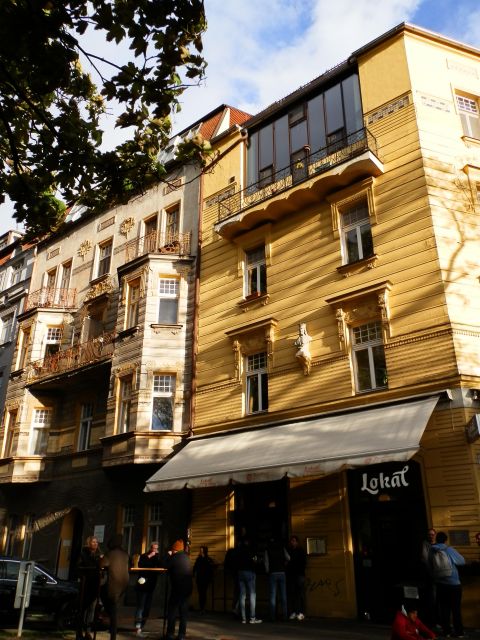
The late part of the tour focuses on Cubism, including some of the most daring examples in a compact area near Vyšehrad fortress. This shift is not just aesthetic. Your guide explains Cubism as a revolt—an attitude that pushed back against the popular Art Nouveau look.
And there’s another key theme: both styles didn’t survive untouched through the hard turns of the early 20th century. World War I changed the world, and architectural taste, funding, and priorities followed. You don’t need a timeline quiz to get it, but the tour gives you enough context to connect the buildings to their era.
This is the moment where you’ll really understand the differences. Art Nouveau tends to read as motion, flow, ornament-as-personality. Cubism reads as control and structure—geometry you feel in your body when you’re standing close enough.
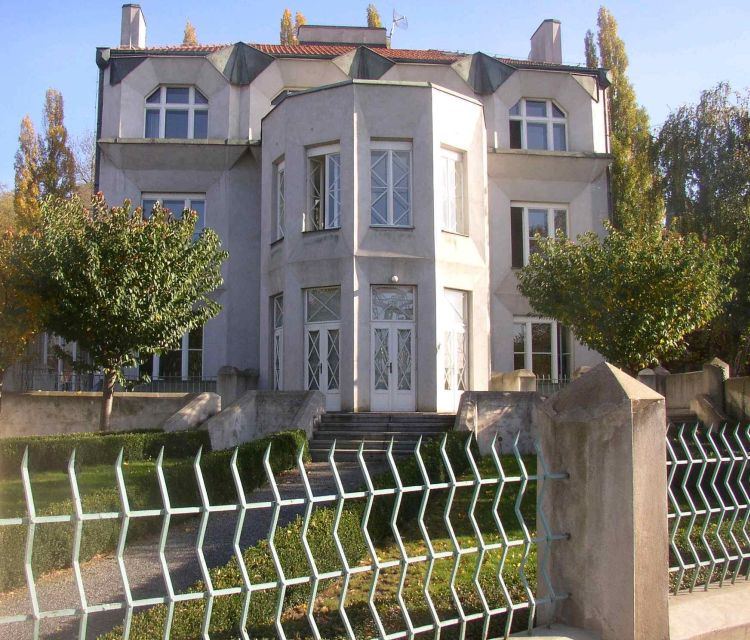
Three Cubist Houses, Kovařovicova vila, and cubist house Vyšehrad č. p. 98
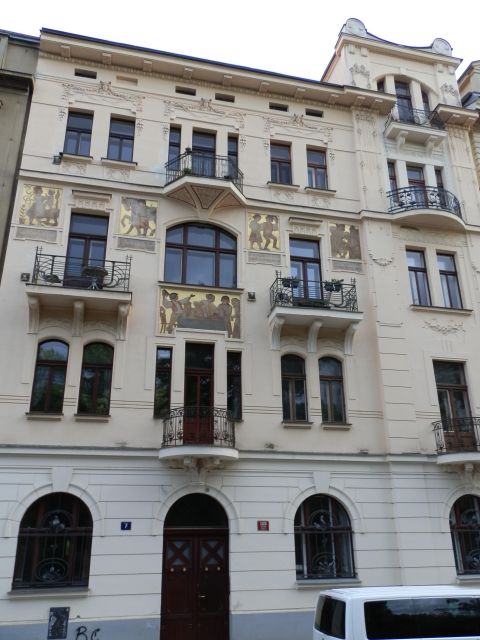
In the Vyšehrad area, the tour hits a set of named Cubist buildings:
- Three Cubist Houses (about 5 minutes sightseeing)
- Kovařovicova vila (about 5 minutes)
- Cubist house Vyšehrad č. p. 98 (about 5 minutes)
Even though each stop is short, the sequencing is smart. You see how Cubism changes from one building to the next, rather than treating it like one style snapshot. It’s the difference between hearing a single chord and hearing a whole song.
One of the best parts of a private format is that you can linger if something clicks. If one facade’s angles make sense to you, ask your guide to point out what to look for on the next one. If nothing clicks, ask again. That’s where a guide’s narration earns its keep.
Price and value: $84 for a full day of architecture storytelling
At $84 per person for a 1-day private tour, you’re paying for three things at once:
1) a live guide with English or German narration
2) transport included via public transportation tickets
3) a route built around architecture, not just landmarks
For Prague, that price can feel reasonable if you already know you want something more focused than a general walking tour. It’s also a strong value if you’ve done the big sights already and want something more specific—Art Nouveau and Cubism are niche enough that you benefit from interpretation.
Private tours cost more than group tours, of course. But here the private format matters because the guide is constantly shaping how you see buildings. You’re not just consuming information. You’re learning a way to look. If that kind of skill matters to you, the price is easier to justify.
Who this tour is best for (and who should skip it)
This is best for you if:
- you’ve already seen central Prague highlights and want a second layer
- you like architecture with context, not just photos
- you enjoy 20th-century stories told through real buildings
- you want less crowd chaos and more chances to ask questions
It may not be ideal if:
- you want a short, relaxed sightseeing loop with minimal walking
- you’re traveling with kids under 12, since the tour is not suitable for that age group
If you love Prague but want to see it through a different lens—one that connects style changes to what happened in the world—you’ll likely enjoy this day a lot.
Before you go: simple prep that makes the day smoother
Bring comfortable shoes. The schedule is built from short segments, lots of stepping, and several quick stops—so your legs do the work even if your brain feels like it’s just watching.
Also, come ready to ask questions. The tour is private, and your guide’s job is to explain why these styles arrived, how they fought for attention, and how they shaped modern aesthetics and architecture. If you’re the type who notices carvings and facade shapes, this day will feel like a reward.
Should you book the Prague Art Nouveau and Cubism private tour?
Yes—if you want a Prague day that’s focused on how modern style was born and how it responded to major upheaval. Starting at the 1909 Central Train Station, then moving through Art Nouveau landmarks and into Cubism near Vyšehrad is a smart way to see Prague as a living design story, not only as a postcard city.
Book it if you’re returning to Prague or if you only have a week and want to fill your schedule with architecture you can’t get from a simple self-guided stroll. I’d also say it’s a good choice when you like your guides to connect details to meaning—because this tour does that, repeatedly.
FAQ
FAQ
Where does the tour meet?
You meet on Prague’s Central Train Station, in the middle of Platform No. 1. The guide is carrying a red folder.
What’s the duration?
It’s listed as a 1-day tour.
How much does it cost?
The price is $84 per person.
Is it a private tour?
Yes, it’s a private group.
What languages are the guides?
The live guide is available in English and German.
Are transportation tickets included?
Yes. Tickets for public transportation are included in the price.
Is the tour wheelchair accessible?
Yes, wheelchair accessibility is noted as supported.
Is it suitable for children?
It is not suitable for children under 12.
What should I bring?
Wear comfortable shoes. That’s the main item called out for preparation.
Is there free cancellation?
Yes. You can cancel up to 24 hours in advance for a full refund.
More Prague Private Tours



More Tours in Prague
More Tour Reviews in Prague


More Prague tours we have written up lately


Private, compared.
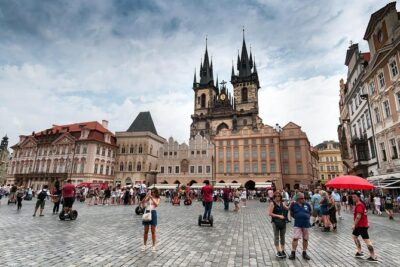 ★ 5.0Prague Old Town: Private TourFrom $541,223 reviews
 ★ 4.5Prague Airport Private Arrival TransferFrom $48991 reviews
 ★ 4.5Prague Airport Private Departure TransferFrom $48780 reviews
 ★ 5.0Discover Prague Private Tour – 3 hoursFrom $133705 reviews
 ★ 4.8City Highlights Private Walking TourFrom $210635 reviews
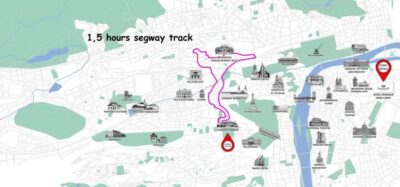 ★ 4.8Shared Group/Private Segway Tour with Hotel TransferFrom $67574 reviews
 ★ 5.0Winter Charm of Prague – private tour with PERSONAL PRAGUE GUIDEFrom $113479 reviews
 ★ 5.0Best of Prague Private Walking Tour (Left and Right Riverbank)From $134431 reviews