
REVIEW · PRAGUE MUSEUMS & GALLERIES
Prague: Mucha Museum Entry Ticket
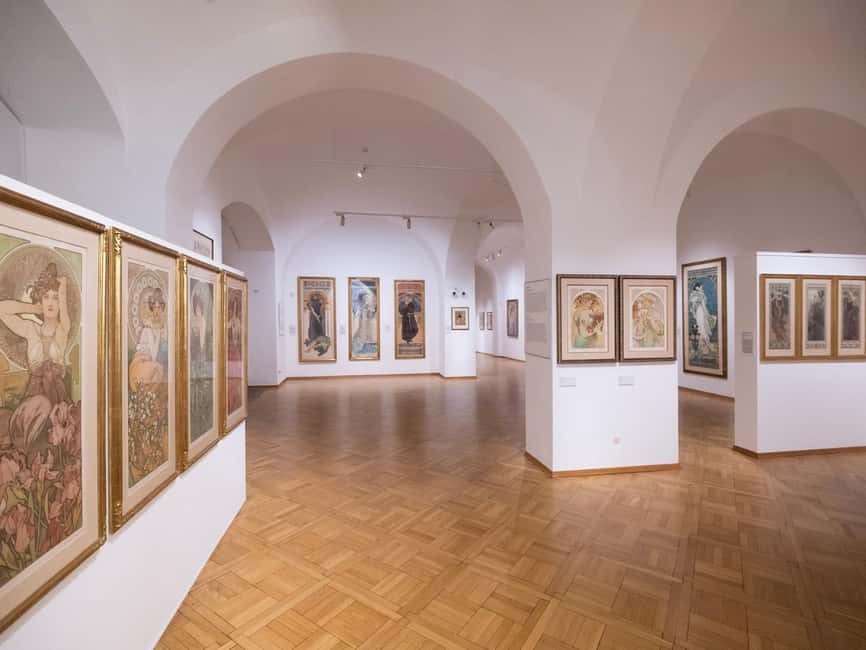
Mucha’s posters feel like time travel. With this Mucha Museum entry ticket, you get a focused look at Alfons Mucha’s Art Nouveau brilliance in the historic Kaunický Palace on Panská Street.
I like two things a lot here. First, the museum is organized by themes—Decorative Panels, Parisian posters, advertisements, Czech posters, and memorabilia—so you can see the “how” and the “why” behind the artwork without getting lost. Second, the MUSEUS AI guide uses QR codes so you can get explanations in your language while you walk the rooms.
One thing to consider: the museum is about 500 square meters, and the experience is designed for a full visit in a single day. If you want a long, slow, professor-style walkthrough, you may find it finishes quicker than you hoped.
In This Review
- Key highlights to look for
- Mucha Museum in Kaunický Palace: the setting and what it’s really about
- Galleries that make sense: Panels, posters, ads, Czech work, memorabilia
- The Ivan Lendl collection: nearly 100 originals and why that’s a big deal
- Parisian-era posters: where you see Art Nouveau in its natural habitat
- Advertisements and decorative panels: the practical genius behind the style
- Using the MUSEUS AI guide with QR codes in your language
- How much time you need for a smooth visit
- Museum shop: souvenirs that don’t steal your attention
- Ticket value: is $14 a good deal for this museum?
- Who should book this entry ticket, and who might want something else
- Should you book the Mucha Museum entry ticket?
- FAQ
- FAQ
- Where is the Mucha Museum located?
- How much does the Mucha Museum ticket cost?
- How long is the visit?
- What does the entry ticket include?
- Is a guided tour included with the ticket?
- What galleries or sections are inside the museum?
- What is the Ivan Lendl collection?
- Does the museum offer an AI guide?
- What languages are available for the AI guide?
Key highlights to look for
- QR-code AI explanations (MUSEUS) that answer questions in six languages today
- Ivan Lendl collection with nearly 100 original pieces, with selections tied to Jack Rennert
- Parisian brand posters from names like Moët & Chandon, Job Cigarettes, and Lefèvre-Utile Biscuits
- Themed galleries that help you connect Decorative Panels to graphic design
- Museum shop with exclusive Mucha-inspired gifts and posters
Rainy afternoon covered. More Prague museums and galleries.
- Prague: Klementinum Library & Astronomical Tower Guided Tour★ 4.5 · 5,050 reviews
- Prague: Museum of Fantastic Illusions Entry Ticket★ 4.3 · 4,337 reviews
- Prague: Petřín Tower and Mirror Maze Entry Ticket★ 4.3 · 2,294 reviews
- IAM Illusion Art Museum Entry Ticket★ 4.2 · 1,664 reviews
Mucha Museum in Kaunický Palace: the setting and what it’s really about
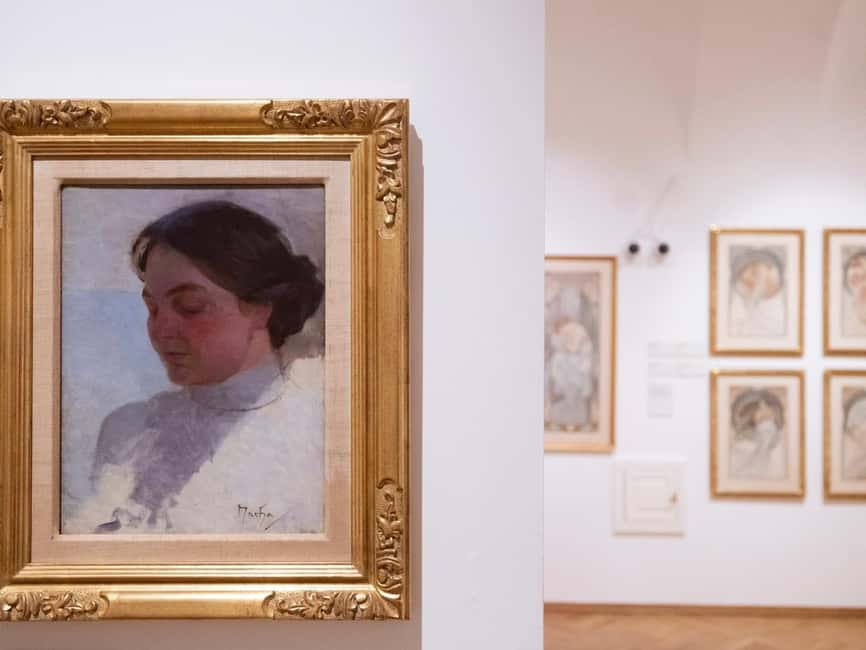
The Mucha Museum is in Kaunický Palace on Panská Street, right in the middle of Prague’s day-to-day action. It’s not some scattered “museum of everything.” This place is built as a single-artist story, and that matters.
This is also the first museum in the world dedicated exclusively to Alfons Mucha’s life and work. Since it opened in 1998, it has drawn millions of visitors, which tells you the format works: people come, see the artwork, and leave with clearer ideas about who Mucha was and why his style landed so strongly in Art Nouveau.
The museum spreads across about 500 square meters, with thematic sections that keep the pace moving. That makes the ticket good value if you’re the type who likes to see the artwork directly rather than chasing long timelines. You’ll spend the day walking from one design type to another and noticing how Mucha’s visual language repeats and evolves.
Galleries that make sense: Panels, posters, ads, Czech work, memorabilia
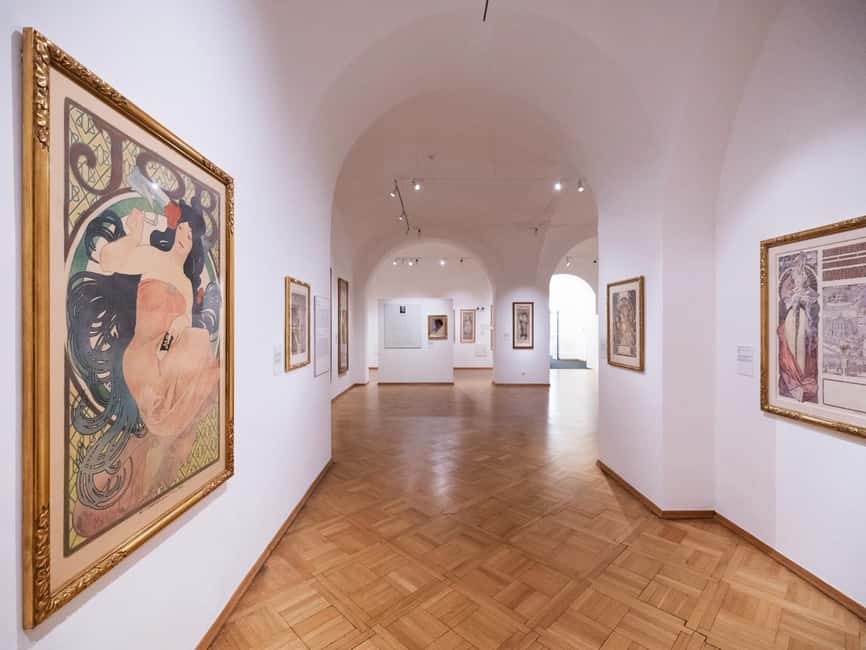
The museum is divided into themed sections, so you’re not just wandering—you’re building a mental map. The main areas include Decorative Panels, Parisian Posters, Advertisements, Czech Posters, and Memorabilia.
Here’s why that layout works for you:
Decorative Panels show Mucha’s design side—those decorative, composed scenes where everything feels intentional: the lines, the framing, the sense of rhythm. Once you’ve seen this section, the later poster work clicks more quickly, because you can spot the same design “grammar” showing up in different formats.
The Parisian galleries and advertisements are where you see the commercial genius. Mucha didn’t just paint; he made graphic art that businesses wanted around them. Seeing works tied to recognizable brand names—Moët & Chandon, Job Cigarettes, and Lefèvre-Utile Biscuits—helps you understand Art Nouveau as a real-world style, not only something for salons.
Then the Czech posters and memorabilia ground it again in Mucha’s broader identity. If you’re curious about the movement beyond the look, these sections help you connect the dots without forcing you into heavy reading.
The Ivan Lendl collection: nearly 100 originals and why that’s a big deal
One of the smartest parts of this ticket is the chance to see the Ivan Lendl collection. The museum includes nearly 100 original pieces from this collection, and the selection is associated with Jack Rennert.
This matters because original works beat photographs every time. Prints are good for context, but originals carry details that photos can flatten: the texture of the work, the precision of the lines, and the exact feeling of color and composition.
In practice, the Lendl material gives you a “through-line” to Mucha’s career—especially useful if you’re not starting the day as a die-hard Mucha expert. Instead of jumping randomly between poster styles, you’re offered a set of works that help your eye learn how his design patterns shift over time.
If you enjoy graphic design, the Lendl portion is the part where you’ll likely slow down. You’ll start noticing how Mucha built images to communicate quickly—without losing beauty. It’s a lesson in persuasion-by-design.
Parisian-era posters: where you see Art Nouveau in its natural habitat
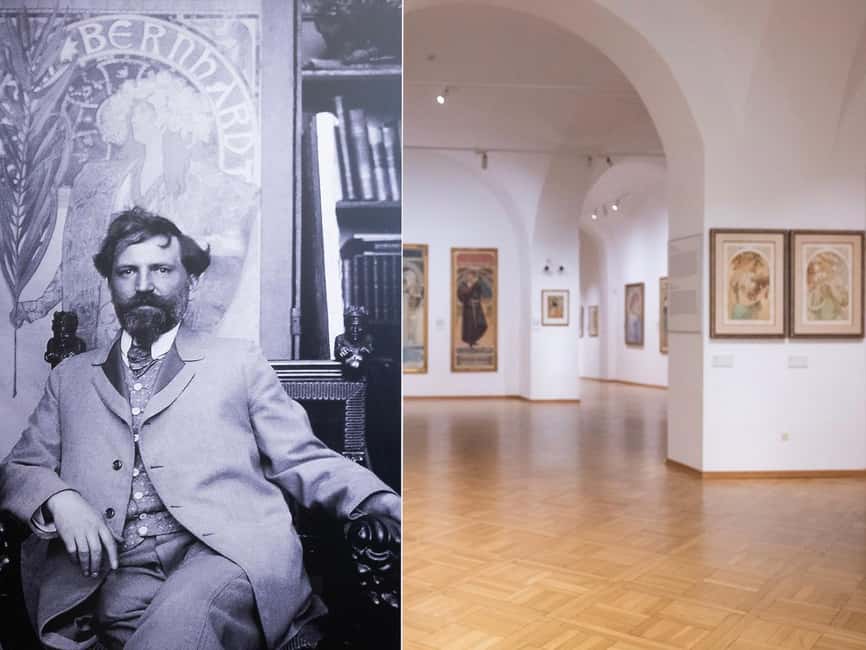
The museum’s Paris-themed room is a highlight for a reason. Mucha’s Parisian period is where his famous look really took shape in the form people recognize: elegant figures, decorative borders, and lettering that feels like part of the artwork, not an afterthought.
What I like about this section as a visitor is that it shows you the relationship between art and mass viewing. These weren’t created in isolation. They were meant to be seen in public, on streets and in the everyday visual clutter of city life. You get to understand why the style spread: it was striking from a distance and detailed up close.
The brand connections add another layer. When you see Mucha’s work connected to names like Moët & Chandon, you start thinking beyond the art surface. You’re seeing the design choices companies paid for—how color, figure, and typography could make a product feel like a lifestyle.
If you’re a fan of Art Nouveau, this is likely the room that most rewards repeat attention. Even if you move quickly, you’ll leave with at least a few poster images stuck in your head.
Skip the queue. More entry tickets and passes for Prague.
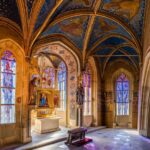

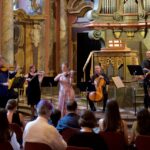

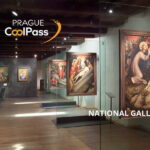
Advertisements and decorative panels: the practical genius behind the style
A lot of people think Art Nouveau is mainly about aesthetics. At Mucha Museum, you can see the practical side too—how decorative design becomes communication.
In the Advertisements section, you’ll notice that Mucha’s work isn’t just pretty. It’s structured to sell attention. The designs guide your eyes with clear visual steps: framing elements pull you inward, figures and faces act like anchors, and the lettering ties the whole composition back to the message.
Then, in Decorative Panels, you see the same instincts with a different purpose. These panels feel more like complete visual worlds. The difference helps you understand Mucha’s range: he could do immersive decorative scenes, but he also knew how to compress ideas into a poster format.
So if you’re wondering whether this ticket is “just posters,” it’s not. The museum makes you see how posters and panels are part of the same design skill set.
Using the MUSEUS AI guide with QR codes in your language
The museum now offers an interactive AI guide called MUSEUS. It works right at the start: scan a QR code with your phone at the beginning of the exhibition, then use the AI curator for explanations and questions.
That’s a big quality-of-life upgrade if you’re the type who wants context while you’re looking at the art. Instead of reading every placard like it’s homework, you can get targeted answers that match what you’re seeing right then.
Language support is also a real plus. Today, the AI guide communicates in six languages: Japanese, Chinese, Korean, French, Czech, and English. Based on that setup, you’ll likely get the most accurate and comfortable experience if you choose your own language.
One practical tip: keep your phone charged. A QR-based guide is simple, but you don’t want to hit low battery halfway through the best sections.
Also, one nice detail from the way people talk about the museum: the QR codes work well in French, and it makes the visit easier if you want explanations on the spot rather than relying only on wall text. If French is your strongest language, you’ll probably feel like the museum was built for you.
How much time you need for a smooth visit
This ticket is valid for 1 day, and the museum encourages choosing a starting time based on availability. Because the exhibition is roughly 500 square meters, you can plan a visit that feels relaxed instead of rushed.
A good approach is to follow the museum’s theme flow rather than bounce around randomly:
- Start with the sections that give you the big picture (panels and the Parisian poster focus).
- Then move into advertisements where you’ll start spotting the same design tricks used for selling.
- Finish with the Czech-focused areas and memorabilia for closure.
If you go in expecting a long, deep lecture-style experience, you may feel the pace is too quick. That’s not a problem with the museum so much as a mismatch in expectations. Think of it as a tight, design-forward day: you’re there to see the work, connect patterns, and leave with a clear sense of Mucha’s visual world.
If you want to stretch the topic beyond the museum itself, pairing it with another Mucha-related stop in Prague can help, especially if you’re the kind who likes extra context before and after.
Museum shop: souvenirs that don’t steal your attention
You end the visit at the museum shop, which sells exclusive gifts and posters inspired by Mucha’s art. This is a good time to shop because your eye will already be trained by the galleries.
If you’re trying to avoid impulse buys, set a small rule for yourself: look for posters that match the rooms you cared about most. That way, the purchase feels like a memory of a theme you actually explored, not a generic souvenir.
The shop also works as a low-pressure way to extend the experience. Even if you don’t buy anything, browsing helps you spot the artwork themes again in a different format.
Ticket value: is $14 a good deal for this museum?
At about $14 per person, the ticket price is positioned for a “high clarity” art stop. You’re paying for access to all exhibition sections and a museum designed around a single artist.
The best value signals for you are:
- You like seeing original works and design details without needing a guided tour.
- You enjoy organized themes, especially posters and advertisements.
- You’ll use the MUSEUS QR guide for language support while you walk.
If you already know a bit about Art Nouveau and Mucha, you’ll likely feel the price is fair because you can move efficiently from room to room and still get meaning. If you’re brand-new, the AI guide and the themed organization do a lot of the teaching for you, so you’re not paying to stand in front of confusing text.
The only “value risk” is timing: if you prefer ultra-long museum marathons, the museum’s size means your visit may feel short. But for a one-day plan that fits into Prague sightseeing, it’s a clean, focused investment.
Who should book this entry ticket, and who might want something else
You’ll probably love this if:
- Art Nouveau is your style (and you like graphic design and poster art).
- You want original Mucha work tied to both Parisian and Czech themes.
- You like using your phone to get explanations as you go.
You might want to pair it or look elsewhere if:
- You expect a long guided-style lecture.
- You want a huge museum campus with many hours of roaming.
- You mainly want modern art or general European painting—this is specifically Mucha, and it stays that way.
Should you book the Mucha Museum entry ticket?
Yes, you should book it if you want a one-day Mucha experience that feels organized, design-focused, and easy to understand. The mix of themed sections, the Ivan Lendl material, and the QR-based MUSEUS guide make it practical for different interests and different language needs.
I’d say it’s especially worth it if you’re into Art Nouveau posters, typography, and the way commercial art can be genuinely beautiful. And if your plan has room for only one dedicated Mucha stop, this is the ticket that gives you the strongest “start-to-finish” understanding of his work in Prague.
FAQ
FAQ
Where is the Mucha Museum located?
The Mucha Museum is in Kaunický Palace on Panská Street in Prague.
How much does the Mucha Museum ticket cost?
The price is listed as $14 per person.
How long is the visit?
The ticket is valid for 1 day, so you can plan your visit within that time window.
What does the entry ticket include?
The ticket includes entry to the Mucha Museum and access to all exhibition sections.
Is a guided tour included with the ticket?
No. Guided tours are not included.
What galleries or sections are inside the museum?
The museum is organized into themed sections including Decorative Panels, Parisian Posters, Advertisements, Czech Posters, and Memorabilia.
What is the Ivan Lendl collection?
The museum includes nearly 100 original pieces from the Ivan Lendl collection, connected with Jack Rennert.
Does the museum offer an AI guide?
Yes. The museum offers an interactive AI guide called MUSEUS, accessed by scanning a QR code at the beginning of the exhibition.
What languages are available for the AI guide?
The AI guide is available in six languages: Japanese, Chinese, Korean, French, Czech, and English.
More Tour Reviews in Prague


More Prague Tickets & Passes
More Prague Museums & Galleries

More Prague tours we have written up lately

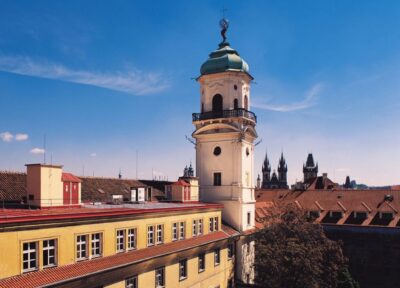
Prague Museums & Galleries, compared.
 ★ 4.5Klementinum Library & Astronomical Tower Guided TourFrom $185,050 reviews
 ★ 4.3Museum of Fantastic Illusions Entry TicketFrom $174,337 reviews
 ★ 4.3Petřín Tower and Mirror Maze Entry TicketFrom $142,294 reviews
 ★ 4.2IAM Illusion Art Museum Entry TicketFrom $161,664 reviews
 ★ 4.0Museum of Senses Admission TicketFrom $181,445 reviews
 ★ 5.0IAM Illusion Art Museum Prague Fast Pass TicketFrom $13957 reviews
 ★ 4.5Admission Ticket to Museum of Senses in PragueFrom $19861 reviews
 ★ 4.2Museum of Bricks Entry TicketFrom $14851 reviews
Browse the lists this tour appears in