
REVIEW · PRAGUE MUSEUMS & GALLERIES
Museum Story of Prague
Prague’s past feels close-up here, fast. I like how interactive displays turn big historical periods into something you can follow, and I like the sweep from medieval legends to 20th-century change in just 1 hour 30 minutes. One thing to consider: the museum uses a lot of QR codes, and if you prefer to read lightly, you may get tired after the first floor.
The museum is built like a guided story, with dimly lit rooms, film installations, and audio elements that keep the timeline moving. You’ll meet characters and moments like Jan Žižka and the Hussites, Prague’s Old Town Hall and the Astronomical Clock era, and the silent presence of the Golem. There’s also medieval torture on display, but it’s presented without practical demonstrations.
On the upper floors, the tone gets heavier, revisiting Nazi occupation, the bombing of Prague, and Soviet occupation before landing on the Velvet Revolution and Czech achievements in a more hopeful space. If you want a museum that feels like a narrative, this one is worth your time.
In This Review
- Key highlights to plan around
- Story Of Prague Museum in 90 minutes: what you’ll actually see
- Knights, Hussites, and the Old Town Hall era: where the story starts
- The Golem in dim halls: why this section hits
- Hidden room and exhibits you won’t see in photos
- Second floor: Nazi occupation and the bombing of Prague
- Third floor: Soviet occupation to the Velvet Revolution and Czech achievements
- Interactive displays, film, audio, and the QR-code question
- Price and value: is $19.27 fair for what you get?
- Who this museum fits best (and who should skip it)
- Practical tips: how to get the most out of your visit
- Should you book Story Of Prague Museum?
- FAQ
- What is the duration of the Museum Story of Prague experience?
- How much does the Museum Story of Prague cost?
- What time does it start?
- Is a ticket included with the experience?
- Do I get a mobile ticket?
- Is it easy to get to using public transportation?
- Is free cancellation available?
Key highlights to plan around
- Mixed reality storytelling using film installations and audio elements, not just wall labels
- Three-floor timeline, from knights and kings to the Velvet Revolution
- The Golem experience, a major visual anchor in the dimmed halls
- A hidden room and unusual exhibits that don’t show up in many photos
- Tough history handled in sections, including Nazi occupation and Soviet rule
- QR codes can be repetitive, so go at your pace and don’t feel forced to scan everything
Rainy afternoon covered. More Prague museums and galleries.
- Prague: Klementinum Library & Astronomical Tower Guided Tour★ 4.5 · 5,050 reviews
- Prague: Museum of Fantastic Illusions Entry Ticket★ 4.3 · 4,337 reviews
- Prague: Petřín Tower and Mirror Maze Entry Ticket★ 4.3 · 2,294 reviews
- IAM Illusion Art Museum Entry Ticket★ 4.2 · 1,664 reviews
Story Of Prague Museum in 90 minutes: what you’ll actually see
Think of the Story Of Prague as a museum you experience like a timeline movie. Instead of separate exhibits that you wander through randomly, the layout pushes you floor by floor through major eras. The result is that you get context—you understand how one period leads into the next—without needing to read a book first.
The whole visit is about 1 hour 30 minutes. That makes it a smart add-on if you’re doing Old Town sights in the morning or if you want something indoor that still feels active. You’ll walk through multiple rooms and encounter interactive components, and you’re guided by audio and film elements that help you stay oriented.
You also get a ticket that includes admission, and the ticket is delivered as a mobile ticket. That’s handy when you’re juggling tram stops and changing plans, because you don’t have to hunt for paper.
Knights, Hussites, and the Old Town Hall era: where the story starts
The museum starts by putting Prague’s medieval world on stage. You’ll move through the era of knights and kings, and then into the period connected to Jan Žižka and the Hussites. If you’ve seen Prague’s Gothic architecture outside and wondered what was happening inside that time period, this is a way to connect the dots.
Then the story turns toward landmark civic life—especially the Old Town Hall and the Astronomical Clock era. Even if you’re not studying architecture, this kind of context matters because it explains why these sites are more than pretty backdrops. You learn what role the city center played and how Prague’s identity got shaped through public power and public timekeeping.
The museum also includes medieval torture as part of the historical picture. The key detail is that it’s presented without practical demonstrations. In other words, it’s not a live reenactment. It’s more about historical framing than shock value, which makes it easier to handle if you’re traveling with mixed comfort levels.
The Golem in dim halls: why this section hits
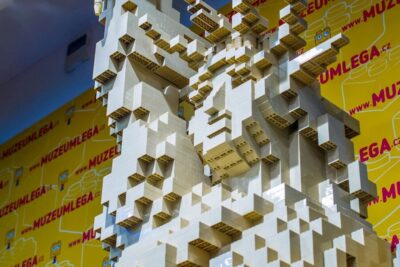
This is the moment people talk about for a reason: in the dimly lit rooms, a towering Golem figure stands silently. Even if you don’t know the legend in advance, the museum uses the visual weight of that figure as a kind of anchor. You remember it, and it helps the museum shift from straight historical events into the world of folklore and mysticism.
For me, the value of this part is the emotional tone. Prague folklore isn’t a separate topic here; it’s presented as part of how the city thought and told stories. The museum mixes the eerie atmosphere with the timeline you’ve already been following, so the legend doesn’t feel tacked on.
You should plan to slow down for this section. If you rush, you miss the intended mood. If you take a minute, it’s one of the best “I get it now” moments in the whole experience.
Hidden room and exhibits you won’t see in photos
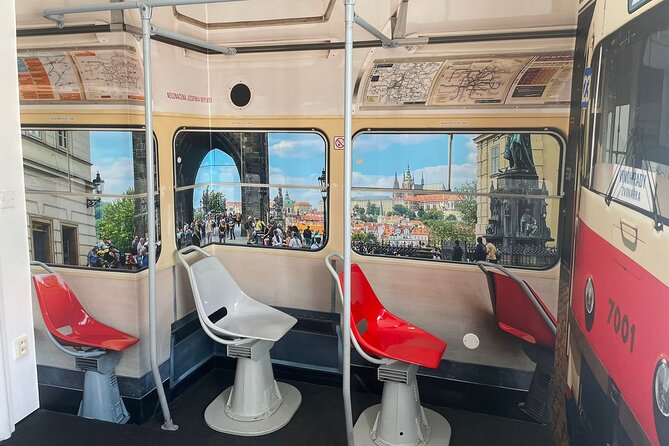
One of the most practical ways to judge a museum experience is whether it’s built for actually being there—not just for marketing shots. This one has a hidden room plus unique exhibits that aren’t captured well in typical photos. That’s a big deal because it means your visit won’t feel like you’ve already seen everything online.
This also changes how you should approach the visit. Don’t treat it like a quick checklist. If you notice signage that suggests something special in a corner or off the main route, take the time to follow it. Hidden content is often where the museum’s personality shows up.
And since you’re only there for about 90 minutes, that’s also a reminder not to get stuck on one display too long—especially if you want the full arc from medieval Prague through to modern history.
More Prague museums and collections worth an hour.


Second floor: Nazi occupation and the bombing of Prague
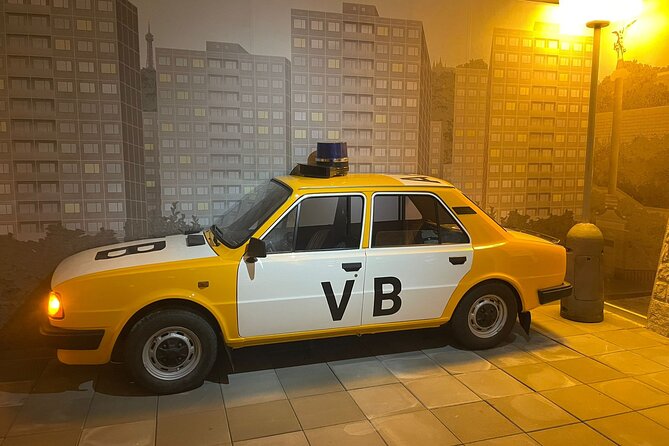
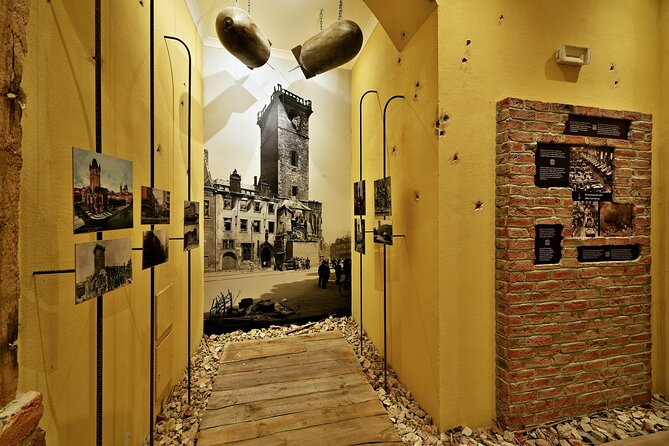
The second floor shifts the mood and the stakes. You revisit Nazi occupation and the bombing of Prague, plus a broader look at how the city and its people were shaped by wartime pressure. The museum organizes these topics so you don’t get overwhelmed by jumping between eras.
This is where the museum’s storytelling method helps. Audio and film elements keep the narrative tied together, so you’re not left staring at separate facts with no “what happened next” thread. You’re still in a museum, but you’re being led through cause and effect.
A practical consideration: if you’re sensitive to heavy history, give yourself permission to go slower here. Take a breather between rooms. It’s not a live performance, but the themes are intense, and the museum doesn’t treat them like background.
Third floor: Soviet occupation to the Velvet Revolution and Czech achievements
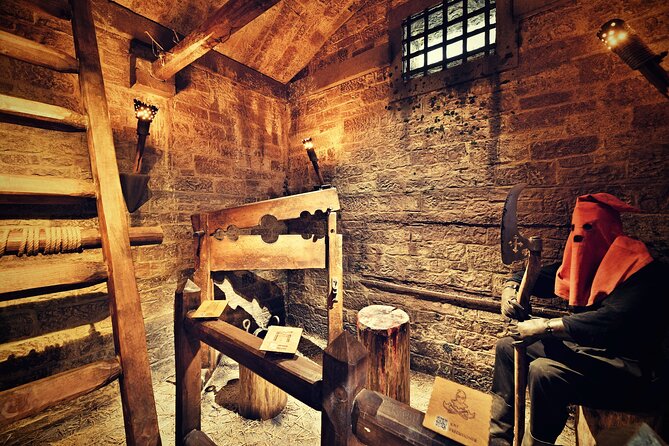
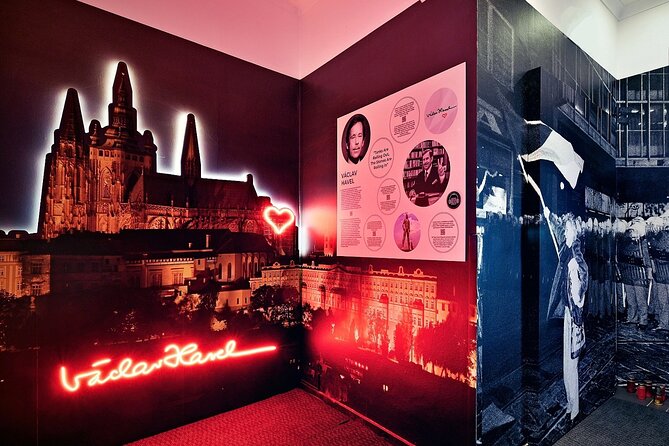
Then the story turns toward the decades that follow wartime disruption, including Soviet occupation. After that comes the bright turn many people come for: the Velvet Revolution and the way Czech society changed in the late 20th century.
What I like about ending here is that it avoids the all-grim ending problem. You don’t just leave with tragedy; you leave with direction—how change happened and what the country has achieved afterward. The museum also points to Czech global achievements, which helps connect the idea of “history” to the present.
This floor is often where visitors feel their energy return. If you’ve been walking through darker rooms, you’ll likely appreciate this shift. It’s also the section that tends to feel most hopeful without pretending the past was easy.
Interactive displays, film, audio, and the QR-code question
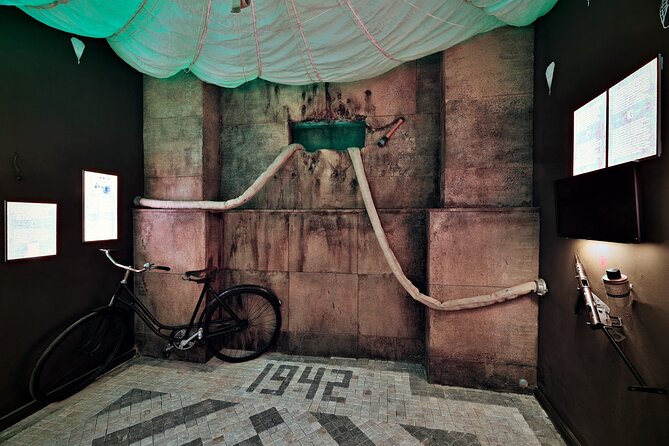
The Story Of Prague uses interactive displays and a mix of media: film installations and audio elements. That combination is useful because it gives you multiple ways to understand the story. Some people prefer listening, others like visual pacing. Here, you get both.
Still, one caution from experience with museums that rely on scanning: the QR codes can feel heavy. If you’re not in the mood to stop and scan repeatedly, you can still enjoy plenty without doing every code. My advice is simple—scan what you need, then move on. You’re there for the story and the rooms, not for a technical task.
If you want the best balance, keep your attention on the main narrative features (the film and audio parts) and treat QR content as optional support. That way, you keep momentum and don’t interrupt the flow of the timeline.
Price and value: is $19.27 fair for what you get?
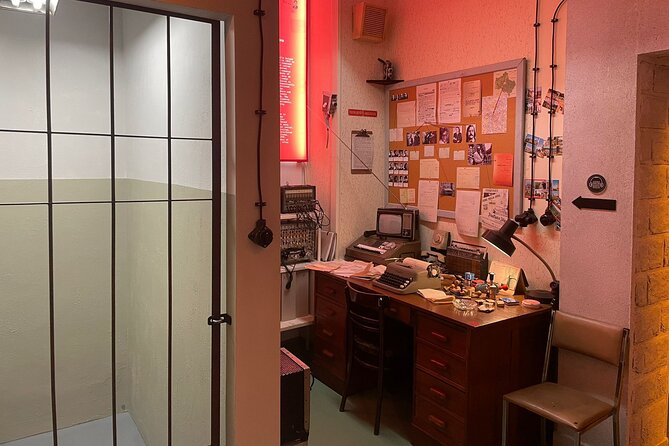
At $19.27 per person, this museum sits in a range that can work well for travelers who want a “middle option” between free sights and big paid guided tours. The value comes from two things:
- Time efficiency. At around 90 minutes, you get a full arc without burning half a day.
- Ticket includes admission and uses mixed-media elements. You’re not just paying for entry; you’re paying for the experience design.
If you’re comparing costs, ask yourself what you’d spend for a similar indoor, story-based attraction elsewhere. In this price zone, you’re paying for pacing, structure, and media-driven interpretation—especially since it’s a museum that tries to connect eras rather than separate them.
It’s also a good value if the weather turns. Prague can shift quickly, and having a museum plan that feels like an active walk through history is a solid backup.
Who this museum fits best (and who should skip it)
This experience is ideal if you like history explained in a modern way. You don’t need a background in Czech history, because the museum’s timeline approach helps you build the story as you go.
You’ll also appreciate it if you want a memorable Prague legend moment. The Golem element alone makes it more than a standard history room. And the museum’s use of audio and film tends to work well for people who learn by narrative and atmosphere rather than reading every label.
Where I’d be more cautious: if you hate scanning QR codes or you prefer very quiet, traditional museum layouts, you might find the interactive elements a bit too “tech-forward.” You can still enjoy it by skipping extras, but you should know the museum leans into those tools.
If you’re traveling with kids, the museum is still “for most travelers” and includes interactive displays. Just be sure your group is okay with heavy 20th-century topics on the upper floors.
Practical tips: how to get the most out of your visit
Keep these simple moves in mind, and the museum will feel smoother:
- Go with a timeline mindset. Don’t treat each floor as separate; connect what you learn from one era to the next.
- Slow down at the Golem moment and at the Velvet Revolution ending so the emotional tone lands.
- If you see QR codes that look like extra background, you can use them selectively. The main story is still communicated through the spaces and the media.
- Give yourself the full 90 minutes. If you cut it short, you’ll likely miss the strongest “arc” from medieval Prague to modern change.
The museum is near public transportation, which matters because it makes your day planning easier. If you’re juggling tram routes, this is one of those “drop-in style” museum options that doesn’t require a car or complicated detours.
Should you book Story Of Prague Museum?
Book it if you want a structured, media-driven Prague history experience that moves fast but still feels meaningful. The best reasons are the timeline flow, the Golem atmosphere, and the way the museum touches everything from medieval eras to the Velvet Revolution in one visit.
Skip it or reconsider if you strongly prefer traditional, quiet museums and you know you’ll resent QR-code interruptions. Also consider skipping (or preparing mentally) if your group doesn’t handle wartime themes well, since the upper floors cover Nazi occupation, the bombing of Prague, and Soviet occupation.
If you’re the type who likes history with a storyline—this one is a good fit.
FAQ
What is the duration of the Museum Story of Prague experience?
It’s approximately 1 hour 30 minutes.
How much does the Museum Story of Prague cost?
The price is $19.27 per person.
What time does it start?
The start time is 10:00 am.
Is a ticket included with the experience?
Yes. Admission ticket is included.
Do I get a mobile ticket?
Yes, the experience uses a mobile ticket.
Is it easy to get to using public transportation?
Yes, it’s near public transportation.
Is free cancellation available?
Yes. Free cancellation is available up to 24 hours in advance for a full refund.
More Prague Museums & Collections

More Tour Reviews in Prague




More Prague Museums & Galleries


More Prague tours we have written up lately

Prague Museums & Galleries, compared.
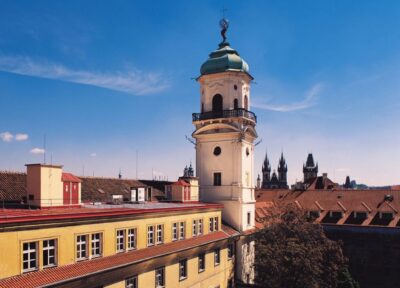 ★ 4.5Klementinum Library & Astronomical Tower Guided TourFrom $185,050 reviews
 ★ 4.3Museum of Fantastic Illusions Entry TicketFrom $174,337 reviews
 ★ 4.3Petřín Tower and Mirror Maze Entry TicketFrom $142,294 reviews
 ★ 4.2IAM Illusion Art Museum Entry TicketFrom $161,664 reviews
 ★ 4.0Museum of Senses Admission TicketFrom $181,445 reviews
 ★ 5.0IAM Illusion Art Museum Prague Fast Pass TicketFrom $13957 reviews
 ★ 4.5Admission Ticket to Museum of Senses in PragueFrom $19861 reviews
 ★ 4.2Museum of Bricks Entry TicketFrom $14851 reviews
Browse the lists this tour appears in