
REVIEW · WALKING TOURS
Walking through ages: 11th to 21st century, Prague flavoured
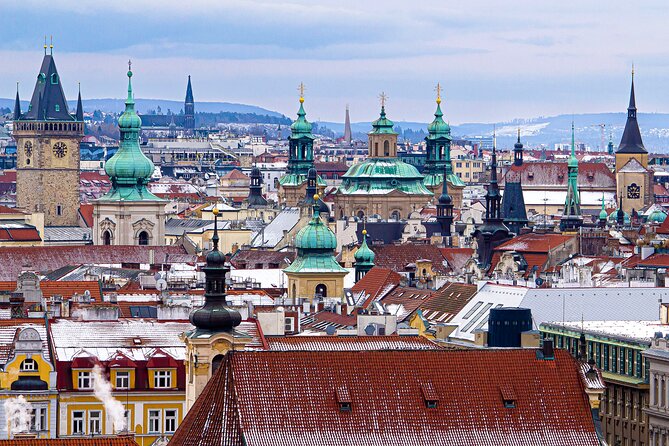
Prague in four focused hours sounds perfect. This route stitches together Prague Castle views with the Charles Bridge corridor, then carries you through Josefov, Old Town Square, and the National-era streets—covering the 11th through the 21st century in one smooth loop. I like the tight stop lengths (you see the main exteriors without turning it into an all-day slog), and I really like Vadim’s approach—clear explanations, lots of direct answers, and a flexible pace that can match your timing. One catch: it’s exterior-only, so interiors such as St. Vitus Cathedral, St Nicholas Church, and the Old-New Synagogue are not included and you may need separate tickets.
You start at Pražský hrad at 10:00 and finish at Wenceslas Square, which is handy because it drops you near Prague’s main transit and nightlife energy. The group is capped at 10, and pickup is offered, but you’ll still want to plan for public transport getting to the castle area (listed as €2.00 per person) and for walking time in cobbles and crowds.
In This Review
- Key things that make this Prague walk worth your time
- A 4-hour “ages” sampler: how the route tells Prague’s story
- Meeting at Pražský hrad and getting your bearings fast
- Prague Castle: the power seat behind the skyline
- St. Vitus Cathedral and Hradčany Square: Gothic meaning + best city views
- Lesser Town and Malostranská: Baroque streets where you can breathe
- Charles Bridge: the 700-year centerpiece of postcard reality
- Josefov: stepping into Jewish Prague with architecture and legend
- Old Town Square and Stare Mesto: clock, university, and Mozart-linked theater
- Obecní dům and Wenceslas Square: Czech identity through Art Nouveau to modern memory
- Price and logistics: what you’re really paying for
- What I think this tour is best at (and where it’s not)
- Who should book this Prague 11th–21st century walk
- Should you book it?
- FAQ
- Is admission included for the main sights?
- How long is the tour?
- What language is the guide?
- Is pickup included?
- Where does the tour start and end?
- What time does the tour begin?
- How big is the group?
- Do I need to pay for public transport?
- FAQ
- Do I need to bring snacks or water?
- Can service animals join the tour?
Key things that make this Prague walk worth your time
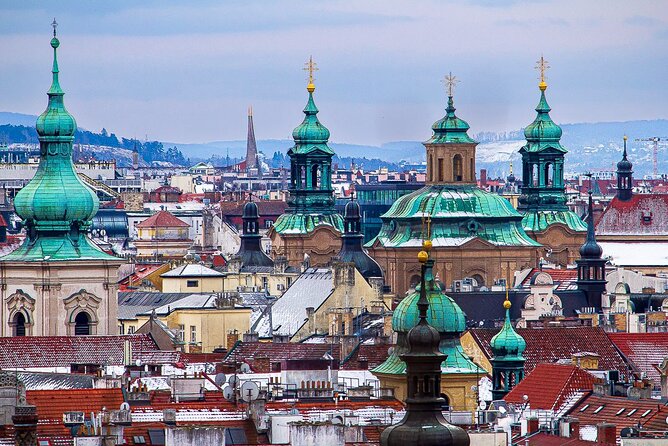
- Prague Castle to Wenceslas Square in one go, so you don’t have to crisscross the city all day
- Small group (max 10 travelers) means you can ask questions and actually get answers
- Vadim-led storytelling with detailed responses and a pace tailored to timing
- Exterior-only route focused on seeing big icons fast, not waiting in ticket lines
- 11th to 21st-century sweep from medieval power to Art Nouveau and modern squares
Keep walking. More of Prague at street level.
- Prague: 3-Hour Walking Tour of Old Town & Prague Castle★ 4.7 · 5,696 reviews
- Prague: Ghost Walking Tour Where Legends Come To Life★ 4.4 · 5,253 reviews
- Prague: Jewish Quarter Walking Tour with Admission Tickets★ 4.7 · 3,729 reviews
- Prague Guided Walking Tour and Cruise with Authentic Czech Lunch★ 5.0 · 3,627 reviews
A 4-hour “ages” sampler: how the route tells Prague’s story
This tour is built like a guided timeline you can walk through. You’re not just looking at pretty buildings. You’re watching Prague change roles over the centuries—from the power center at Prague Castle, to the religious and artistic anchors in Lesser Town and Old Town, and then into the 20th-century identity marked by Independence-era architecture and Wenceslas Square.
The pace is short-stop friendly. Many sights are “look, understand, and move” rather than “wait in line and linger for an hour.” That works well if you want the highlights without turning your vacation into a queue.
Meeting at Pražský hrad and getting your bearings fast
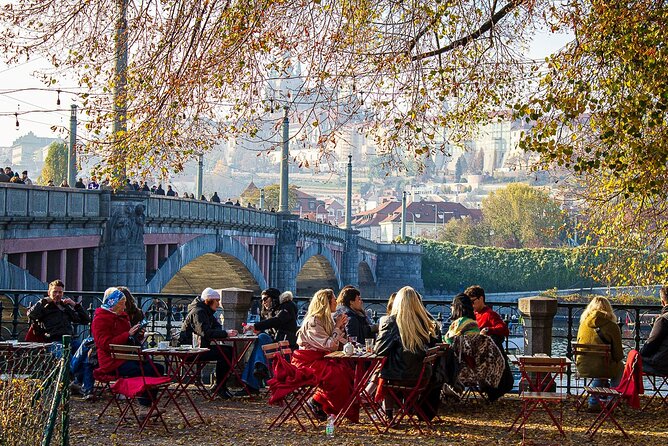
The day begins at Prague Castle, at the address listed for Pražský hrad, and the start time is 10:00. If you’re staying central, the pickup option can make the first leg less stressful, and one common strategy is using trams to reach the castle area so you aren’t fighting parking or long walks on day one.
Even if you’ve visited Prague before, this kind of start matters. Prague Castle sits up on the hill, and the best way to enjoy it is to understand where you are relative to the river, Old Town, and the bridges. A good guide helps you orient, not just point.
Practical tip: wear shoes that can handle stone and hills. This tour is mostly outside, and the total time on your feet is part of the experience.
Prague Castle: the power seat behind the skyline
Your first major stop is Prague Castle, the dominant landmark and a UNESCO World Heritage Site. It’s been the seat of Bohemian rulers since the 10th century, so it’s more than a photo stop—it’s a whole political and cultural anchor for Prague.
You’ll get a brief look from the outside (admission isn’t included here). That means you’re focused on the big picture: how the complex sits above the city and how its long history shaped what grew around it.
This is a smart opener because it sets the mental map. Once you see where the “headquarters” of the old rulers sits, the rest of the walk feels more connected.
St. Vitus Cathedral and Hradčany Square: Gothic meaning + best city views
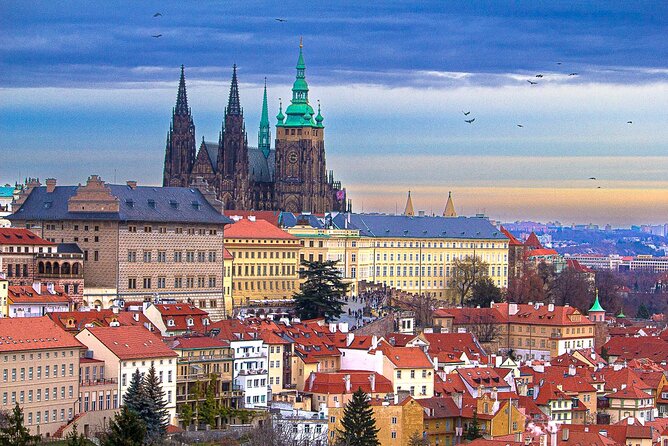
From Prague Castle, you get a quick look at St. Vitus Cathedral. It’s described as a world-famous Gothic masterpiece and a symbol of Czech state, and that framing helps you notice the cathedral beyond its silhouette.
Then you head to Hradcanske Namesti, the square in front of Prague Castle. This is one of those “small time, big payoff” spots. You’ll look at the square and the 17th-century palaces around it, plus you get stunning city views.
Advising you plainly: don’t rush this moment. The time is short, but it’s where the hilltop panorama clicks and makes the rest of the route make sense.



Lesser Town and Malostranská: Baroque streets where you can breathe
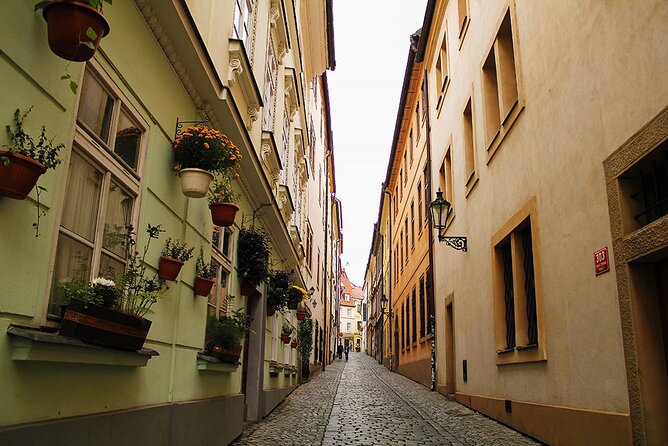
Next comes Lesser Town, described as one of the best preserved baroque quarters of Europe. This is where the tour slows just a bit in feel (even if the stop time is still limited) because Lesser Town is calmer than the biggest Old Town intersections.
You’ll wander through the vibe: lush gardens, majestic palaces, and cozy restaurants and small shops along the way. It’s a great section to reset after Castle-area crowds.
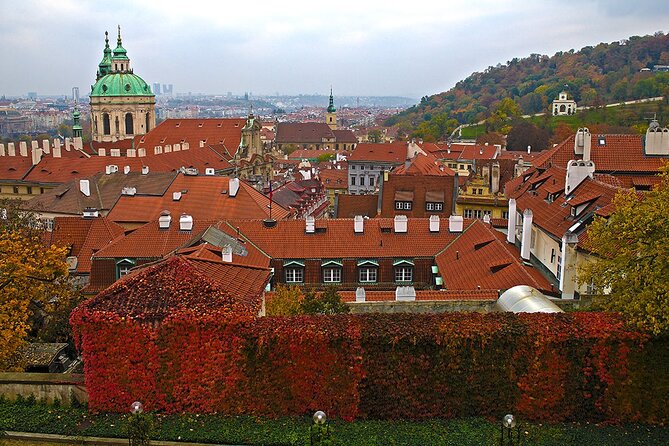
Then you’re in Malostranske namesti, the center of Lesser Town, with St Nicholas church as the baroque highlight. The church’s dome is one of the most recognizable sights on Prague’s skyline, which makes the exterior view especially useful—you’re learning to “read” Prague from its skyline features.
St Nicholas Church is not included for entry. Still, the exterior look helps you spot it later even if you skip the interior ticket that day.
Charles Bridge: the 700-year centerpiece of postcard reality
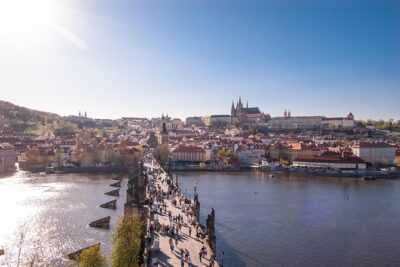
Charles Bridge is the iconic main landmark here: about 700 years old and decorated by numerous statues. The tour gives you a 15-minute window, and that’s usually enough to take in the bridge, scan the statue line, and appreciate how it frames river views.
This stop is also where your guide’s explanations can matter most. A few facts about why the bridge is positioned the way it is, and how it functions as a connector, can turn a quick walk into a real understanding of Prague’s layout.
If you hate crowds, aim to accept that Charles Bridge is busy by nature. The tour’s strength is that it times your glance so you get value without spending your whole day stuck in peak congestion.
Josefov: stepping into Jewish Prague with architecture and legend
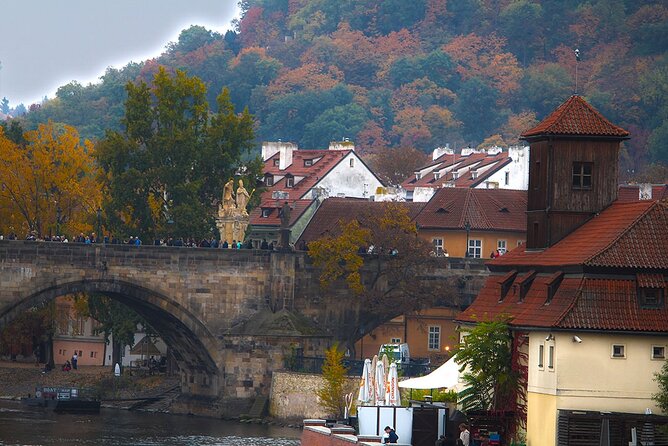
From the river corridor, the walk moves into Josefov, the Jewish quarter. It’s noted as being rebuilt on the border of the 19th–20th centuries, with neorenaissance and art nouveau styles. That matters because Josefov isn’t just “old streets.” It’s a section where a modern-era rebuild shaped what stands today.
You’ll get a 30-minute segment that’s timed for an easy, guided walk through the area. It’s also where you’ll feel a different Prague mood—less of the bridge-and-square rush and more of “slow walking and looking.”
The Old-New Synagogue is nearby and dates back to 1270. There’s also a legend attached to it: that a closed attic holds remains of the Golem, a human-like creature said to have served its master. Like other interior-heavy stops, admission isn’t included, so your time here is about exterior context and legend framing rather than a full inside visit.
If you’re a folklore person, this is a good moment. Even if you don’t go in, you leave with a story you’ll recognize when you see synagogue imagery around Prague.
Old Town Square and Stare Mesto: clock, university, and Mozart-linked theater
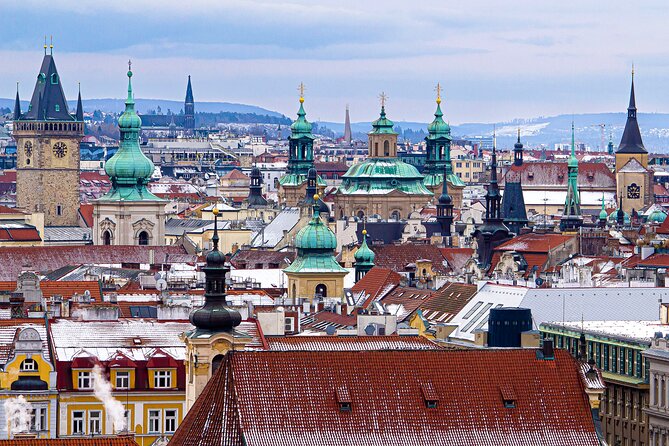
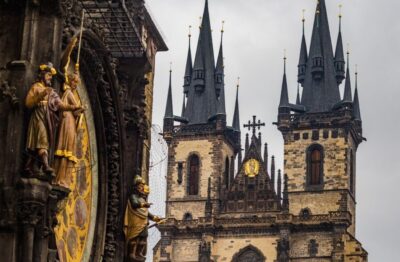
Then you reach the heart of Prague’s center at Old Town Square. It’s described as the heart of the city with about 800 years of history, and it’s famous for the Astronomical clock.
A 20-minute stop works if you treat it like a “read the room” moment. Look at the clock area, scan the surrounding civic buildings, and let your guide connect the square’s history to what you’re seeing elsewhere in the walk.
After that, the tour goes to Stare Mesto (Old Town) for a longer 30-minute feel. This is where Charles University enters the picture, plus the Estates Theater—a venue tied to Mozart. The key detail here is that the Estates Theater is described as the only theater still in operation where Wolfgang Amadeus Mozart personally conducted his operas.
There’s also a stop specifically at Estates Theatre for a brief look. Even if you don’t enter, the fact that this place is tied to Mozart’s conducting adds weight to what you see. Prague has plenty of “Mozart stories.” This one is grounded in a venue that is still operating, which makes it feel less like a random name-drop.
Obecní dům and Wenceslas Square: Czech identity through Art Nouveau to modern memory
Next is a shift into the 20th-century story with Obecní Dum (Municipal House). It’s described as the flagship building of Czech Art Nouveau, built on the site of the former Royal Court. It was completed on the eve of Czechoslovak independence, designed as a celebration of Czech art and national identity, and it’s also where the new state was proclaimed in 1918.
That’s a lot for a short 10-minute exterior look, but it’s worth it. This is where you stop thinking of Prague as only medieval stone, and you start seeing it as a city that constantly rebuilds meaning—using architecture to declare identity.
The tour ends at Wenceslas Square, the main square of “new-time Prague,” described as remembering movements of the 20th and 21st centuries. It’s a mixture of styles and eras, and the listed highlights help you spot what’s around you: the Gothic church of Our Lady of the Snows, the neo-classical National Museum, Art Deco Hotel Europa, and even rondocubism.
Wenceslas Square is also simply practical. It’s near transport, shopping, and many late-night options. So when your tour ends there, you’re not stranded at the end of nowhere.
Price and logistics: what you’re really paying for
The price listed is $60.21 per person for an approximately 4-hour guided walking experience in English. At this price, you’re paying for three things: the guide service, a curated route that hits major landmarks, and a group size that stays small (max 10).
Admissions are not included, and the tour is described as exterior only. That’s important for value math. If you want interior tickets—St. Vitus Cathedral, St Nicholas Church, or Old-New Synagogue—you should budget extra and decide what you want most in your free time.
Public transport is also noted as €2.00 per person. The tour is a walking tour, and getting to the starting point is by public transport. Pickup is offered, which may reduce the hassle of the first leg, but you should still expect at least some transit cost and some walking.
Snacks aren’t included. You can bring water or snacks, or buy along the way. This is a simple thing, but it makes a big difference because the tour is mostly outside and your appetite can catch up faster than you think.
One more practical point: this is often booked about 19 days in advance on average. If your dates are fixed, book early so you can lock in a time.
What I think this tour is best at (and where it’s not)
This tour is at its best when you want a guided overview that connects the dots. The guide style—especially Vadim’s detailed answers and witty stories—helps you understand why each stop exists, not just what it looks like.
It’s also strong if you like learning how to move around Prague. One review highlighted tram know-how and getting your bearings quickly. That kind of local transport coaching is underrated value, because it can save you time and stress for the rest of your trip.
Where it’s less ideal: if you want lots of time inside churches, synagogues, or other ticketed spaces, you’ll feel the limits. Interiors are not included in this exterior-only format, and stop times are brief by design.
Who should book this Prague 11th–21st century walk
You’ll like this if:
- you want a highlight route that covers a broad historical span in about four hours
- you prefer guided orientation over a self-guided checklist
- you value Q&A time and a guide who can adapt to timing needs
- you’re comfortable with walking and outdoor sightseeing
You might skip it (or pair it with other plans) if:
- your top priority is lots of interior visits and you don’t want to manage extra tickets
- you need a fully resting pace or frequent sit-down breaks (the route is built for movement)
Also, if you’re traveling in English and want it handled by a group guide, this is set up for that.
Should you book it?
If you’re trying to see Prague efficiently without losing the meaning, I’d book this. The price feels fair for a guided, small-group route with a guide like Vadim who answers questions clearly and even tailors pace when timing is tight. The exterior-only format can be a plus, not a drawback, because it keeps the day moving and lets you pick interior tickets later if you want them.
One bonus: you can cancel for a full refund up to 24 hours in advance, so if your plans shift, you still have flexibility.
If your schedule is firm and you want the “Prague in one walk” effect, this is a solid choice.
FAQ
Is admission included for the main sights?
No. The tour is described as exterior only, and admission tickets are not included for stops like Prague Castle, St. Vitus Cathedral, St Nicholas Church, and the Old-New Synagogue.
How long is the tour?
It’s approximately 4 hours.
What language is the guide?
The tour is offered in English.
Is pickup included?
Pickup is offered, and the tour is a walking tour to the starting area using public transport.
Where does the tour start and end?
It starts at Pražský hrad (Prague Castle) and ends at Wenceslas Square.
What time does the tour begin?
It starts at 10:00 am.
How big is the group?
There’s a maximum of 10 travelers.
Do I need to pay for public transport?
Public transportation is listed as €2.00 per person.
FAQ
Do I need to bring snacks or water?
Snacks aren’t included, but you can bring water or snacks or buy them along the way.
Can service animals join the tour?
Yes, service animals are allowed.
More Prague Walking Tours




More Tour Reviews in Prague


More Prague tours we have written up lately



Walking Tours, compared.
 ★ 4.73-Hour Walking Tour of Old Town & Prague CastleFrom $305,696 reviews
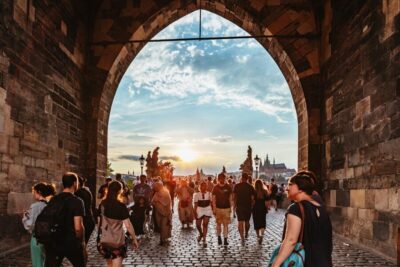 ★ 4.4Ghost Walking Tour Where Legends Come To LifeFrom $275,253 reviews
 ★ 4.7Jewish Quarter Walking Tour with Admission TicketsFrom $763,729 reviews
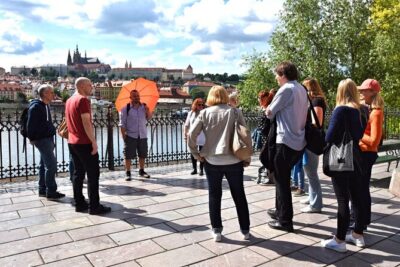 ★ 5.0Prague Guided Walking Tour and Cruise with Authentic Czech LunchFrom $1023,627 reviews
 ★ 4.6Old Town and Jewish Quarter Guided Walking TourFrom $222,847 reviews
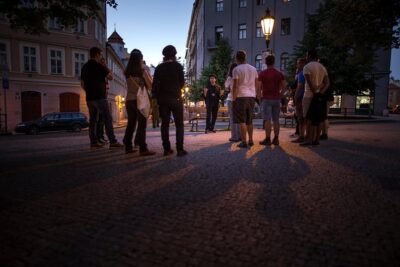 ★ 4.5Prague Ghost and Legend of Old Town Walking TourFrom $212,630 reviews
 ★ 5.0Prague 3-hour Afternoon Walking Tour including Prague CastleFrom $531,899 reviews
 ★ 4.7Ghosts and Legends Nighttime Guided Walking TourFrom $221,462 reviews
Browse the lists this tour appears in