
REVIEW · PRAGUE WALKING TOURS
The Royal road, walking tour in french
Prague’s Royal Road is a fast history lesson. This French walking tour strings together the route future kings of Bohemia took for coronation, then shows you why Prague still feels like an imperial capital. I love the clear explanations (you’ll get architecture and Czech culture in plain language), and I also love the built-in photography moments—Charles Bridge, Kampa, and the Castle-area views. One thing to consider: you’ll be walking for about 150 minutes rain, shine, or snow, so plan on solid shoes and a steady pace.
Meeting the tour at Celetná Street keeps things simple, and the guide is usually praised for being both passionate and genuinely helpful. In particular, I’ve seen names like Alexandre highlighted for being strong on Prague and Czech history and for answering questions without rushing. If you’re expecting heavy time inside churches or museums, manage expectations: this is a walking tour built around streetscapes and big exterior sights, ending at the Castle gates rather than deep-ticket interiors.
In This Review
- Key things that make this tour worth your time
- The Royal Road: why this walk feels like a living history map
- Starting at Celetná 601/5: a meeting point that’s easy to reach
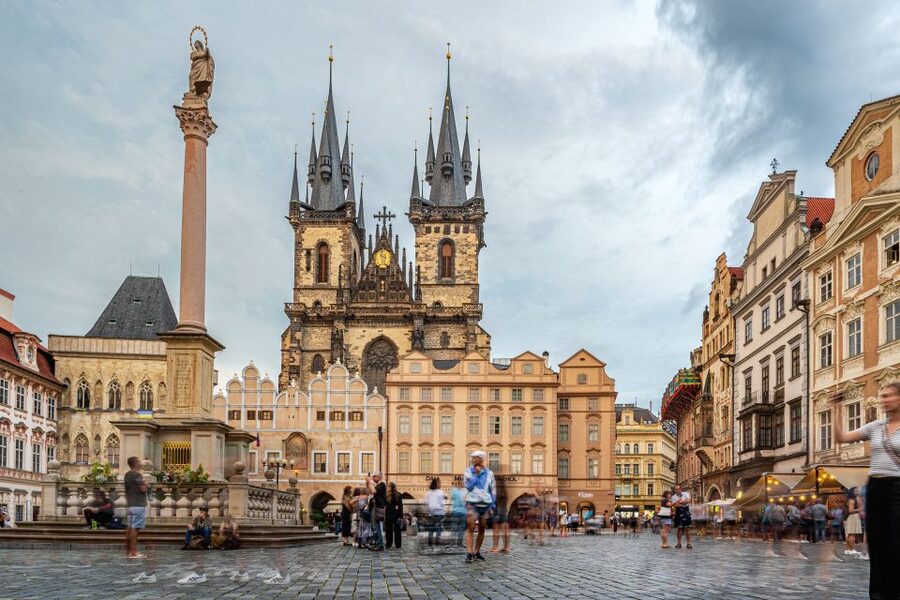
- Týn yard and Ungelt: a 5-minute start that sets the tone
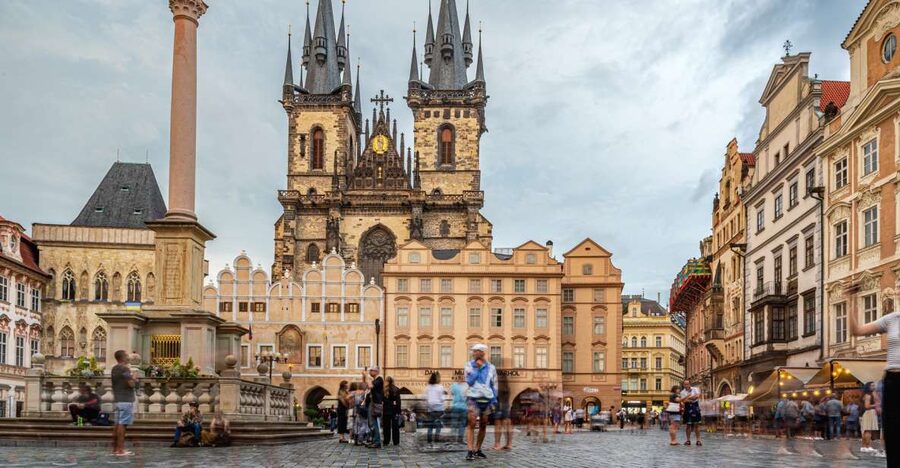
- Old Town Square: the Astronomical Clock area, explained
- Malé náměstí and Mariánské náměstí: small squares, big meaning
- Karlova Street: the coronation route you can actually feel
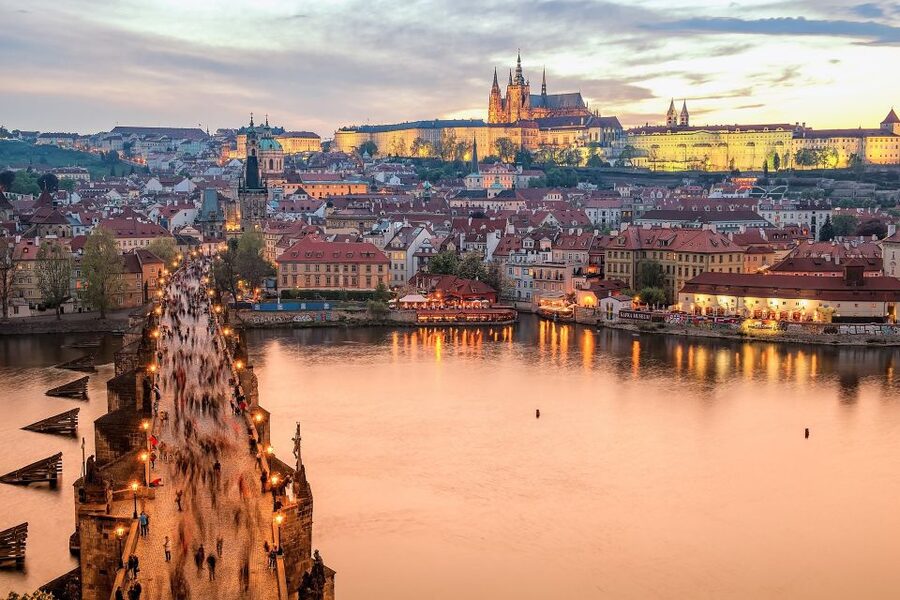
- Charles Bridge and the Vltava view: where the walk turns cinematic
- Kampa Island: a calmer pause after the bridge
- John Lennon Wall: why it belongs on a historical walk
- Maltézské náměstí, a few stops that keep momentum
- Karmelitská and Malostranské náměstí: entering Malá Strana’s architectural rhythm
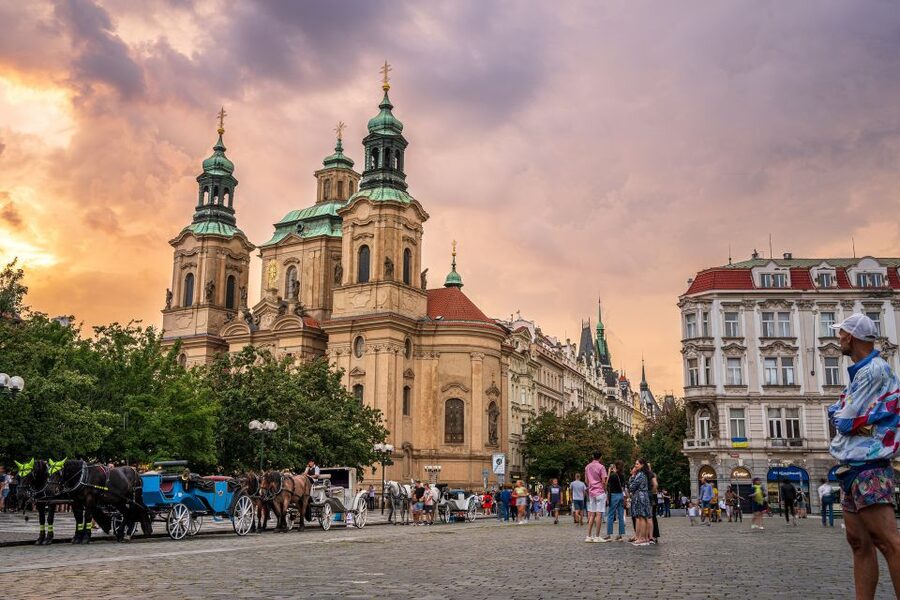
- Saint Nicholas Church: baroque splendor as part of the route
- Toward the Castle: Sněmovní, Nové zámecké schody, and Hradčany Square
- Opyš Hill views and the end at Castle gates: your best follow-up
- Weather-ready walking and group vibe: what to plan for
- Price and value: what $20 buys in a 2.5-hour French tour
- Who this Royal Road tour suits best
- Should you book the French Royal Road walking tour?
- FAQ
- How long is the Royal Road walking tour in French?
- Where is the meeting point?
- How can I get to the meeting point by public transport?
- What language is the guide speaking?
- Is the tour walking-based, and does it run in bad weather?
- What’s included in the ticket price, and what isn’t?
Key things that make this tour worth your time
- Royal Road coronation storyline: you walk the same urban logic that guided Bohemian kings toward their coronation route
- Old Town focus with quick hits: Old Town Square and the Astronomical Clock area get meaning, not just names
- Charles Bridge + Vltava views: timed into the walk so the river moment feels part of the narrative
- Baroque Malá Strana energy: palaces and key church architecture factor into how you read the district
- Castle approach is the payoff: you finish at the gates, well set up for Saint Vitus Cathedral and further Castle exploring
- French guidance you can follow: reviews repeatedly mention strong explanations and Q&A flow
Prefer to cover it on foot? More Prague walks across the old lanes.
- Prague: 3-Hour Walking Tour of Old Town & Prague Castle★ 4.7 · 5,696 reviews
- Prague: Ghost Walking Tour Where Legends Come To Life★ 4.4 · 5,253 reviews
- Prague: Jewish Quarter Walking Tour with Admission Tickets★ 4.7 · 3,729 reviews
- Prague Guided Walking Tour and Cruise with Authentic Czech Lunch★ 5.0 · 3,627 reviews
The Royal Road: why this walk feels like a living history map
The Royal Road in Prague isn’t just a pretty route. It’s a story line painted across streets, squares, and bridges. The walk traces a practical path: future rulers had to travel to the Prague Castle for their coronation, so the city’s streets and landmarks weren’t accidental. When you connect the route on foot, you start seeing Prague as a single “system” that once supported power, ceremony, and travel.
I also like that the tour treats history as something you can watch happen in the city. You’ll move through Staré Město (Old Town) with its most famous civic symbols, then shift into Malá Strana with its baroque architectural punch. The Castle end point gives you a clean next step, especially if you’re planning to visit Saint Vitus Cathedral and Prague Castle afterward.
Starting at Celetná 601/5: a meeting point that’s easy to reach
The tour meets at number 5 / 601 on Celetná Street, in front of Madame Tussauds museum. That matters because it puts you right near central transit options and keeps delays from snowballing. You can reach it by metro (Staroměstská, Mustek, or Náměstí Republiky on lines A and B) or by tram, getting off at Jindřišská station.
From either exit, it’s about a 10-minute walk. That’s not far, but it’s enough that you should arrive a bit early so you can collect yourself before the guide starts setting context.
Týn yard and Ungelt: a 5-minute start that sets the tone
The tour’s first guided stop is the Týn yard – Ungelt area, with a short guided segment of about five minutes. Even with limited time, this kind of opening matters: you’re essentially being taught how to look at Prague. Instead of starting with the biggest photo spot, the guide gets you oriented to how Old Town edges and passages feel—tight, historic, and full of atmosphere.
This early timing helps you later. When you reach bigger squares, you’ll understand why the streets funnel people the way they do, and how Prague’s urban design supported commerce and movement long before today’s crowds.
Old Town Square: the Astronomical Clock area, explained
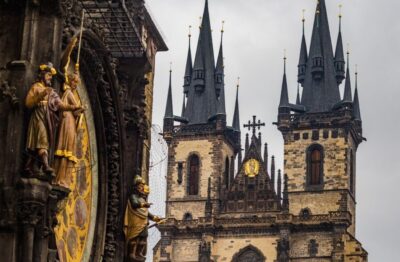
Old Town Square is the anchor. You’ll get roughly 30 minutes of guidance here, which is a sweet spot: enough time to learn what the Astronomical Clock represents, while still having time to take in the surrounding facades.
What I like is that the tour doesn’t treat the square like a checklist. It frames the area in the bigger story of Prague as an imperial center. The Astronomical Clock becomes more than a famous object; it becomes part of a world where public life, timekeeping, and status all showed up in the same space.
One practical note: the square can be busy. Your best move is to listen first, then step back briefly for photos instead of stopping dead-center right away. You’ll get better angles and feel less rushed.
Keep walking. More of Prague at street level.





Malé náměstí and Mariánské náměstí: small squares, big meaning
After Old Town Square, you’ll continue to Malé náměstí (about 5 minutes) and then Mariánské náměstí (about 10 minutes). These are smaller spaces, but that’s exactly why they work on a guided Royal Road walk.
This is where the city’s “layers” become visible. Prague shifts from grand public symbolism into more intimate, human-scale settings. You’ll start to notice architectural variety faster: the way buildings face the street, how corners shape views, and why these spaces feel built for gathering rather than just passing through.
If you’re the kind of traveler who likes to understand the city’s bones—how one place leads to the next—this segment is a great payoff for your brain.
Karlova Street: the coronation route you can actually feel
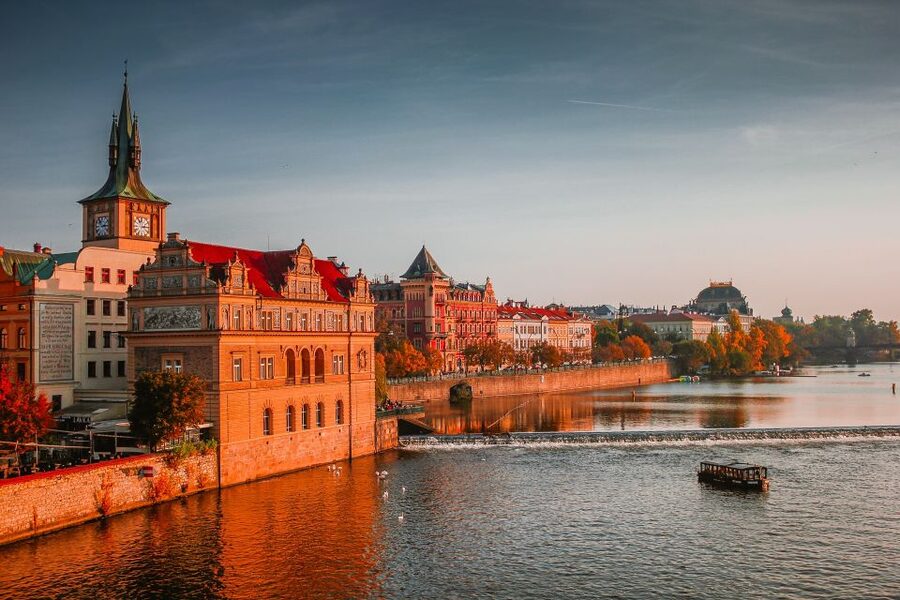
Karlova is one of the tour’s key links, with about five minutes of guided time. The description of Karlova matters: it’s tied to the idea that future sovereigns followed a route to the Castle for coronation.
Even if you don’t memorize every historical detail, Karlova gives you a physical sense of process. You’re walking a corridor that used to matter for serious journeys. That’s a powerful way to make history stick. Instead of reading about movement through Prague, you experience it as a linear walk.
This is also a good place to slow down. If you’re taking photos, this is where you’ll spot sightlines—long angles looking toward the more open views ahead.
Charles Bridge and the Vltava view: where the walk turns cinematic
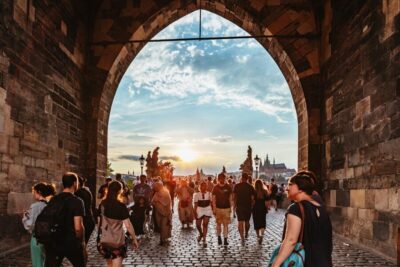
Next up: Charles Bridge with about 15 minutes of guided time. This is one of the most iconic moments in Prague, and the guide’s job is to make it more than a postcard.
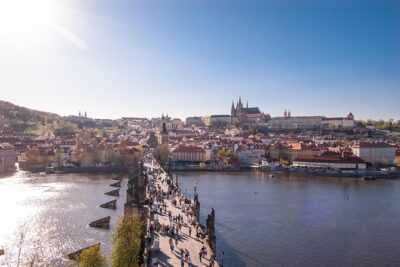
You’ll get a unique view of the Vltava from Charles Bridge as part of the Royal Road story. The river isn’t just scenery here; it’s part of how Prague connected districts and managed movement. When you understand that, the bridge becomes functional history, not only a famous viewpoint.
Practical photo help: bring a lens that can handle both wide and mid-range shots. Wide frames capture bridge scale and river angles; mid-range shots help you focus on architectural rhythm.
Kampa Island: a calmer pause after the bridge
Right after Charles Bridge, the itinerary includes Kampa Island (about 10 minutes). This stop is a smart contrast. You go from one of the busiest “icon” areas into a quieter feeling that helps you reset.
Kampa’s value on this tour is perspective. If Charles Bridge teaches scale, Kampa teaches flow—how the riverfront shapes daily life and how Prague’s charm can soften even when you’re still in the core tourist zone.
If you want photos that feel less crowded, this is often where you can breathe a little, listen, and shoot without feeling stuck in the middle of the river of people.
John Lennon Wall: why it belongs on a historical walk
The tour includes the John Lennon Wall (about 10 minutes). This is not medieval power-courting history. And that’s why I think it works.
Prague isn’t frozen in time, and a modern symbol like the Lennon Wall shows how the city reuses public space for meaning. You get a “present-day Prague” checkpoint so the walk doesn’t become only about rulers and coronations.
The best way to handle this stop is simple: treat it as a window into how people express identity in Prague. You’ll likely get enough context from the guide’s framing to understand why this wall has become symbolic.
Maltézské náměstí, a few stops that keep momentum
Then comes Maltézské náměstí (about 5 minutes) and Lavička Václava Havla (about 5 minutes). These are short segments, but they keep the pace and keep the story moving through different parts of Prague.
You’re building a mental map: Old Town Square to river crossing to quieter districts, and now into the areas where Prague’s civic and cultural identity continues. The tour’s strength here is how it connects “places” into “meaning,” so you don’t just collect landmarks.
Karmelitská and Malostranské náměstí: entering Malá Strana’s architectural rhythm
Karmelitská gets about 15 minutes, followed by Malostranské náměstí for about 15 minutes. This is where Malá Strana starts feeling like the baroque district people rave about—without requiring you to know every term upfront.
The walking time matters. Baroque architecture rewards slower looking. As you move along streets and into squares, you’ll see how facades change with perspective and how churches and palaces compete for attention. This is also a great section to notice details on rooflines, windows, and the way buildings “frame” street corners.
If you love architecture as a language, this part will feel like a guided decoder.
Saint Nicholas Church: baroque splendor as part of the route
Your tour experience specifically calls out Saint Nicolas Church as one of the most beautiful baroque churches in Europe. Even if your time at the church is limited by the walking schedule, the key value is context: you’re not seeing it in isolation.
Instead, you see it as a stop inside Malá Strana’s broader transformation—an emblem of wealth, taste, and religious art shaping the district’s identity. That makes later visits feel more meaningful, because you’ll recognize what the guide pointed you toward.
Toward the Castle: Sněmovní, Nové zámecké schody, and Hradčany Square
The route continues to Sněmovní (about 5 minutes), then Nové zámecké schody (about 5 minutes), and finally Hradčany Square (about 10 minutes). This is the climb zone—physically and mentally.
Short guided segments work well here because the main goal becomes orientation. You’re getting ready for the Castle complex, learning where you are, and understanding what kinds of views you should expect.
Nové zámecké schody is particularly practical: stairways in Prague are never just stairs. They reshape your sightlines. Even a brief stop can give you an angle that makes the Castle feel close and real, not far away on a map.
Opyš Hill views and the end at Castle gates: your best follow-up
One of the tour highlights is a unique view from Opyš Hill, the seat of Prague Castle. You’ll get this perspective as part of the approach, then the tour ends at the gates of the Castle.
That ending is valuable because it’s not a dead end. It’s a launch point. If you plan to visit Saint Vitus Cathedral and then continue through Prague Castle, this tour gives you a guided mental layout for where you want to head next.
When you finish near the Castle gates, you’re already primed: you know you’re arriving at the political heart of the city, and the walk you did becomes your explanation for what you’re about to see.
Weather-ready walking and group vibe: what to plan for
This tour runs rain, shine, or snow. That means you should treat it like real walking—not a museum day. Bring layers and something to protect your feet and hands. If you’re traveling in winter, give yourself a little extra time and expect surfaces to feel slick.
The group format is also worth noting. A private group option is available, which can be a big help if you prefer more Q&A time or you’re traveling with friends who want a slightly slower pace.
And about the tone: guides are repeatedly praised for being interesting and for having good explanations. That matters because you’ll remember the tour based on what your guide makes you notice.
Price and value: what $20 buys in a 2.5-hour French tour
At about $20 per person for roughly 150 minutes, the value is strong—especially because this isn’t just a stroll with someone reading a script. You’re getting a licensed local guide, explanations tied to Prague’s history and Czech culture, and help with good addresses plus advice for your stay.
Here’s the practical math: you’re buying time with someone who can point out why places matter and how they connect. Doing the same route alone can turn into guesswork and photo-taking without understanding. For many visitors, that knowledge makes later visits—Old Town, Malá Strana, and especially the Castle—feel more rewarding.
If you have limited time in Prague and want one guided walk that sets you up for the rest of your trip, this price-to-time ratio is hard to beat.
Who this Royal Road tour suits best
I think this tour is a great fit if you:
- want a smooth intro to Prague’s most emblematic areas without getting lost
- like history that connects to architecture and city planning
- are planning to visit Prague Castle and want a smart warm-up
- prefer French guidance and explanations rather than only self-guided wandering
You might want to choose something else if you’re looking for an in-depth museum experience or lots of long indoor stops. This is a walking tour built around streets, squares, bridges, and viewpoints.
Should you book the French Royal Road walking tour?
Yes—if you want a guided storyline that stitches Prague into one coherent experience, book it. The combo of Old Town identity, Charles Bridge and river views, Malá Strana’s baroque architecture, and a Castle-gate finish is a strong route for making your next hours in Prague easier and more meaningful.
If you’re a planner type, the structure helps you. If you love photos, you’ll get the viewpoints. And if you want good French explanations from a guide like Alexandre—known for being passionate, organized, and responsive—that’s the real prize here.
FAQ
How long is the Royal Road walking tour in French?
The tour lasts about 150 minutes (around 2.5 hours).
Where is the meeting point?
Meet at number 5 / 601 on Celetná Street, in front of Madame Tussauds museum.
How can I get to the meeting point by public transport?
You can take the metro and get off at Staroměstská, Mustek, or Náměstí Republiky (lines A and B), or take the tram to Jindřišská station (lines 3, 5, 6, 9, 14, and 24). From the station exit, it’s about a 10-minute walk.
What language is the guide speaking?
The tour is guided in French.
Is the tour walking-based, and does it run in bad weather?
Yes, it’s a walking tour and it runs rain, shine, or snow.
What’s included in the ticket price, and what isn’t?
Included: a licensed local guide, walking guided tour with site explanations, and advice for your stay. Not included: hotel pickup/return, transport tickets, and food and drinks.
More Tours in Prague


More Tour Reviews in Prague



On Foot Through Prague, Continued

More Prague tours we have written up lately



Prague Walking Tours, compared.
 ★ 4.73-Hour Walking Tour of Old Town & Prague CastleFrom $305,696 reviews
 ★ 4.4Ghost Walking Tour Where Legends Come To LifeFrom $275,253 reviews
 ★ 4.7Jewish Quarter Walking Tour with Admission TicketsFrom $763,729 reviews
 ★ 5.0Prague Guided Walking Tour and Cruise with Authentic Czech LunchFrom $1023,627 reviews
 ★ 4.6Old Town and Jewish Quarter Guided Walking TourFrom $222,847 reviews
 ★ 4.5Prague Ghost and Legend of Old Town Walking TourFrom $212,630 reviews
 ★ 5.0Prague 3-hour Afternoon Walking Tour including Prague CastleFrom $531,899 reviews
 ★ 4.7Ghosts and Legends Nighttime Guided Walking TourFrom $221,462 reviews
Browse the lists this tour appears in