REVIEW · PRAGUE
The Plague Doctor of Prague
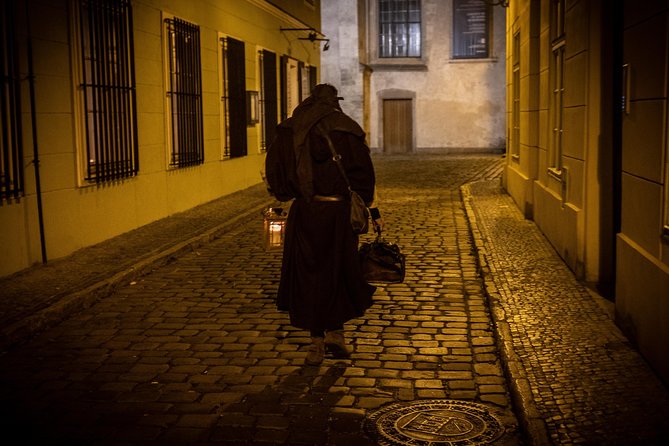
A plague doctor costume changes how you see Prague. In this Plague Doctor of Prague experience, you follow stories tied to 1713–15 while moving through major Old Town landmarks and quieter side streets that help the subject feel real, not like a lecture.
Two things I really liked: you get performance-style storytelling in English that stays clear and funny, and the group stays small (up to 10) so the guide can keep things interactive.
One consideration: one guest noted the costume can smell a bit, so if you’re sensitive to odors, wear a mask or stand a little upwind.
In This Review
- Key Things to Know Before You Go
- Price and Value for a 90-Minute Story Walk
- Start at Aurus Hotel Prague: Alexander Schamsky and 1715 Symbols
- Klementinum, the New Town Hall, and What Quarantine Looked Like
- Old Town Square: Merchants, Hussite Church, Týn Church, and a 30-Year War Detour
- Kafka’s Statue to the Jewish Quarter: La Peste and Real Community Impact
- Saint Simon and Jude Meets Na Frantisku Hospital: Healing Methods and Medical Myths
- The Convent of St. Agnes Finale: Closing the Loop and Linking Past to Present
- What to Expect on Foot: Timing, Group Size, and Comfort
- Who This Tour Fits Best
- Should You Book the Plague Doctor of Prague?
- FAQ
- Where does the tour start?
- Where does the tour end?
- How long is the Plague Doctor of Prague tour?
- What language is the tour offered in?
- Is the ticket mobile?
- What group size should I expect?
- Are admission tickets included for the stops?
- Is the tour dependent on weather?
- What is the cancellation policy?
Key Things to Know Before You Go
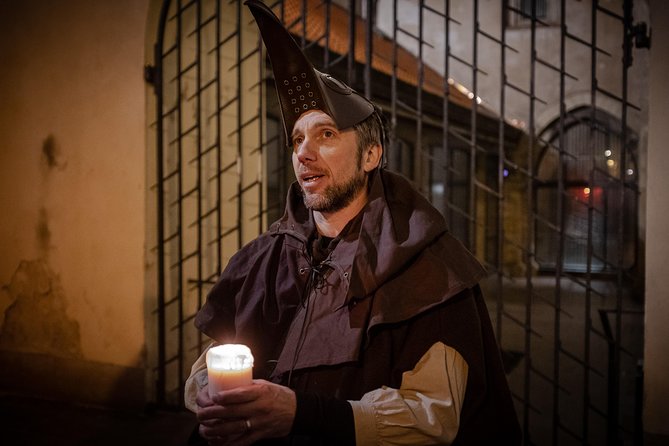
- Alexander Schamsky starts it off: you begin in the Aurus Hotel area and time-travel to 1715 with plague beliefs and symbols in the mix.
- Klementinum to quarantine lessons: the New Town Hall stop connects big civic buildings to how people coped when movement was restricted.
- Old Town Square + the Thirty Years War: merchants and daily fear are discussed alongside a major conflict that shaped the region.
- Kafka and the Jewish Quarter link directly to plague impact: Franz Kafka’s statue and the Jewish Quarter are part of the story arc, not an add-on.
- Na Frantisku hospital brings medical context: you hear about healing methods and why plague was terrifying long before antibiotics.
- You end at the Convent of St. Agnes with a modern connection: the tour wraps with the current status of the disease and a group photo with the plague doctor.
Still weighing up how to spend your days in Prague? These are the tours travellers book most.
- Prague: 50-Minute Sightseeing Evening Cruise★ 4.2 · 33,780 reviews
- Prague: Medieval Dinner with Unlimited Drinks★ 4.4 · 19,847 reviews
- Prague: Castle Tour with Local Guide and Entry Ticket★ 4.6 · 10,422 reviews
- Prague: Oldtown, Medieval Underground & Dungeon History Tour★ 4.3 · 10,277 reviews
Price and Value for a 90-Minute Story Walk
At $26.61 per person for about 1 hour 30 minutes, this isn’t a budget “quick stop” tour. It’s priced like an experience you book for the evening as a highlight: a character-driven guide, multiple central Prague locations, and a structured storyline across the city.
What makes the price feel reasonable is the format. You’re not just getting a rundown of dates and names. You’re getting a scene-by-scene narrative that connects beliefs about the plague (including older ideas about why it happened) with what life looked like when quarantine and fear took over. Plus, the group caps at 10 people, which usually means more attention from the guide and less time waiting to be heard.
Also, the tour runs in English and uses a mobile ticket. That means fewer logistics hassles for you once you arrive. And each stop lists admission ticket free, so you’re not paying separate entry fees as you move between places.
Start at Aurus Hotel Prague: Alexander Schamsky and 1715 Symbols
Your tour kicks off at Aurus Hotel Prague on Karlova 3. Right away, the guide introduces the plague doctor of Prague—Alexander Schamsky—and sets the tone by taking you back to 1715.
This first stop matters because it frames everything else. You’re not starting with an abstract map of “plague history.” You start with a specific setting: the building known as the House of the Golden Well. From there, you meet saints commonly linked with plague protection, especially St. Sebastian and St. Rochus. Those names are more than trivia. They explain how people searched for meaning and protection when science couldn’t explain an outbreak.
You’ll also hear what people believed were the root causes of the plague back then. That section is useful because it helps you understand why quarantine happened the way it did and why people reacted so intensely to rumors, symptoms, and blame.
Practical tip: this is the time to pay close attention to the guide’s character cues. Later stops make more sense when you know how the story is being told.
Klementinum, the New Town Hall, and What Quarantine Looked Like
The second major stop is at the New Town Hall area, where you’re guided through nearby landmarks including the old monastery Klementinum, the new library, and the town hall setting. It’s a shift from the hotel start, but the theme stays steady: how public life changed during outbreaks.
This stop gets specific about the different types of Black Death and how Prague residents—wealthy people and common people—experienced it differently. That social angle is important. The plague wasn’t only about illness. It was also about power: who could move, who could hide, who could afford safety, and who couldn’t.
Then the tour brings you into quarantine life. You hear about the rules and the feeling of confinement—how normal routines got replaced by fear, limits, and constant uncertainty. Even if you’ve read plague history before, this kind of “day-to-day” framing helps it land in your brain, not just your notes.
One small drawback to keep in mind: since the tour covers several concepts at speed, people who want only architecture may feel the focus tilts more toward human behavior than building details.
Old Town Square: Merchants, Hussite Church, Týn Church, and a 30-Year War Detour
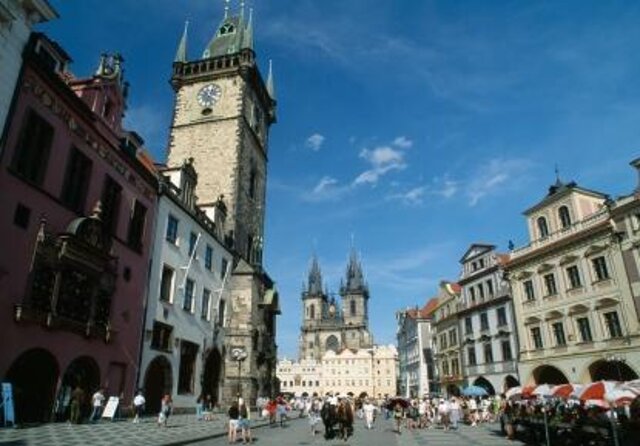
At Staroměstské náměstí (Old Town Square), the tour widens out. You’ll take in the Hussite Church, the Týn Church, and the Old Town Hall context while learning about plague-era life for merchants.
This is a clever part of the storyline. Markets are where you feel society’s pulse—trade, gossip, crowding, and risk all at once. So talking about merchants during plague times gives you a direct link between public health and everyday economics. You start to understand why outbreaks strained not only bodies, but also livelihoods and supply.
The guide also makes an excursion into the Thirty Years War period. That side path is valuable because plague outbreaks didn’t exist in a vacuum. The broader instability in the region shaped who had access to food, care, and stability.
If you’re the type of traveler who likes tours that connect the dots, this stop will satisfy you. If you prefer a strictly plague-only narrative, you might think the war detour takes a few minutes away—though it does help explain why life felt so fragile.


Kafka’s Statue to the Jewish Quarter: La Peste and Real Community Impact
Stop four is where the tour takes a more human, less symbolic turn. The guide introduces Franz Kafka with a stop at his statue, then talks about Jewish people during plague times in Prague and across Europe. You then enter the Jewish Quarter.
This portion is significant for two reasons. First, it keeps the plague story from becoming only about doctors and saints. Second, it connects culture and literature to lived suffering. The guide brings in Albert Camus’s La Peste as a way to think about the emotional weight of an outbreak—what it does to people’s sense of control and normal life.
I like how the tour doesn’t treat the Jewish Quarter as scenery. The plague impact is framed as community-level reality, which helps you avoid the common pitfall of “touring history” without learning anything concrete about people.
If you’re sensitive to heavy topics, this is likely the section where you feel the most emotional weight. The good news: the guide’s tone aims to keep it readable and not bleak for its own sake.
Saint Simon and Jude Meets Na Frantisku Hospital: Healing Methods and Medical Myths
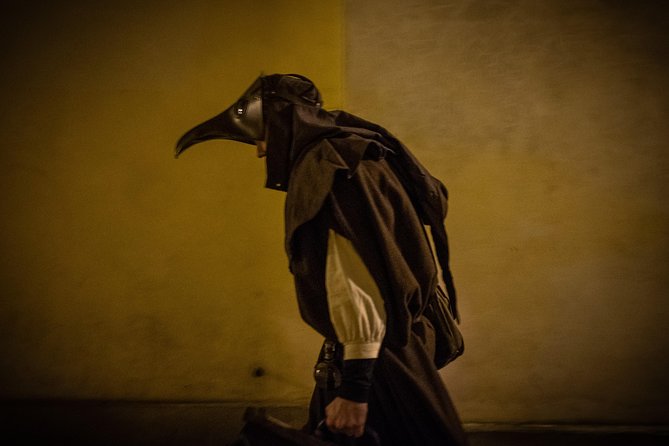
The fifth stop is Church of Saint Simon and Jude, with a visit to the old hospital Na Frantisku. This is one of the most educational parts because it shifts from fear and belief into the mechanics of old medical practice.
You’ll explore plague in Prague again, but with more medical background: healing methods, how doctors and caregivers tried to respond, and why plague was so deadly long before modern treatments. The tour also mentions the global death toll, with the plague killing approximately 200 million people worldwide. That number is startling, and it gives the Prague story a wider frame.
You’ll also hear about unknown heroes of medicine who worked in this hospital. I appreciate this angle because it spreads credit beyond famous names. Outbreak medicine was often the work of ordinary staff—people who showed up anyway, day after day, even when outcomes were grim.
One practical note: hospital-related stops can feel more intense and a bit more “classroom” than the market-square scenes. If you like the storytelling side, stay with it. The guide usually ties the medical details back to how people lived and feared.
The Convent of St. Agnes Finale: Closing the Loop and Linking Past to Present
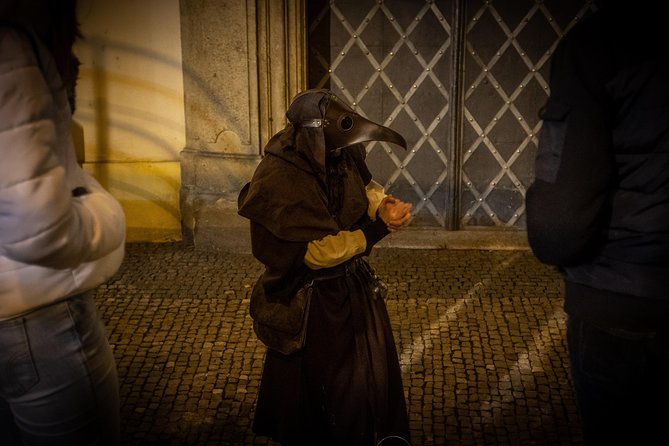
The tour wraps at the National Gallery Prague–Convent of St. Agnes of Bohemia. This ending works well because it’s a quieter setting after the city-center stops.
Here, the guide introduces St. Agnes of Bohemia—her life and work—then brings you back to the big picture with a summary of plague times in Prague and Europe. This is where the tour makes sure the story arc lands. You go from causes and quarantine to community impact and healing attempts, and then the guide pulls it together so you don’t leave with scattered facts.
The final minutes also include interesting facts about the current status of the disease. That “present-day link” is useful because it reminds you that plague isn’t just an old European tragedy. It’s a real public health concept that still matters.
You finish with a group picture with the plague doctor. It’s a small thing, but it helps you mark the experience as something you actually did—especially if you’re trying to balance serious history with something playful and memorable.
What to Expect on Foot: Timing, Group Size, and Comfort
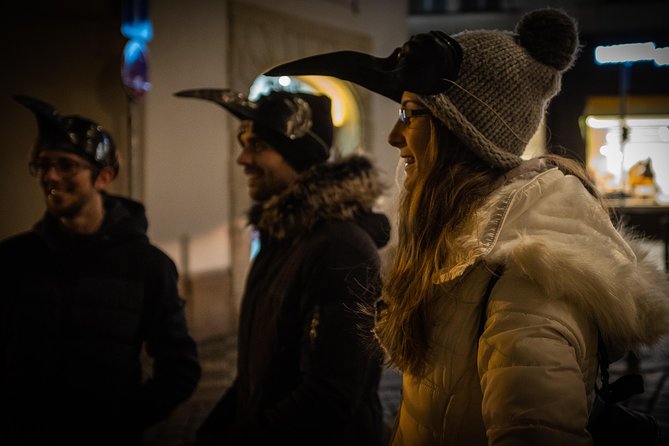
This is an about 1 hour 30 minutes walking route across central Prague. It’s set for most travelers, and the group size maxes at 10. For me, the small number is one of the best value signals here. With a cap that low, the guide can keep the pace from turning into a bottleneck.
The tour also uses a mobile ticket, and it’s near public transportation. That helps you fit it into a day with other plans without a stressful transfer.
Because it depends on good weather, it’s smart to check the forecast and dress for damp evening Prague streets. When weather forces a change, you’ll be offered a different date or a full refund.
Finally, service animals are allowed. If you’re traveling with a companion animal, this is worth knowing up front.
Who This Tour Fits Best
This experience is ideal if you like history that has a storyline. You’ll enjoy it if you want plague-era Prague through human choices: saints, quarantine rules, merchant life, Jewish community impact, and what medical people could do at the time.
It also fits families. The tour pacing is built for a range of ages, and the guide performance style makes the subject less formal and more approachable.
If you only want architecture heavy stops, you might feel the focus tilts toward the plague story rather than building-by-building detail. The itinerary includes big landmarks, but the guide keeps steering back to daily life, public health, and how people explained the unexplainable.
Should You Book the Plague Doctor of Prague?
Book it if you want a memorable evening activity that blends history, public health themes, and theater-like storytelling in English. The $26.61 price point is strong for a guided route that covers multiple central locations and ends with a modern connection to the disease.
Skip it or reconsider if you’re mainly after quiet museum-style history, or if you’re especially bothered by spooky costuming. One guest did note the costume can smell, and that’s worth factoring in if odors are an issue for you.
FAQ
Where does the tour start?
It starts at Aurus Hotel Prague, Karlova 3, 110 00 Praha 1-Staré Město, Czechia.
Where does the tour end?
It ends at a different location. The itinerary concludes at National Gallery Prague – Convent of St. Agnes.
How long is the Plague Doctor of Prague tour?
It lasts about 1 hour 30 minutes.
What language is the tour offered in?
The tour is offered in English.
Is the ticket mobile?
Yes. A mobile ticket is provided.
What group size should I expect?
The maximum group size is 10 travelers.
Are admission tickets included for the stops?
The tour lists admission ticket free for the stops described in the itinerary.
Is the tour dependent on weather?
Yes. It requires good weather. If canceled due to poor weather, you’ll be offered a different date or a full refund.
What is the cancellation policy?
Free cancellation is available up to 24 hours before the experience for a full refund. Canceling less than 24 hours before start time doesn’t receive a refund.