REVIEW · PRAGUE
Taste, Cook and Dine Traditional Czech
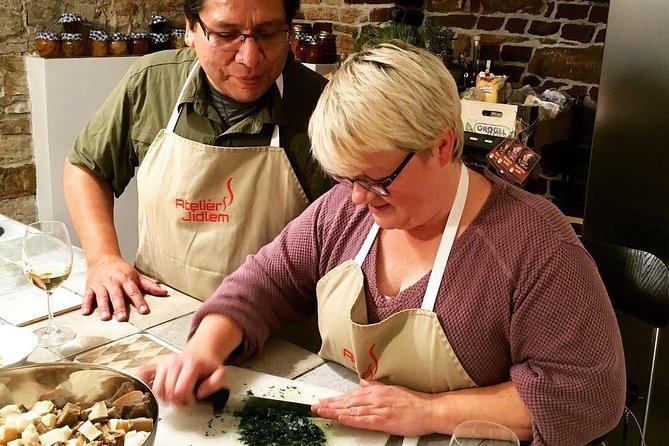
Czech food class in a basement beats a museum day. This hands-on Taste, Cook and Dine evening in Prague turns typical ingredients into a full meal, with you chopping, mixing, and tasting as you go. I love the way the hosts (Bret and Aide, often with Svetlana too) make it feel like an evening with real people, not a scripted demo, and I especially like the wine and fruit brandy pairing alongside the cooking. One drawback to consider: you’re doing a lot of tasting and eating in about 3.5 hours, so if you prefer light snacks, plan to eat slower than you normally would.
The best part is that the food isn’t just served and forgotten. You’ll learn what Czech families traditionally reach for, why those flavors became everyday staples, and how regional habits shaped what ends up on the table. For food lovers who like to learn by doing, this is a fun, low-stress way to experience Prague beyond sightseeing.
In This Review
- Key things I’d watch for
- Karlín meeting point and what this 3.5-hour night is really like
- The tasting spread: Czech snacks, charcuterie, and what you learn before you cook
- Hands-on cooking: bread, pancakes, and the seasonal dishes that set the tone
- Main course options: how you get the classic Czech comfort meal without the hassle
- Dessert choices: fruit dumplings or Kremrole
- Wine and Czech fruit brandy: why the drinks actually help the meal make sense
- Hosts and group vibe: Bret, Aide, and Svetlana make it feel personal
- Price and value: what you’re paying for at $167.75 per person
- Who should book this Czech cooking night
- Should you book Taste, Cook and Dine Traditional Czech?
- FAQ
- How long is the Czech cooking and dining experience?
- Where does the tour start in Prague?
- Is the tour in English?
- How many people are in a group?
- What food and drinks are included?
- What kinds of dishes do you cook?
- Is the main dish cooked during the class?
- What is the cancellation policy?
Key things I’d watch for
- Small group size (max 8): you’re not lost in a crowd, and you’ll get real hands-on time.
- Seasonal cooking choices: you may help make different Czech dishes depending on the time of year.
- Three Czech wines plus fruit brandy: drink included, not an afterthought.
- A proper multi-course meal: starters, a main course prepared by the host, sides, and dessert.
- Practical cultural context: you connect the ingredients to daily life and local history through food.
Still weighing up how to spend your days in Prague? These are the tours travellers book most.
- Prague: 50-Minute Sightseeing Evening Cruise★ 4.2 · 33,780 reviews
- Prague: Medieval Dinner with Unlimited Drinks★ 4.4 · 19,847 reviews
- Prague: Castle Tour with Local Guide and Entry Ticket★ 4.6 · 10,422 reviews
- Prague: Oldtown, Medieval Underground & Dungeon History Tour★ 4.3 · 10,277 reviews
Karlín meeting point and what this 3.5-hour night is really like
This experience runs about 3 hours 30 minutes and starts at Křižíkova 70/67, Praha 8–Karlín. It ends back at the same meeting point, so you don’t have to think about transit after dinner. It’s also near public transportation, which matters because you’ll likely leave hungry and happy, not eager for a long walk.
The group stays small, with up to 8 travelers, so the evening keeps moving at a good pace. Think cozy and social: people cook, taste, chat, and then sit down for the meal. One review described it in a historical basement space, and that vibe fits what this class is aiming for: fewer distractions, more talking about food while you cook.
Food-first, not fancy-first. You’ll be doing enough food work to feel involved, but the host still handles key steps—especially the main course—so it doesn’t turn into a frantic cooking audition.
The tasting spread: Czech snacks, charcuterie, and what you learn before you cook
You start with a variety of typical Czech delicacies, including things like sausages and cheeses plus home-style products such as jams, pickles, and bread. You’ll also see local and seasonal vegetables and fruits in the mix. This part matters because it sets your baseline taste: once you understand the flavors, the cooking lessons make more sense.
After the first round of tasting snacks, the class shifts into either a vegetable-and-starch direction or a dairy-and-cheese direction, depending on season and what’s available. You might begin with potato-sauerkraut pancakes, a cheese quark spread, or a carrot/kohlrabi salad. Those aren’t random menu items. They’re classic Czech comfort foods built from ingredients people actually grew and used.
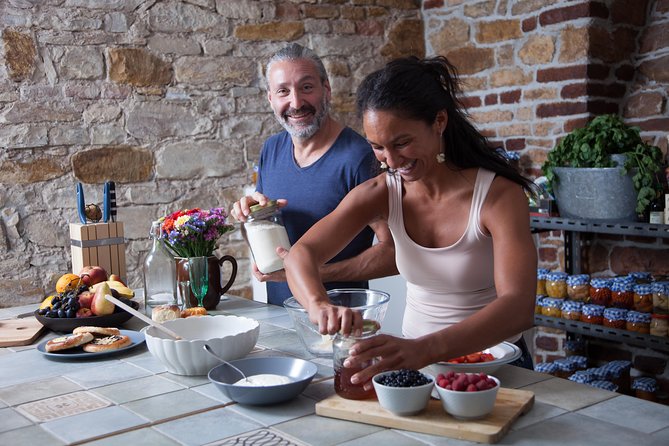
Then comes your hands-on moment. You and the group will prepare one of those dishes using typical Czech ingredients. The fun is in seeing how these items are built—simple components, shaped and seasoned in a way that makes them feel unmistakably Czech.
If you like learning through your senses, this format is ideal. You taste first, then cook, then taste again. That’s how you stop memorizing and start understanding.
Hands-on cooking: bread, pancakes, and the seasonal dishes that set the tone
The cooking portion is the heart of the evening. Depending on the season, you may help make three traditional Czech dishes, with examples including bread or bread dumplings with a spread, vegetable pancakes, and a cake or dessert. The exact set changes, but the goal stays the same: you’re not just following instructions, you’re working with traditions.
One detail I like in the way this is set up is that it doesn’t pretend every dish will be new or complicated. Czech cuisine often shines through technique you can learn fast: grating, mixing, portioning, and pan work. Reviews specifically mention getting hands involved with things like cheese graters and flipping a potato pancake, which tells you the class expects participation, not spectator mode.
You’ll also make bread dumplings together as a side. That’s a great choice for a cooking class because bread dumplings sit right between humble and satisfying. When you learn how they’re formed and cooked, you get a clearer picture of why dumplings matter in Central Europe—practical, filling, and perfect for soaking up sauce later.
If you’re the type who worries you’ll do everything wrong, relax. This is set up so everyone can contribute. You get guidance as you work, and the pace feels social rather than stressful.
Main course options: how you get the classic Czech comfort meal without the hassle
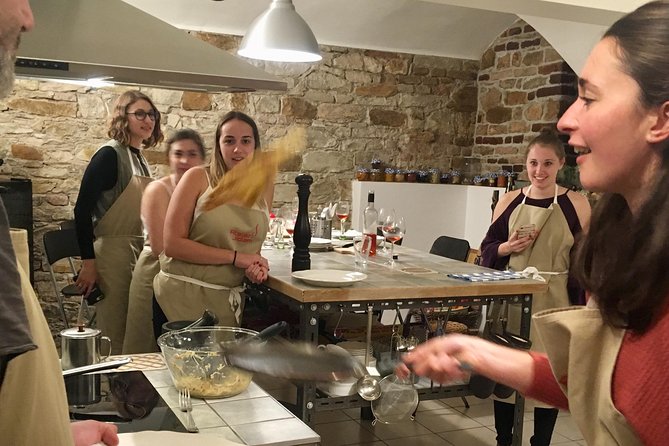
Your main dish is prepared by the host in advance. You’ll see a range of options, such as:
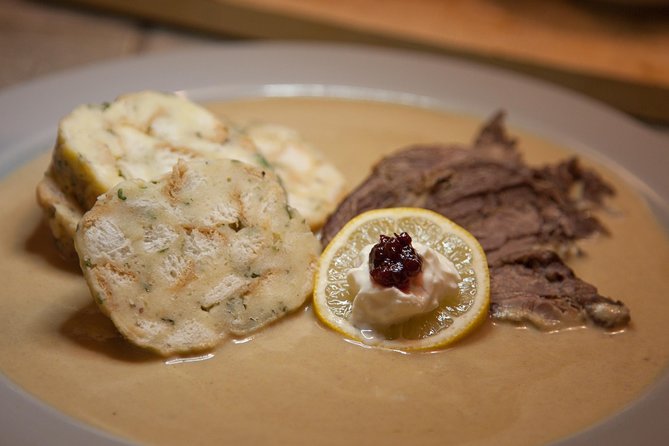
- Svíčková (vegetable cream sauce with beef)
- Beef goulash
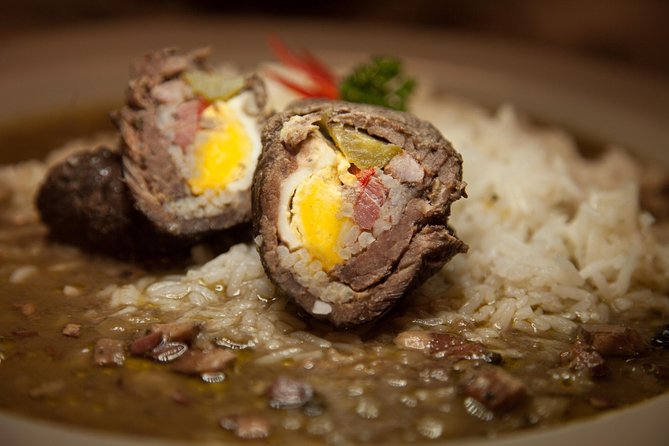
- Spanish bird (stuffed beef roll)
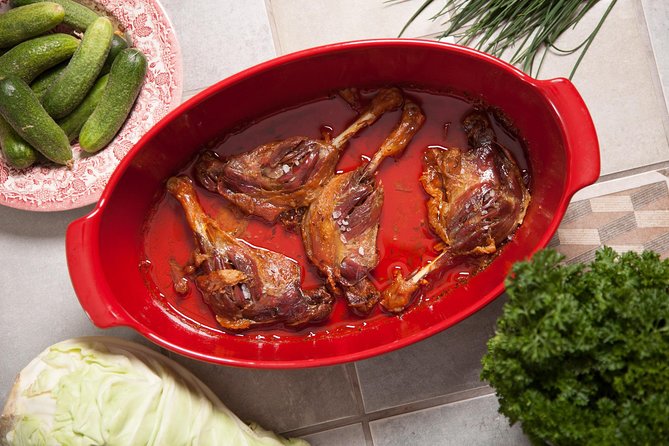
- Roasted duck
- Rabbit with vegetables
- Beef with mushrooms
This matters for two reasons. First, you still get the educational part: you learn what makes each dish typical and where the flavors come from. Second, you’re not forced to cook the most complex part of the meal while also doing starters and sides.
If you’re thinking, that sounds like less work, consider the trade. The class gives you time to actually enjoy the group and the eating, not just survive the kitchen. You’ll still be busy, but the main course lands as the reward.
Svíčková is the headline option for many food-first visitors to Czechia, and the cream sauce concept helps you understand why Czech dinners feel hearty and complete. Goulash gives you that deep, slow-simmer feeling without the work. And if you see a meat-and-stuffing dish like Spanish bird, it helps you connect Czech cooking to the wider Central European love of roasts and fillings.





Dessert choices: fruit dumplings or Kremrole
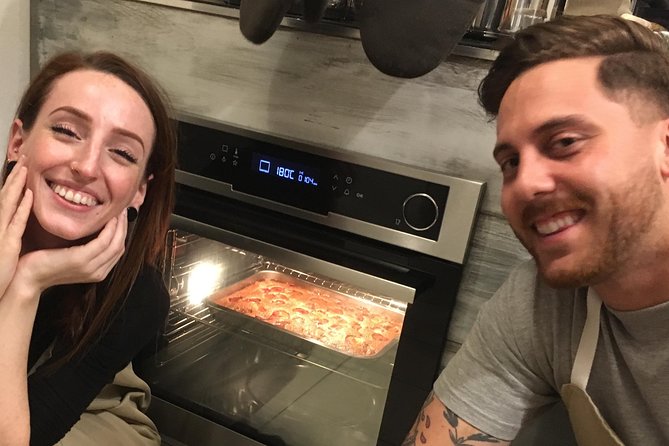
Dessert is either fruit dumplings or Kremrole. Fruit dumplings are made with fresh seasonal fruit, served with poppy seeds and/or quark. Kremrole is a fragile pastry filled with sweet meringue.
This is a nice balance. Fruit dumplings lean comforting and homemade, while Kremrole brings a more pastry-forward sweetness that feels like a special-occasion finish. Either way, dessert closes the loop on what you’ve been tasting and cooking: carbs, fruit, dairy, and that very Central European relationship with dough.
Also, dessert here doesn’t feel tacked on. It’s part of the same cultural story you started learning at the beginning of the evening.
Wine and Czech fruit brandy: why the drinks actually help the meal make sense
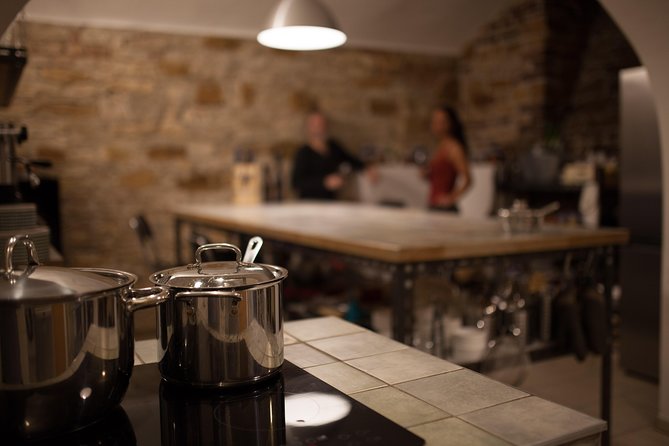
You’ll taste three Czech wines and get a sample of Czech fruit brandy. This is more than a perk. The wine helps you learn the flavor structure of Czech meals: the saltiness from cheeses and sausages, the tang from sauerkraut, the comfort from creamy sauces, and the sweetness from dumplings and pastry.
One review specifically called out Moravian wine, and that’s a clue about the direction the hosts are leaning. Czech wines can be a world away from what many people expect, so having them explained in the same setting you’re tasting food is a big deal.
And fruit brandy makes sense with Czech desserts. It’s a bridge between savory and sweet, with a warm, aromatic finish. If you’re nervous about tasting unfamiliar drinks, you can relax: the class is built to guide you through pairings while you’re already eating.
Hosts and group vibe: Bret, Aide, and Svetlana make it feel personal
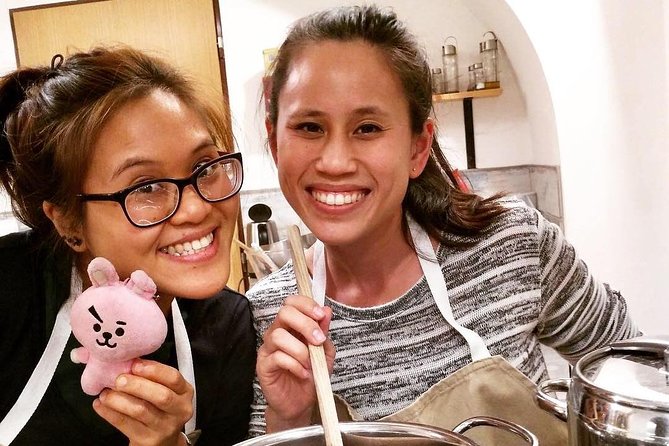
This experience is led by one or both of the hosts, and the names that show up again and again are Bret and Aide, with Svetlana mentioned in some group setups. The teaching style comes through clearly: people are involved, questions are encouraged, and the tone stays relaxed.
Reviews paint the hosts as funny and warm, with a real love for food and wine. That energy isn’t just personality—it changes how the class feels. When the host explains the why behind dishes while you’re actively cooking, the information sticks.
One thing I’d take from the vibe: expect conversation. You’ll swap stories while you cook, and music may be part of the evening’s atmosphere. Small-group size helps with this. You’re not shouting over a big tour bus.
If you’re solo, this kind of class can be a strong move because you still end up talking to people while you’re busy in the kitchen. If you’re traveling with family, it can work too, since it’s structured and interactive rather than purely lecture-based.
Price and value: what you’re paying for at $167.75 per person
At $167.75 per person for roughly 3.5 hours, the value depends on what you want from Prague. If you want a class with just one dish and a small tasting, this might feel pricey. But if you want multiple courses, wine included, and hands-on work in a small group, it’s easier to justify.
Here’s what’s bundled into the experience based on the program details:
- A full multi-course meal: starters, one main course, bread dumplings, and dessert
- A tasting menu at the start with Czech snacks and typical products
- Three Czech wines plus Czech fruit brandy
- A cooking lesson where you prepare dishes using traditional ingredients
- A small-group limit of 8 travelers
When you spread that across the time and servings, it often competes well with the cost of a good dinner plus drinks plus a guided experience. And you get something you can’t buy at a restaurant: the technique and the ingredient story.
Also, the fact that the main course is prepared by the host in advance helps you feel like you’re learning, not struggling. You still contribute, but you’re not stuck waiting for a kitchen meltdown to end.
Who should book this Czech cooking night
This is best for you if:
- You love food and want to connect flavors to local life, not just eat.
- You enjoy wine pairing and want a guided taste experience.
- You prefer small-group activities where you can talk and participate.
It’s not ideal if:
- You hate hands-on cooking or want a totally passive tour.
- You’re very sensitive to alcohol and want zero-drink experiences.
- You’re trying to pack in a full itinerary where this 3.5-hour block leaves no breathing room.
If Prague is feeling too museum-heavy, this is a great counterweight. It’s also an easy win for dates, groups of friends, and travelers who like structured, social evenings.
Should you book Taste, Cook and Dine Traditional Czech?
Yes, I’d book it if you want a practical, food-centered Prague experience with hands-on cooking, real tastings, and included wine. The small group size and the way the meal is built around seasonal Czech dishes make it feel personal instead of mass-tourish.
I’d hesitate only if you’re expecting a light snack stroll or if you prefer to cook alone at your own pace. Otherwise, this is one of those evenings where you walk away with both full stomachs and a clearer sense of what Czech food tastes like and why.
FAQ
How long is the Czech cooking and dining experience?
It runs for about 3 hours 30 minutes.
Where does the tour start in Prague?
The meeting point is Křižíkova 70/67, 186 00 Praha 8-Karlín, Czechia.
Is the tour in English?
Yes, it’s offered in English.
How many people are in a group?
The maximum group size is 8 travelers.
What food and drinks are included?
You’ll have a variety of Czech snacks and starters, you’ll cook and/or help prepare traditional dishes, you’ll have a main dish and dessert, and you’ll taste three Czech wines plus Czech fruit brandy.
What kinds of dishes do you cook?
Depending on the season, you may cook three traditional Czech dishes. Examples include bread or bread dumplings with a spread, vegetable pancakes, and a cake or dessert. The program also includes bread dumplings prepared together, and you’ll prepare one of the starter options such as potato-sauerkraut pancakes, cheese quark spread, or carrot/kohlrabi salad.
Is the main dish cooked during the class?
The main dish is prepared by the host in advance, and you’ll eat it as part of the meal.
What is the cancellation policy?
You can cancel for a full refund up to 24 hours before the experience starts. If you cancel less than 24 hours before, the amount paid is not refunded. Free cancellation is available, and the experience may be rescheduled or refunded if the minimum number of travelers isn’t met.