
REVIEW · PRAGUE WALKING TOURS
Prague Renaissance & Baroque Gardens Walking Tour
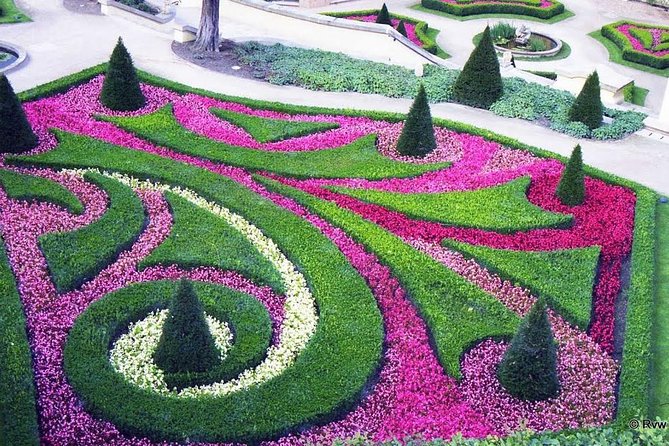
A good garden tour in Prague feels like a secret key. This 3-hour small-group walk through Renaissance and Baroque gardens takes you from grand Prague Castle grounds to quieter, walled-in spaces you’d never stumble into alone.
I especially love how the route mixes pretty scenery with real stories. You’ll get scene-setting details from guides such as Bonita (and sometimes Vadim), including how statues, fountains, and myth references were used to communicate power and taste.
The main catch is physical: parts of the Vrtbovská Garden involve steep stairs. If that’s an issue, the plan includes a workaround where you can wait on a lower terrace and rejoin the group shortly after.
In This Review
- Key things to know before you go
- The point of this Prague Castle gardens tour: art, power, and good walking
- Price and value: what $126.03 buys (and what it doesn’t)
- Meeting in Malostranská and getting to the castle on tram
- Vrtbovská Garden: the Baroque walled garden with terraces and city views
- Wallenstein/Waldstein Garden: fountains, statues, and Italian-style garden tricks
- Royal Garden at Prague Castle: where plant history becomes a walking story
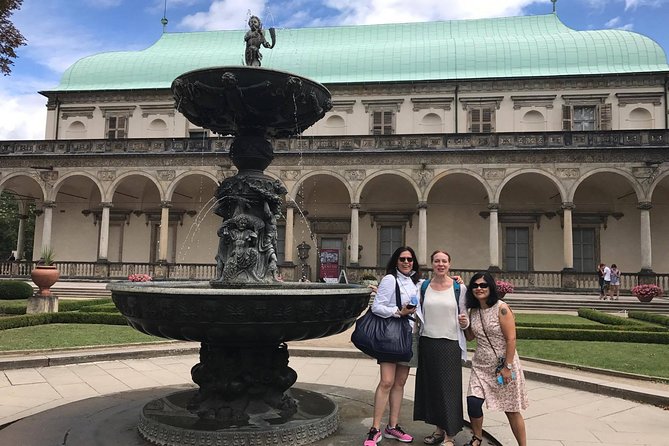
- Queen Anne’s Summer Palace: Renaissance architecture with figurative details
- Ball Game Hall: a Renaissance building with changing roles
- The small-group feel: why max 8 matters in garden country
- Departure options: plan your day around the 10am vs 2pm choice
- Who this tour suits best (and who might skip it)
- Should you book? My call for Prague Renaissance and Baroque Gardens
- FAQ
- Where is the meeting point?
- How long is the tour?
- Is the tour in English?
- How big is the group?
- What time departures are available?
- Is Vrtbovská Garden included?
- Do we pay for other garden admissions too?
- How strenuous is the walk?
- Can I cancel and get a full refund?
Key things to know before you go
- Max 8 travelers: the pace stays human, and your guide can adjust to your questions.
- Prague Castle garden highlights: you’ll pass the Belvedere Summer Palace area plus key spots in the Royal Garden grounds.
- Wallenstein/Waldstein Garden sculptural program: plan on seeing fountains, statues, and notable features tied to Italian design.
- Vrtbovská Garden is the main ticket item: it’s the walled Baroque garden with terrace views over Prague.
- Garden “plant history” stops: figs, citrus, almonds, and even early tulip introductions show up in the story.
- Two departure choices: pick a 10am or 2pm start time, based on your day’s energy.
Prefer to cover it on foot? More Prague walks across the old lanes.
- Prague: 3-Hour Walking Tour of Old Town & Prague Castle★ 4.7 · 5,696 reviews
- Prague: Ghost Walking Tour Where Legends Come To Life★ 4.4 · 5,253 reviews
- Prague: Jewish Quarter Walking Tour with Admission Tickets★ 4.7 · 3,729 reviews
- Prague Guided Walking Tour and Cruise with Authentic Czech Lunch★ 5.0 · 3,627 reviews
The point of this Prague Castle gardens tour: art, power, and good walking
Prague does gardens like other cities do museums. The plants matter, sure, but the real focus is how Renaissance and Baroque designers used water, sculpture, and layout to say something—about status, culture, and who was allowed into these spaces.
This tour is built for that kind of attention. With a maximum of 8 people, you’re not stuck in a noisy line chasing the next postcard view. You’re guided from one themed “scene” to the next, which makes the details land instead of evaporating after the photo.
Best of all, you get a break from the main crowds. Even when you’re near iconic areas, you’ll spend time in garden interiors where the pace slows and the city gets smaller around you.
Price and value: what $126.03 buys (and what it doesn’t)
At about $126.03 per person for roughly 3 hours, you’re paying mainly for guided access, interpretation, and the small-group format. The guide is the product here: the tour is designed around walking the gardens and explaining what you’re looking at—especially the symbolism and the “why” behind each feature.
Most garden access is handled for you, but there are stated exceptions. Vrtbovská Garden is an extra fee (CZK 130; students and seniors CZK 100). The pricing info you’ll see for gardens under Prague Castle also lists an additional entry fee (CZK 90; students and seniors CZK 60), so don’t assume every single entry point is fully covered no matter what day you go.
My practical take: if you’re the kind of person who likes learning while you walk, this price is fair. If you just want scenery with no stories, you can self-tour, but you’ll miss the layers that make these gardens feel intentional instead of decorative.
Meeting in Malostranská and getting to the castle on tram
You meet near Malostranská Metro, at Bagel Lounge Malostranská Letenská (Letenská 118/1, Prague 1). The setup is convenient: it’s close to public transport, and you don’t need to figure out complicated transfers before your tour even starts.
From there, your group takes the tram to the castle area. That’s a smart choice because it keeps the walking reasonable for a tour that’s already going to include garden stairs and uneven paths.
Also, this is offered in English, and you use a mobile ticket. That’s useful if you’re hopping around Prague all week and don’t want paper clutter in your daypack.
Vrtbovská Garden: the Baroque walled garden with terraces and city views
Vrtbovská Garden is the “pay extra for a reason” stop. It’s a walled Baroque garden from the early 1700s, and it’s known for its sculptural decor—some of it tied to older statuary and symbolic design. The garden also gives you one of the best angles for seeing Prague Castle and the surrounding cityscape, because the layout uses terrace height like a built-in viewing platform.
Plan for movement here. The terrain includes steep stairs up to the higher terrace. The tour description includes an easy adjustment if stairs are difficult: you can wait on the second terrace while the group goes up, then you’ll rejoin about 10 minutes later. If you’re traveling as a private group and you need more flexibility, there’s also an option to modify this portion.
What you should do while you’re there:
- Take your time at the terraces before you rush back down.
- Look for how the garden frames the skyline; it’s not just a view, it’s a designed perspective.
- Enjoy the statuary at a slower pace. This is where the guide’s explanation turns “pretty objects” into “political and cultural messages.”
If you want one stop to justify the tour, this is it.
Keep walking. More of Prague at street level.





Wallenstein/Waldstein Garden: fountains, statues, and Italian-style garden tricks
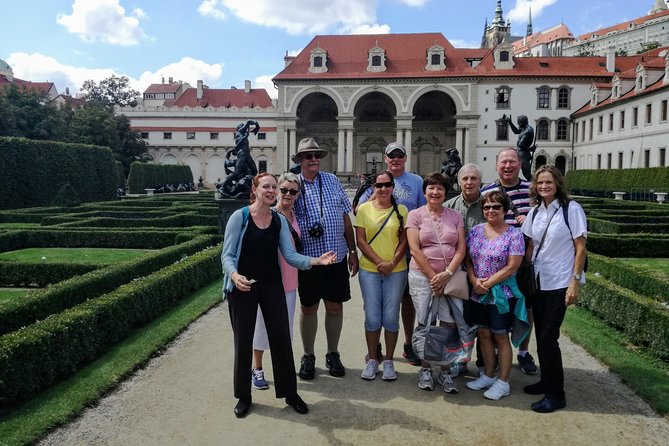
After Vrtbovská, the tour shifts into the Wallenstein/Waldstein Garden area. This is tied to Wallenstein Palace gardens originally built in the 1600s, and today it’s open to the public as part of Senate of the Czech Republic grounds.
What makes this segment interesting is the Italian influence. You’ll get a sense of the “garden as theater” idea: architecture and landscape elements are arranged so you keep discovering new angles as you walk.
Expect highlights like:
- An aviary
- An artificial grotto
- A sculptural gallery featuring mythological heroes
- A fountain associated with the sculptor Adrian de Vries
If you like classical mythology, this stop will feel extra satisfying. The guide’s stories help you connect individual statues to the broader theme: how myth was used to communicate cultural credibility and political messaging.
Drawback to consider: garden time can run long if the group pauses for photos constantly. If you’re with a slow-motion camera person (no judgment), you may find you have less energy for the later stops—so pace yourself early.
Royal Garden at Prague Castle: where plant history becomes a walking story
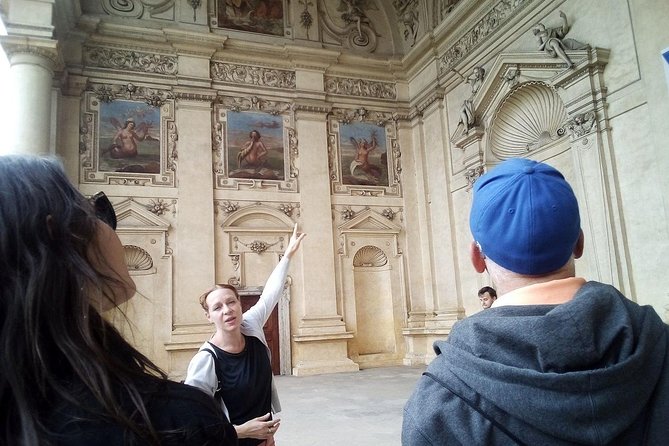
Once you’re in the Royal Garden area within Prague Castle grounds, the tour changes gears from “sculptures and symbolism” to “how plants and design reflect trade, curiosity, and status.”
Here’s what you can look for:
- The Royal Garden is established on the site of older medieval vineyards and later developed into a Renaissance garden.
- You’ll hear about rare botanical specimens and exotic plants associated with earlier plant introductions from far away.
- You’ll pass key features including the Belvedere Summer Palace garden area and, importantly, the Fig House and Orangery.
The Fig House/Orangery stop is worth slowing down for. The tour description points to the early cultivation of figs, almonds, oranges, and lemons in central Europe—basically an edible “this is what money and connections can do” showcase.
You’ll also learn how tulips were first brought to Prague. Even if you’ve seen tulip displays elsewhere, hearing that origin story in the place where it connects back to Renaissance plant culture makes it click.
Tip: bring your curiosity more than your shopping list. This part is less about “one famous statue” and more about how the whole garden ecosystem was curated.
Queen Anne’s Summer Palace: Renaissance architecture with figurative details
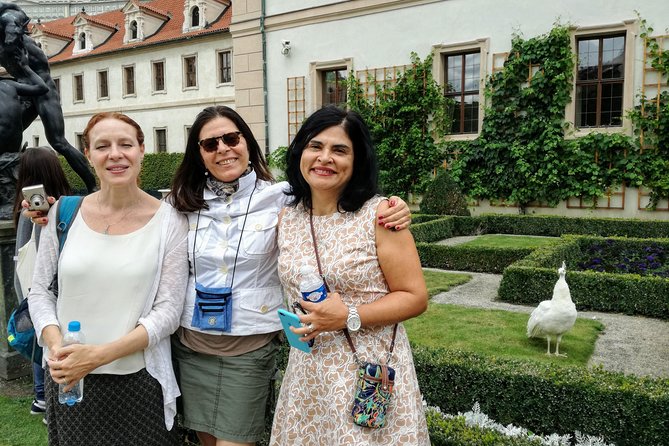
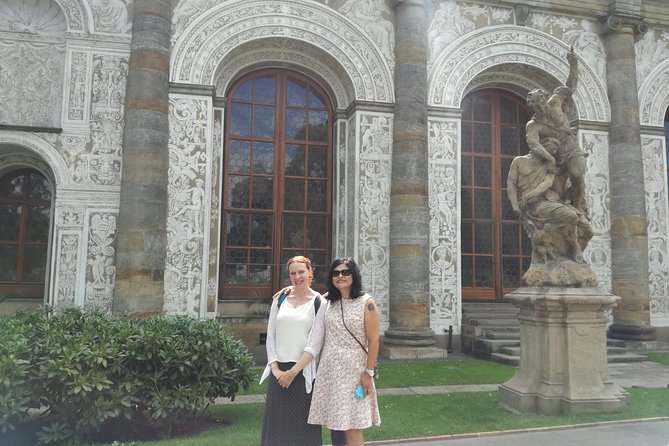
Next comes Queen Anne’s Summer Palace, finished in the mid-1500s. This building is described as among the purest Renaissance architecture outside Italy, and that matters because it isn’t just a background structure—it’s wrapped with details designed to be read.
You’ll notice:
- An ornamental, figurative frieze
- Outside arcade pillars with decorated Tuscan heads
- Wall reliefs showing scenes from mythology, hunting, and wars
- A founder figure (Ferdinand I) and a fig-tree-blossom gesture connecting founder and queen
Even if you’re not an architecture person, I think you’ll enjoy how the guide links those details into a story about identity and symbolism. This is where the tour becomes more than “pretty gardens”—it turns into a guided reading of the stone.
Time tip: this is a shorter stop (around 5 minutes described for the palace portion), so don’t expect a museum-style linger. Let the guide point out what to focus on, then take your own quick look after.
Ball Game Hall: a Renaissance building with changing roles

The final stop on the garden-side loop is the Ball Game Hall in the Royal Garden area, on the south side above the Stag Moat. Built in the mid-1500s, it originally served as a ball games hall and later functioned as a riding school and stables.
Why it works on this tour: it shows that gardens weren’t only for strolling and posing. The castle grounds were a working world, and buildings had practical roles even when they were part of an elite landscape.
If you like historical continuity, this stop gives you that: one structure can serve different needs across centuries, but the form still carries its original Renaissance identity.
The small-group feel: why max 8 matters in garden country
Prague Castle gardens can look like a maze if you’re solo. Paths split, viewpoints change, and it’s easy to miss what you came for. A small group keeps the walking plan tight and makes it easier for your guide to redirect attention.
With up to 8 travelers, you get a better chance to ask why something is there—why a myth figure is placed where it is, why the garden layout works from one terrace but not another, and why some spaces feel quieter than you expect.
Also, you’re not being rushed like a conveyor belt. One of the most positive themes from the guide style described for this tour is story-driven explanation—so you’ll likely leave not just with photos, but with a better sense of how Renaissance and Baroque design communicated.
Departure options: plan your day around the 10am vs 2pm choice
You can choose 10am or 2pm. In practice, the best time depends on how you like to tour.
- If you prefer a calmer start, the 10am option can help you avoid late-day crowd energy in the castle area.
- If you like a slower morning with coffee and museums, 2pm fits well—especially if you want this garden walk to be your afternoon reset.
Since the tour is about 3 hours and ends back near the meeting point, you can pair it with another nearby Prague experience without needing a long commute.
Who this tour suits best (and who might skip it)
This tour is a great match if you want:
- A guided walk through Prague Castle gardens plus Wallenstein/Waldstein and Vrtbovská
- Interpretive storytelling about symbolism, sculpture, and the “message” behind design
- A group size that stays intimate (max 8)
It may be less ideal if:
- You hate stairs. Vrtbovská includes steep steps up to higher terraces, with a waiting option, but it’s still a key consideration.
- You want a purely self-guided photo walk. This is built for explanation, not just wandering.
Should you book? My call for Prague Renaissance and Baroque Gardens
Book this tour if you want to see Prague’s gardens as designed spaces, not just pretty backgrounds. The combination of Renaissance architecture (Queen Anne’s Summer Palace and Royal Garden structures) with Baroque garden design (Vrtbovská) is a strong pairing—and the small-group format keeps it from feeling like a stampede.
I’d think twice if you’re sensitive to stairs, or if you’re only interested in taking pictures with zero context. In that case, you might be happier doing a simpler self-walk and saving money.
If you can handle a few steep sections and you enjoy learning why the art and landscaping were planned the way they were, this is one of the better ways to spend a half-day in Prague.
FAQ
Where is the meeting point?
You meet at Bagel Lounge Malostranská Letenská (Letenská 118/1), near Malostranská Metro in Prague 1.
How long is the tour?
It’s about 3 hours (approx.).
Is the tour in English?
Yes. The tour is offered in English.
How big is the group?
The tour has a maximum of 8 travelers.
What time departures are available?
You can choose between a 10am and 2pm departure time.
Is Vrtbovská Garden included?
No. Vrtbovská Garden admission is an extra fee (CZK 130; students and seniors CZK 100).
Do we pay for other garden admissions too?
The tour info states Vrtbovská is not included, and it also lists a separate CZK 90 entry for gardens under Prague Castle (students and seniors CZK 60).
How strenuous is the walk?
The tour is listed as requiring moderate physical fitness. Vrtbovská includes steep stairs to a higher terrace, but you can wait on the second terrace and rejoin the group about 10 minutes later.
Can I cancel and get a full refund?
Yes. Free cancellation is offered if you cancel at least 24 hours before the experience’s start time.
More Tours in Prague





More Tour Reviews in Prague



On Foot Through Prague, Continued



More Prague tours we have written up lately


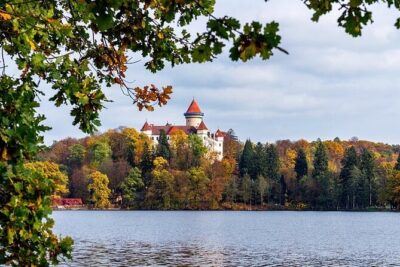
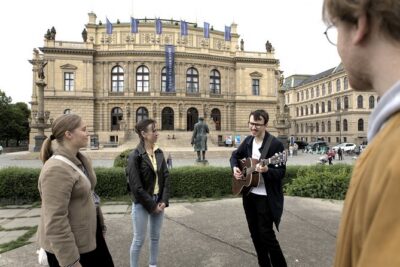


Prague Walking Tours, compared.
 ★ 4.73-Hour Walking Tour of Old Town & Prague CastleFrom $305,696 reviews
 ★ 4.4Ghost Walking Tour Where Legends Come To LifeFrom $275,253 reviews
 ★ 4.7Jewish Quarter Walking Tour with Admission TicketsFrom $763,729 reviews
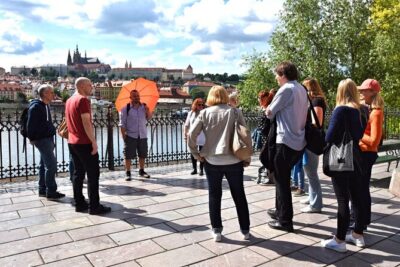 ★ 5.0Prague Guided Walking Tour and Cruise with Authentic Czech LunchFrom $1023,627 reviews
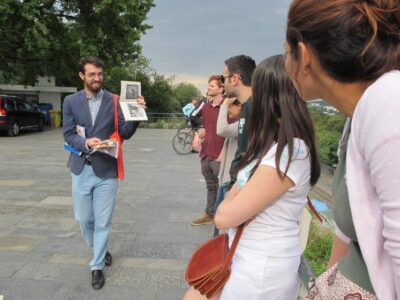 ★ 4.6Old Town and Jewish Quarter Guided Walking TourFrom $222,847 reviews
 ★ 4.5Prague Ghost and Legend of Old Town Walking TourFrom $212,630 reviews
 ★ 5.0Prague 3-hour Afternoon Walking Tour including Prague CastleFrom $531,899 reviews
 ★ 4.7Ghosts and Legends Nighttime Guided Walking TourFrom $221,462 reviews
Browse the lists this tour appears in