
REVIEW · PRAGUE WALKING TOURS
Prague Renaissance and Baroque Gardens Walking Tour
Prague gardens can feel like politics in bloom. This 3-hour walking tour connects Renaissance classicism and Baroque theater through famous castle spaces and two major garden stops. I especially love the way the guide turns stone, water, and plants into a story you can actually picture.
I also like the route’s variety: you move from the Belvedere Summer Palace area to the Fig House and Orangery, then down the hill to the Wallenstein Garden. You get myth, horticulture, and design details instead of a garden checklist. One drawback to plan around: the tour includes stair climbing, sometimes narrow or steep, so it may not suit everyone unless you choose a private tour.
In This Review
- Key points to look for
- Why Renaissance and Baroque gardens in Prague feel different
- Starting at Bagel Lounge Malostranska: timing, shoes, and your best pace
- Prague Castle gardens: Ferdinand I’s Italian Renaissance plan
- The Singing Fountain and the Giardinetto details you’ll remember
- Fig House and Orangery: Mediterranean fruit and the Central Europe boost
- From stag moat to Bull Stairs: how the castle route sets up the South Gardens
- Wallenstein Garden: albino peacocks, Mannerist statues, and mythical fountains
- Wallenstein’s fountains and grotto walls: seeing Baroque ideas in motion
- Vrtba Garden in Mala Strana (1720): a walled Baroque world with marine views
- Price and tickets: is $123 worth a 3-hour walk?
- Who this tour suits best (and who should consider private)
- Should you book Prague Renaissance and Baroque Gardens?
- FAQ
- FAQ
- How long is the Prague Renaissance and Baroque Gardens Walking Tour?
- What does the tour cost, and what’s included in that price?
- Where do I meet the tour?
- Is admission to Prague Castle Gardens included?
- Is Vrtba Garden admission included?
- What language is the tour guide?
- Are there private or small-group options?
- What should I know about stairs and mobility?
- What’s the cancellation policy?
- Can I reserve without paying right away?
Key points to look for
- Ferdinand I hired Italian landscapers and imported a whole design style north of the Alps
- Belvedere Summer Palace plus the Singing Fountain cast in 1564 in bell bronze
- Fig House and Orangery: figs, almonds, oranges, and lemons grown in Central Europe
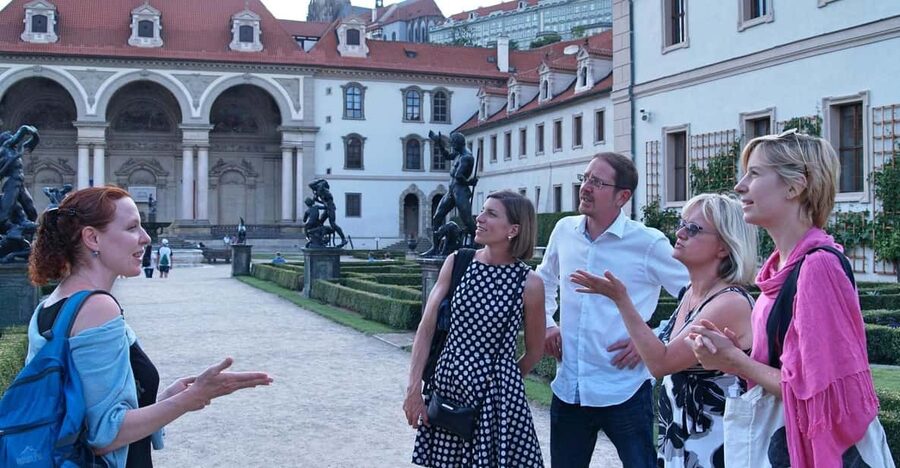
- Wallenstein Garden with albino peacocks, statues, grotto wall, and mythical fountains
- Vrtba Garden (1720) in Mala Strana, ending with marine-themed grotto views
Prefer to cover it on foot? More Prague walks across the old lanes.
- Prague: 3-Hour Walking Tour of Old Town & Prague Castle★ 4.7 · 5,696 reviews
- Prague: Ghost Walking Tour Where Legends Come To Life★ 4.4 · 5,253 reviews
- Prague: Jewish Quarter Walking Tour with Admission Tickets★ 4.7 · 3,729 reviews
- Prague Guided Walking Tour and Cruise with Authentic Czech Lunch★ 5.0 · 3,627 reviews
Why Renaissance and Baroque gardens in Prague feel different
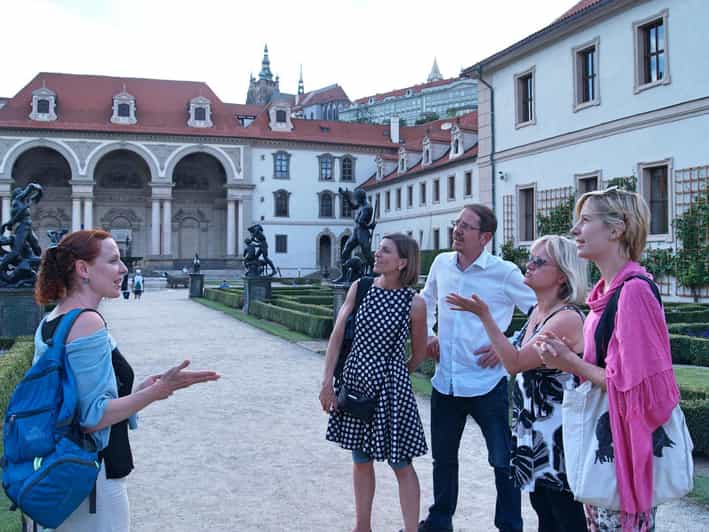
Prague’s garden story is not just about pretty plants. It’s about power, religion, and taste—how rulers wanted the world to see them. That’s why this tour works: it treats gardens like architecture, not decoration.
The best part is the “how” behind the look. You’ll hear how Ferdinand I pushed Italian Renaissance lushness into Prague, then you’ll track the shift toward Baroque ideas as the walk continues. By the time you reach Wallenstein and Vrtba, you can see the change in mindset, not just the change in style.
Also, the tour doesn’t pretend Prague only has one era. You’ll pick up horticultural threads stretching from medieval herb gardens to later palace culture, so you get context for what you’re seeing. This makes the whole walk feel grounded, not random.
Starting at Bagel Lounge Malostranska: timing, shoes, and your best pace
You meet at the door of Bagel Lounge Malostranska. It’s a convenient starting spot if you’re staying in the Lesser Town area, and it sets you up for the downhill route that comes later.
The tour is 3 hours, and that matters because garden viewing needs time but also needs momentum. You’ll be walking and climbing through castle grounds before you settle into the bigger garden scenes. Wear comfortable shoes with good grip, because Prague’s stairs and uneven paths can turn a “light walk” into an ankle test.
If you’re the type who likes to stop and read every plaque, you’ll still be fine. The pacing is designed for a historical story arc across multiple sites, so you’re not stuck waiting for the group at one location too long.
Prague Castle gardens: Ferdinand I’s Italian Renaissance plan
The tour’s backbone is the castle-garden world created under Emperor Ferdinand I. You’ll hear how he hired Italian landscapers and architects for the palace gardens—an intentional move to bring Mediterranean-style design into Prague. That’s not a small detail. It explains why the shapes, water features, and pleasure-palace mood look like Italy had a direct influence here.
A major highlight is the Belvedere Summer Palace, commissioned by Ferdinand I as a gift for his wife, Queen Anne. The twist is human and a little tragic: she did not live to see the palace completed. As you look at the reliefs, you learn how the gardens were part of a personal, courtly world—not just a public attraction.
The palace is designed by Italian architect Paola della Stella and is often described as the most beautiful Renaissance structure outside Italy. Even if you take that with a grain of salt, it’s still the kind of detail that helps you understand what “Renaissance” meant in Prague: symmetry, elegance, and controlled drama.
The Singing Fountain and the Giardinetto details you’ll remember
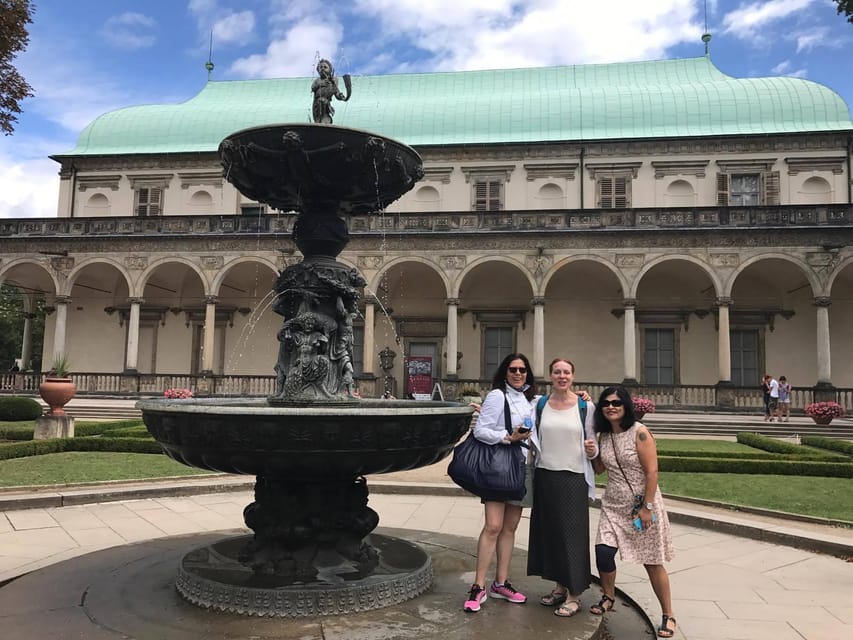
Right in front of the palace is the Giardinetto and the Singing Fountain. This is the type of feature that makes you slow down because it’s specific. The fountain was cast in 1564 in bell bronze, so when water drops into the bowl, it resonates or seems to sing.
That’s such a clever idea that it changes how you think about garden sound. It’s not background noise. It’s a designed effect—like court music, but made of water and metal. If you’re a fan of “small mechanisms with big meaning,” you’ll love the way this story is explained on the walk.
You’ll also see how the palace gardens connect to the broader Royal Gardens surrounding the area. In other words, this is not a single structure; it’s part of a designed landscape system (even though you’re moving on foot through it).
Keep walking. More of Prague at street level.





Fig House and Orangery: Mediterranean fruit and the Central Europe boost

After the palace area, the tour heads into the Fig House and Orangery. This is where the story gets hands-on. These buildings weren’t just decoration; they were production spaces for imported crops.
You’ll learn that figs, almonds, oranges, and lemons were grown here for the first time in Central Europe. That single line tells you a lot: the gardens were about experimentation and prestige at the same time. A garden could be a flex, and it could also be a living lab.
As you walk toward the western end of the garden, you’ll hear another plant story: tulips were introduced to the Royal gardens as an exotic gift brought by the Sultan of Constantinople. Even if you know the tulip craze as a later European phenomenon, hearing it connected directly to Prague palace culture makes it feel real and grounded.
From stag moat to Bull Stairs: how the castle route sets up the South Gardens
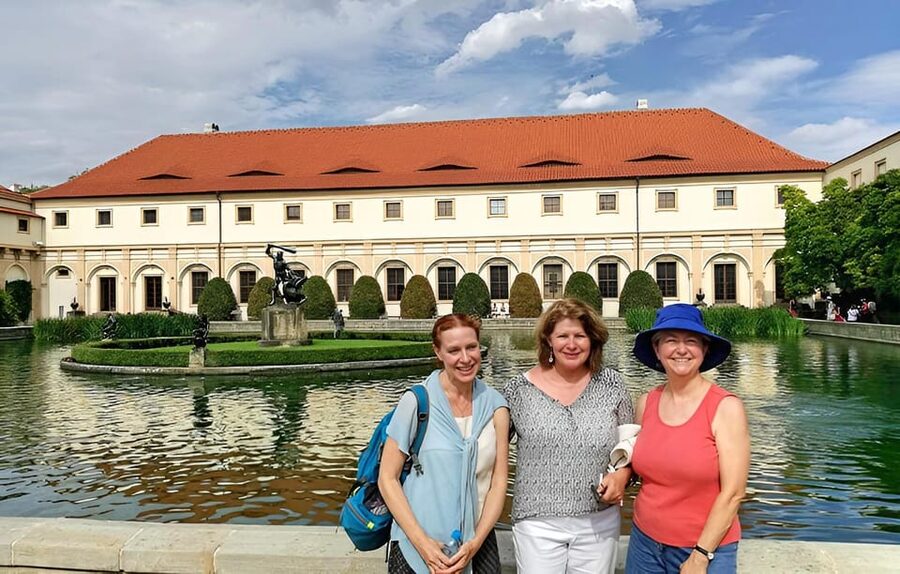
You’ll pass the stag moat before crossing through the castle courtyard and descending the Bull Stairs to the South Gardens. The moat is one of those touches that makes the gardens feel like part of a working estate, not just a leisure zone.
The stair descent is also where practical reality shows up. This tour includes steps, and some are described as narrow or steep. If you’re sensitive to stairs, you’ll want to take that seriously and consider a private tour so the route can be adjusted to your rhythm.
Once you reach the South Gardens, you’ll move through the Garden of Paradise and the Garden on the Bulwark. What I like here is that these names aren’t random. They hint at how people used gardens to stage emotions—utopia, control, and careful views from specific angles.
Then comes the downward movement into the terraced gardens below the castle. This downhill sequence sets up the next big reveal, so don’t rush it.
Wallenstein Garden: albino peacocks, Mannerist statues, and mythical fountains
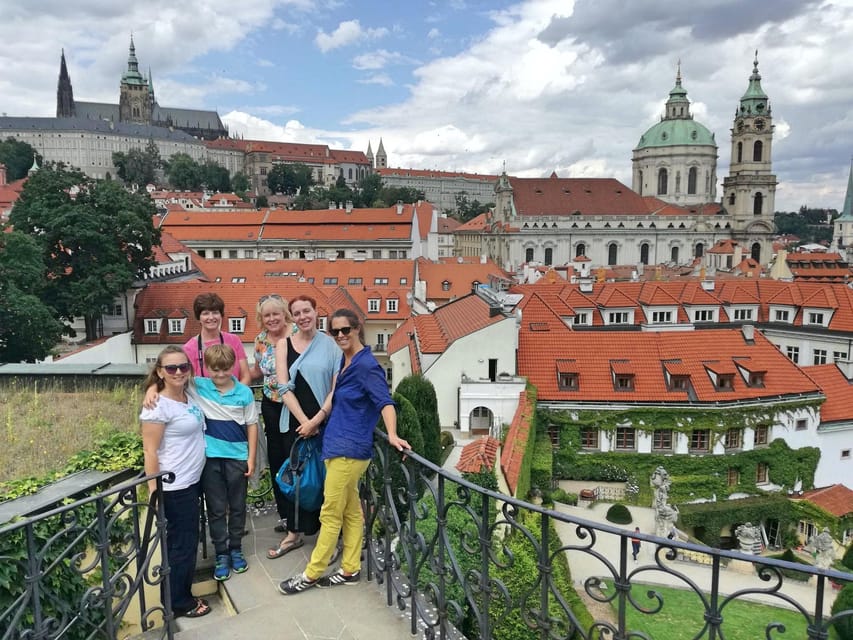
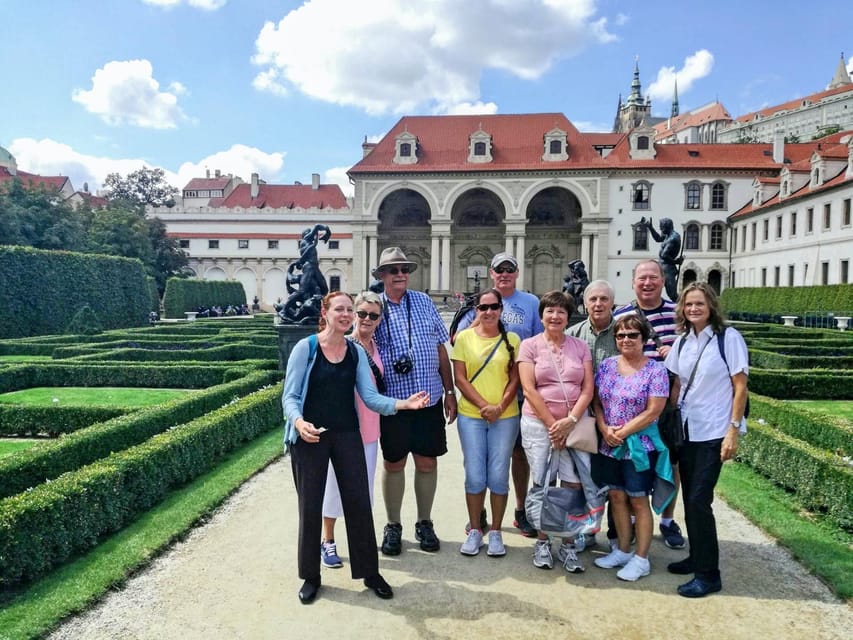
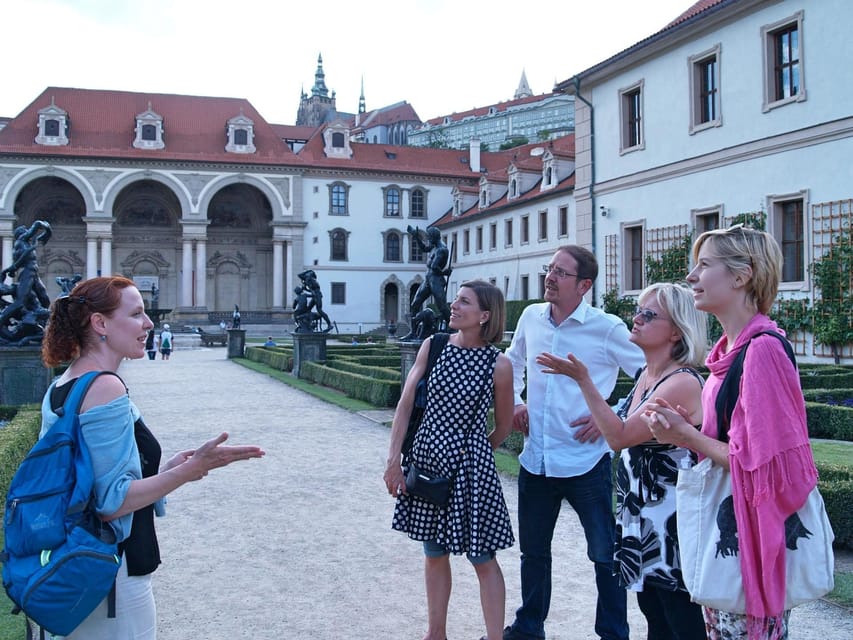
When you reach the Wallenstein Garden, the tour flips from palace elegance to a grand, dramatic garden world. You’ll see albino peacocks, Mannerist statues, a grotto wall, and mythical fountains. It’s a lot at once, but that’s part of the point.
Wallenstein Garden is the place where the Renaissance-to-Baroque change becomes visible in mood. Renaissance design often feels controlled and balanced, while Baroque tends to feel like it’s trying to surprise you—through movement, sound, and theatrical effects. The guide connects that shift directly to the philosophies of the time.
You’ll also hear about the garden’s commissioner, Albrecht von Wallenstein, including his dramatic life. That matters because gardens like this were never “just for nature.” They were created by people who wanted their image to last, and they used architecture, water, and sculpture to make that happen.
If you’re the kind of traveler who likes gardens but gets bored when they’re just a list of plants, this part is better. The focus is the design program—how everything works together.
Wallenstein’s fountains and grotto walls: seeing Baroque ideas in motion
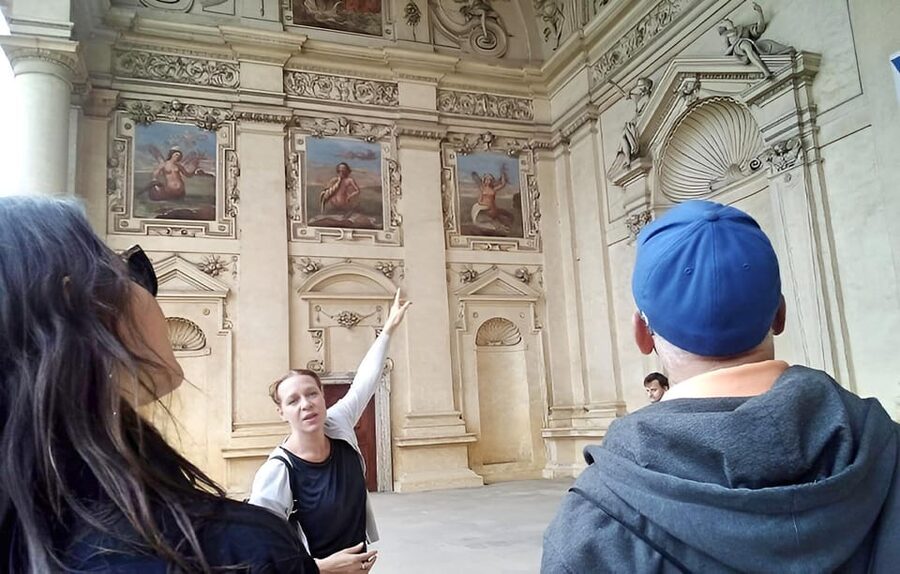
The mythical fountains and grotto wall are not just photo points. They’re part of how Baroque landscapes create experience. Water features can control attention—where you look, where you pause, and how quickly you move through space.
You’ll also likely notice how the statues and decorative elements guide your route. The garden doesn’t want you to wander aimlessly. It wants you to follow a story, like scenes in a play.
And yes, the albino peacocks are a scene-stealer. Even if you’ve seen peacocks elsewhere, the setting here makes them feel like character props. It fits the larger idea: Baroque gardens were about staging wonder.
Vrtba Garden in Mala Strana (1720): a walled Baroque world with marine views
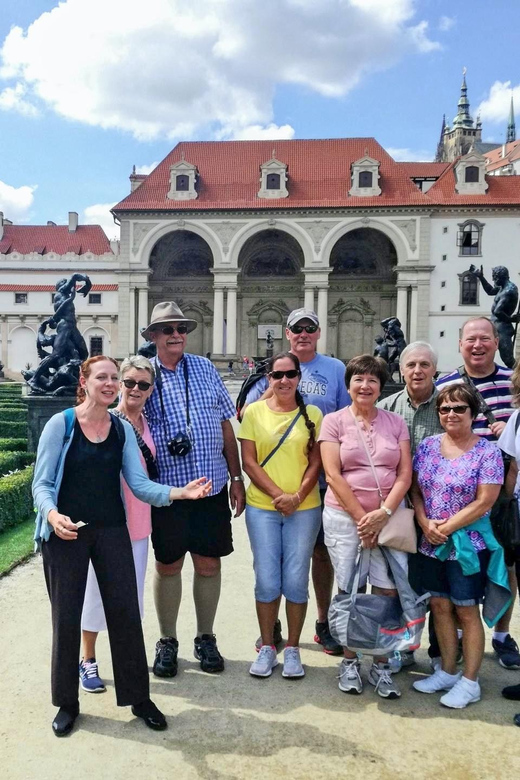
The tour ends at the Vrtba Garden, a walled Baroque garden dating from 1720 in Mala Strana (Lesser Town). This is a key stop because it contrasts with the castle world. Here you get a more private, noble-life flavor from the 18th century.
This garden is rarely seen compared to Prague’s headline attractions, and that’s exactly why it’s valuable. You get a quieter kind of beauty: walls, controlled sightlines, and Baroque landscaping built to impress without needing big crowds.
As you move upward within the garden, you’ll reach the top courtyard with its marine-themed grotto. That’s your payoff moment, because you’re not only looking at design details—you’re also getting stunning vistas over Prague’s cityscape.
Price and tickets: is $123 worth a 3-hour walk?
At $123 per person for a 3-hour guided history walk, the value depends on what you care about. If your goal is to collect garden photos, you could probably do it faster on your own. But if you want the “why” behind the layout, the Italian influence, and the Renaissance-to-Baroque shift, the guided format is the point.
This tour includes a historian guide, and you can feel it in the level of specificity. Stories like the Singing Fountain being cast in bell bronze in 1564, or the Central Europe firsts in the Fig House and Orangery, are exactly the kinds of details that become meaningful only with context.
One important logistics note: Prague Castle Gardens admission fees aren’t included, and Vrtba Garden admission isn’t included either. So budget for tickets on top of the tour price. If you’re comparing costs, treat $123 as for the guide and structured route, not for entry fees.
Who this tour suits best (and who should consider private)
This is a strong match for you if you like historical architecture, garden design, and the way art connects to politics. You’ll enjoy it if you want to understand why Ferdinand I’s Italian team mattered, and how Baroque gardens turned ideas into drama.
It’s also great if you like variety in one outing: palace pleasure spaces, horticultural buildings, a grand aristocratic garden, and finally a walled garden with city views. The route gives you multiple “garden moods” instead of repeating one theme.
The main consideration is movement. The tour includes walking up and down stairs, sometimes narrow and/or steep. If that’s a challenge for you, consider booking a private tour so the guide can tailor the route and potentially leave out sites that don’t fit your limits.
Also, if you’re traveling as a couple or a small group, the private/small group option can help you absorb details at a comfortable pace.
Should you book Prague Renaissance and Baroque Gardens?
Yes, I’d book it if you want a guided garden story with real specifics and clear historical connections. The route hits major sites with strong characters behind them: Ferdinand I, Paola della Stella, Wallenstein, and the Baroque design language that follows.
Skip it (or consider a private plan) if stairs are a dealbreaker for you or if you only want a casual stroll without the historical framing. And remember the garden entries: you’ll want to have admission covered for the areas with fees.
If you go in with curiosity—about why rulers built what they built, and how water, sculpture, and plant choices create mood—you’ll walk away with a Prague garden story that actually sticks.
FAQ
FAQ
How long is the Prague Renaissance and Baroque Gardens Walking Tour?
The tour lasts 3 hours.
What does the tour cost, and what’s included in that price?
The price is $123 per person and it includes a 3-hour guided history walk with a historian guide.
Where do I meet the tour?
Meet at the door of Bagel Lounge Malostranska.
Is admission to Prague Castle Gardens included?
No. Prague Castle admission fees are not included.
Is Vrtba Garden admission included?
No. Vrtba Garden admission fees are not included.
What language is the tour guide?
The tour is in English.
Are there private or small-group options?
Yes. Private or small groups are available.
What should I know about stairs and mobility?
The tour involves walking up and down stairs that are sometimes narrow or steep. If you think this could be difficult, consider booking a private tour so the guide can tailor the route.
What’s the cancellation policy?
You can cancel up to 24 hours in advance for a full refund.
Can I reserve without paying right away?
Yes. The option is reserve now & pay later.
More Tours in Prague





More Tour Reviews in Prague



On Foot Through Prague, Continued



More Prague tours we have written up lately




Prague Walking Tours, compared.
 ★ 4.73-Hour Walking Tour of Old Town & Prague CastleFrom $305,696 reviews
 ★ 4.4Ghost Walking Tour Where Legends Come To LifeFrom $275,253 reviews
 ★ 4.7Jewish Quarter Walking Tour with Admission TicketsFrom $763,729 reviews
 ★ 5.0Prague Guided Walking Tour and Cruise with Authentic Czech LunchFrom $1023,627 reviews
 ★ 4.6Old Town and Jewish Quarter Guided Walking TourFrom $222,847 reviews
 ★ 4.5Prague Ghost and Legend of Old Town Walking TourFrom $212,630 reviews
 ★ 5.0Prague 3-hour Afternoon Walking Tour including Prague CastleFrom $531,899 reviews
 ★ 4.7Ghosts and Legends Nighttime Guided Walking TourFrom $221,462 reviews
Browse the lists this tour appears in