
REVIEW · OLD TOWN & ASTRONOMICAL CLOCK
Prague: Plague Doctor Old Town History Walking Tour
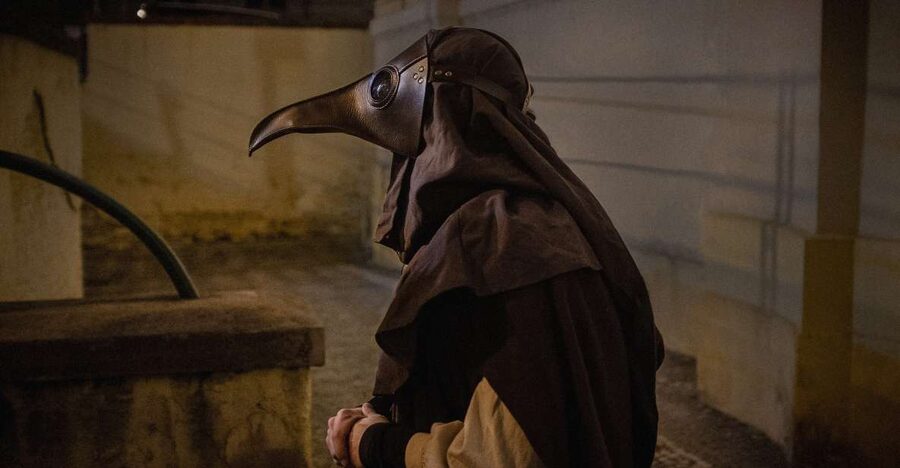
Prague looks cheerful today. Then you meet a plague doctor, and the mood flips fast. This 90-minute walking tour uses a costumed guide to bring the fear of the bubonic plague era to street level, moving you through Prague’s Old Town with stops that connect directly to how the city tried to survive.
I like two things most: you get hands-on roleplay with a guide dressed in plague-doctor clothing from 1713, and you also learn specific 18th-century details, including meeting A. Schamsky, a hero tied to the 1713 plague effort. The route also mixes big-name landmarks with quieter corners, so you’re not just ticking off postcards.
One consideration: it runs rain or shine, so you’ll want weather-ready clothing and shoes with good grip. The theme is dark, but the tour keeps a lighter, question-friendly tone, which may or may not suit everyone.
In This Review
- Key highlights you’ll remember
- Meeting your 1713 plague doctor at Seminářská
- Clementinum and Marianské náměstí: how Prague looks before the story hits
- Old Town Square: the Black Death fear in a bright public space
- Josefov and the Kafka Monument: history layers in tight streets
- Na Františku Hospital: seeing care spaces through a plague lens
- Convent of St. Agnes: faith, fear, and the human response
- Saint Castulus Church: the ending where the theme lands
- Price and what you get for $23 in 90 minutes
- Who this tour is best for (and who should skip it)
- Should you book the Prague Plague Doctor Old Town tour?
- FAQ
- How long is the tour?
- Where does the tour start and where does it end?
- What’s included in the ticket price?
- Is the tour wheelchair accessible?
- Does the tour run in bad weather?
- What languages are available?
Key highlights you’ll remember
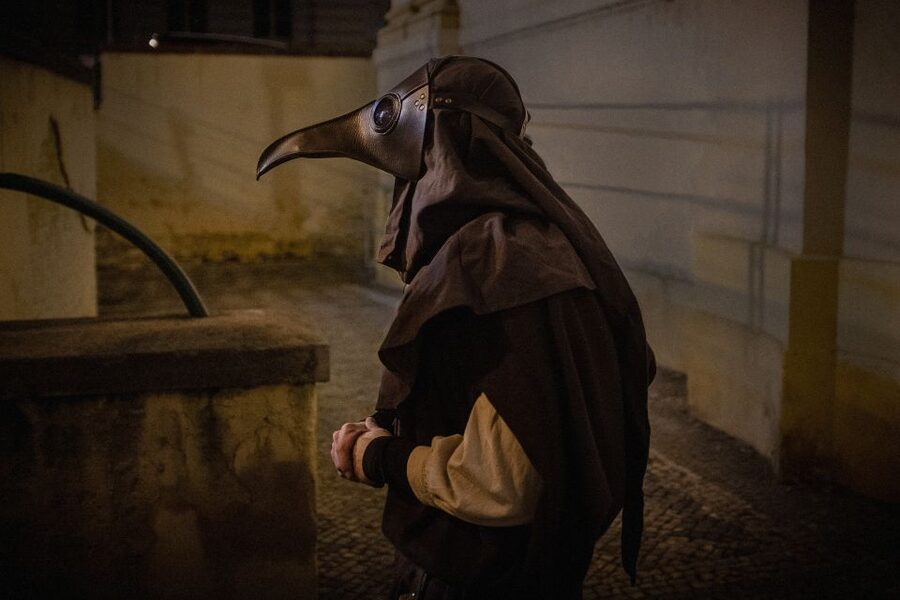
- Plague doctor in-character guidance that keeps the story moving street by street
- PPE talk: what plague doctors used for protection in the period
- A. Schamsky: a less-remembered 1713 fighter against the plague
- Historic stops like Na Františku Hospital and the Convent of St. Agnes
- Clementinum, Old Town Square, Josefov: iconic sights stitched to the plague story
- A small anti-plague pill (candy) moment that’s more fun than it sounds
Still circling the Old Town? More of the square and its lanes, reviewed.
- Prague: Oldtown, Medieval Underground & Dungeon History Tour★ 4.3 · 10,277 reviews
- Prague: Old Town Hall Tower Entry Ticket★ 4.5 · 6,749 reviews
- Prague: 3-Hour Walking Tour of Old Town & Prague Castle★ 4.7 · 5,696 reviews
- Prague: 3-Hour Old Town and Prague Castle Tour in German★ 4.8 · 5,671 reviews
Meeting your 1713 plague doctor at Seminářská
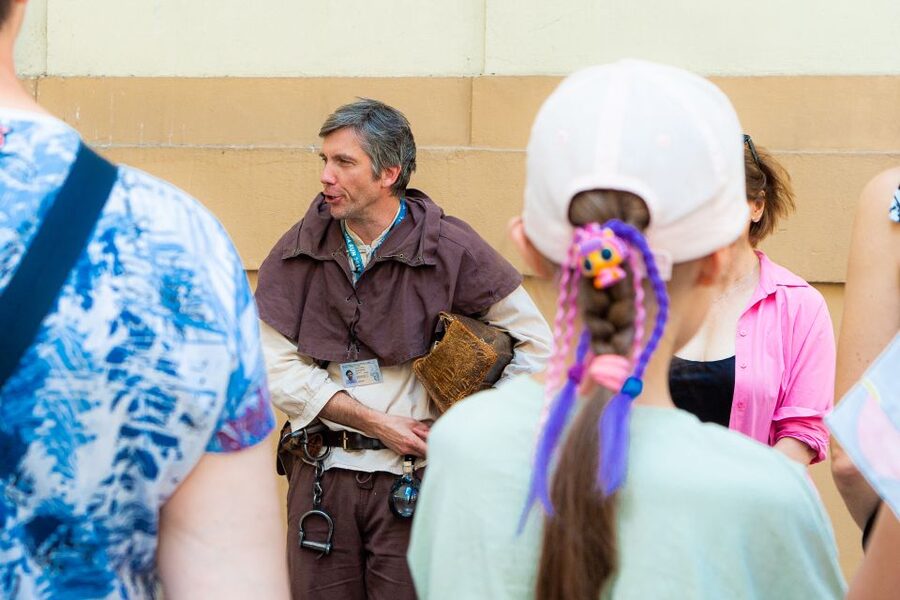
The tour starts at Seminářská 175/2 in Staré Město, where your first cue is simple: look for your guide dressed as the plague doctor. That costume matters more than you might think. It’s the visual hook that makes the history feel immediate, especially when you’re standing right in the middle of a city that still has medieval bones.
Right away, you’ll be set up to ask questions. English and Czech are offered by the live guide, and the format encourages you to speak up if something doesn’t make sense. From my perspective, that’s one reason this works well in a short 90 minutes. You’re not stuck listening for the whole time.
You’re also paying for more than storytelling. The ticket includes a licensed guide in plague doctor dress, so you’re seeing a themed performance that stays tied to real locations in Prague instead of drifting into a generic lecture.
Clementinum and Marianské náměstí: how Prague looks before the story hits
Your route takes you toward Clementinum for a short stop. Even if you’ve walked through Prague’s center before, Clementinum has a “serious” feel. It’s the kind of place that makes you think about institutions, learning, and authority. In a plague context, those themes connect to how cities responded: rules, records, and controlled spaces.
From there you move to Mariánské náměstí. This is one of those squares where the buildings give you quick clues about style, wealth, and the way communities organized themselves. On this tour, you’re not looking at architecture only. You’re using it as a map for the social side of disease, like who had access to help and what daily life could look like when fear spread faster than cures.
What I like here is the pace. Each stop is long enough for a few key points, but not so long that you’re stuck in one spot while the rest of the group waits. That keeps attention sharp, especially when the topic gets heavy.
Old Town Square: the Black Death fear in a bright public space
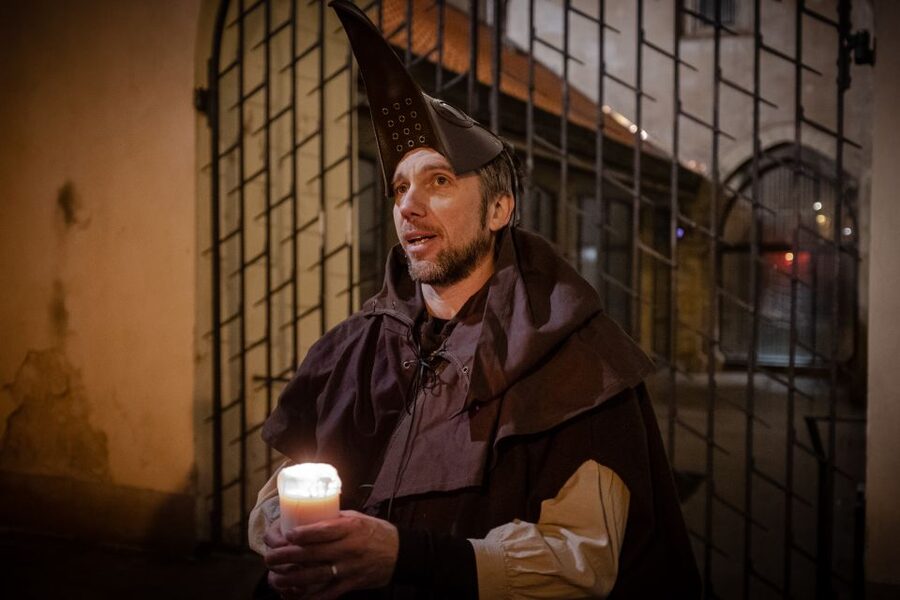
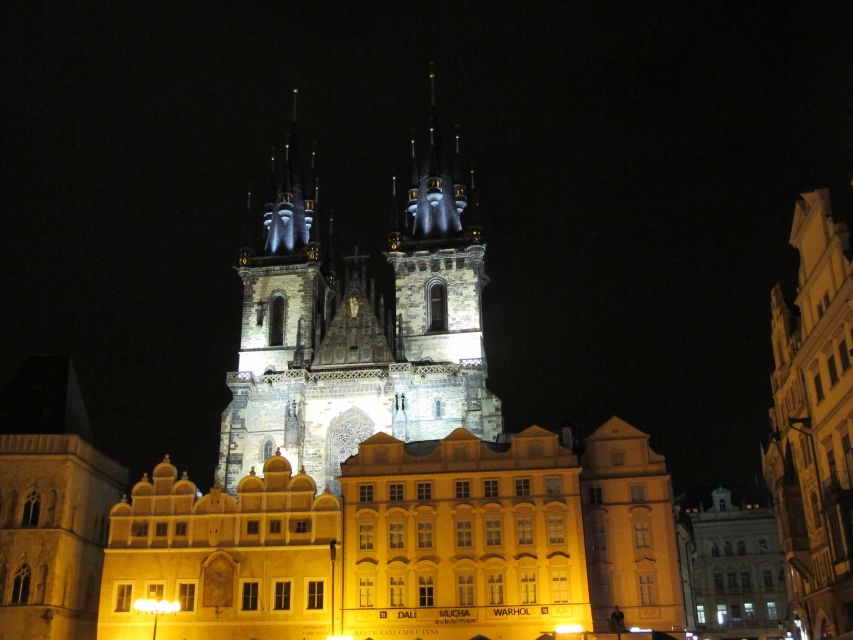
Old Town Square is the moment where Prague tries to look like a postcard again. That contrast is part of the method. Standing in a public, crowded place while discussing the bubonic plague turns the “big square” into something else: a stage where fear could spread, rumors could multiply, and people could change their behavior in ways they couldn’t undo.
You’ll hear about the terror years when the “Black Death” affected much of Europe, and you’ll connect that to what Prague experienced during the era the tour focuses on. The guide doesn’t just name the disease. You’ll also get practical context about daily life during a plague outbreak, including how people tried to protect themselves and what kinds of help might have existed.
This stop is also where the humor and roleplay help. If you’re worried the tour will be nonstop doom, the guide’s tone often balances the subject. You’ll still get the scary parts, but you’re guided through them in a way that keeps you from shutting down.
Josefov and the Kafka Monument: history layers in tight streets
After Old Town Square, the tour slips into Josefov for a shorter stop, then heads toward the Franz Kafka Monument. Even with limited time here, these are smart choices. Josefov’s identity as part of Prague’s older urban fabric gives you a sense of how neighborhoods could be shaped by catastrophe and change. Then Kafka’s presence gives you a bridge to a later era, reminding you that Prague’s story keeps unfolding long after outbreaks fade from living memory.
Kafka Monument is not just a “famous name” stop. It helps the guide shift your thinking from plague as a single event to plague as part of the long arc of city life. Fear, sanitation rules, care systems, and religious responses all leave echoes. You don’t need a medical background to get something out of this. The guide frames it clearly and keeps you oriented.
At this point on the walk, you’ll likely feel the rhythm settle: you start looking at street width, proximity, and how people moved. That’s the kind of observation that makes the tour stick after you leave.
Prefer to cover it on foot? More Prague walks across the old lanes.


Na Františku Hospital: seeing care spaces through a plague lens
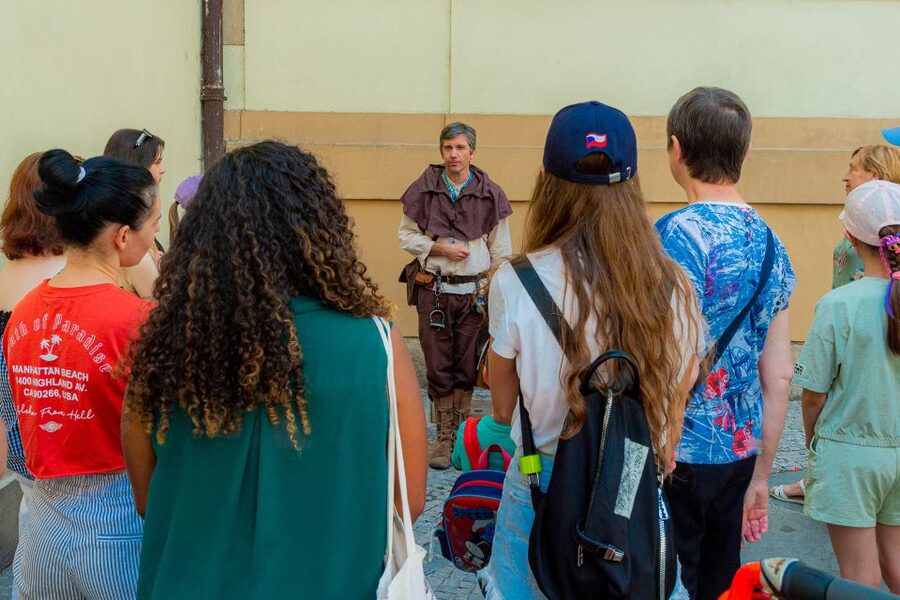
One of the standout historic moments is the stop at Na Františku Hospital, also described as St. Francis Hospital on the tour theme. A hospital is an obvious place to bring plague history, but the value here is how the guide connects it to the period’s reality.
Instead of making this a museum stop, you’re outside in the city, taking in the setting and learning what hospital care meant when plague was around. You’ll hear about the kinds of details that made survival difficult: how people understood sickness, what protective steps were (and weren’t) effective, and why responses varied by time and place.
This is also where the guide’s plague doctor costume becomes a teaching tool. You’ll learn about the kinds of PPE that plague doctors used in this period. The point isn’t to score modern “how did they not know” logic. It’s to understand what protection looked like with the knowledge they had then, and how a single protective idea could shape behavior.
If you’re the type who likes concrete specifics, ask questions here. You’re at a stop where the “why” can connect directly to the environment.
Convent of St. Agnes: faith, fear, and the human response
Next you reach the Convent of St. Agnes for another focused moment. Convents often come up in plague conversations because religion and community care were tied together. Even if you don’t view things through a religious lens, it’s useful to see how people organized support and meaning when disease felt random.
Here’s what I find helpful: the guide doesn’t treat the convent as a backdrop. The story keeps circling back to the same theme—how people tried to live and function while plague terrorized the city. That can mean prayers, vows, community roles, and the social structure around illness.
If you prefer tours that include personal stories, this is where you’ll often get the most human angle. It’s not just facts. You’re learning how people might have tried to make sense of sickness when answers were scarce.
And yes, you’ll keep moving at a sensible walking pace. The tour finishes after a few more landmarks, so you’re not stuck at one heavy stop too long.
Saint Castulus Church: the ending where the theme lands
The last stretch includes Saint Castulus Church, where the tour finishes. Finishing at a church makes sense for this particular storyline, because the plague era responses often mixed civic, medical, and spiritual ideas. You end in a place that feels old enough to hold layers of stories, which helps the tour’s theme land with emotional weight without becoming overwhelming.
If you enjoy seeing how history changes the meaning of familiar architecture, the final stop is a satisfying payoff. By now, you’ve heard about the outbreak and the protective approach of plague doctors, and you’ve seen multiple city “systems” tied into the narrative: public squares, medical spaces, religious spaces, and older neighborhood fabric.
The tour also gives you small “staying power” touches, like the included anti-plague pill (candy). It’s playful, but it reinforces the idea that the plague story wasn’t only grim. People still did rituals, jokes, and everyday habits even when fear dominated.
Price and what you get for $23 in 90 minutes
At $23 per person for 90 minutes, this is priced like an experience that targets both first-timers and history lovers who want something different from standard sightseeing.
Here’s the value logic I’d use when deciding:
- You’re getting a costumed, licensed guide rather than a plain lecture.
- You’re covering multiple central Old Town sites in a short walk, which reduces “what do we do next” stress.
- The tour includes an anti-plague pill (candy) and includes instruction about plague doctor PPE, not just dates.
- You also get specific storytelling anchors, including A. Schamsky and the 1713 focus.
The cost feels fair if you want an engaging walk with real landmarks and a strong theme. If you prefer purely academic history with no theatrical element, you might want to think twice. But if you’re open to humor, roleplay, and Q&A, this is a strong bargain for Prague’s busiest area.
Who this tour is best for (and who should skip it)
This fits best if you like:
- City walks with a theme that ties places together
- History that’s explained clearly with plenty of chances to ask questions
- A guide who stays in character and uses humor to keep the subject moving
- First evening activities, since it gives you a mental map of central Prague fast
It’s also great for families with kids who can handle spooky stories in a safe, guided way. In past tours, guides have adjusted their tone for younger visitors and stayed sensitive about the subject matter while still making it fun.
Skip it if:
- You’re easily upset by disease-themed topics
- You want a strictly medical or scientific tour, with no storytelling or performance elements
- You’re hoping for a long sit-down experience. This is a walk, and it will keep you moving through multiple stops.
Should you book the Prague Plague Doctor Old Town tour?
Yes, if you want a short, memorable way to see Prague’s center while learning how plague fear shaped everyday life, protected bodies with the tools of the era, and prompted a mix of civic and religious responses.
If you book, do two things to get the most out of it:
- Bring weather-ready layers and good shoes, since it runs rain or shine.
- Go in curious. This tour works when you ask questions about PPE, how plague-era people tried to cope, and why certain locations matter.
If you’re excited by the idea of following a plague doctor through Old Town and ending at Saint Castulus Church with the story still fresh, you’ll likely enjoy it a lot.
FAQ
How long is the tour?
It lasts 90 minutes.
Where does the tour start and where does it end?
It starts at Seminářská 175/2, Staré Město, and finishes at Church of St Castulus.
What’s included in the ticket price?
You get a licensed guide dressed as a plague doctor, the walking tour, and an anti-plague pill (candy).
Is the tour wheelchair accessible?
Yes, the tour is listed as wheelchair accessible.
Does the tour run in bad weather?
Yes, it runs rain or shine.
What languages are available?
The live guide offers English and Czech.
More Tour Reviews in Prague



On Foot Through Prague, Continued
The Old Town, A Few More Ways
More Prague tours we have written up lately



Old Town & Astronomical Clock, compared.
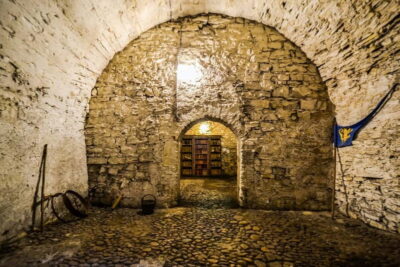 ★ 4.3Oldtown, Medieval Underground & Dungeon History TourFrom $3110,277 reviews
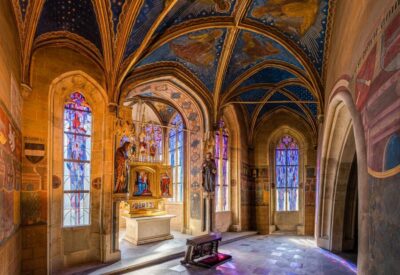 ★ 4.5Old Town Hall Tower Entry TicketFrom $216,749 reviews
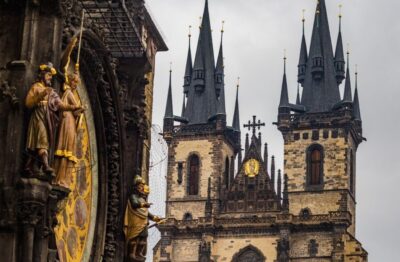 ★ 4.73-Hour Walking Tour of Old Town & Prague CastleFrom $305,696 reviews
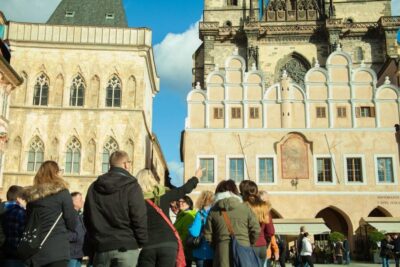 ★ 4.83-Hour Old Town and Prague Castle Tour in GermanFrom $365,671 reviews
 ★ 4.5Prague Old Town, Medieval Underground and Dungeon Historical TourFrom $323,227 reviews
 ★ 4.8Old Town and Jewish Quarter Guided Tour in GermanFrom $293,143 reviews
 ★ 4.5Ghosts and Legends of the Old Town Evening TourFrom $213,091 reviews
 ★ 4.6Old Town and Jewish Quarter Guided Walking TourFrom $222,847 reviews
Browse the lists this tour appears in