
Old Town makes more sense on foot. I like the way a long-time Prague local (with an international background) turns famous sights into clear, human stories, and I love the photo-friendly viewpoints along the way. The one drawback: this is a mostly outdoor, steady 4-hour walk with cobblestones, so plan on real walking time.
You’ll connect the dots between the Castle District, Charles Bridge, Josefov, Old Town Square, and Wenceslas Square, with enough detours into lanes and courtyards to feel like you’re moving like a local. The pace is moderate, the group is small (up to 10), and you can ask questions and request quick pauses for coffee or a viewpoint.
If you want only ticketed interiors all day, this may feel different. Paid entry into churches and museums isn’t included, and the tour is designed to keep you outside unless free access adds real value.
In This Review
- Key points I think you’ll care about
- Why this Old Town + Lesser Quarter walk feels different
- Getting started in Prague 1: pickup, pace, and group size
- Castle District views: setting the stage before Prague Castle
- Prague Castle and Lesser Town: architecture styles you can actually spot
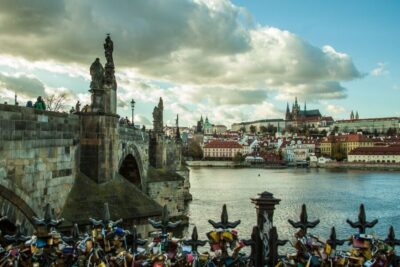
- Charles Bridge: photo stop plus story, not a rushed stamp
- Josefov and the historic Jewish Quarter: Prague’s layers in one walk
- Old Town Square and the Astronomical Clock: learn how to look
- The Estates Theatre stop: a quick hit with real context
- Wenceslas Square to Municipal House: civic Prague and design details
- Interactive guide approach: ask, pause, and get real answers
- Price and value: is $50 for 4 hours worth it?
- Practical tips so you enjoy every minute
- Who should book this walk (and who might not love it)
- Should you book this Prague Old Town & Lesser Quarter history walk?
- FAQ
- How long is the Prague Old Town & Lesser Quarter history walk?
- Where is pickup located?
- Is the tour mostly outdoors?
- What landmarks and areas does the route cover?
- Does the price include entry tickets to churches or museums?
- What languages is the tour offered in?
- What should I bring for the walk?
- Is the tour suitable for wheelchair users or guests with mobility impairments?
Key points I think you’ll care about
- A guide story model, not a facts-only stroll: you’ll hear why Prague mattered in Europe, not just what you’re looking at.
- The weirdly specific history that makes you pause: things like the Cyrillic alphabet being created on Czech territory and early ideas that resemble a United Nations appearing in the Middle Ages.
- Prague’s architecture styles seen in context: Gothic, Baroque, Neo-Renaissance, and Art Nouveau show up as you walk, not as a museum slideshow.
- Charles Bridge and Prague Castle viewpoints timed for photos: you get stops designed for angles and skyline views.
- Small-group feel (max 10): flexible questions and the chance to hear details without shouting over crowds.
- Your guide can help with photos: you’re not stuck filming and missing the moment.
Still circling the Old Town? More of the square and its lanes, reviewed.
- Prague: Oldtown, Medieval Underground & Dungeon History Tour★ 4.3 · 10,277 reviews
- Prague: Old Town Hall Tower Entry Ticket★ 4.5 · 6,749 reviews
- Prague: 3-Hour Walking Tour of Old Town & Prague Castle★ 4.7 · 5,696 reviews
- Prague: 3-Hour Old Town and Prague Castle Tour in German★ 4.8 · 5,671 reviews
Why this Old Town + Lesser Quarter walk feels different
Prague can be a blur of postcards if you just hop from one landmark to the next. This tour keeps the city in the right order and gives you the story behind it, so the streets start to make sense.
What I like is the balance: you’ll get the big names (Prague Castle, Charles Bridge, the Astronomical Clock, Wenceslas Square), but the guide also brings in themes about identity, culture, and how Prague shaped major European conflicts and movements. You’re not memorizing a timeline—you’re understanding why the city looks the way it does.
And you get practical help built into the walk, like where to eat and how to get around, so the tour becomes a launchpad for the rest of your stay.
Getting started in Prague 1: pickup, pace, and group size
The experience starts with pickup in Prague 1, from the wider center. The transfer is by public transport (the pickup itself is included), and you’ll be told the day before. Plan to be ready up to 30 minutes before the start time.
The walk is fully outdoors and runs rain or shine. That matters because you’ll want weather-appropriate layers and a quick-dry mindset; the guide is clearly set up for moving together no matter what.
The group is limited to 10 people, which keeps things conversational. When the guide is talking for real, you can actually ask questions instead of saving them for the end.
Castle District views: setting the stage before Prague Castle
You’ll begin in the Castle District area and ease into the story while you’re still getting your bearings. Expect a guided introduction and then a photo stop on the way, which is helpful because Castle District streets can feel steep and confusing if you’ve never been here.
This is the moment where you learn to see Prague like an architect and a historian at the same time. The guide explains how the city’s “top layer” of monuments connects to older political and cultural forces—so when you look at stone walls and spires, you’ll know what shaped them.
Practical tip: bring shoes with good grip. The cobblestones here can be uneven, and you’ll be glad for it when you’re stopping for photos and moving again.
Prague Castle and Lesser Town: architecture styles you can actually spot
When you reach the Prague Castle area and then continue into the Lesser Town, the tour turns into a real walking lesson on architecture. The key is that the guide ties styles to time and purpose, so you don’t just memorize labels like Gothic or Baroque—you learn what changed and why.
You’ll have a guided walk through the Castle zone, then continue onward through the Lesser Town with more stops built around what you can see from the street. One reason this works: you get multiple angles. Instead of one viewpoint and a goodbye, you build a mental map as you go.
Also, keep expectations realistic about interiors. The tour is designed as an outdoor history walk, so you won’t be relying on paid entry. Interiors only happen if access is free and adds real value to the route.
Keep walking. More of Prague at street level.




Charles Bridge: photo stop plus story, not a rushed stamp
Charles Bridge is the “everybody knows it” stop, but it’s still worth having structure around it. You’ll get a guided introduction plus a photo stop, then a short walking segment to connect the bridge to what comes next.
Here’s the trick: without context, the bridge is just busy scenery. With context, it becomes a corridor of history—where trade, movement, and power left visible marks on the city’s identity.
If you care about photos, this part helps because you’re not just standing anywhere. You’re guided to spots where the views work and where you can frame Prague’s skyline without constantly fighting the crowd flow.
Josefov and the historic Jewish Quarter: Prague’s layers in one walk
Next comes Josefov, the historic Jewish Quarter. This is where the tour earns its “beyond the postcard” reputation, because the guide connects what you see to what happened here over time.
You’ll get a guided walk through the area with time for sightseeing and a chance to look into smaller streets and the overall neighborhood layout. The value of this stop is how it changes your mental picture of Prague—from a “monuments city” to a city of communities and everyday lives.
It’s also an excellent moment to ask questions. If you want to know how the Jewish Quarter fits into Prague’s larger religious and political history, this is the kind of area where the guide can explain it in a way that doesn’t feel like a textbook.
Old Town Square and the Astronomical Clock: learn how to look
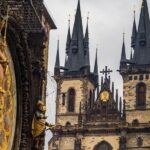
Old Town Square is a magnet for tourists, but this tour gives you a way to look past the obvious. You’ll have guided time in the square and then a specific photo stop at the Astronomical Clock area.
What makes this worthwhile is that you’ll learn what the clock represents and why it became such a symbol in Prague. Instead of treating it as a one-second photo moment, you’ll understand why people gathered here and why the clock became part of the city’s identity.
A smart move here: use the guide’s context to decide what you want to revisit on your own afterward. This tour doesn’t try to sell you hours of ticketed museum time; it helps you choose where to go deeper next.
The Estates Theatre stop: a quick hit with real context
The tour includes a short stop at the Estates Theatre. You don’t spend all day inside; think of it as a focused “checkpoint” that connects Prague’s public life to culture and ideas.
Even when time is short, a guided history stop can change how you interpret a building. Instead of seeing a façade, you start noticing what the place signaled to the city—and what kinds of ideas would have moved through spaces like this.
If you’re a person who likes to understand the city’s intellectual life, this kind of mid-route stop is a good balance between major monuments and smaller, meaningful landmarks.
Wenceslas Square to Municipal House: civic Prague and design details
Wenceslas Square gives you a different mood from the Castle District. It’s more civic, more street-level, and it helps you feel the city as more than a monument set.
The tour then continues toward Municipal House, with guided time that helps you notice architecture details you might otherwise skip. This is one of the best segments for travelers who love design—especially if you want to see how Art Nouveau and other styles blend into Prague’s overall architectural personality.
You’ll leave with practical advice on how to keep moving through the city after the tour. And if you plan to do the rest on your own, it helps to have this “where you are in the city” orientation before you head off in different directions.
Interactive guide approach: ask, pause, and get real answers
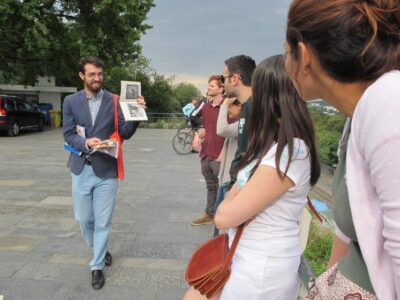
One reason this tour works is the guide doesn’t talk at you. It’s interactive, and you’re encouraged to ask questions. If the group wants, you can pause for a coffee or step to a viewpoint—small flexibility that can make the walk feel less rigid and more human.
Also, you’re not on your own for photos. The guide can take pictures of you at photo stops, which is a small service that adds up—especially when you want a couple of keepers without constantly handing your phone to strangers.
A name you may hear in the local experience: Vadim. One of the strongest impressions from past participants is the guide’s conversational style—history told through stories the streets seem to whisper.
Price and value: is $50 for 4 hours worth it?
At about $50 per person for a 4-hour guided small-group walk, the value depends on what you want from Prague.
If your goal is only the top highlights, you could probably stitch it together yourself with maps and a playlist. But if you want the city explained in a way that’s tied to architecture, conflicts, cultural identity, and everyday life, the guide time is the point. And because the group is small, you’re more likely to actually get your questions answered.
You’re also getting hotel pickup in the wider center, plus the structured walking route that strings together far-apart areas into one coherent storyline. That reduces the stress of navigating your first day—especially if you don’t yet know how Prague’s neighborhoods connect.
Bottom line: this is good value if you like to learn while you walk, not if you only want to check boxes.
Practical tips so you enjoy every minute
Here’s how to set yourself up for an easy experience.
- Wear comfortable walking shoes with grip for cobblestones.
- Dress for weather since the tour runs rain or shine.
- Expect most of the time outside, with interiors only when access is free and worth it.
- Bring snacks or a plan for kids, if you’re traveling with a stroller or baby. The route includes cobblestones and may require lifting/handling the stroller.
- Mobility note: this is not suitable for wheelchair users or people with mobility impairments.
- Plan for a moderate pace and enough walking to feel like a proper outing.
One more thing: the tour can vary slightly by season and weather. That’s not a red flag; it’s usually what keeps you moving comfortably in changing conditions.
Who should book this walk (and who might not love it)
This tour is a strong fit if you want to understand Prague, not just photograph it. If you like history that connects politics, culture, and the built environment—this format tends to click fast.
It’s also ideal if you’re the type who enjoys small detours: courtyards, side lanes, and viewpoints that you might miss when you’re rushing.
If you hate walking, need wheelchair access, or want a day built around interior museum time, you may find the outdoor, moderate-pace format a mismatch. The tour is designed for moving and learning outdoors, not for long seated breaks or paid-entry sightseeing marathons.
Should you book this Prague Old Town & Lesser Quarter history walk?
Yes, if you want Prague explained in plain language while you’re still discovering the city. For a first or second day, it’s a smart way to build context fast, and it helps you decide what to explore in more depth later.
Book it especially if you care about the “why” behind landmarks: how Prague fits into European storylines, why certain ideas appeared here, and how architecture styles show different eras and influences. The structure, the small group, and the interactive guide approach make it feel like a real conversation, not a lecture.
FAQ
How long is the Prague Old Town & Lesser Quarter history walk?
It lasts 4 hours.
Where is pickup located?
Pickup is from Prague 1, and it’s offered from any accommodation in the wider center of Prague.
Is the tour mostly outdoors?
Yes. It’s fully outdoors, and paid interiors are not included unless free access is available and adds value.
What landmarks and areas does the route cover?
You’ll see Prague Castle, the Lesser Town, St. Nicholas Church, Charles Bridge, Josefov, Old Town Square with the Astronomical Clock, the Jewish Quarter, Estates Theatre, and Wenceslas Square, plus Municipal House.
Does the price include entry tickets to churches or museums?
No. Entry tickets to paid interiors are not included.
What languages is the tour offered in?
The tour is available in English, Russian, French, or Czech.
What should I bring for the walk?
Bring comfortable shoes and weather-appropriate clothing, since the tour runs rain or shine.
Is the tour suitable for wheelchair users or guests with mobility impairments?
No. It’s not suitable for people with mobility impairments or wheelchair users.
More Prague Walking Tours



More Tour Reviews in Prague




The Old Town, A Few More Ways

More Prague tours we have written up lately



Old Town & Astronomical Clock, compared.
 ★ 4.3Oldtown, Medieval Underground & Dungeon History TourFrom $3110,277 reviews
 ★ 4.5Old Town Hall Tower Entry TicketFrom $216,749 reviews
 ★ 4.73-Hour Walking Tour of Old Town & Prague CastleFrom $305,696 reviews
 ★ 4.83-Hour Old Town and Prague Castle Tour in GermanFrom $365,671 reviews
 ★ 4.5Prague Old Town, Medieval Underground and Dungeon Historical TourFrom $323,227 reviews
 ★ 4.8Old Town and Jewish Quarter Guided Tour in GermanFrom $293,143 reviews
 ★ 4.5Ghosts and Legends of the Old Town Evening TourFrom $213,091 reviews
 ★ 4.6Old Town and Jewish Quarter Guided Walking TourFrom $222,847 reviews
Browse the lists this tour appears in