
REVIEW · PRAGUE WALKING TOURS
Prague: Immersive History Walking Tour and VR
Six VR snapshots turn Prague into a time machine.
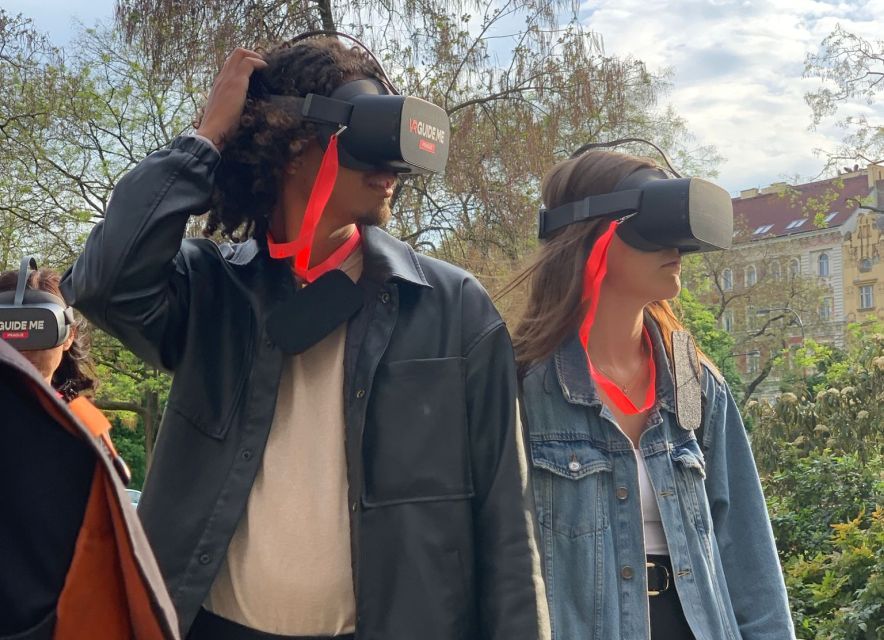
This is a short history walking tour that pairs famous squares and landmarks with VR headsets, so the city’s past shows up right where you’re standing, from the Old Town Square to the Vltava waterfront. You’ll move on foot through central Prague while a guide connects what you see today with major moments from Czech history.
I really like two parts of the format. First, an expert local guide keeps the story grounded as you walk, and you’ll hear clear context for what you’re about to see in the headset. Second, the tour pushes you to compare the city then and now: you take off the glasses and the differences in buildings, streetscapes, and mood snap into focus.
One thing to keep in mind: the VR experience can feel more like you’re observing history from a fixed viewpoint than controlling fast action. If you’re hoping for lots of character movement, go in with flexible expectations, even though the visuals and sound are strong.
In This Review
- Key highlights you won’t want to miss
- Walking Prague with VR: what this tour really does
- Where you start: Panská 1, then straight into the Old Town feel
- Old Town Square with the 1900s view: Prague, before the modern look
- Wenceslas Square and the “why” behind the story
- Prague National Museum stop: learning the city through what it preserved
- New Town Hall and Cyril and Methodius: when architecture supports the timeline
- The VR history moments: wars, Prague Spring, and Operation Anthropoid
- Ending at the Dancing House and the Vltava promenade
- Price and time value: why $33 can work on a tight schedule
- Who should book this tour (and who might want to choose differently)
- Should you book this Prague VR history walk?
- FAQ
- How long is the Prague Immersive History Walking Tour with VR?
- How much does the tour cost?
- Where does the tour meet?
- What’s included with the ticket?
- What languages are available?
- Is the tour suitable if I wear glasses?
- Can I get a refund if plans change?
Key highlights you won’t want to miss
- Six VR scenes tied to different Prague locations and time periods
- Old Town Square to the Dancing House route, with iconic sights along the way
- Time-and-place comparisons when you remove the headset during stops
- Major Czech events in VR, including the Prague Spring and Operation Anthropoid
- Professional guidance in English, plus optional audio in multiple languages
- Short, efficient 2-hour format that fits a busy sightseeing day
Prefer to cover it on foot? More Prague walks across the old lanes.
- Prague: 3-Hour Walking Tour of Old Town & Prague Castle★ 4.7 · 5,696 reviews
- Prague: Ghost Walking Tour Where Legends Come To Life★ 4.4 · 5,253 reviews
- Prague: Jewish Quarter Walking Tour with Admission Tickets★ 4.7 · 3,729 reviews
- Prague Guided Walking Tour and Cruise with Authentic Czech Lunch★ 5.0 · 3,627 reviews
Walking Prague with VR: what this tour really does
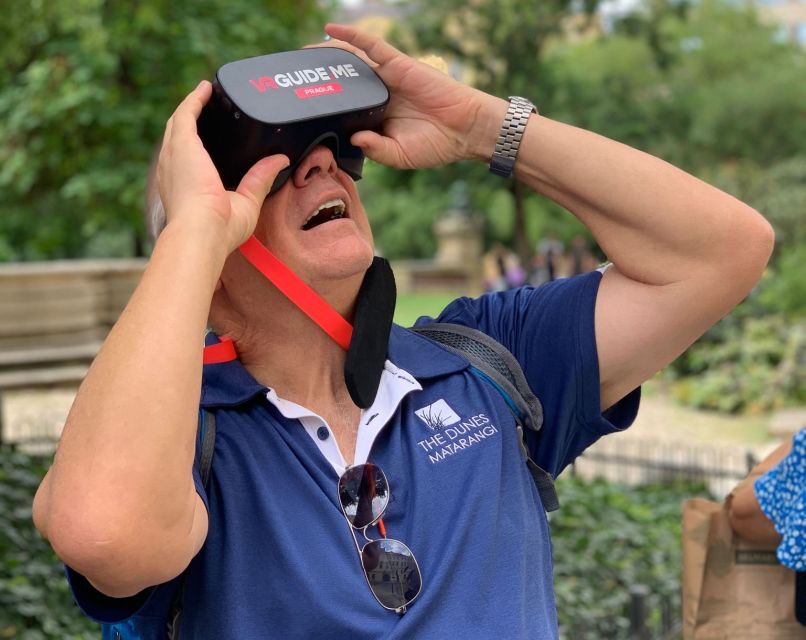
This isn’t one of those tours where you just listen while standing in a crowd. The key idea here is that VR is used as a way to place history back onto real streets and squares. You don’t have to picture everything from a museum caption. You stand in the spot, put on the headset, and suddenly you’re looking at a version of Prague that matches the period your guide is describing.
You’ll get a strong mix of places: the tourist-famous anchors in central Prague plus quieter stops that help explain how the city functioned. And because it’s only two hours, you can do it early in your trip to get your bearings, or squeeze it in on a day when your feet already have other plans.
Where you start: Panská 1, then straight into the Old Town feel
Your guide meets you at Panská 1, near Hamleys. It’s an easy starting point if you’re already walking around central Prague, and it helps the tour flow quickly instead of starting with a long transit.
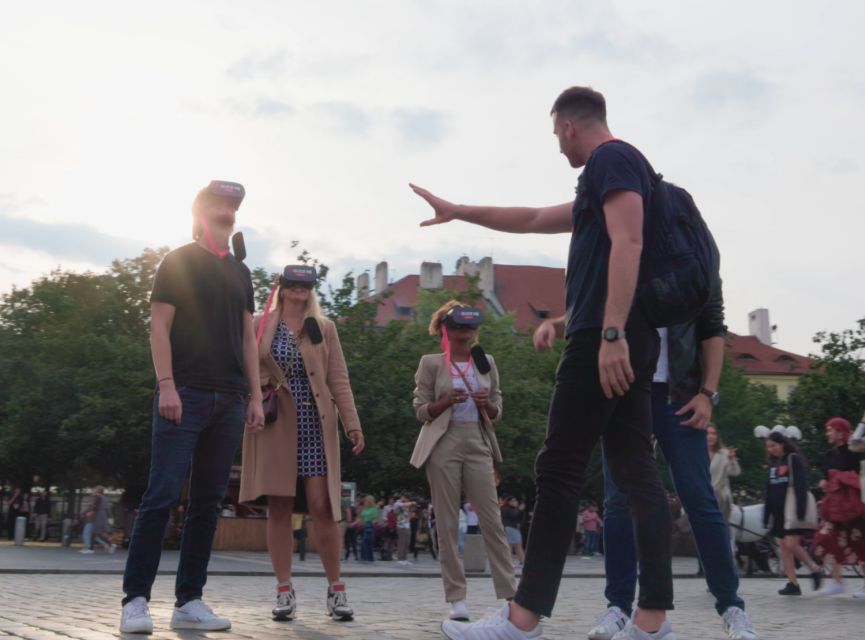
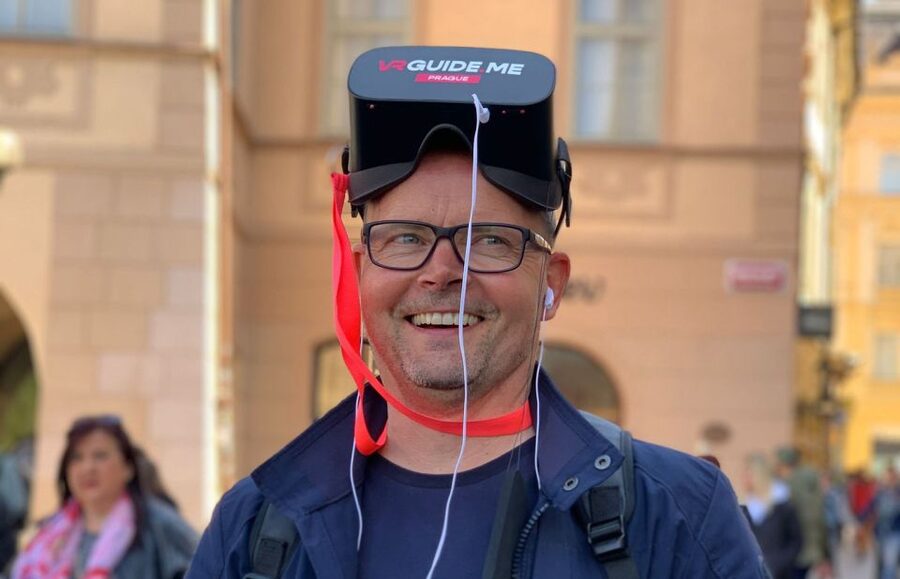
Early on, you’ll get set up with the VR headset and a quick explanation of how the experience works. If you wear glasses, you can still take part—this is explicitly supported. The headset style is made for real sightseeing, not a delicate lab setup, and guides also keep the pace moving so you don’t feel stuck waiting.
Old Town Square with the 1900s view: Prague, before the modern look
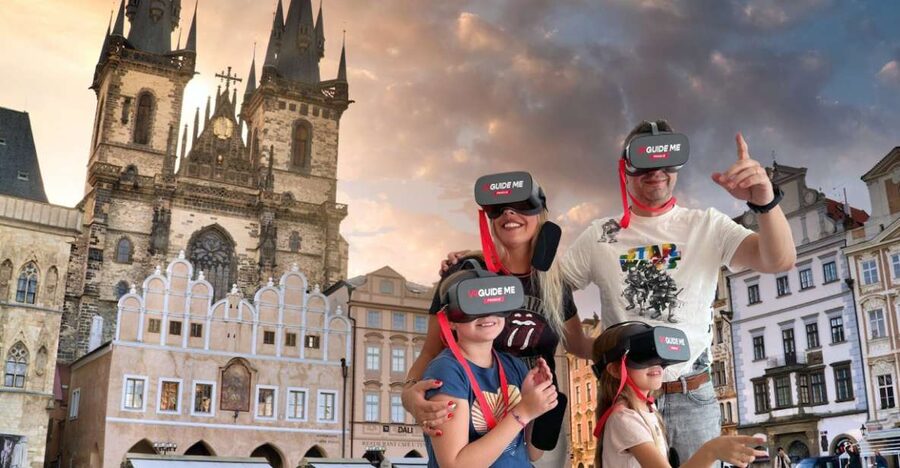
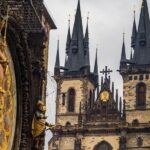
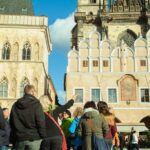
The tour’s first major landmark is the Old Town Square. This is where Prague’s “postcard Prague” reputation is real—but it can also feel frozen in time. The VR scenes change that. Instead of only admiring the architecture you see today, you get a chance to picture what that same space looked like more than a century ago.
This stop works well because the square is so visually structured. When the headset shows an earlier street-and-building pattern, your brain has something concrete to map onto. After the VR moment, you take the glasses off and compare. That contrast is the whole point: you’re not just told how the square changed; you witness it, right at street level.
Wenceslas Square and the “why” behind the story
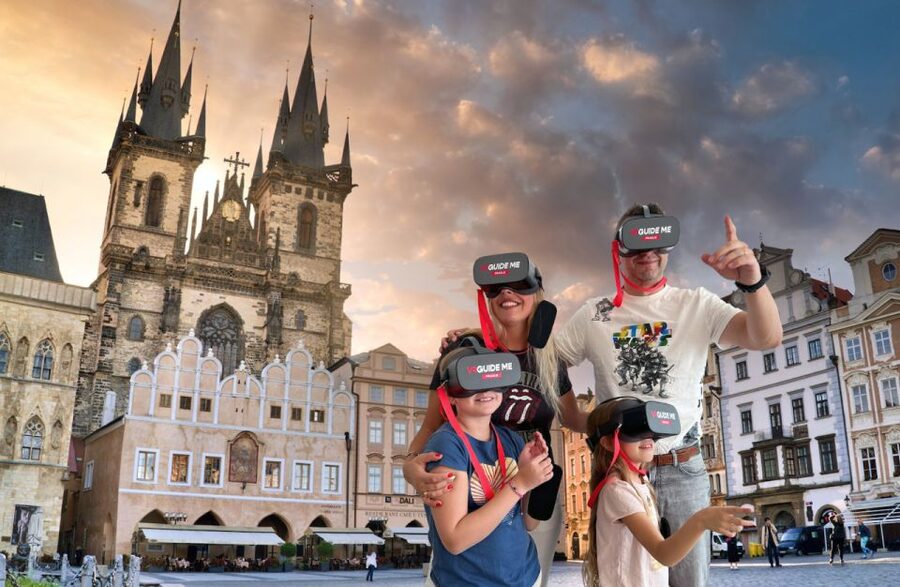
From there you head toward Wenceslas Square, another central axis where Prague feels both historic and politically charged. A regular walking tour will often describe the buildings and monuments. Here, the guide uses the space to help you understand motivations behind events rather than treating history like a list of dates.
One of the strengths of this format is that the guide can connect the story to the specific streets you’re walking. You’re not only learning what happened—you’re learning why certain places matter. That’s especially useful in Prague, where layers of empire, reform, and conflict stack on top of each other.
Keep walking. More of Prague at street level.


Prague National Museum stop: learning the city through what it preserved
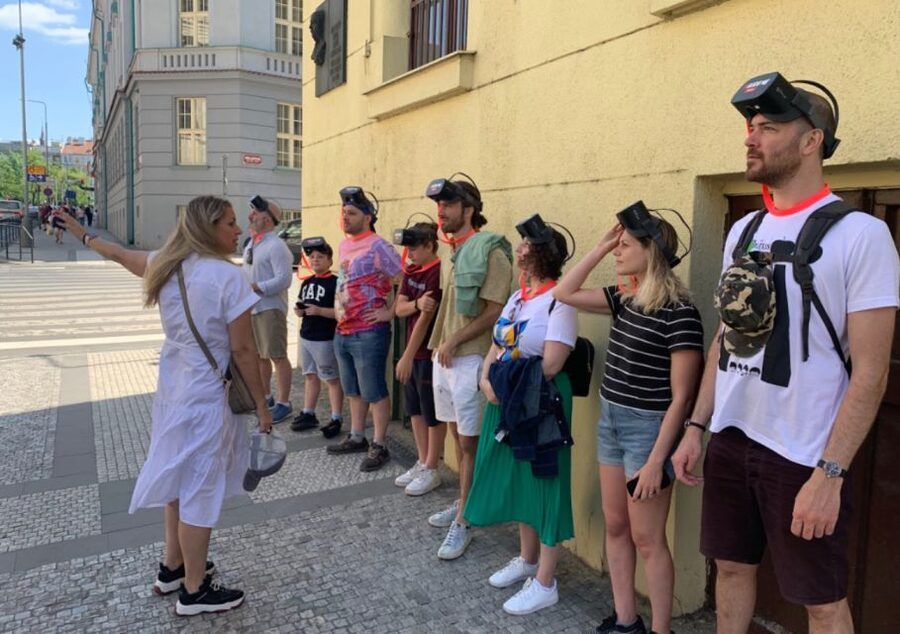
Next up is the Prague National Museum area. This is a good choice for the “past vs. present” theme, because museums are naturally about preservation, even if the building and surroundings change over time.
The VR moments in this tour aren’t random. They’re tied to key turning points—so when you’re near a major cultural institution, the context lands better. You also get a reminder that history isn’t only what happened; it’s also what people later chose to remember, protect, and display.
If you like your history with a practical explanation—how Prague’s institutions and public spaces fit into bigger national shifts—this is a good stop.
New Town Hall and Cyril and Methodius: when architecture supports the timeline
The route continues toward New Town Hall and then to Saints Cyril and Methodius Cathedral. These stops help balance the tour. The Old Town Square and Wenceslas Square can feel like “big stage” Prague, while these church and civic landmarks make the story feel more human-scale: daily life, tradition, and long-term cultural identity.
This part of the tour also helps if you tend to get overwhelmed by too many major sights in one day. You’re not just swapping one famous landmark for another. You’re still walking through important locations, but the narrative gives each stop a job in the timeline.
And because the VR scenes are triggered at different points, this section helps you keep your focus. You’re moving, listening, and then switching modes: look at today, then look at the past through the headset.
The VR history moments: wars, Prague Spring, and Operation Anthropoid
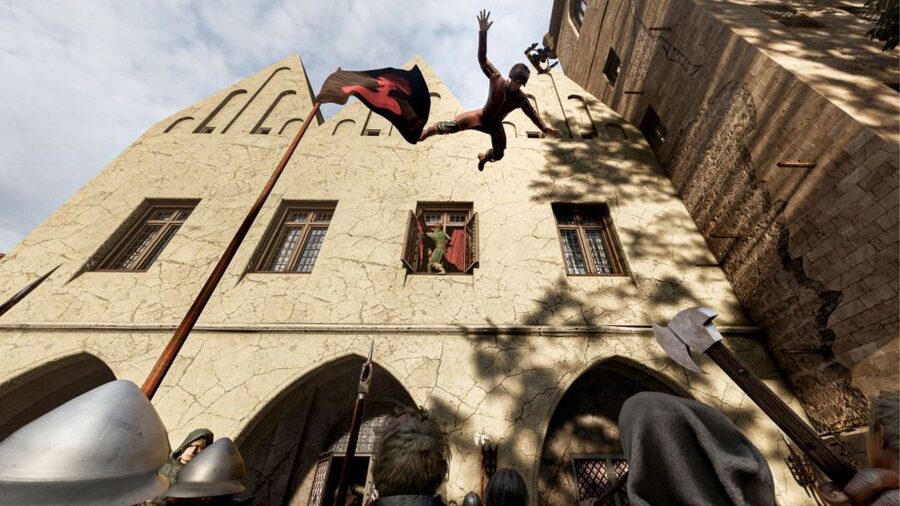
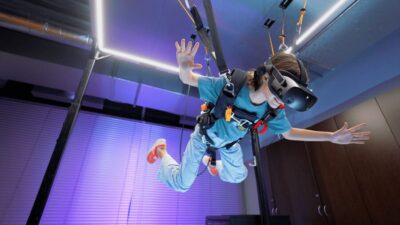
The standout feature of the tour is the set of six VR scenes. They’re designed to highlight different stages of Czech history and to show cause-and-effect in a way a photo caption can’t.
You’ll see VR moments that include:
- an early 1900s view of the Old Square
- a Middle Ages explanation tied to the causes of major wars
- a depiction of Soviet tanks entering the city during the Prague Spring
- Operation Anthropoid, presented as an experience tied to what was happening on the ground
What I like about this approach is that it forces you to connect political events to geography. Prague isn’t just a pretty place to photograph; it’s a city where streets, squares, and buildings became parts of real events.
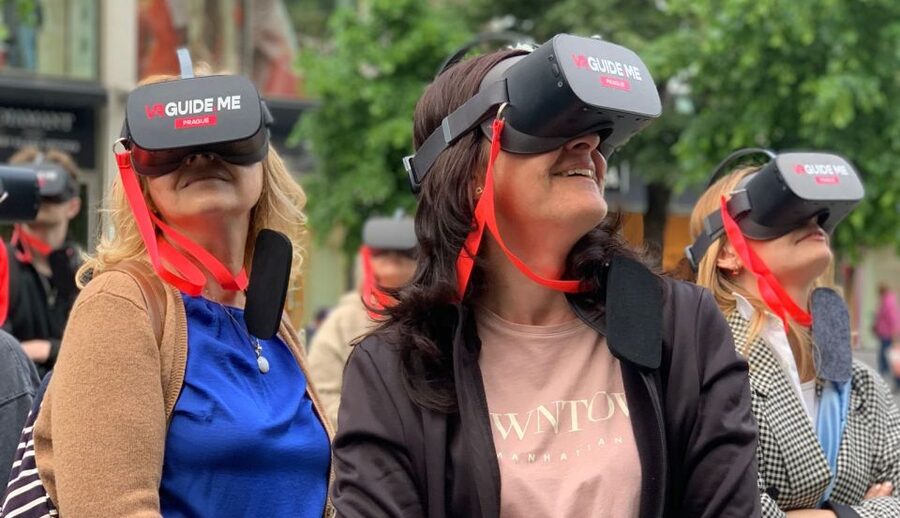
On the tech side, the sound quality is noted as a plus, and many people find the setup easy to use. VR also adds a “stand in the right spot” layer: you’re not only hearing about a turning point; you’re viewing it as if you’re there.
Ending at the Dancing House and the Vltava promenade
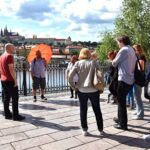
The tour ends near the Dancing House, along one of Prague’s beautiful promenades by the Vltava River. This ending makes sense after the VR history content. As your story reaches its later beats, the city’s modern architecture takes over, and the walk naturally finishes with a visual reward and a calmer mood.
Also, it’s practical. If you want dinner, river walks, or to hop onto another sightseeing plan, you’re placed in a spot that’s easy to keep exploring without backtracking.
Price and time value: why $33 can work on a tight schedule
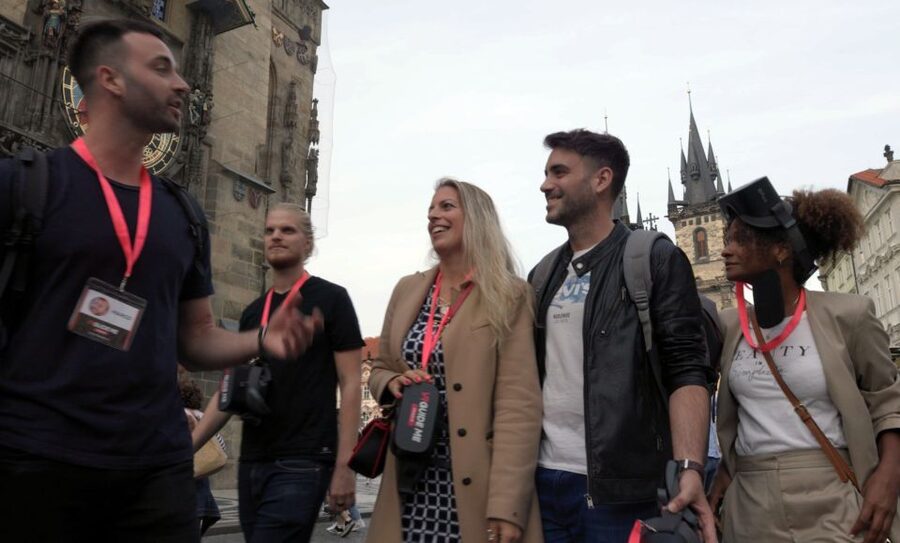
At $33 per person for a 2-hour experience, you’re paying for a guided walking tour plus VR headset time and a professional story delivered by a local guide. In Prague, that combination tends to be a better deal than doing a standard walking tour alone, especially if you like your sightseeing interactive rather than purely verbal.
This tour is also a smart value if you’re short on time. Two hours is enough to cover multiple central landmarks and still feel like you learned something specific, not just “saw a bunch of squares.”
Group size can be flexible. Some tours can run with only a couple of people, which can make the guide’s attention feel more personal. If you’re a solo traveler, that can be a big plus.
Who should book this tour (and who might want to choose differently)
This is a great fit if you:
- love history but find museum-only tours too passive
- want a practical way to understand how Prague changed over time
- enjoy tech-assisted storytelling, as long as it still comes with real human guidance
- want central sights handled efficiently in two hours
It may be less ideal if you:
- strongly prefer tours with lots of walking rhythm and minimal tech setup
- expect VR to be heavily interactive with lots of motion or physical action
- want only the most classic “top sights” checklist (this route focuses on story-linked places, not a pure postcard greatest-hits march)
Should you book this Prague VR history walk?
If you want Prague history in a way that feels “in the street,” I’d book it. The combination of a guided walk, six VR scenes, and the habit of comparing past and present is what makes this tour different from the usual lecture-style experience. It’s also strong value for the time—two hours, central locations, and a clear narrative arc.
Before you go, pack your expectations like this: VR provides the time-and-place snapshots; the guide provides the meaning. If you match those roles in your mind, you’ll get a far better experience than if you expect VR to replace the guide.
FAQ
How long is the Prague Immersive History Walking Tour with VR?
It lasts 2 hours.
How much does the tour cost?
The price is $33 per person.
Where does the tour meet?
Meet your guide at Panská 1, at Prague Tour Info, located next to Hamleys.
What’s included with the ticket?
You get a professional tour guide and a virtual reality headset. Optional audio is also available.
What languages are available?
The live tour guide is in English, and audio is included in English, German, Czech, French, Spanish, Italian, and Russian.
Is the tour suitable if I wear glasses?
Yes. The tour information states that people who wear glasses can also perform the activity.
Can I get a refund if plans change?
Yes. The tour offers free cancellation up to 24 hours in advance for a full refund.
More Tours in Prague

More Tour Reviews in Prague



On Foot Through Prague, Continued


More Prague tours we have written up lately


Prague Walking Tours, compared.
 ★ 4.73-Hour Walking Tour of Old Town & Prague CastleFrom $305,696 reviews
 ★ 4.4Ghost Walking Tour Where Legends Come To LifeFrom $275,253 reviews
 ★ 4.7Jewish Quarter Walking Tour with Admission TicketsFrom $763,729 reviews
 ★ 5.0Prague Guided Walking Tour and Cruise with Authentic Czech LunchFrom $1023,627 reviews
 ★ 4.6Old Town and Jewish Quarter Guided Walking TourFrom $222,847 reviews
 ★ 4.5Prague Ghost and Legend of Old Town Walking TourFrom $212,630 reviews
 ★ 5.0Prague 3-hour Afternoon Walking Tour including Prague CastleFrom $531,899 reviews
 ★ 4.7Ghosts and Legends Nighttime Guided Walking TourFrom $221,462 reviews
Browse the lists this tour appears in