
REVIEW · PRAGUE ATTRACTION TICKETS
Prague: House at the Golden Ring Entry Ticket
Digital Prague history fits in one ticket. At the House at the Golden Ring, you get multimedia exhibits that show how Prague looked under Charles IV and Rudolf II, not just static displays. I especially like the combination of physical models and video mapping, plus the interactive costume part that turns the past into something you can play with. One thing to consider: the dialogue is in English, so if you were hoping for French audio, this may feel limiting.
This ticket focuses on what Prague was like when the House of Luxembourg ruled, with short “movie stops” that set the scene around key moments like Charles’s arrival in Prague in 1333 and his coronation. You’ll also see how city administration worked and how the medieval bridge was built, with visuals that help you hold the whole 14th-century city in your head.
Plan your time right. You’ll likely want around 1.5 to 2 hours to watch the videos, read what you can, and click through the interactive bits without rushing. If you’re the type who likes history mainly through text, the format is more digital-and-visual than documentary-heavy.
In This Review
- Key Things to Know Before You Go
- Entering the House at the Golden Ring and Getting Oriented
- Charles IV Prague: Models, Administration, and the Medieval Bridge
- The “how the city worked” part
- Video mapping of the 14th-century city
- From Prehistory to the Tailcoat: Everyday Life and Interactive Costumes
- Why this matters for your visit
- Rudolf II and the Nine-Metre Animation: Prague in Motion
- How to watch this section for best results
- What the Exhibits Add Up To: Seeing Prague’s “City Growth” Story
- Time, Language, and Learning Style: Making It Work for You
- How long should you budget?
- Who this suits best
- Price and Value: Is This Ticket a Good Use of Your Prague Day?
- Should You Book the Prague House at the Golden Ring Entry Ticket?
- FAQ
- FAQ
- How much does the House at the Golden Ring entry ticket cost?
- How long is the experience valid?
- How long should I plan to spend inside?
- What language is available for the experience?
- What exhibits are included with this ticket?
- Is there an interactive element?
- What’s the highlight of the Rudolf II multimedia section?
- Is video mapping included?
- Can I cancel and get a refund?
- Can I reserve now and pay later?
Key Things to Know Before You Go
- House at the Golden Ring focus: the ticket is built around one building experience, not just a scatter of rooms.
- Charles IV, made tangible: virtual and physical models of major sites from the 14th century.
- Video mapping and town administration: you learn how the medieval city functioned, not only what it looked like.
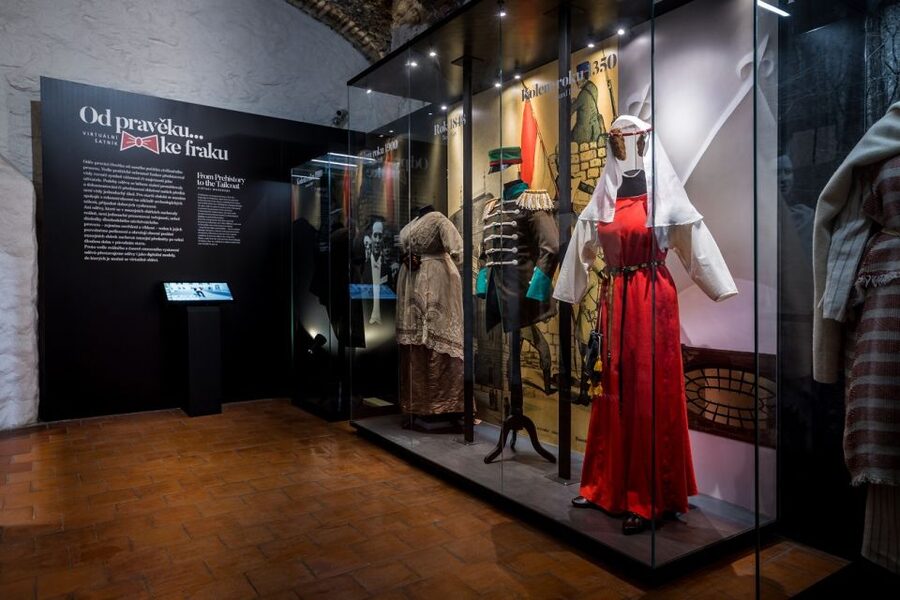
- Interactive digital costume exhibition: you can participate, not just watch.
- Rudolf II nine-metre animation: a big, dramatic look at everyday life in the Rudolfine era.
- English-language dialogue: plan for English narration unless you’re happy with the visuals carrying you.
Skip the queue. More entry tickets and passes for Prague.
- Prague: Castle Tour with Local Guide and Entry Ticket★ 4.6 · 10,422 reviews
- Prague Castle 2.5-Hour Tour Including Admission Ticket★ 4.7 · 8,927 reviews
- Prague: Old Town Hall Tower Entry Ticket★ 4.5 · 6,749 reviews
- Prague: Entry ticket to Ice Pub Prague with Nightclub Option★ 4.1 · 5,273 reviews
Entering the House at the Golden Ring and Getting Oriented
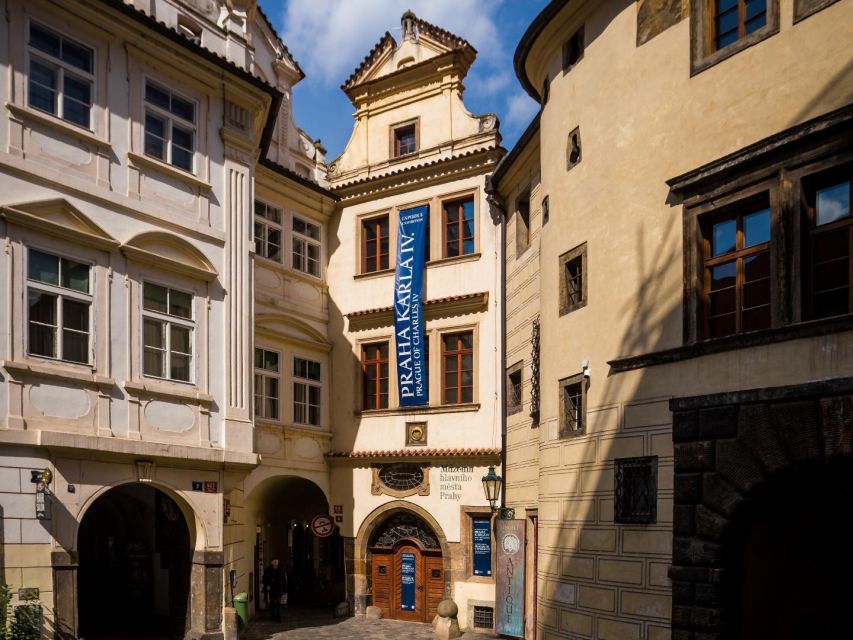
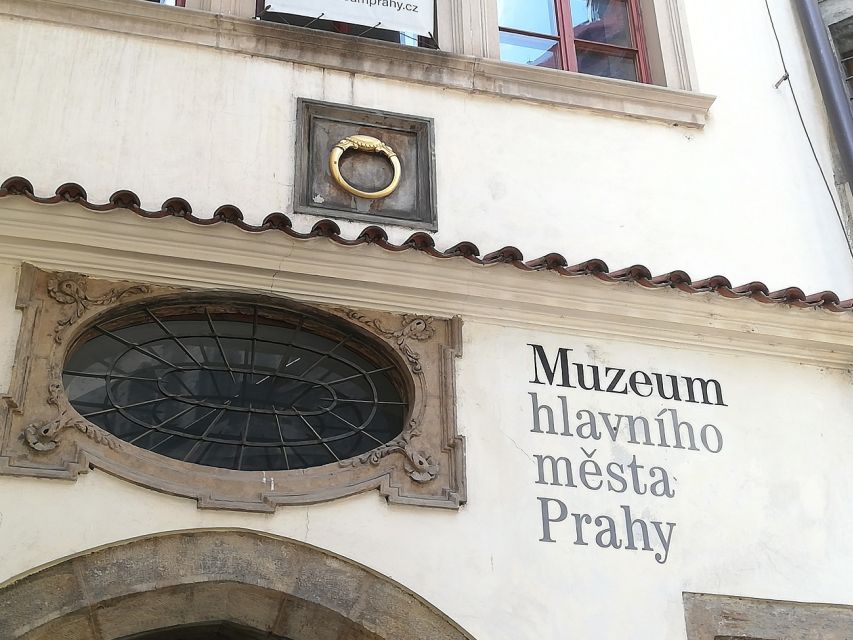
The attraction is called Prague: House at the Golden Ring Entry Ticket, and that name matters. You’re not hopping from stop to stop across town. Instead, you step into a single venue designed to help you understand Prague as it changed across different rulers and centuries.
The price is low for what you’re getting: about $8 per person. That matters because this isn’t just a small room with a few panels. You’re paying for three exhibition blocks under one entry ticket, including multimedia and interactive elements.
What helps right away is the way the exhibits are organized. You start with Prague’s medieval world and then shift into Rudolf II’s era, where the city feels more crowded, more alive, and more personal. The building itself, the House at the Golden Ring, is part of the experience because it anchors everything in a real, visitable location rather than a screen-only show.
If you’re short on time in Prague but still want context, this format is a big plus. A one-day ticket is long enough to see everything at a relaxed pace, especially if you’re okay spending time in front of videos and screens.
Charles IV Prague: Models, Administration, and the Medieval Bridge
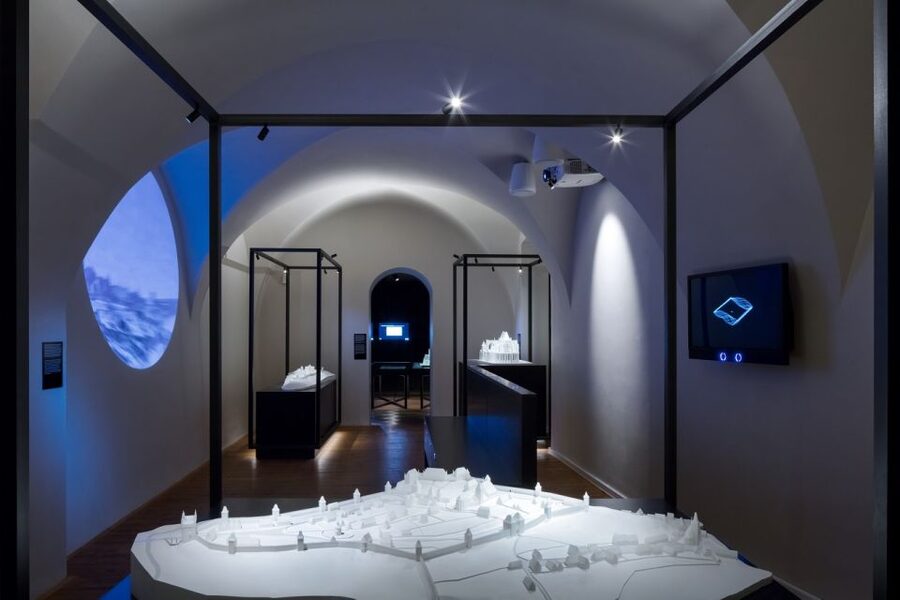
The heart of the experience is the Medieval Town exhibition and its multimedia companion. This is where you build a mental map of Prague in the 14th century under Charles IV, the period when Prague became a major center of state and religious power.
Instead of asking you to imagine everything from descriptions, the exhibition shows virtual and tangible models of buildings founded by Charles IV. That’s a key difference. When the buildings are three-dimensional and scaled, you can better understand distances, positioning, and the idea of a developing city.
Some of the featured structures include a model of Vyšehrad, Prague Castle, and St Vitus Cathedral. The exhibit also connects these spaces to how they were used for both religious and state purposes at the time, which helps you understand why they mattered beyond architecture.
The “how the city worked” part
You’ll also see virtual presentations about the system of town administration and the construction of the medieval bridge. These segments can feel more explanatory than a typical museum stop. They answer the question you might not know you’re asking: not only what the city looked like, but how it functioned.
Then the exhibits use dramatic stops to bring the timeline to life, with moments such as:
- Charles’s birth
- his arrival to Prague in 1333
- his coronation
- his burial
You don’t have to be a medieval expert to follow it. The combination of imagery and short narrative beats helps you “lock in” the era, so the city stops being a vague backdrop.
Video mapping of the 14th-century city
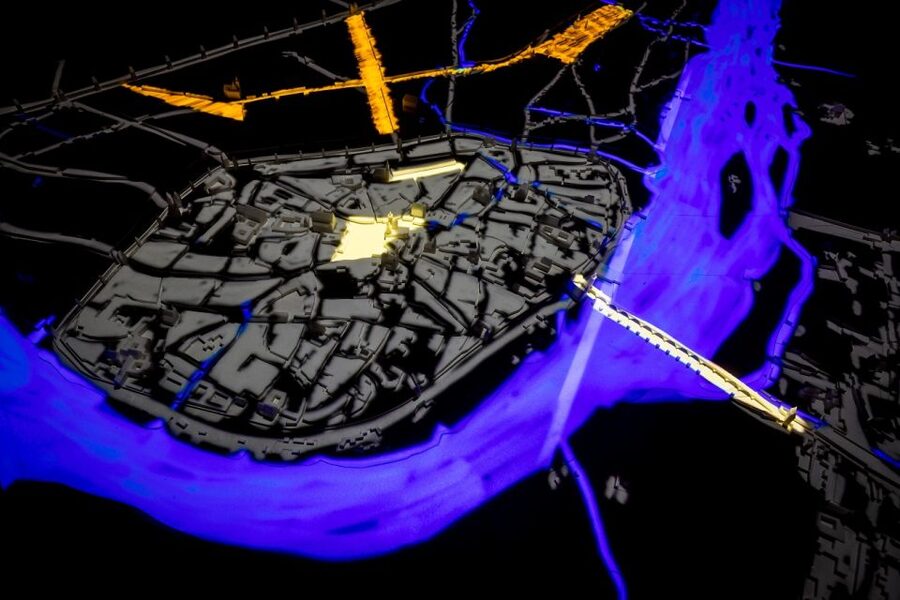
Another standout element is the video mapping of a Prague conurbation model and the area around Charles Square. This is useful even if you normally skip video sections. Mapping helps you see urban development as a transformation rather than a static snapshot.
If you like “big picture” learning, this portion is one of the best places to slow down. Don’t treat it like background noise. Watch it, then look again at the nearby models. The second glance usually makes the relationships click.
Other Prague tours and experiences that reward a closer look




From Prehistory to the Tailcoat: Everyday Life and Interactive Costumes
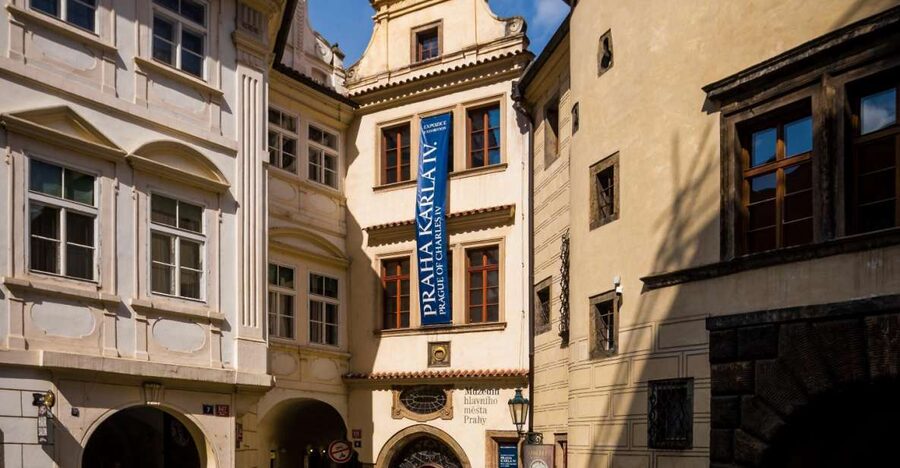
The third exhibition listed is From Prehistory to the Tailcoat. The title alone signals that this isn’t only about monuments and rulers. It also aims to show daily life.
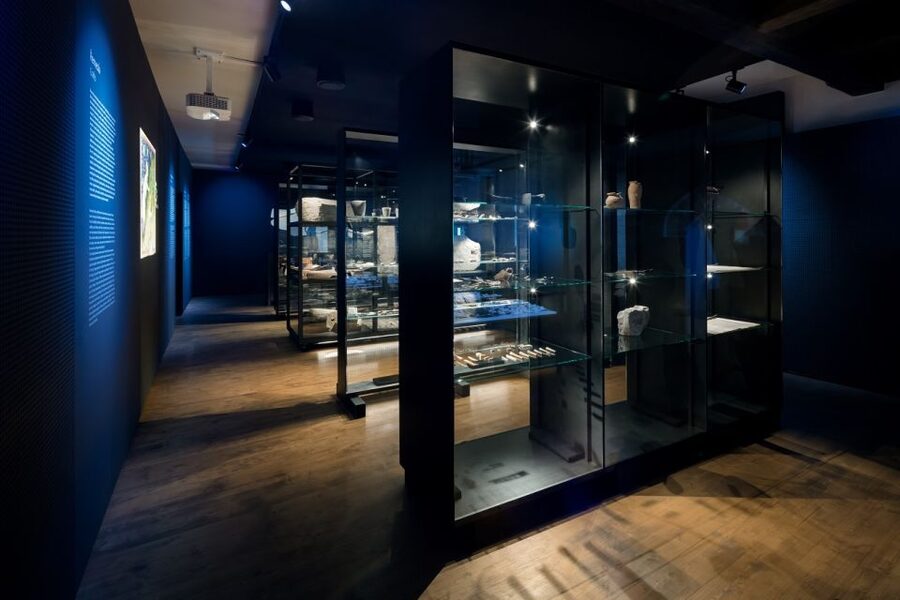
One of the most practical parts here is that you get unique archaeological findings and original objects from major Czech cultural institutions, including the Prague City Museum and the National Heritage Institute (Regional Office in Prague). That’s a strong value signal. It means you’re not only seeing computer graphics; you’re also seeing tangible pieces that help explain everyday life in the city.
The exhibit also includes an interactive digital costume exhibition. This is the part I’d call most “active” in a good way. Even if you’re not deep into history, costume interactions can help you understand how people dressed, what materials and silhouettes suggested, and how everyday identity was tied to the era.
Why this matters for your visit
Here’s the thing: most Prague history experiences can become either monument-only or document-only. This one tries to bridge the gap by mixing objects with interactive visuals. It helps you remember what you saw because you’re making connections, not only absorbing facts.
If you’re visiting with kids, this is one of the easiest areas to keep everyone engaged. If you’re traveling solo, it’s also a good way to avoid fatigue from constant video watching, because interaction tends to reset your attention.
Rudolf II and the Nine-Metre Animation: Prague in Motion
Next comes the Multimedia View of Prague During the Rule of Rudolf II. This is where Prague shifts from the 14th-century Charles IV story into the later Rudolfine era.
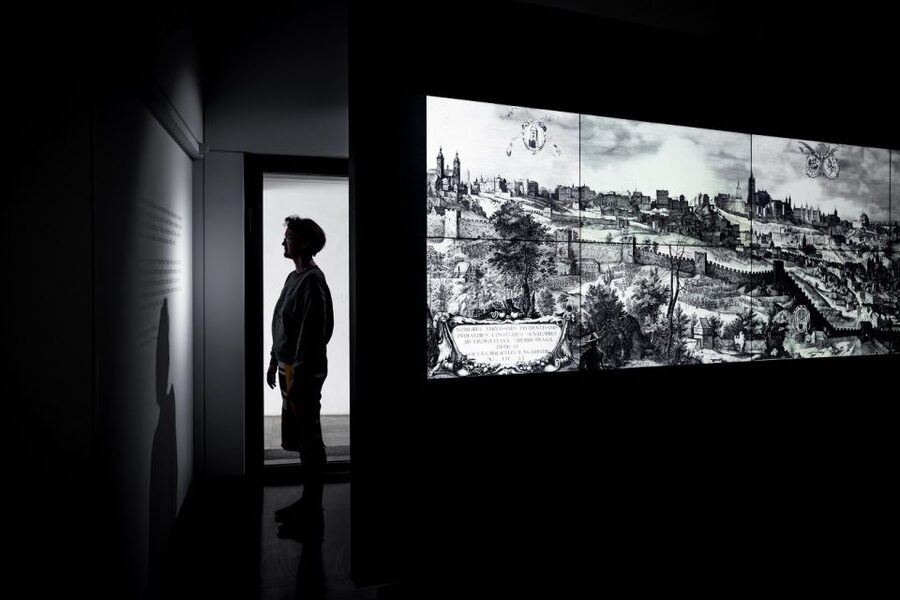
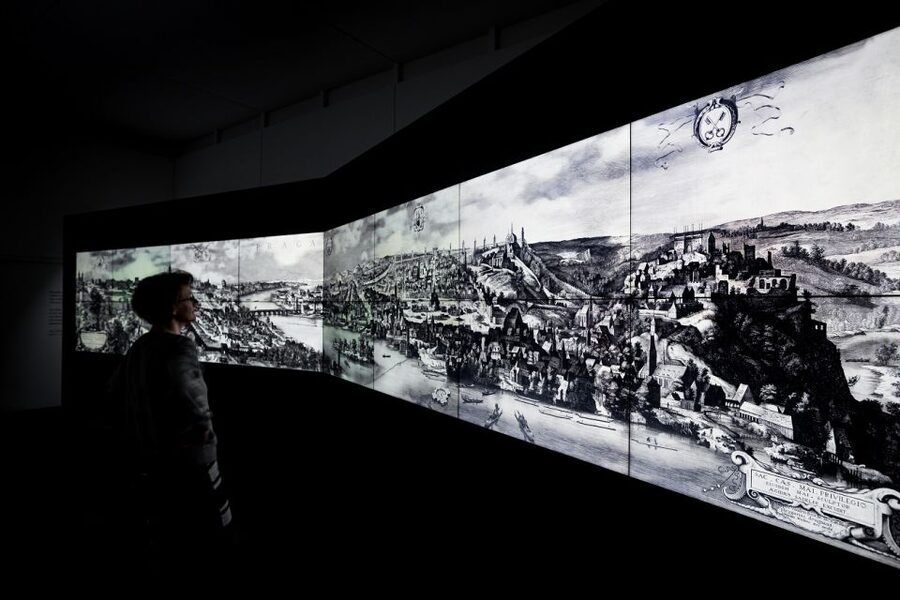
The big-ticket piece here is a nine-metre animation showing life in Prague during Rudolf II’s rule. A nine-metre presentation is hard to ignore. Even if you normally skip long multimedia displays, the scale is doing something important: it makes the city feel inhabited rather than staged.
You’ll also encounter the Sadeler Prospect, described as an outcome of joint efforts of historians and modern technology specialists. The point of this visual is not just to show Prague buildings; it shows the city as filled with people—an image of joys and worries, not a museum-empty model.
How to watch this section for best results
Go into this part with your attention switched on, but don’t stress about memorizing details. The purpose is emotional and visual understanding: what the city felt like when it was alive. If you catch yourself drifting, step back and re-center. Look for the flow—how the crowd energy and city layout connect.
If you’re a photographer, this is the area that can be visually rewarding, but be aware that multimedia exhibits can have rules about flash or standing too close. In those moments, it helps to follow the room’s pace and prioritize the experience over the perfect shot.
What the Exhibits Add Up To: Seeing Prague’s “City Growth” Story
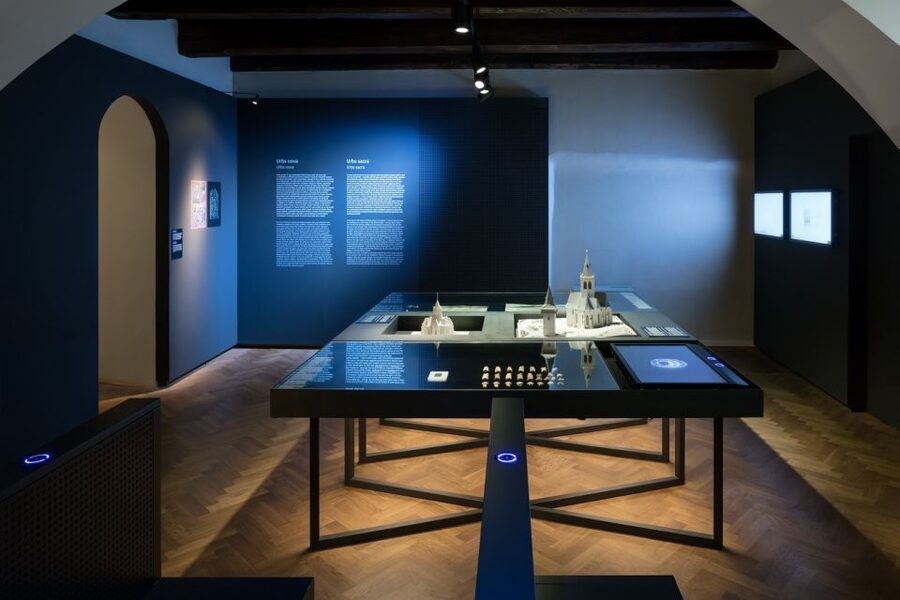
Taken together, the exhibitions create a story about Prague changing over time. You start with a medieval city under Charles IV, learn how institutions and constructions shaped the city, and then shift to Rudolf II to see life and atmosphere at a later moment.
I like that the museum doesn’t treat history as a list of dates. It treats it like an urban transformation. When you watch the mapping and see the models of major sites, you start to understand why Prague became what it became.
There’s also a practical bonus: once you’ve seen these layouts and city-development visuals, walking around Prague afterward can feel easier. You’re not starting from scratch anymore. Even without planning a specific route, you’ll have a framework for the city’s major religious and state sites, and you’ll better grasp the idea of a medieval metropolis growing into a bigger center.
Time, Language, and Learning Style: Making It Work for You
This experience is designed for English speakers. The instructor is listed in English, and the dialogue is in English as well. If you don’t understand English well, plan to rely heavily on visuals, models, and objects. That can work, but it won’t feel as smooth.
How long should you budget?
Based on the structure of the exhibits—models, video segments, and interactive elements—you’ll likely want about 1.5 to 2 hours. If you’re the type who replays sections to get the details, give yourself closer to the longer end.
A useful strategy: don’t try to “speed-run” the multimedia parts. Instead, pick one section to watch carefully (usually the Charles IV mapping or the Rudolf II animation) and treat the rest as you would a museum gallery: look, read what you can, then move on.
Who this suits best
You’ll probably enjoy this ticket if:
- you like visual learning
- you want context for Prague’s medieval rulers
- you’re curious about both monuments and everyday life
- you don’t mind spending time with multimedia presentations
You might feel less satisfied if:
- you only want quiet exhibits with lots of text
- you need non-English dialogue support
- you’re expecting a very traditional museum layout with long reading passages as the main attraction
Price and Value: Is This Ticket a Good Use of Your Prague Day?
At $8 per person, this ticket is priced like a bargain, especially because it bundles multiple exhibitions and high-effort production elements like mapping and a nine-metre animation.
Value isn’t only the price though. The bigger value is the variety:
- Medieval town models and virtual presentations
- Charles IV timeline dramatizations
- Video mapping around Charles Square and the wider city model
- Archaeological objects tied to everyday life
- An interactive digital costume exhibition
- Rudolf II’s animation and the Sadeler Prospect approach
That’s a lot of learning and entertainment packed into a single stop. If you’re trying to build a meaningful Prague day without paying for several separate attractions, this ticket is a strong candidate.
The only “cost” to consider is time. If you only have 30–45 minutes and hate multimedia, it may feel like too much. If you can give it 1.5–2 hours, you’ll get your money’s worth in actual attention and understanding.
Should You Book the Prague House at the Golden Ring Entry Ticket?
Book it if you want a smart, low-cost way to understand Prague’s medieval story and see rulers’ eras as real city scenes. The mix of models, video mapping, objects, and interactive costumes makes it easier to remember what you saw than a typical board-and-brochure museum.
Skip or at least think twice if you’re strongly dependent on non-English dialogue, or if you prefer a traditional exhibit style where reading is the main event. In that case, you might feel frustrated by the English-only narration and the heavier multimedia format.
If your goal is context and atmosphere in one place, this is one of the better uses of a single day in Prague—especially for the price.
FAQ
FAQ
How much does the House at the Golden Ring entry ticket cost?
It’s listed at $8 per person.
How long is the experience valid?
The ticket is valid for 1 day.
How long should I plan to spend inside?
You’ll want to set aside about 1.5 to 2 hours, since the exhibits include multiple multimedia sections and interactive areas.
What language is available for the experience?
English is the stated language, and the instructor is listed as English.
What exhibits are included with this ticket?
The included exhibitions are the Medieval Town exhibition, the Multimedia View of Prague During the Rule of Rudolf II exhibition, and From Prehistory to the Tailcoat.
Is there an interactive element?
Yes. There’s an interactive digital costume exhibition as part of the experience.
What’s the highlight of the Rudolf II multimedia section?
A nine-metre animation shows life in Prague during the rule of Rudolf II, and the Sadeler Prospect is included as a related visual outcome of historians and technology specialists.
Is video mapping included?
Yes. Video mapping is part of the presentation tied to Prague’s city model and the Charles Square area.
Can I cancel and get a refund?
Free cancellation is offered up to 24 hours in advance for a full refund.
Can I reserve now and pay later?
Yes. Reserve now & pay later is available, so you can book without paying today.
More Tickets in Prague

More Tour Reviews in Prague



More Prague Tickets & Passes
More Prague tours we have written up lately

Prague Attraction Tickets, compared.
 ★ 4.6Castle Tour with Local Guide and Entry TicketFrom $6110,422 reviews
 ★ 4.7Prague Castle 2.5-Hour Tour Including Admission TicketFrom $578,927 reviews
 ★ 4.5Old Town Hall Tower Entry TicketFrom $216,749 reviews
 ★ 4.1Entry ticket to Ice Pub Prague with Nightclub OptionFrom $145,273 reviews
 ★ 4.4Prague Castle and Lobkowicz Palace Entry TicketsFrom $385,066 reviews
 ★ 4.7Entry Ticket Classical Concert at the Mirror ChapelFrom $344,636 reviews
 ★ 4.3Museum of Fantastic Illusions Entry TicketFrom $174,337 reviews
 ★ 4.1CoolPass with Access to 90+ AttractionsFrom $844,046 reviews
Browse the lists this tour appears in