REVIEW · PRAGUE
Prague Essential
Prague in 2.5 hours? Yes, and smarter. This private walk stitches together iconic spots like Charles Bridge and the Astronomical Clock with clear explanations you can use right away. I especially like how it feels like a guided story, not a checklist, and how the pacing keeps moving without rushing you through everything.
I also like the mix of everyday city views and big-meaning buildings. The quiet courtyard at Klementinum, the old-square atmosphere near Stare Mesto, and the Neo-Renaissance finale at Rudolfinum give you variety in just a short time. You’ll get enough context to understand why locals care about these places.
The main thing to consider is that not every stop has entry included. A few of the indoor sights are listed as admission not included, so you may want a little cash or card plan for extra tickets.
In This Review
- Key things you’ll notice on this Prague Essentials tour
- How the 2.5-hour route works (and why the pace is a feature)
- Charles Bridge: the wish, the date, and the feeling you can’t fake
- Klementinum courtyard: a quieter Jesuit-side Prague break
- The Old Town Hall and Astronomical Clock: how to read the show
- Stare Mesto (Old Town): the heart of the city, with real contrasts
- Theatre des Etats: Mozart’s performance point
- Karolinum and Charles University: a campus that adds depth
- Prasná brána: a gothic gateway to the Old Town
- Old-New Synagogue: oldest in Europe, and the Golem legend tie-in
- Pinkas Synagogue: WWII memory, respectfully framed
- Rudolfinum: a Neo-Renaissance finish with real visual payoff
- Price and value: what $96.12 buys you in practice
- What the guide quality adds (and why Darya shows up in feedback)
- Who should book Prague Essential (and who might want something else)
- Should you book this tour?
- FAQ
- How long is the Prague Essential tour?
- What time does the tour start, and where do we meet?
- What’s the tour language?
- Is this tour private?
- Do tickets cost extra for the sights on the route?
- Is there a mobile ticket?
- What is the cancellation policy?
Key things you’ll notice on this Prague Essentials tour
- Charles Bridge with the wish tradition plus the story of Charles IV starting the bridge
- Klementinum courtyard peace without getting stuck in the noisiest crowds
- Astronomical Clock basics so you can actually read what you’re seeing
- Old Town Square contrasts from market life to executions, all in one compact area
- Two synagogues, two tones: Golem legend and WWII memory stops
- Rudolfinum as a stylish finish with a Neo-Renaissance concert-hall setting
Still weighing up how to spend your days in Prague? These are the tours travellers book most.
- Prague: 50-Minute Sightseeing Evening Cruise★ 4.2 · 33,780 reviews
- Prague: Medieval Dinner with Unlimited Drinks★ 4.4 · 19,847 reviews
- Prague: Castle Tour with Local Guide and Entry Ticket★ 4.6 · 10,422 reviews
- Prague: Oldtown, Medieval Underground & Dungeon History Tour★ 4.3 · 10,277 reviews
How the 2.5-hour route works (and why the pace is a feature)
This is a short, focused private tour built for “first timer” energy. You start at the Charles IV Statue in Staré Město and finish in front of Rudolfinum on Alšovo nábř. The total time is about 2 hours 30 minutes, and the stops are intentionally brief, many around 5–10 minutes.
That format is great if you want a fast orientation: where the city’s big landmarks are, how they connect, and what to pay attention to when you come back on your own. It’s less ideal if you want long, slow museum time at each location—this is more of a smart introduction than a deep dive day.
Also, you’ll be in English, and you’ll get a mobile ticket. It’s easy to match this to a morning schedule since the start time is listed as 10:00 am.
Charles Bridge: the wish, the date, and the feeling you can’t fake
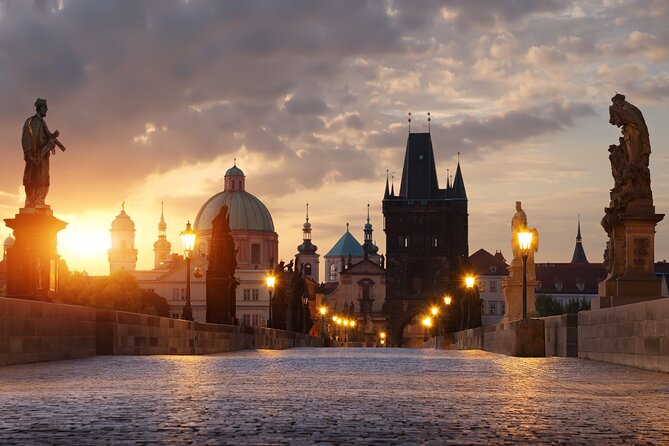
Charles Bridge isn’t just a pretty postcard. It’s an energetic place with a built-in legend, tied directly to Charles IV. The tour centers on the bridge’s mystical beauty and the story of him laying the first stone on a special date.
There’s also a practical reason this stop matters early: it helps you understand Prague’s “layers.” You’re standing at a point where history, superstition, and daily life overlap. If you’re the type who loves small details, this is where you’ll start seeing Prague the way your guide is pointing at it.
Real talk: Charles Bridge can be crowded, so arriving right in the middle of the day can mean more foot traffic and more noise. The short stop length helps you enjoy it without feeling stuck in it for too long.
Klementinum courtyard: a quieter Jesuit-side Prague break
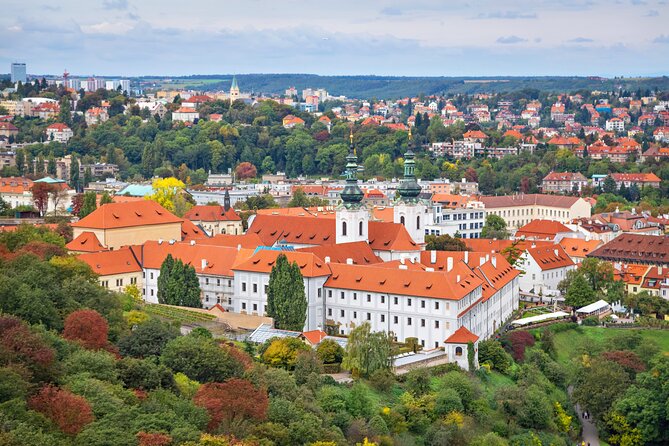
Next comes Klementinum, with a goal of getting away from the crowd. You’re guided to the quiet courtyard of the Jesuits collegium, a place that the tour frames as connected to serious, even dangerous, history. Instead of rushing through a loud main attraction, you get a calmer pocket where the stories land better.
This stop works well because it changes the mood. Charles Bridge is about open views and movement; Klementinum is about walls, symbolism, and the long memory of institutions in this city. It also gives you a sense of why Prague’s religious and educational influence is still visible in everyday places.
Good news: the courtyard admission is listed as free, so this is one of the easiest wins on the route.
The Old Town Hall and Astronomical Clock: how to read the show
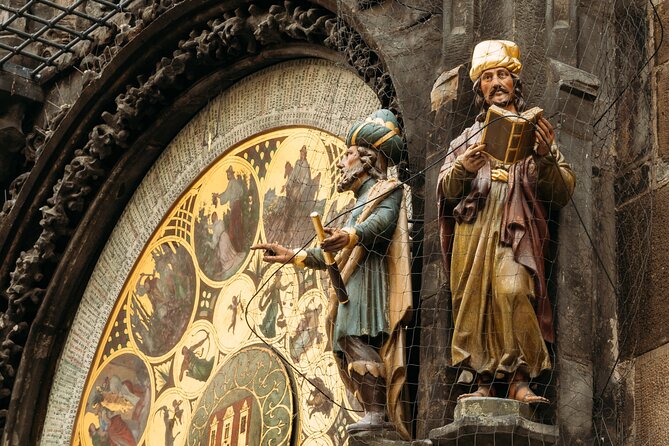
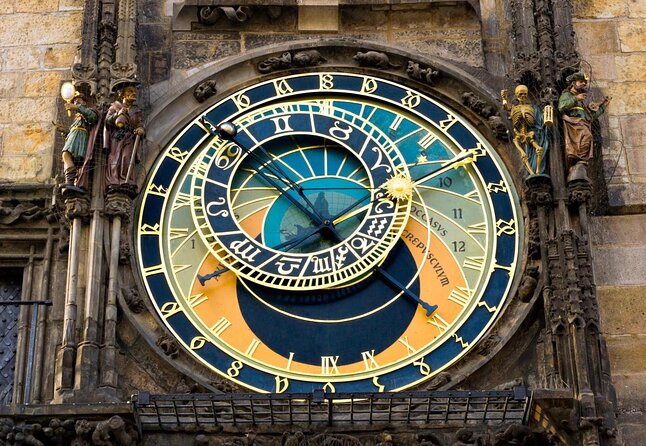
At the Old Town Hall with the Astronomical Clock, the focus is on what makes the Prague clock unique. You’ll hear why it stands out even though there are about ten similar clocks in Europe, and you’ll learn how to read it instead of just watching it happen.
What I like about this part is that it turns a famous landmark into an activity you can follow. When you understand the basics, the experience feels less like passing by a busy screen and more like following a mechanism with a purpose.
The clock area also has an advantage for value: the tour notes admission ticket free for this stop, so you’re not paying extra to stand in the right place and understand what’s happening.
Tip for your own visit later: even if you’re not seeing the clock display during your tour timing, knowing how to read the clock helps you recognize what to look for when you return.



Stare Mesto (Old Town): the heart of the city, with real contrasts
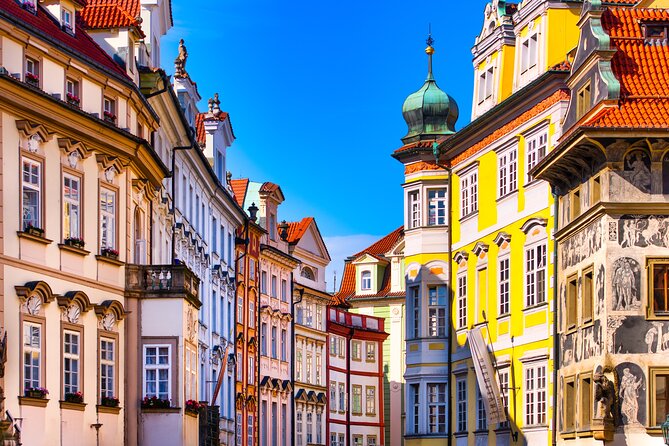
Stare Mesto is described as the most important and most beautiful square in Prague, and the tour uses it as a storytelling anchor. Here you get the idea of the square as a civic center—where rich market activity happened, and where terrible executions took place.
That combination is uncomfortable, but it’s also honest. If you only see the pretty side of old squares, you miss the human weight that shaped them. This stop helps you understand why locals treat these spaces with seriousness, not just as background scenery.
The tour also flags this stop as free entry, so it’s another portion where you’re paying mainly for the explanation and the context, not an additional ticket.
Theatre des Etats: Mozart’s performance point
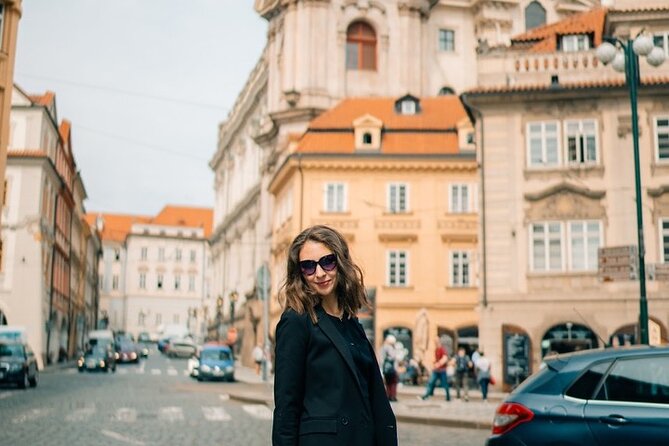
At Theatre des Etats, the tour highlights the magnificent Estate Theatre building and notes that Mozart performed there. Even if you don’t know the venue’s musical background in detail, the point is clear: Prague wasn’t just a medieval street scene. It also played a major role in European culture and performance.
This is one of those quick “time jump” moments. You move from square life to the stage world, and it keeps the tour from feeling like the same type of sightseeing over and over.
Time is short here, though. If you’re a big theatre fan and want a longer visit inside, you’ll likely want to return later on your own.
Karolinum and Charles University: a campus that adds depth
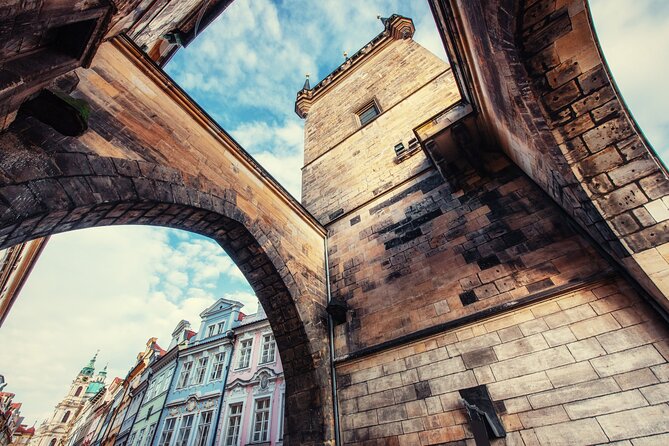
Karolinum is the stop connected to the Charles University main campus. The tour presents it as a great university with fascinating history, and it gives you a chance to see how education and architecture sit close together in Prague.
Why I like including this: it rounds out the “power map” of the city. You’re not only looking at rulers, priests, and merchants; you’re also seeing the institutional side—places where ideas were trained and spread.
Admission here is listed as not included, so treat this more as an exterior-and-story moment during the tour, then decide later if you want to pay for more access.
Prasná brána: a gothic gateway to the Old Town
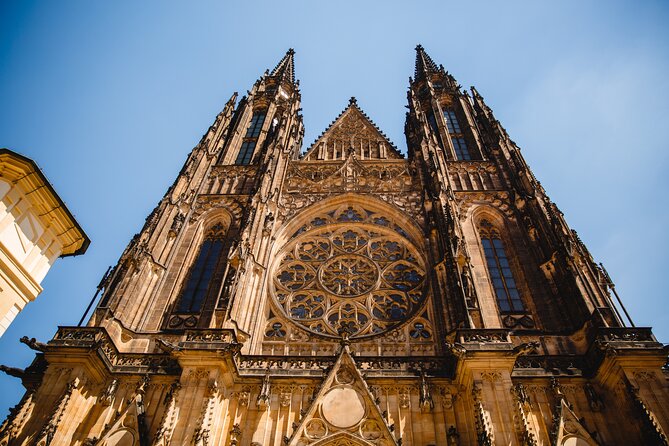
Prasná brána, described as an impressive gothic tower, is framed as a gateway to the Old Town. This is a smart stop because a gateway is easier to visualize than a random building. You can feel the city’s structure: where you enter, where you pass through, and how the old street layout shaped movement.
Again, the tour time here is brief. But it’s useful if you want an early understanding of how Prague’s historical edges worked.
Admission for this stop is listed as not included, so don’t plan on a ticketed attraction here as part of the tour’s built-in value.
Old-New Synagogue: oldest in Europe, and the Golem legend tie-in
The Old-New Synagogue is one of the most story-dense stops on the route. The tour notes it as the oldest synagogue in Europe, and it connects the building to the legend about the Golem.
This is where the tour shifts tone again—more mysterious, more symbolic, and very different from the bridge and square scenes. If you enjoy folklore, this is a standout because it links a specific place to a specific legend rather than keeping things abstract.
The stop length is set at about 10 minutes, which can work if you’re paying attention to the story beats. If you want slower, more quiet time inside, you may want to return separately later with extra time.
Admission is listed as not included here, so factor that into your budget if you decide you want full access.
Pinkas Synagogue: WWII memory, respectfully framed
Next is the Pinkas Synagogue, described as a place of memories dedicated to Jewish victims of World War II. This is not a fun, lighthearted stop, and the value is in how the tour frames remembrance in a real setting.
Including this stop matters because it widens your understanding of Prague beyond medieval snapshots. You see that history did not stop long ago, and that some buildings are tied to mourning and memory as much as to architecture.
This is another 10-minute stop, and as with the other interior sights marked not included, you should be prepared for the possibility of separate tickets if you want full entry during your visit.
Rudolfinum: a Neo-Renaissance finish with real visual payoff
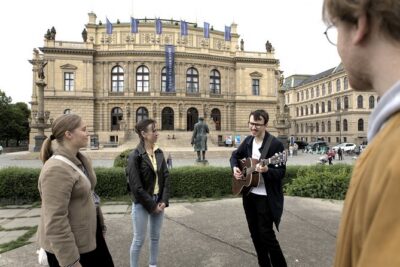
The tour ends at Rudolfinum, a Neo-Renaissance concert hall. Finishing here is a strong choice because the building is the kind of landmark that feels “set” for photos and for last-minute wow-factor.
After walking through squares, towers, and synagogues, you finish with a performance-space vibe. It also helps you remember Prague as a city where art and public culture are built into the urban fabric.
Since the tour finishes in front of Rudolfinum, you can turn this into a plan: after the tour, you can decide whether you want to linger nearby for views or head to your next neighborhood with a better sense of where you are.
Price and value: what $96.12 buys you in practice
At $96.12 per person for about 2 hours 30 minutes, you’re paying for three things: a private English guide experience, curated stops, and time saved from figuring out what matters at each landmark. The private format also means you can ask questions in real time, which is often where the best value shows up.
One detail affects value directly: some stops are free entry during the tour (like Klementinum courtyard, Astronomical Clock area, and Old Town square), while others list admission as not included (such as Theatre des Etats, Karolinum, Prasná brána, and the synagogues, plus Rudolfinum). That means the headline price isn’t the whole story if you want full access at every indoor location.
If you’re trying to keep costs controlled, treat this as a guided route to the essentials with story-rich viewpoints, then pick which ticketed interiors you truly care about.
What the guide quality adds (and why Darya shows up in feedback)
The biggest compliment tied to this tour is the guide’s ability to make Prague feel alive. Darya is specifically praised for being wonderful, very nice, and for sharing so many incredible stories that the time passed quickly. The feedback also highlights that the group learned a lot while still enjoying the walk.
That matters because Prague can be overwhelming at street level. A good guide helps you decide what to notice, what to ignore, and how to connect places into a coherent picture. On this tour, that storytelling approach is a core part of the value, not an add-on.
If you’re the kind of traveler who likes learning while walking—short stops, clear explanations, and just enough context to go exploring after—this format fits that style well.
Who should book Prague Essential (and who might want something else)
This tour is a great fit if:
- you want a fast, first-introduction overview of central Prague
- you prefer a walking route that balances landmark recognition with stories
- you’re okay with short stops and you’ll return later for deeper entry where you care
You might want a different option if:
- you want long museum time at multiple indoor sites
- you don’t enjoy history that includes difficult topics (the Old Town square execution context is part of the stop)
- you’re aiming to avoid any extra ticket costs beyond what’s clearly marked free
Also, note that the tour is generally booked about 10 days in advance on average. If you have fixed plans, it’s smart to book early so you’re not hunting for similar times.
Should you book this tour?
If your goal is to get oriented fast and understand what you’re seeing, I think Prague Essential is a strong buy. The route hits major highlights in a compact way, and the storytelling focus makes the city feel more readable than a self-guided sprint.
I’d book it if you like walking with a guide, want practical context, and don’t mind that a few stops may require separate admissions. It’s less ideal if you’re after long, quiet time inside every building. But as an efficient, story-driven introduction to Prague’s core landmarks, it earns its 5-star reputation.
FAQ
How long is the Prague Essential tour?
It runs for about 2 hours 30 minutes.
What time does the tour start, and where do we meet?
The start time is 10:00 am. You meet at the Charles IV Statue at Křižovnické nám., Staré Město, 110 00 Praha.
What’s the tour language?
The tour is offered in English.
Is this tour private?
Yes. It’s a private tour/activity, and only your group participates.
Do tickets cost extra for the sights on the route?
Some stops are listed as free entry, while others are listed as admission not included. The tour includes a mix of both.
Is there a mobile ticket?
Yes, the tour includes a mobile ticket.
What is the cancellation policy?
You can cancel up to 24 hours in advance for a full refund. If you cancel less than 24 hours before the experience starts, the amount paid is not refunded.