
REVIEW · PRAGUE ESCAPE GAMES & VR
Prague City Tour with Virtual Reality
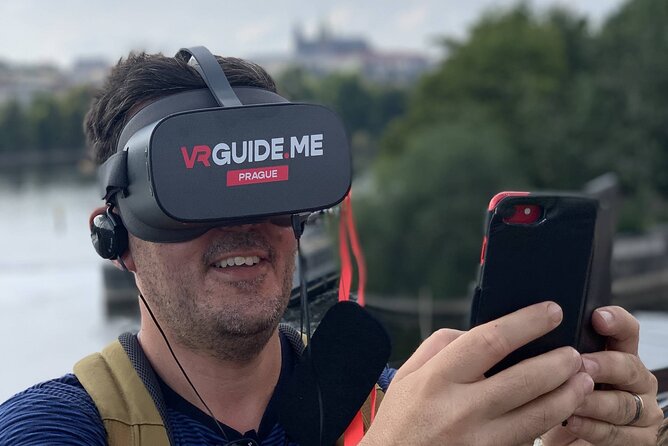
Old Town Square has a time machine feel. This Prague city tour with VR uses glasses to show you key scenes in different eras while a guide walks you through the sights you’d normally miss or explain only half right. It’s part sightseeing, part story lesson, and part clever tech.
Two things I really like: you get small-group time (up to 15), so it’s easier to ask questions instead of getting swept along. And the VR moments make places like the Old Town Square and the areas tied to major events feel understandable fast, not just pretty. One thing to consider is that the tour has a good weather requirement, so if the skies don’t cooperate, your plan may need to change.
In This Review
- VR-Guided Prague: Why This Tour Feels Different
- Key Highlights to Expect
- Old Square and the 1900 Moment in Your Hands
- The Astronomical Clock Story (Not Just a Photo Stop)
- Wenceslas-Style Energy: Prague Spring and the National Museum View
- A Gothic and Baroque Church: Beauty You Can Feel Standing Under
- Kafka’s Head: Modern Art as a Friendly Left Turn
- Old Town Hall: What Changed, and Why It Matters
- The Prague Story Element: Carnicero de Praga and Hidden Paratroopers
- Prague Castle Views and the Dancing House Finish
- Price and Value: What You’re Actually Paying For
- Who This Tour Suits Best
- The Guide Factor: What Marco Brings to the Group Experience
- Tips Before You Go (So the VR Feels Seamless)
- Final Call: Should You Book This VR City Tour?
- FAQ
- How long is the Prague City Tour with Virtual Reality?
- What is the price per person?
- What language is the tour offered in?
- Where does the tour start and end?
- Is the tour offered in a small group?
- Can you use it if you wear glasses or lenses?
VR-Guided Prague: Why This Tour Feels Different
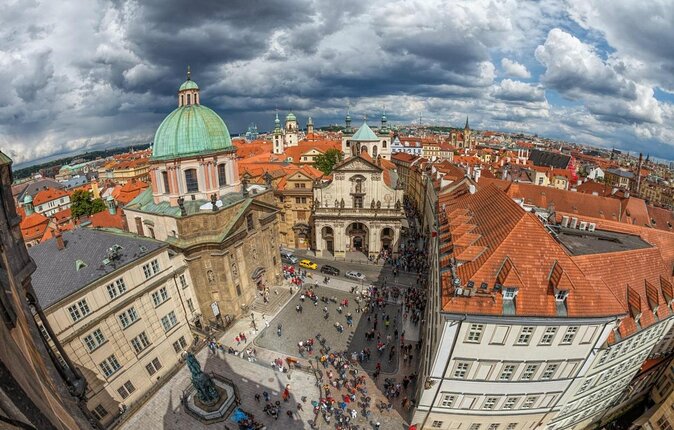
Prague can be easy to tour on autopilot—point, take a photo, move on. This experience slows that down just enough to help you connect the real city with the bigger stories tied to it. The VR glasses are the headline, but the real magic is how they’re stitched into the walk: you stop, look around, and then you’re shown what the setting might have looked like in earlier moments.
You’ll start where the city’s story is loudest, at Prague’s Old Square, and you’ll move through landmarks that most standard routes hit. The difference here is that you’re not only looking at stone and towers—you’re also seeing cues about what changed over time, plus why those places mattered.
Also, you’re not stuck with a mega-tour crowd. The group size cap of 15 travelers matters more than you’d think. You can actually hear the guide, you can ask questions without shouting, and you can keep up with the VR stops without losing the plot.
Locked-room minds welcome. More escape games and VR runs.
- Experience the Future of VR Gaming at Zero Latency Prague★ 5.0 · 564 reviews
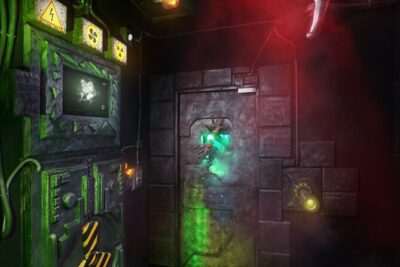
- Apocalypse Zombie 2213 Escape Game in Prague★ 5.0 · 383 reviews
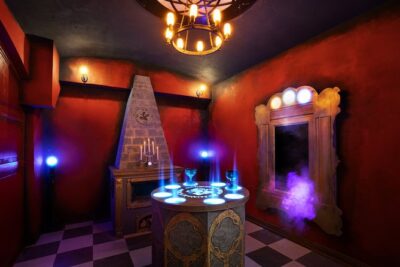
- Magic School: Episode II Escape Game in Prague★ 5.0 · 304 reviews
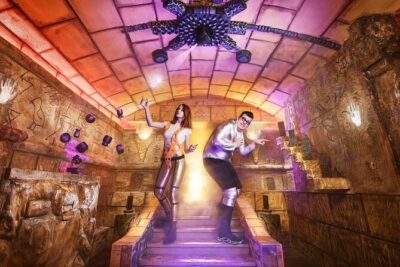
- Star Element Escape Game in Prague★ 5.0 · 275 reviews
Key Highlights to Expect
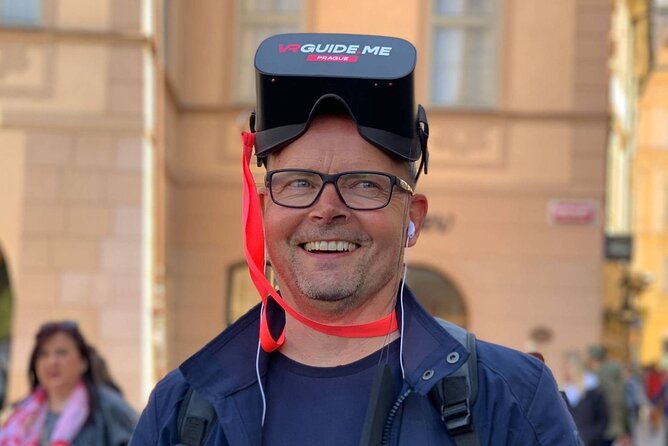
- VR glasses at key stops that help you visualize the past right where you’re standing
- Small-group pacing so you get real time with your guide instead of a race
- Astronomical Clock storytelling that goes past the standard quick explanation
- Church beauty + height as a break from the street-level history
- Kafka’s Head for modern art contrast (so the tour isn’t all old-world)
- Ending with views of Prague Castle and the Dancing House for a strong finish
Old Square and the 1900 Moment in Your Hands
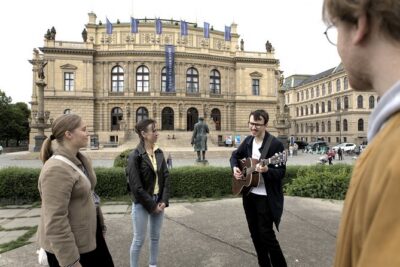
The tour opens at Prague’s Old Square, and right away you’re given the core idea: history isn’t just in books. You’ll walk in a space that still carries its identity, then you’ll put on VR glasses to see how the square looked around 1900.
This kind of “same place, different time” setup is useful because it anchors your memory. Instead of learning about Prague’s past as a separate chapter, you learn it as a layer on top of what you can still see. Even if you’re not a history buff, it helps you notice details you’d otherwise overlook—small spatial cues like where the sightlines lead and how the square feels as a room.
Practical note: VR stops work best when you’re ready to pause and focus. If you’re the type who keeps stepping forward while devices boot up, you’ll want to slow down so you don’t miss the effect. It’s still a walk you can enjoy at a comfortable pace, but this isn’t a constant-motion tour.
The Astronomical Clock Story (Not Just a Photo Stop)
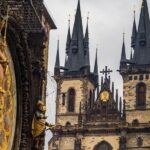
Next comes the famous Prague astronomical clock—but this time the emphasis is on the story behind it. You’ll get an explanation that’s meant to make the clock feel like a living part of the city’s identity, not a “stand here, smile, move on” attraction.
I like tours that treat famous landmarks with respect. When you get the narrative, you also get a framework for what you’re seeing. The clock’s design and status can look complicated at a glance; the guide’s job is to translate what matters and why it’s remembered. On a tour like this, that translation is part of the value.
If you enjoy learning in the middle of the action, you’ll probably find this stop more satisfying than the usual quick glance. It’s the kind of moment where you can ask questions and get answers on the spot, especially in a small group.
Wenceslas-Style Energy: Prague Spring and the National Museum View
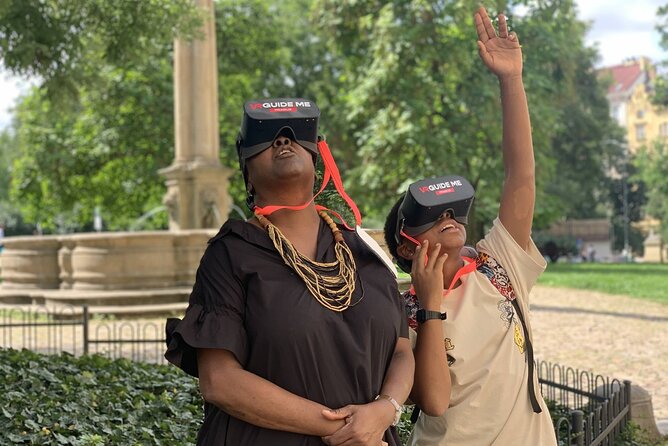
Then you head to a main square with views of the National Museum, and this is where the tour uses VR for a different purpose: helping you understand what happened during the Prague Spring.
This is one of the smarter uses of VR in a walking tour. Prague is full of reminders of the past, but the past can also feel abstract if you’re just reading about it. VR ties the concept to a setting—so the story lands where it belongs: in the urban geography that shaped how people lived and moved.
This stop also gives a nice change of pace. After the Old Square and clock area (which are the “classics”), you get a slightly broader city feel. The National Museum view adds a strong visual endpoint to the chapter you’re hearing. If you like tours that mix famous and purposeful, this section is a good reminder that you’re not just collecting sights—you’re building understanding.
The big picture of Prague, a few more ways.

A Gothic and Baroque Church: Beauty You Can Feel Standing Under
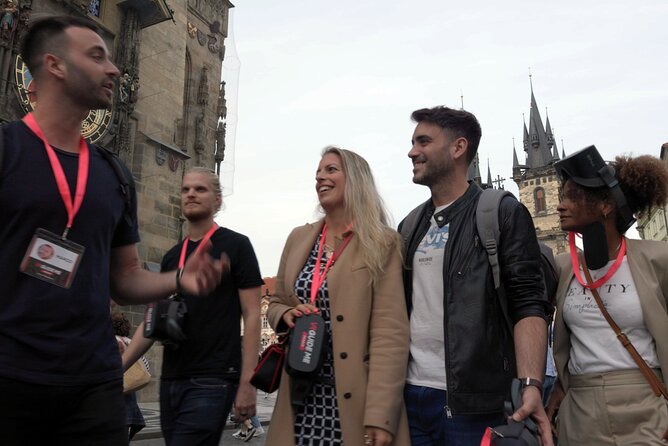
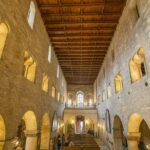
After the political and historical storytelling, you step inside a Gothic and Baroque church. The promise here is simple: you’ll be amazed by the beauty and height.
Church interiors often work well on guided tours because a guide can help you look up—literally. Height isn’t just a statistic here. It changes how the space “reads.” Even if you’ve seen churches before, I find this kind of stop refreshing because it gives your brain a break from street-level facts and lets you appreciate craftsmanship.
A drawback to keep in mind: once you enter a church, the vibe becomes more quiet and stationary. If you prefer nonstop walking, this is still worth it, but you’ll want to plan for a slightly slower, more observational segment.
Kafka’s Head: Modern Art as a Friendly Left Turn
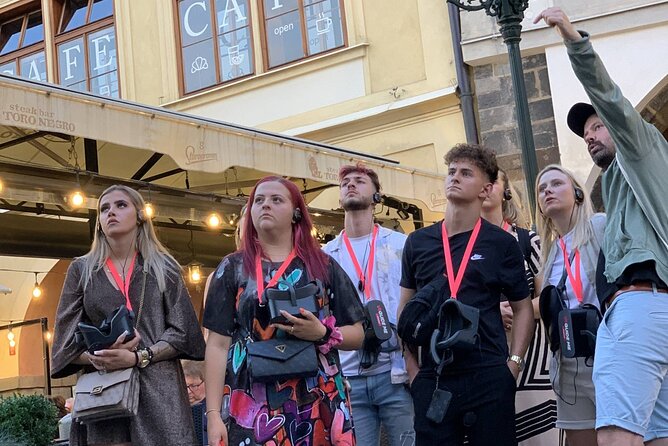
Next comes Kafka’s Head, and this is your modern-art reset. You’re no longer traveling through eras shown by VR; instead you’re stepping into a contemporary artistic way of seeing the city and its creative identity.
That contrast is genuinely helpful. Prague can overload you with one “type” of beauty: old stone, old stories, old streets. Kafka’s Head acts like a palate cleanser. It also keeps the tour from turning into a single-theme lecture.
If you like art stops that aren’t just quick photo opportunities, this one fits nicely because it’s placed after heavier historical segments. By the time you reach Kafka’s Head, you’ve already built context for Prague as a place that changes. The modern art stop then makes that shift feel intentional, not random.
Old Town Hall: What Changed, and Why It Matters
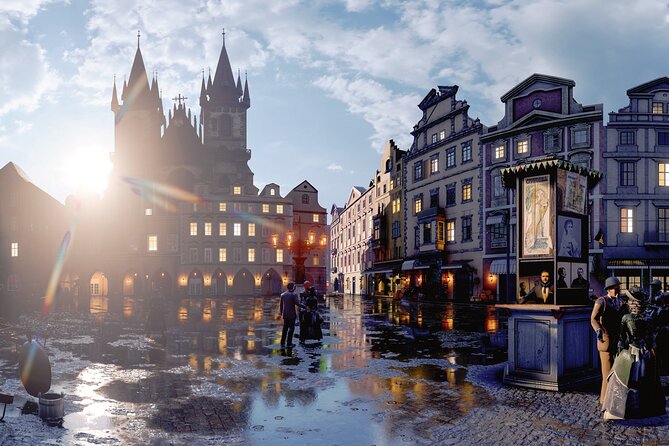
After Kafka’s Head, the tour arrives at the old town hall. Here, the guide shares what happened there—so the building isn’t treated as a static landmark.
Town halls matter because they connect to civic life: decisions, people, and public moments. Even with limited time, the key value is interpretation. A famous building can feel generic until you understand its role. This stop helps you look at the old façade and connect it with how Prague functioned as a city.
One practical advantage of ending this section near the center of the story is that it keeps you moving through the old-town “spine” instead of cutting around the city in confusing jumps. You stay mentally oriented, which makes each new piece click.
The Prague Story Element: Carnicero de Praga and Hidden Paratroopers
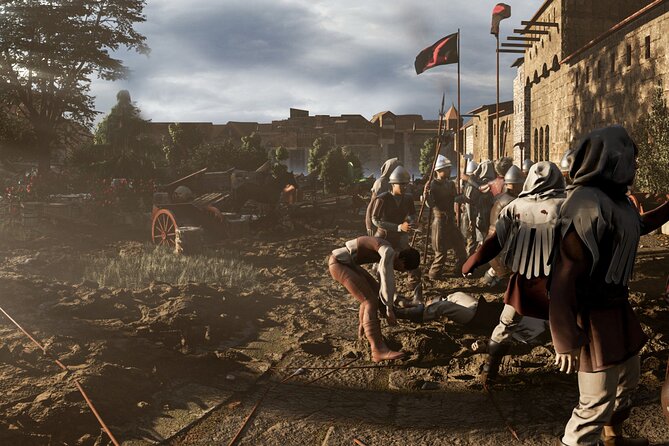
A standout moment is the stop associated with the carnicero de Praga story—where paratroopers hid to allow one of the most impactful scenes in the city’s history to unfold.
This kind of storytelling is why the tour is more than a checklist. It’s not just “here’s a building.” It’s “here’s what happened, and why people needed to be careful.” The detail about paratroopers hiding gives you a human-scale sense of risk and secrecy, which is often missing from standard sightseeing.
I also like that the tour uses dramatic, concrete elements rather than vague descriptions. When the guide frames the story with a specific setting, you leave with a better mental picture of the event, not just a name.
Prague Castle Views and the Dancing House Finish
The tour closes with big-sight payoff: views of Prague Castle and the Dancing House, described as the city’s most modern and emblematic building.
This is the right kind of ending. After you’ve spent time connecting Prague’s past and present, you get a visual reminder of modern identity in the middle of the older city fabric. The Dancing House doesn’t feel like an afterthought here—it acts like a symbol of how Prague keeps evolving.
If you like a finish with skyline energy, this section delivers. You’ll end your walk at the Dancing House area, which makes it easy to transition into your next plans—whether that’s dinner, a longer wander, or a final photo round from viewpoints the tour has already steered you toward.
Price and Value: What You’re Actually Paying For
At $43.14 per person for about 2 hours, the biggest question is whether you’re paying for the walking tour or the VR.
I see the price as fair because you’re getting multiple value layers at once:
- A guide-led route through core Prague landmarks and a few story-rich stops
- VR glasses used at multiple moments, not just a single gimmick stop
- A small-group cap that improves the experience quality, especially for Q&A
A standard walking tour can be cheaper, sure. But cheaper often means less personalization and fewer “how did this place look back then?” moments. Here, the VR provides a concrete payoff: you can connect a past scene to the exact environment you’re standing in.
Also, the tour includes mobile tickets and is offered in English, with audio guides in several European languages. That mix helps you keep up even if you’re not fluent in English, as long as the audio option meets your needs.
Who This Tour Suits Best
This tour is a strong fit if you like:
- History with clear storytelling, not just random dates
- Visual learning (VR helps a lot here)
- A calmer pace thanks to a maximum of 15 travelers
- Prague’s classics plus a couple of side stops that broaden the experience
It may be less perfect if you dislike VR or prefer purely outdoor walking without any tech involved. Also, you should be comfortable with the fact that church interiors mean slower, quiet moments.
The Guide Factor: What Marco Brings to the Group Experience
One detail I think matters a lot is that the guide experience is described as kind, professional, and patient—specifically including Marco. The same review notes he described and translated for a multi-language group.
That’s a real quality signal. In a small tour, language flow can make or break the feeling of the experience. If you’re booking for clarity, having a guide who can pace explanations and handle multi-language dynamics is exactly what you want.
So if you’re worried about understanding everything during a lively group walk, this is a good sign.
Tips Before You Go (So the VR Feels Seamless)
Here are the small things that help you get the most out of the VR stops:
- Be ready to pause when the guide signals a VR moment. The payoff is strongest when you take it in fully.
- If you wear lenses, good news: the tour notes it’s possible to do it with glasses/lenses.
- Wear comfortable shoes. Even though it’s about 2 hours, it’s still a walk between multiple landmarks.
- Plan around weather. The experience requires good weather, and that matters because several stops are tied to the street-level route.
If you show up calm and attentive, the tech part won’t feel like an interruption. It’ll feel like a learning tool.
Final Call: Should You Book This VR City Tour?
If you want Prague in a way that’s both practical and a little surprising, I’d book it. The mix of small-group time and VR-based visualization turns common landmarks into story anchors. And the route has a smart variety: Old Square, the astronomical clock, a church interior, Kafka’s Head, civic history at the old town hall, a dramatic historical anecdote, then castle and the Dancing House for the finish.
Skip it only if you know you don’t enjoy VR or if your schedule can’t flex at all and weather might affect plans. Otherwise, this looks like a solid value for the money—especially because the tour is designed to help you understand Prague, not just tick boxes.
FAQ
How long is the Prague City Tour with Virtual Reality?
It’s approximately 2 hours.
What is the price per person?
The price is $43.14 per person.
What language is the tour offered in?
The tour is offered in English, and audio guides are available in several European languages.
Where does the tour start and end?
It starts at Rafidein s.r.o.1, Panská 892, Nové Město, Praha 1, and ends at the Dancing House area on Jiráskovo nám. 1981/6, Praha 2.
Is the tour offered in a small group?
Yes. The experience has a maximum of 15 travelers.
Can you use it if you wear glasses or lenses?
Yes, the tour indicates it’s possible to do it with lenses.
More Tours in Prague
More Tour Reviews in Prague



More Escape Games & VR

More Prague tours we have written up lately

Prague Escape Games & VR, compared.
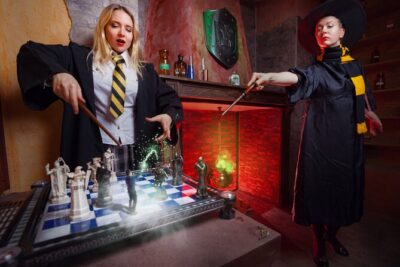 ★ 5.0Prague Wizard Experience Magic School Escape GameFrom $47746 reviews
 ★ 5.0Apocalypse Zombie 2213 Escape Game in PragueFrom $47383 reviews
 ★ 5.0Magic School: Episode II Escape Game in PragueFrom $47304 reviews
 ★ 5.0Star Element Escape Game in PragueFrom $47275 reviews
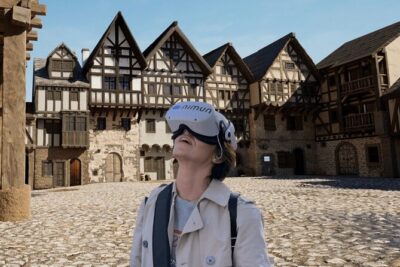 ★ 5.0Prague Immersive Tour: Travel back in time with virtual realityFrom $18248 reviews
 ★ 5.0Moriarty’s Phantom Trap Escape Game in PragueFrom $47140 reviews
 ★ 5.0Enigma – Spy MissionFrom $7058 reviews
Browse the lists this tour appears in