

REVIEW · CITY TOURS
Prague: City Tour in Full
Prague rewards you for moving with a plan. This long city tour strings together the big hitters with guided context, from Prague Castle to the Jewish Quarter and Old Town Square. I especially like the views you get from the Castle area and Charles Bridge, and I also love how you learn what to notice—kings’ tombs, plague-era landmarks, and legends tied to specific statues. One thing to consider: it’s a 6.5-hour walk-and-tram day, so comfortable shoes matter more than you’d think.
Your route is built for “see it, then understand it.” You’ll hit iconic stops like St. Vitus Cathedral and the astronomical clock area, plus the quieter, moodier spots like the Jewish cemetery and Spanish Synagogue area. The guide’s role is practical too; Spanish-speaking guides have been highlighted for being friendly and answering questions, with names like Pacifico, Paola, Carlos, and Yoshi showing up in past experiences. The only mild drawback is that you need to handle public transport tickets yourself, since they’re not included.
You’ll finish with a clear mental map of central Prague, not just a pile of photos. And if you’re the kind of person who likes tying monuments to stories—why a bridge statue matters, what a courtyard sequence is for—this tour fits you well.
In This Review
- Key highlights worth your time
- From Malostranská to the Castle: the tour’s smart starting point
- Prague Castle’s courtyards and St. Vitus Cathedral (the “why this matters” stop)
- Jan Neruda street: the small detail that makes the day feel real
- Plague column, St. Nicholas domes, and the approach to Charles Bridge
- Charles Bridge: sculptures, saints, and the St. John Nepomuceno wish
- Old Town energy: food break that keeps the momentum
- Jewish Quarter: Spanish Synagogue area and the cemetery stop
- Kafka connection and Paris Street: Prague’s layers in one walk
- Old Town Square: Jan Hus, Our Lady of Týn, City Hall, and the astronomical clock mysteries
- Charles University, Cubist House of the Black Madone, and the final landmarks
- Price and value of a 6.5-hour guided route (what you’re really paying for)
- Who this tour suits best (and who might prefer something else)
- The guide factor: Spanish-speaking, and built for questions
- Should you book Prague: City Tour in Full?
- FAQ
- Where does the tour start?
- How long is the tour?
- Is food included?
- Is a boat ride included?
- Do I need to buy public transport tickets?
- Are pets allowed?
Key highlights worth your time
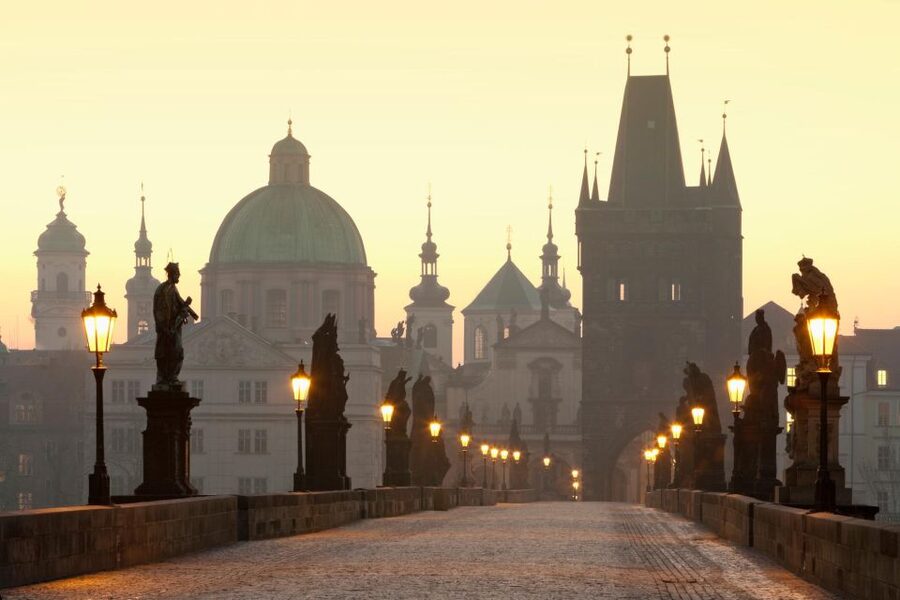
- Prague Castle courtyards + St. Vitus Cathedral: 4 courtyards and a cathedral tied to a thousand-year construction story.
- Charles Bridge with saint sculptures: a focused stop for the legend of St. John Nepomuceno’s wish.
- Jewish Quarter specifics: you’ll pass the Spanish Synagogue area and the cemetery.
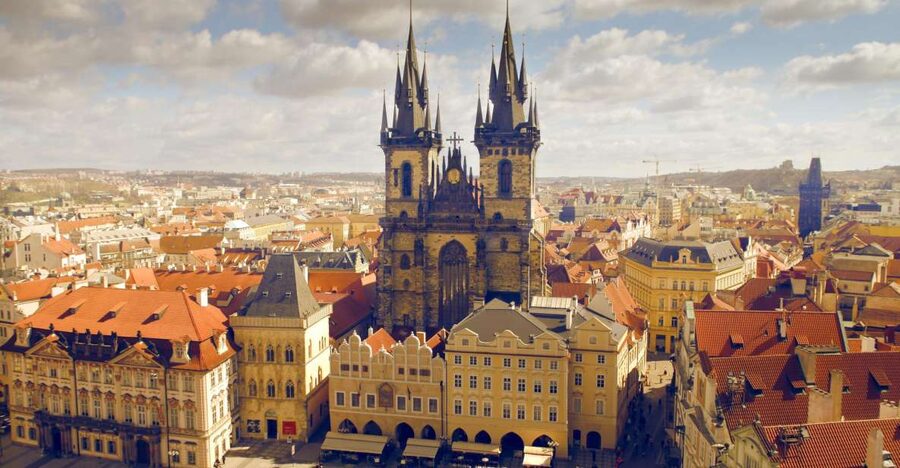
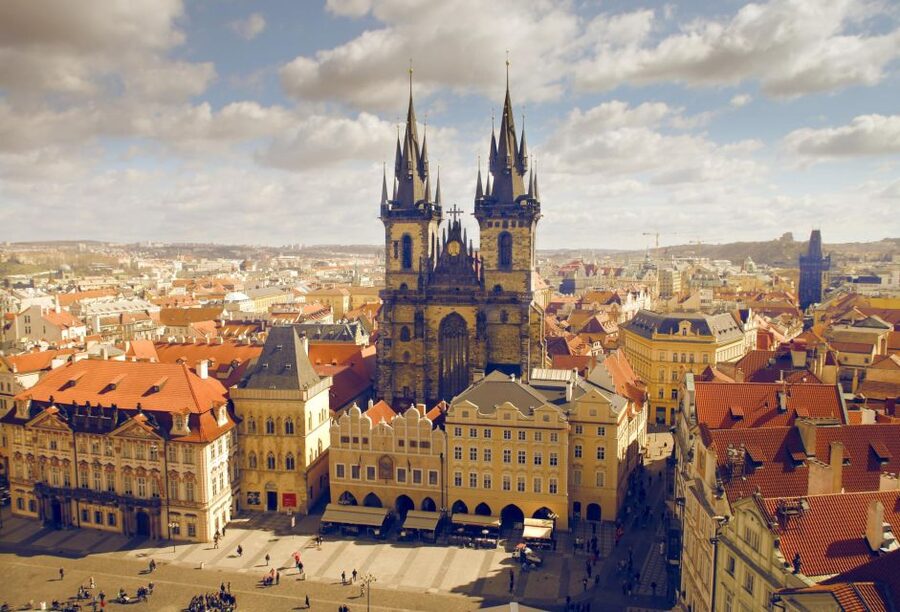
- Old Town Square “what am I looking at?” moments: Jan Hus monument, Old Town Hall area, Our Lady of Týn, and the astronomical clock mysteries.
- Carolina University + landmark variety: you’ll also see founding headquarters of Charles University and other major central buildings before the tour ends.
The big picture of Prague, a few more ways.
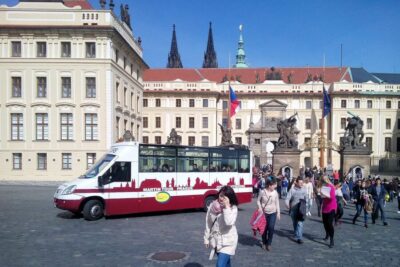
- Prague: Historic City Center Bus Tour with Top Sights★ 4.4 · 2,360 reviews
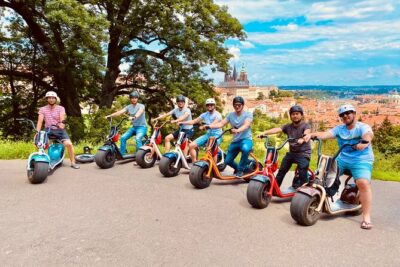
- Grand city tour on Scrooser in Prague★ 5.0 · 1,910 reviews
- Prague: Official City Pass with Public Transport★ 4.5 · 1,779 reviews
- Prague: City Highlights By Bus, Boat, and on Foot★ 4.5 · 1,596 reviews
From Malostranská to the Castle: the tour’s smart starting point
The tour meets at Malostranská Metro station, a convenient base if you’re staying anywhere around Prague’s center. From there, you take a tram up toward the Castle neighborhood. I like this setup because it saves your legs early, before you start stacking the viewpoints and sightseeing.
Once you’re in the Castle area, you’ll pass the castle control point and step into a sequence that feels more like moving through a “world” than checking off one building. The itinerary’s structure matters: rather than rushing straight into the cathedral, you move through courtyards first. That small pacing difference helps you actually notice the space—how the buildings relate to each other and how the Castle complex sits above the city.
The highlight here is the four courtyards. If you’ve ever felt overwhelmed in Prague Castle because everything is too big and too close together, this part is useful. Courtyards slow you down. They also give natural breaks for photos, and they set you up for the cathedral so it lands with more meaning.
Prague Castle’s courtyards and St. Vitus Cathedral (the “why this matters” stop)
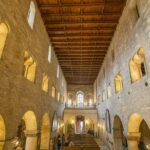
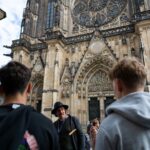
After the courtyards, you reach St. Vitus Cathedral, one of the most important monuments in Prague. The tour includes context that’s easy to remember: its construction took 1000 years. That detail might sound like a trivia nugget, but it actually changes how you look at the building. A project this long tends to reflect changing tastes and generations—so the cathedral feels like more than one moment in time.
You’ll also learn about the tombs inside—specifically those of the patrons and kings of Bohemia. If you’re a “history-by-people” traveler, this is a good fit. Instead of treating rulers as names in a textbook, you connect them to a physical place you can point to. It’s the difference between reading a page and standing in the room.
One practical note: this is still the Castle area, which means you should expect some stairs and uneven walking surfaces. Your guide keeps you moving through the main beats, but comfortable shoes are genuinely worth it on a day that also includes Charles Bridge and Old Town Square.
Jan Neruda street: the small detail that makes the day feel real
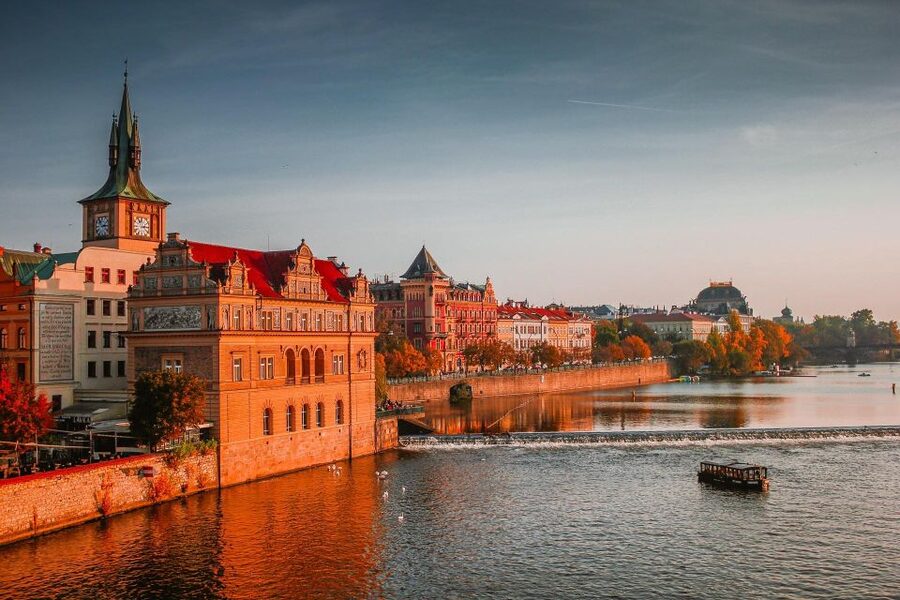
From the Castle you go down Jan Neruda, described as one of the streets that still carries the mystical house symbolism from before Empress Maria Theresa of Austria. That’s the kind of line that’s easy to skip over—unless your guide helps you notice what’s happening.
This stop is valuable because it breaks the “big monument” pattern. Castle views and cathedral interiors are impressive, but the tour also gives you that slower, street-level layer of Prague. You’re not just seeing what famous buildings look like—you’re seeing how the city’s older identity shows up on ordinary blocks.
If you’re traveling with friends who only want photos, this is where you can gently steer them toward photos that have a story behind them. It’s also a nice reset before you switch back to the more dramatic monuments by the river.
Plague column, St. Nicholas domes, and the approach to Charles Bridge
Once you’re back down in the smaller city area, the itinerary brings you past the Plague Column. It’s a reminder that Prague’s story includes fear, survival, and public faith, not only royal pageantry.
Then you visit St. Nicholas Church, known here for its prominent domes—domes you’ll be able to see from Charles Bridge. That’s a clever detail. It trains your eyes so that when you finally reach Charles Bridge, you’re not just walking across a famous bridge—you’re connecting what you saw earlier to what’s in front of you later.
This is also where the tour starts to feel like a guided route of cause-and-effect: you learn something on one side of the river so that the other side becomes easier to read.



Charles Bridge: sculptures, saints, and the St. John Nepomuceno wish
Crossing Charles Bridge is one of those Prague experiences that most people know about—even if they don’t know what to look for. This tour helps with that. Throughout the bridge, you’ll observe the baroque sculptures of the saints of Bohemia. Instead of treating the bridge as a single photo moment, you get a guided tour of what makes it special.
Between the scenery and legends, you’ll stop at the sculpture of St. John Nepomuceno. The tour frames it as a mandatory stop for anyone who wants to return to Prague, centered on the classic wish tradition around this statue.
Is it serious religion, tourist folklore, or both? It’s probably both in practice. But from a travel perspective, it’s a great “anchor moment” in the day. You’ll remember it later because you did something specific—not just watched a crowd.
A small drawback to keep in mind: this is still a bridge, so expect slower movement and more people. The guide’s job is what makes it feel smoother—especially if you’re asking questions while you walk.
Old Town energy: food break that keeps the momentum
Once you reach the old town side, the plan includes time to recharge. You’ll eat in a typical Czech restaurant, and yes, the tour strongly suggests pairing the meal with a good jar of beer so you’re ready to continue.
This matters because the rest of the day keeps hitting major sights, and Prague’s pacing can be deceptively tiring. A real sit-down break—rather than a quick snack—helps you stay present for the Jewish Quarter and Old Town Square without feeling like you’re rushing through.
If you’re traveling with people who get cranky when hungry, this food stop is a practical peace treaty. Even if you skip the beer, having a planned pause makes the whole route feel less like a sprint.
Jewish Quarter: Spanish Synagogue area and the cemetery stop
Next comes the Jewish neighborhood, with emphasis on two specific things: precious synagogues (including the Spanish Synagogue area) and the cemetery. The tour’s focus is useful here because the Jewish Quarter can feel emotionally heavy and historically complex.
Having a guide keep you moving and pointing out what’s where helps you avoid the common problem: walking through meaningful spaces without fully knowing what you’re looking at. This part of the tour also makes the overall day feel balanced. You’re not only seeing political power (kings and rulers); you’re also seeing community life and memory.
One consideration: cemetery visits and related historical areas can feel quieter and more reflective. If your idea of fun is only loud, fast sightseeing, this segment may feel slower than the Castle or bridge. But if you want Prague to feel human instead of only monumental, it’s one of the strongest parts of the day.
Kafka connection and Paris Street: Prague’s layers in one walk
After the Jewish Quarter, the tour includes a stop that ties Prague’s cultural identity to modern literature: you’ll pass by the house associated with Franz Kafka. It’s not just a name drop. It gives you a way to connect the city’s older symbols to a writer who made Prague feel instantly recognizable on the world stage.
Then you walk to Old Town Square via Paris Street. This is where the route becomes more “classic Prague postcard,” but with guidance. You’re still being steered toward what’s important, rather than walking into Old Town Square and hoping you’ll figure it out on your own.
Old Town Square: Jan Hus, Our Lady of Týn, City Hall, and the astronomical clock mysteries
At Old Town Square, the tour lays out the visual map you’ll keep using during your future Prague walks.
You’ll see:
- The monument to Jan Hus
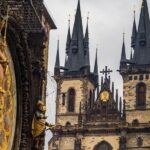
- Our Lady of Týn
- The old City Hall area
- And the astronomical clock, described here as a place where mysteries hide
The astronomical clock section is a highlight because it’s easy to stare at and not understand. With a guide, you learn what’s going on behind the spectacle, and you get a framework for what to watch. That means the clock becomes more than a photo.
This is also where the tour connects political history to daily city life. Jan Hus isn’t just a statue; he’s a symbol of a major turning point in Czech religious history. The guide’s job is to make you see the square as a stage that has been used for centuries.
Old Town Square can be busy, too. The benefit of a guided tour is that you’re not stuck trying to read details while dodging crowds. You get timed moments to look, listen, and move on without panic.
Charles University, Cubist House of the Black Madone, and the final landmarks
After Old Town Square, the itinerary keeps rolling through major center-city landmarks.
You’ll observe the founding headquarters of Carolina University, described as the oldest university in Central Europe. That’s a big claim, but the takeaway for you is practical: this is a place where Prague’s influence has long extended beyond its borders. A university founding point helps explain why the city has always drawn thinkers, writers, and artists.
Next, you’ll see the Cubist House of the Black Madone and also the Torre de la Pólvora. Finally, the tour ends at the Municipal House.
One more time, the point isn’t just the names. It’s the variety. You’re moving from medieval and religious monuments to literary and academic connections, then into different city landmarks. That mix keeps the day from feeling repetitive and helps you build a more rounded sense of Prague’s identity.
Price and value of a 6.5-hour guided route (what you’re really paying for)
The tour price is $38 per person for about 390 minutes. On paper, that might sound like a lot—or like not much, depending on your travel style. The value comes from three things you don’t get as easily on your own: a curated route, guided explanations in Spanish, and built-in pacing across top sights.
You’re not only seeing Prague Castle and Charles Bridge. You’re also getting context for specific elements like St. Vitus Cathedral’s 1000-year construction story, tombs of Bohemian rulers, plague-era symbolism, and the legend around St. John Nepomuceno. That’s exactly the kind of information that’s hard to pick up just wandering.
The main “watch out” for value is that public transport tickets aren’t included. The tour uses the tram between areas, and you’re on your own for those fares. So if you’re counting pennies, add that cost in your mental math.
Also, food and boat ride are labeled as optional. That means your base tour is still the guided walk-and-see day, but the extras depend on what you choose that day.
Who this tour suits best (and who might prefer something else)
This tour suits you if:
- You want a full Prague overview in one day
- You like guided stories tied to specific monuments
- You prefer your photos with context, not random sightseeing stops
- You’re traveling as a group that can handle about 6.5 hours together
It might be less ideal if:
- You only want one neighborhood and don’t want a long circuit
- You’re planning to do lots of independent museum time afterward
- You’re sensitive to crowds on Charles Bridge and in Old Town Square
The good news: it ends with major landmarks, so even if you split off afterward, you’ll be in a useful central zone.
The guide factor: Spanish-speaking, and built for questions
A big part of why this tour gets strong scores is the guide experience. Spanish-speaking guides are singled out for friendliness, answering questions clearly, and offering helpful advice. Names that have appeared include Pacifico, Paola, Carlos, and Yoshi—and one helpful detail is how guides have supported people with transport tips during the day.
That matters because Prague’s center can feel complex when you’re moving quickly. When a guide can explain what’s around the corner and how to get around later, you’ll spend less time guessing and more time enjoying.
Should you book Prague: City Tour in Full?
If you’re trying to decide between jumping into Prague on your own versus having a guided structure, this tour is a strong case for booking. The route hits the highest-demand sights—Prague Castle, Charles Bridge, the Jewish Quarter, and Old Town Square—while also adding the kind of specifics that turn “famous” into “understood.” At $38 for a 6.5-hour Spanish-guided day, it’s good value as long as you’re comfortable buying your own transport ticket.
I’d say book it if you want one day that gives you a map for the rest of your trip. Pass or choose a shorter option if you already know Prague well or if long walking circuits don’t match your pace.
FAQ
Where does the tour start?
The tour meets at Malostranská Metro station.
How long is the tour?
The duration is 390 minutes (about 6.5 hours).
Is food included?
Food is listed as optional.
Is a boat ride included?
A boat ride is also listed as optional.
Do I need to buy public transport tickets?
Yes. Public transport tickets are not included.
Are pets allowed?
No. Pets are not allowed on the tour.
More Prague City Tours

More Tours in Prague
More Tour Reviews in Prague


More Prague tours we have written up lately


City Tours, compared.
 ★ 4.4Historic City Center Bus Tour with Top SightsFrom $202,360 reviews
 ★ 5.0Grand city tour on Scrooser in PragueFrom $831,910 reviews
 ★ 4.5Official City Pass with Public TransportFrom $1221,779 reviews
 ★ 4.5City Highlights By Bus, Boat, and on FootFrom $271,596 reviews
 ★ 3.9City Sightseeing HOHO Bus Tour & Optional Boat TourFrom $351,424 reviews
 ★ 4.5Prague Half Day City Tour Including Vltava River CruiseFrom $501,086 reviews
 ★ 5.0Prague E-Bike City Tour with A Local GuideFrom $55924 reviews
 ★ 4.8City Highlights Private Walking TourFrom $210635 reviews