
REVIEW · PRAGUE CASTLE TOURS
Prague Castle, St. Vitus Cathedral, Royal Palace, St. George’s Basilica
Crown jewels, plus a real staircase. This Prague Castle tour is interesting because historian Robert Procházka ties the buildings to the people who ruled, worshipped, and fought. I love the architecture shift you’ll walk through—Gothic to Renaissance to Baroque—without feeling rushed, and I love that the route ends in Golden Lane where Prague feels up close. The main drawback is simple: it’s in German, and the castle grounds can be cold, so you’ll want to dress for wind and stone chill.
In just 3 hours, you’ll cover the big hitters most visitors cluster around anyway: St. Vitus Cathedral, the Old Royal Palace, St. George’s Basilica, and the Golden Lane. You’ll also get those classic Prague photo views from the castle complex, which is why this stop remains a must-do even if you’ve seen pictures before.
Meeting is easy. You’ll start right at the tram stop Pražský hrad (tram lines 22 or 23, toward Bílá hora). From there, your guide meets you and helps you handle tickets smoothly so your time inside stays focused on the story.
In This Review
- Key things I’d circle before you go
- Where the tour really starts: Prague Castle grounds and your first big view
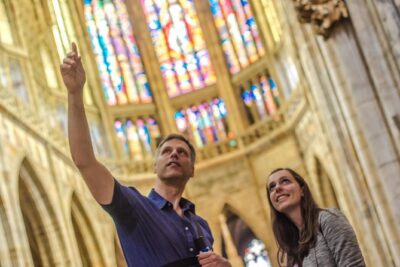
- St. Vitus Cathedral: kings, relics, and the Gothic heart of the city
- Old Royal Palace: crown jewels, a throne room, and why Prague became a spark
- St. George’s Basilica: a 10th-century church with a personal tragedy at its center
- Golden Lane finale: Rudolf II’s alchemy, Kafka’s rooms, and the best ending for photos
- Price and tickets: does $43 feel worth it?
- How to plan your timing (and what will feel like “a lot”)
- Should you book this Prague Castle tour?
- FAQ
- What’s the duration of the Prague Castle tour?
- Where exactly do we meet for this tour?
- Is the tour guided, and what language is it in?
- Are the attraction tickets included in the price?
- How much are the tickets for adults and seniors?
- Will the guide help with buying tickets?
- Is this tour suitable for children?
Key things I’d circle before you go
- Historian-led route with Robert Procházka, so the details connect instead of piling up randomly
- The Wenceslas Chapel to Crown Chamber path, with the cathedral’s political and religious role made clear
- Royal Palace highlights like the throne room and the replica crown jewels, plus the Third Defenestration connection
- St. George’s Basilica with the tomb of St. Ludmila as a concrete human anchor in the timeline
- Golden Lane finale, where Rudolf II’s alchemists and Franz Kafka both fit into one walk-through
The castle complex rewards more than one visit. Here are other ways in.
- Prague: Castle Tour with Local Guide and Entry Ticket★ 4.6 · 10,422 reviews
- Prague Castle 2.5-Hour Tour Including Admission Ticket★ 4.7 · 8,927 reviews
- Prague: 3-Hour Walking Tour of Old Town & Prague Castle★ 4.7 · 5,696 reviews
- Prague: 3-Hour Old Town and Prague Castle Tour in German★ 4.8 · 5,671 reviews
Where the tour really starts: Prague Castle grounds and your first big view
You’ll meet at Pražský hrad tram stop (lines 22/23, direction Bílá hora). That matters because Prague Castle is spread out, and starting at the main approach helps you avoid that “where do we actually go?” feeling.
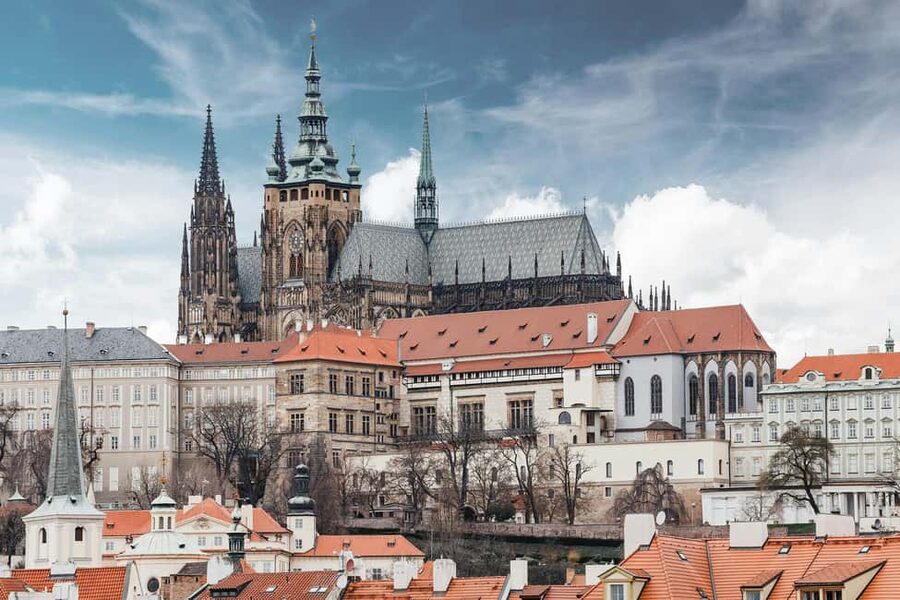
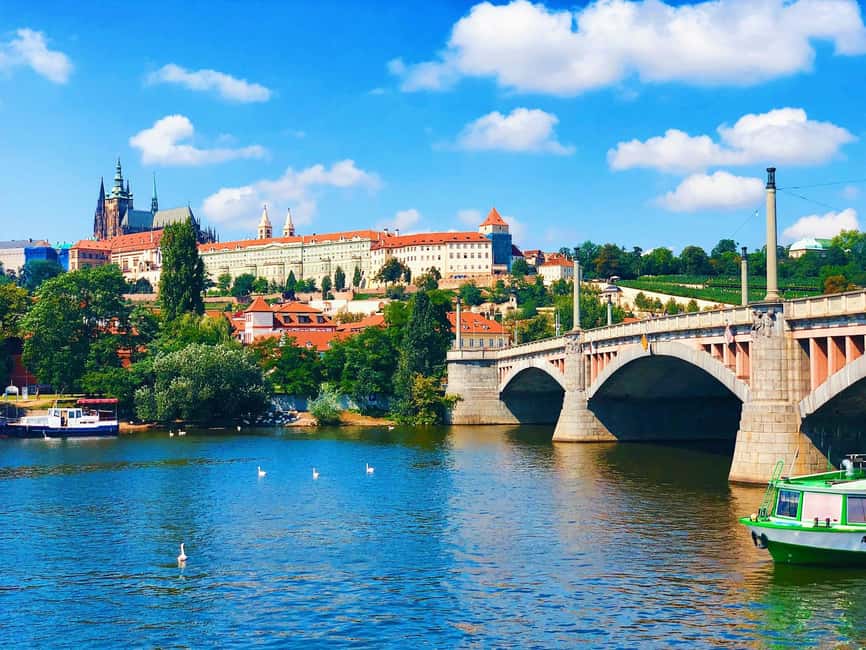
The castle complex itself is massive. It’s even listed in the Guinness Book of Records as the largest enclosed castle grounds in the world, and you feel that scale immediately when you step into the grounds. I like opening here because your brain quickly understands the setting: you’re not touring one building, you’re inside a fortified world.
And yes, you’ll get the views. Not just one postcard angle, but the sense that you’re looking down at the city from the power center that shaped Prague’s identity. If you’re the type who cares about context, the viewpoints make the history feel less abstract.
St. Vitus Cathedral: kings, relics, and the Gothic heart of the city
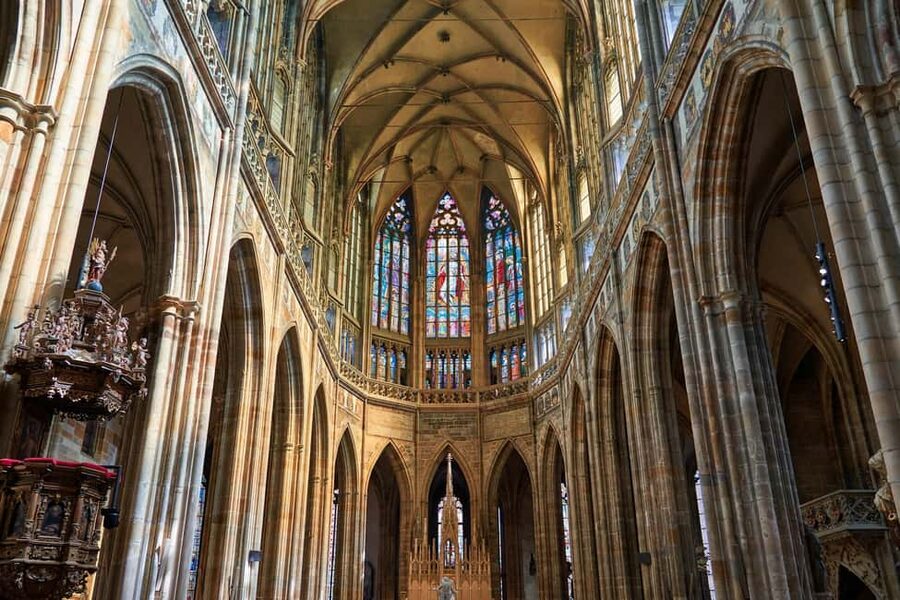
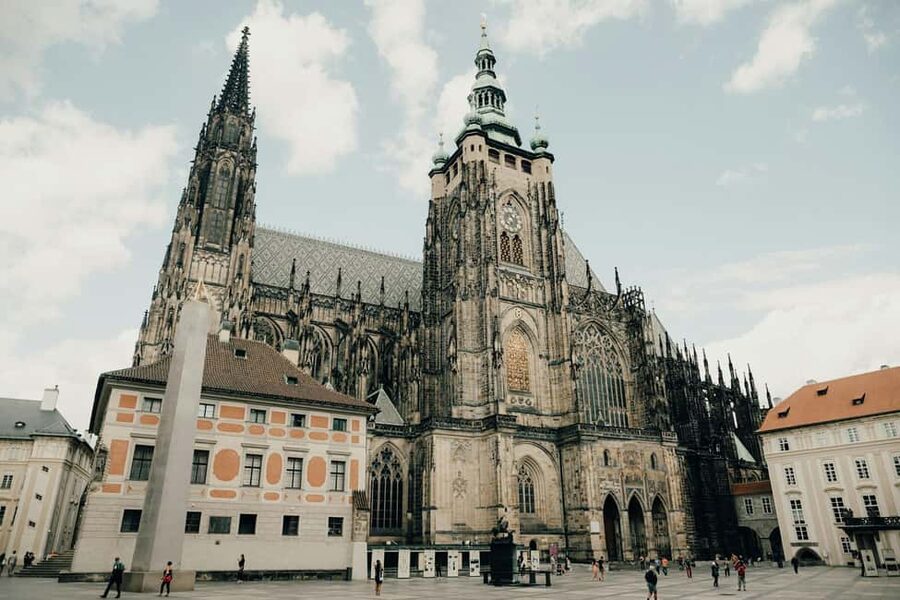
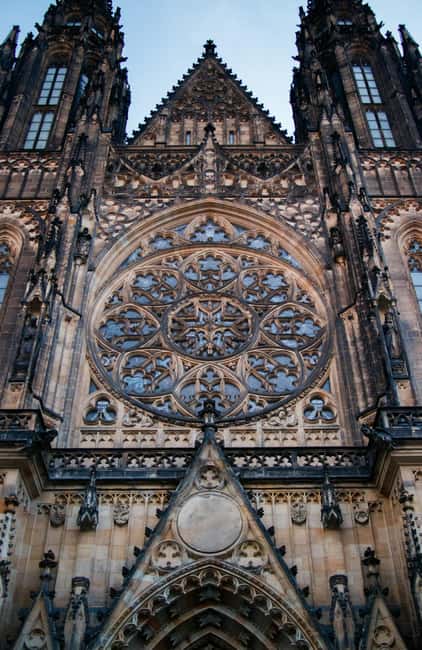
St. Vitus Cathedral is where the tour’s tone sharpens. This is the burial and coronation site for Bohemian kings, so even when you’re looking at stonework, you’re also looking at ceremony and authority.
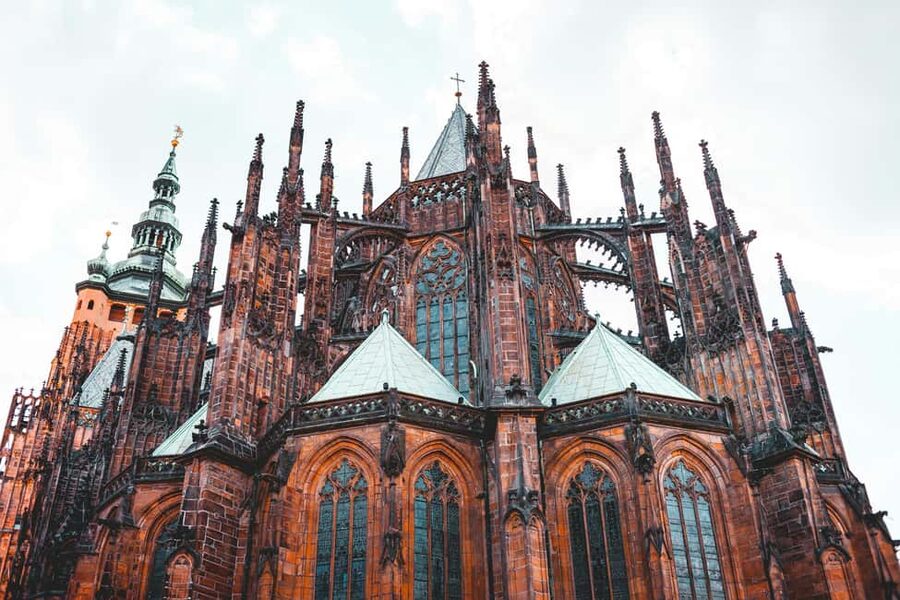
You’ll learn how old layers sit under newer ones. The oldest predecessor building was a Romanesque rotunda founded around 925, and that timeline helps you read the cathedral as a long project, not a single-episode landmark. Then you move into the Gothic masterpiece period—built out as the cathedral’s identity formed in the 14th century.
The cathedral houses the country’s key patron saints, including St. Wenceslas and St. Adalbert. That detail matters because St. Wenceslas isn’t just a name on a plaque; it’s the cathedral’s center of gravity for many stories.
From there, the tour highlights the Wenceslas Chapel, decorated with semi-precious stones, with the bones of St. Wenceslas resting in a Gothic shrine. I find that pairing—beauty plus purpose—one of the cathedral’s best “okay, I get it” moments.
Then comes one of the most practical-feeling parts: a spiral staircase leads to the Crown Chamber, where the coronation insignia are kept. Even if you don’t memorize every object, the guided link between chapel and crown space makes the cathedral’s message click: this is where sacred legitimacy becomes public power.
Tip for you: the cathedral experience is more satisfying if you’re willing to slow down and listen, especially at the chapels and crown area where symbolism is doing most of the work.
Old Royal Palace: crown jewels, a throne room, and why Prague became a spark
After the cathedral, the tour shifts from sacred kingship to political drama. The Old Royal Palace is where authority shows up in style and procedure.
You’ll see a replica of the Bohemian crown jewels, and it’s a smart stop for first-timers because you can connect what you saw in the cathedral’s coronation story to what rulers actually staged and displayed. It also keeps the tour moving without turning it into a “museum lecture.”
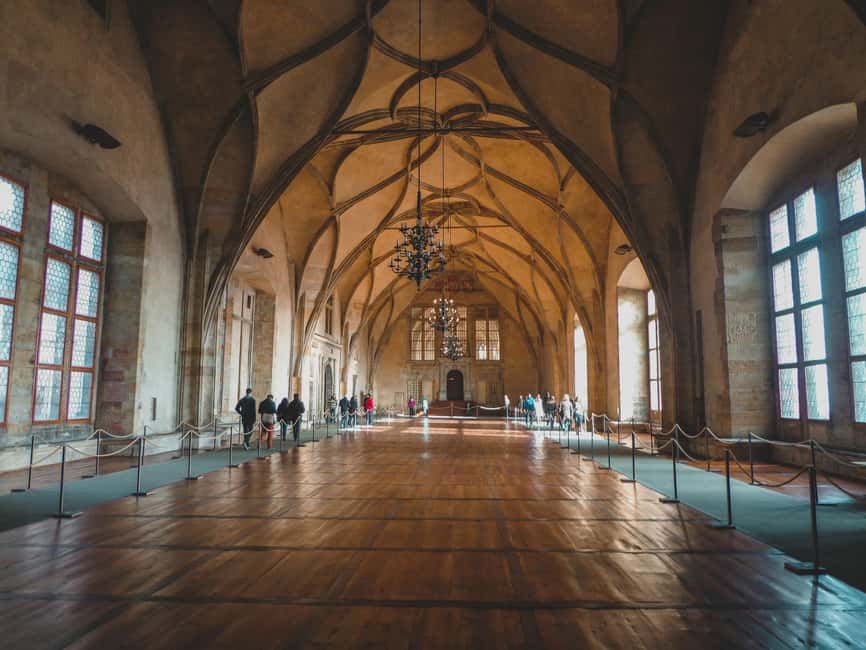
Next up is the throne room. The highlight here is the largest late Gothic throne room in Central Europe, and that size-by-design matters. Thrones aren’t placed for comfort; they’re placed to communicate hierarchy, ceremony, and reach.
The most dramatic historical anchor is the Third Defenestration of Prague, tied to the State Chancellery site. You’ll learn how that event helped initiate the Thirty Years’ War, which gives your walking route a real cause-and-effect thread. It’s one of those moments where you look at a building and realize it’s linked to a turning point, not just a date in a textbook.
Practical note: this part can feel “busy” because you’re absorbing architecture plus event history. If you’re the kind of visitor who likes a clean timeline, this tour’s historian approach is a good match.
St. George’s Basilica: a 10th-century church with a personal tragedy at its center
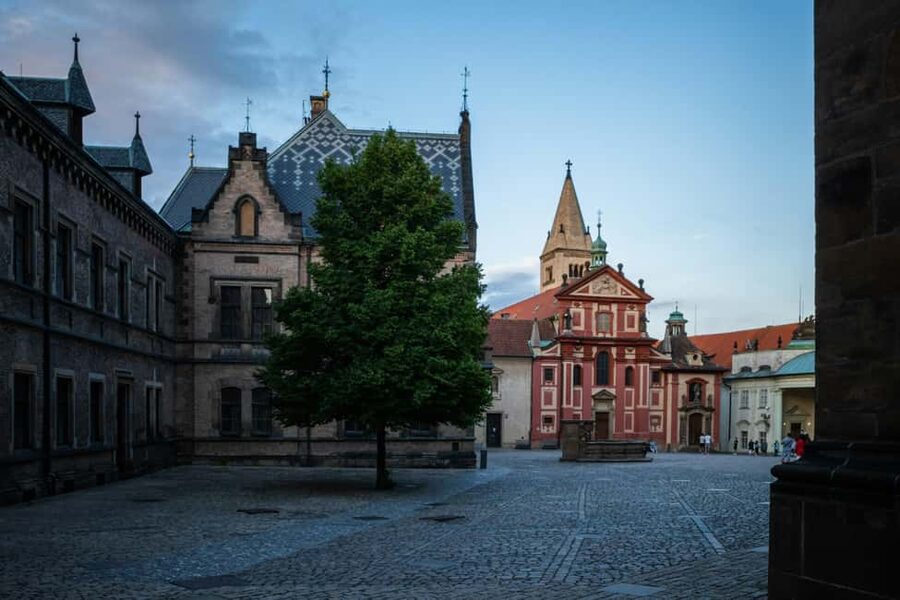
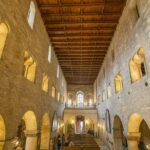
St. George’s Basilica offers a different tempo. The building is 10th-century, which immediately changes how the space feels compared with the Gothic cathedral and palace rooms.
Here, you’ll focus on the tomb of St. Ludmila, the grandmother of St. Wenceslas. Her story is tragic and specific: she was strangled by Viking warriors on behalf of her daughter-in-law. I like including this stop because it puts names and motives behind the “saints and kings” label.
Even if you’re not religious, you can appreciate the human layer. The basilica acts like a pause button: after the political power of the palace, you get a story that reminds you history often moves through family conflict and survival.
If you want your Prague Castle tour to feel more than sightseeing, this basilica stop helps balance the bigger monuments with something grounded and intimate.
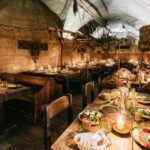


Golden Lane finale: Rudolf II’s alchemy, Kafka’s rooms, and the best ending for photos
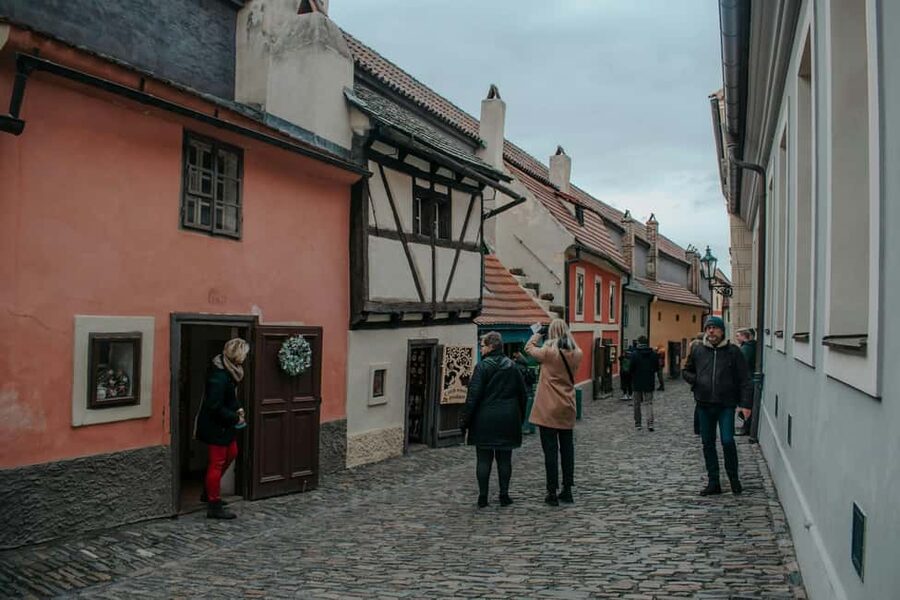
The tour ends in Golden Lane, and it’s a smart choice. The narrow street-and-house setup makes it feel like you’ve stepped into a miniature world inside the larger castle complex.
This is where Emperor Rudolf II comes in. You’ll hear about his court alchemists searching for an elixir of life and trying to make gold from lead. That story could sound odd on a brochure, but in the space itself—small houses, close walls—it becomes more believable. It’s a reminder that curiosity and obsession have always lived inside power.
Then there’s the literary connection: Franz Kafka lived in one of the little houses. I love this kind of endpoint because it turns “history” into “human scale.” You’re not only learning what happened; you’re walking through a setting where creative minds also occupied the same era.
Golden Lane is also where you’ll likely want to spend a few extra minutes after the guided portion, because the street is built for looking upward, sideways, and back the way you came.
Dress tip for you: a few people find the castle grounds cold, especially when the wind moves across open spaces. Even in good weather, bring a warm layer. Stone and shade can cut right through.
Price and tickets: does $43 feel worth it?
The tour price is listed as $43 per person for a 3-hour guided experience in German. What’s included is the historian-led tour through the castle complex and inside the historic buildings.
Tickets are not included. You’ll need separate admission for St. Vitus Cathedral, the Old Royal Palace, St. George’s Basilica, and Golden Lane. The data shows €18 for adults and €14 for seniors (from 65).
So is it good value? For me, the key is this: you’re paying for structured interpretation inside major sites, not just walking between them. With the ticket help, you avoid losing time figuring things out at multiple counters.
You’ll be accompanied to the castle cashier where you can pay with a payment card. You can also hand the amount in EUR directly to the guide, and the guide will get your ticket. The tickets are bought at a counter exclusively for guides, so you generally shouldn’t burn time waiting in normal lines.
If you’re the type who enjoys learning the “why” behind each place—coronations, political events, patron saints—this format is a solid use of limited time.
How to plan your timing (and what will feel like “a lot”)
This is a 3-hour walk through a concentrated set of stops. That means you should expect steady movement and a steady flow of information. The best way to enjoy it is to think of it as a guided story with checkpoints, not a site-by-site self-paced museum day.
There’s also a language reality. It’s German, so if you speak it well enough to follow explanations, you’ll probably feel like you’re getting the full experience. If German is shaky, you might still enjoy the architecture, but the storytelling will land less cleanly.
Also, castle weather is real weather. Even when the city is pleasant, the castle can be colder, especially in winter months. Plan for a windproof outer layer and warm socks.
For who this fits best:
- Adults and history-minded visitors who want context fast
- People who like structured routes over open-ended wandering
- German speakers (or strong German learners) who want the narration in full detail
Should you book this Prague Castle tour?
I’d book it if you want the castle complex handled like a guided narrative: cathedral roots, palace power, basilica human stories, and Golden Lane as the memorable close. It’s also a good choice if you appreciate a historian’s tone—Robert Procházka’s approach is built to make connections, not just list facts.
I’d skip or reconsider if you strongly prefer tours in a language you speak fluently other than German, or if you find long, detail-rich explanations tiring. In that case, you might be happier with a self-guided plan where you control pace.
FAQ
What’s the duration of the Prague Castle tour?
The tour lasts 3 hours.
Where exactly do we meet for this tour?
You meet right at the tram stop Pražský hrad (tram lines 22 or 23), towards Bílá hora.
Is the tour guided, and what language is it in?
Yes. The tour has a live guide, and it runs in German.
Are the attraction tickets included in the price?
No. Tickets for St. Vitus Cathedral, the Old Royal Palace, St. George’s Basilica, and Golden Lane are not included.
How much are the tickets for adults and seniors?
The data lists €18 for adults and €14 for seniors (from 65).
Will the guide help with buying tickets?
Yes. The guide accompanies you to the castle cashier to purchase tickets. You can pay by payment card, or you can hand over the amount in EUR to the guide, who will get the tickets for you.
Is this tour suitable for children?
It is not suitable for children under 10.
If you want, tell me your travel dates and whether you speak German well—I can help you decide if this is the right pace and language for how you like to tour Prague.
More Tour Reviews in Prague


More Ways Into Prague Castle

More Prague tours we have written up lately



Prague Castle Tours, compared.
 ★ 4.6Castle Tour with Local Guide and Entry TicketFrom $6110,422 reviews
 ★ 4.7Prague Castle 2.5-Hour Tour Including Admission TicketFrom $578,927 reviews
 ★ 4.73-Hour Walking Tour of Old Town & Prague CastleFrom $305,696 reviews
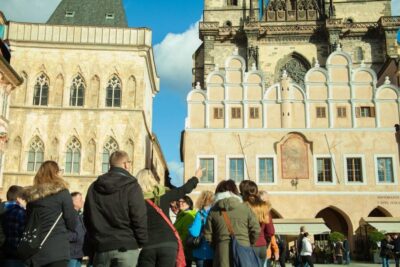 ★ 4.83-Hour Old Town and Prague Castle Tour in GermanFrom $365,671 reviews
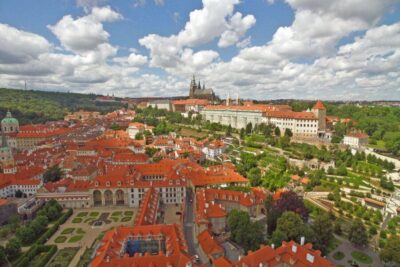 ★ 4.4Prague Castle and Lobkowicz Palace Entry TicketsFrom $385,066 reviews
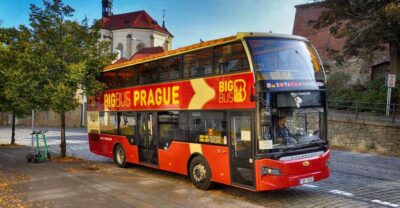 ★ 4.0Big Bus Hop-on Hop-off, Castle Tour and River CruiseFrom $363,733 reviews
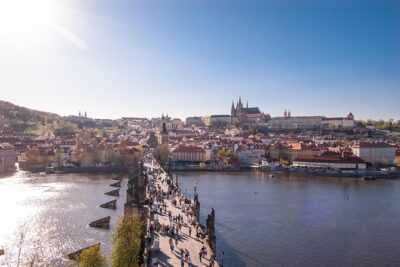 ★ 5.0Prague 3-hour Afternoon Walking Tour including Prague CastleFrom $531,899 reviews
 ★ 4.5Prague Castle Tour Including Admission Ticket – 2.5 HourFrom $591,171 reviews
Browse the lists this tour appears in