
You feel Prague Castle before you even reach it. One part grand architecture, one part dark stories, and one part big city panoramas make this walking tour a smart way to start your day near Pražský Hrad. I especially like the way the tour connects major figures like Rudolf II and Kafka to real spots you can point at, and I also love the payoff views over the Old Town. The main drawback: it is a lot of walking on uneven ground, and it is not recommended for wheelchair users.
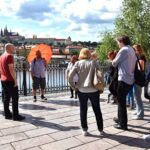
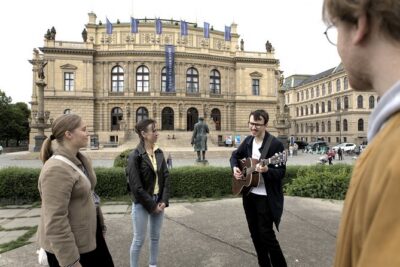
Meeting up is easy. You start in front of Rudolfinum on Jan Palach Square, and guides carry red t-shirts and umbrellas. Just keep one practical note in mind: you need a transportation ticket (30 CZK) in advance, and the tour does not include entrance fees for paid exhibits.
In This Review
- Key things I’d watch for on this Prague Castle walk
- Getting Oriented at Prague Castle Without Paying for Every Step
- Prague Castle Courtyards: Architecture, Legends, and Jože Plečnik’s Influence
- Kafka’s Nightmares and the Domeček Gestapo HQ: A Darker Prague Lesson
- Malá Strana and Hradčany: Palaces, Monastery Stops, and Deer Moat Views
- Finishing with Charles Bridge: The View Part Feels Like a Reward
- Price and What You Actually Get for $30
- How Long Is It, and What Should You Wear?
- Who Should Book This Prague Castle Walk?
- Should You Book This Tour?
- FAQ
- Where is the meeting point?
- Do I need a transportation ticket?
- Does the tour include paid entrances or government offices?
- How long is the tour?
- Is the tour suitable for wheelchair users?
- Are children allowed, and do they pay?
Key things I’d watch for on this Prague Castle walk
- Rudolf II and Kafka, tied to actual locations so the stories stick
- Domeček Gestapo former HQ adds a real-world, unsettling layer to the day
- Mostly free-to-access castle areas mean more sightseeing per crown
- Malá Strana and Hradčany strolls give you the best angles without rushing
- Charles Bridge is a strong closing act with big river-and-city views
The castle complex rewards more than one visit. Here are other ways in.
- Prague: Castle Tour with Local Guide and Entry Ticket★ 4.6 · 10,422 reviews
- Prague Castle 2.5-Hour Tour Including Admission Ticket★ 4.7 · 8,927 reviews
- Prague: 3-Hour Walking Tour of Old Town & Prague Castle★ 4.7 · 5,696 reviews
- Prague: 3-Hour Old Town and Prague Castle Tour in German★ 4.8 · 5,671 reviews
Getting Oriented at Prague Castle Without Paying for Every Step
Prague Castle is huge, and first-timers can waste time wandering. This tour works because it moves with purpose: you cover the skyline-dominating castle complex, then sweep outward into nearby neighborhoods for context. Even when you do not enter paid spaces, you still get a strong sense of how the city is organized around the castle hill.
The tour also keeps things practical. You do not need to hunt down every viewpoint on your own, and you are guided through courtyards and walkways where most visitors do not slow down. At a listed price of $30 per person, you are paying mainly for the human guide and the story craft, not for a museum ticket.
Two logistics points matter for a smooth experience:
- You must purchase the 30 CZK transportation ticket ahead of time.
- There is no pick-up or drop-off at your hotel, so plan on getting yourself to the meeting spot.
Also, note the tour time can be confusing. The title suggests 2.5 hours, the description talks about a 2-hour walking tour, and the booking notes show a 30-minute duration window. I suggest you confirm your exact start time and expected route length with the operator at booking, then wear shoes for a longer walk rather than a quick hop.
Prague Castle Courtyards: Architecture, Legends, and Jože Plečnik’s Influence
You start with the part that makes Prague feel cinematic: the castle dominating the skyline, with layered architecture from different centuries. The tour frames the castle as an evolving project rather than one static monument. That matters because it helps you read what you are seeing instead of just taking photos and moving on.
A big theme is how the castle’s look came together over generations of architects, with Jože Plečnik highlighted as a key 20th-century influence. Even if you are not an architecture nerd, you can feel the difference in how spaces are shaped for movement and viewpoints. It is the kind of detail that turns Prague Castle from tall walls into a designed experience.
On the story side, you get legends of the court of Rudolf II. The practical value here is that the castle is not only about royalty—it is also about why certain spots became power centers, and how rulers shaped culture in ways you can still see. When your guide connects a figure to a location, you walk differently. You start looking for clues: what sits where, what overlooks what, and what feels ceremonial versus defensive.
Kafka’s Nightmares and the Domeček Gestapo HQ: A Darker Prague Lesson
Not every Prague Castle tour deals with the heavier layers. This one does, and it does so in a way that stays tied to place. You visit the former HQ of the Domeček Gestapo, which adds a stark historical weight to a setting that otherwise feels monumental and quiet.
Then the tour threads in Kafka’s nightmares. The point is not just name-dropping. It is about creating a bridge between literature and the real mental atmosphere of Prague—survival, dread, control, and the way ordinary streets can feel watched. When you hear those ideas while standing near the spots connected with power and fear, the stories stop being abstract.
The guide also covers the struggle lines of the Velvet Revolution. That context helps you understand why Prague Castle is more than a medieval icon. It sits in the flow of modern change, and the transition from total control to political freedom is part of its long narrative.
I like that this tour does not pretend everything here is purely beautiful. You get grandeur and unease in the same walk, which feels closer to how history really works.
Malá Strana and Hradčany: Palaces, Monastery Stops, and Deer Moat Views
After the castle core, the route shifts into the neighborhoods that give Prague Castle its backdrop. You move through Malá Strana, known for noble palaces and the kind of streets where you can see how the city climbed its way up the hill. This part is less about big wow moments and more about comfort with scale—how residences, churches, and viewpoints relate to the castle.
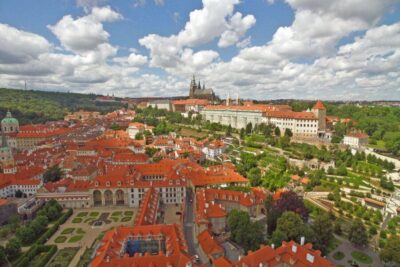
You also wander through Hradčany for some of the best angles over the city. This is where you start to notice the geography: roofs stepping down, the Vltava’s line in the distance, and the Old Town drawing you back in.
Along the way, the tour includes stops around major landmarks you would otherwise spend time researching:
- Strahov Monastery and Brewery areas (more context than a deep museum-style visit)
- Wallenstein Palace (a sense of aristocratic power in architecture form)
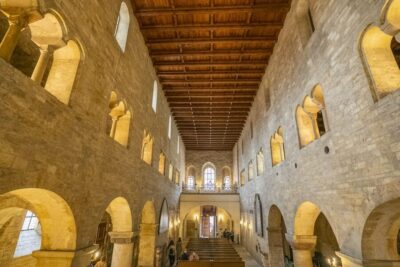
- St George’s Basilica (a strong religious and artistic focal point)
- Deer Moat (a classic castle-park viewpoint spot)
Some of these sites can be paid to enter depending on where you go, but the tour positioning matters: it emphasizes the areas you can access without turning your morning into an expense log. The tour also does not enter government offices, and it does not visit paid exhibits. That keeps the pace moving and helps you avoid long waits.
One more practical note: the Prague Castle area is massive with multiple structures and back courtyards. The tour visits most places without entrance fees, but you should still expect changes in terrain and lots of stairs or uneven steps.
Prefer to cover it on foot? More Prague walks across the old lanes.




Finishing with Charles Bridge: The View Part Feels Like a Reward
The tour’s ending hits where Prague is strongest for photo power: Charles Bridge. Crossing the Vltava on this iconic span is not just a scenic moment. It is a visual summary of your day—castle hill above, river channel below, and the city’s historic center unfolding outward.
Because you visit the bridge after spending time on the castle hill, the bridge feels like the release. You finally get the broader city picture, and you can connect what you saw earlier with what you see now. This is the kind of closing that helps you remember Prague in layers: skyline, neighborhoods, then the river spine.
If you care about views that help you orient, this finish is worth it.
Price and What You Actually Get for $30
At $30 per person, you are not buying entry tickets. You are buying a guided walking route with story context and a local guide to steer you through a maze of courtyards and viewpoints. That distinction is important for value.
Included:
- A walking tour
- A local guide
Not included:
- The 30 CZK transportation ticket
- Pick-up or drop-off at your accommodation
- Any paid exhibits (and no government offices)
So how do you judge the value?
- If you like learning while you walk, the guide time pays for itself fast.
- If you are the type who wants to sit in museums for hours, you might find this is more about orientation and storytelling than deep indoor time.
- If you are trying to keep costs controlled, the no-paid-exhibits approach is a real benefit.
English is available, and that makes a difference here. Prague Castle history has enough names and time periods that you want clear explanations without language friction.
How Long Is It, and What Should You Wear?
The safest approach is to plan for a meaningful walk, not a short stroll. The booking info shows duration details that seem shorter than the narrative description and the tour title. Since Prague Castle involves distance and stairs, I would treat this as a few hours of real moving around, then adjust once you see the group pace.
What to wear:
- Comfortable walking shoes with grip
- Layers, because castle hill weather can feel different from street level
- A small day bag for water and any extras
What to expect in terms of pace:
- Your route may vary depending on what the guide thinks is best for the group. That is not a red flag. In a huge place like this, it often means you get fewer detours and more viewpoint time.
And please remember: this tour is not recommended for wheelchair users due to the terrain.
Who Should Book This Prague Castle Walk?
This is a strong fit if:
- You want a first-time-friendly way to understand Prague Castle and nearby districts
- You like stories that mix literature, political change, and real history rather than only dates
- You want great viewpoints without turning your day into a ticket-hunting mission
It may feel less ideal if:
- You want a mostly indoor, museum-heavy day
- You need fully accessible routes (this one is not recommended for wheelchair users)
- You are very sensitive to uphill walking and uneven steps
On the guide style side, past departures have highlighted a mix of energy and humor. Names like Brandan, Jeremy, Terry, and Lyle show up as examples of how the tour can feel: engaged, question-friendly, and animated rather than stiff.
Should You Book This Tour?
I’d book this tour if you want to get more meaning out of Prague Castle than you could on your own in the same amount of time. The big win is how it turns a massive site into a guided story—Rudolf II, Kafka, the Domeček Gestapo, and Velvet Revolution themes all connected to where you stand.
I would also book it because the tour stays efficient with money. You are paying for your guide and route, not for a pile of paid entrances. If you already know you will walk a lot anyway, you will get good value from that.
One last check before you go: buy the 30 CZK transportation ticket in advance, and confirm your expected time range so you can plan meals and the rest of your day.
If all of that sounds good, this is one of the better ways to start understanding Prague from the hill where power and stories overlap.
FAQ
Where is the meeting point?
Meet in front of Rudolfinum on Jan Palach Square. Look for the guides wearing red t-shirts and carrying umbrellas.
Do I need a transportation ticket?
Yes. You need a transportation ticket for the tour, listed as 30 CZK, and you should buy it in advance.
Does the tour include paid entrances or government offices?
No. The tour does not enter government offices and it does not visit any paid exhibits. It focuses on areas you can access without paid entry.
How long is the tour?
The details you see can vary: the tour title suggests a longer walk, while the booking info lists a shorter duration window. Check availability for your exact starting time and plan for a longer walking day around the castle area.
Is the tour suitable for wheelchair users?
No. This tour is not recommended for wheelchair users.
Are children allowed, and do they pay?
Children up to 13 years old are welcome to join for free, but they still need a transportation ticket. The operator may ask for a valid ID for children.
More Tour Reviews in Prague




On Foot Through Prague, Continued

More Ways Into Prague Castle

More Prague tours we have written up lately



Prague Castle Tours, compared.
 ★ 4.6Castle Tour with Local Guide and Entry TicketFrom $6110,422 reviews
 ★ 4.7Prague Castle 2.5-Hour Tour Including Admission TicketFrom $578,927 reviews
 ★ 4.73-Hour Walking Tour of Old Town & Prague CastleFrom $305,696 reviews
 ★ 4.83-Hour Old Town and Prague Castle Tour in GermanFrom $365,671 reviews
 ★ 4.4Prague Castle and Lobkowicz Palace Entry TicketsFrom $385,066 reviews
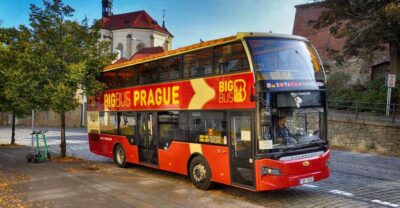 ★ 4.0Big Bus Hop-on Hop-off, Castle Tour and River CruiseFrom $363,733 reviews
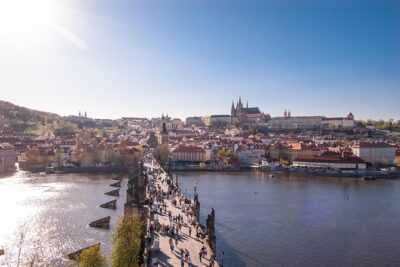 ★ 5.0Prague 3-hour Afternoon Walking Tour including Prague CastleFrom $531,899 reviews
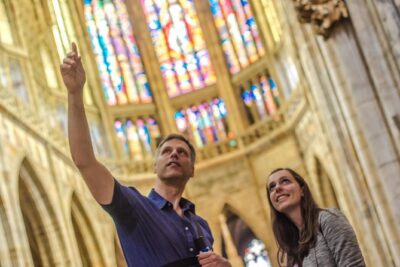 ★ 4.5Prague Castle Tour Including Admission Ticket – 2.5 HourFrom $591,171 reviews
Browse the lists this tour appears in