
REVIEW · TOURS
Prague Art Nouveau Tour
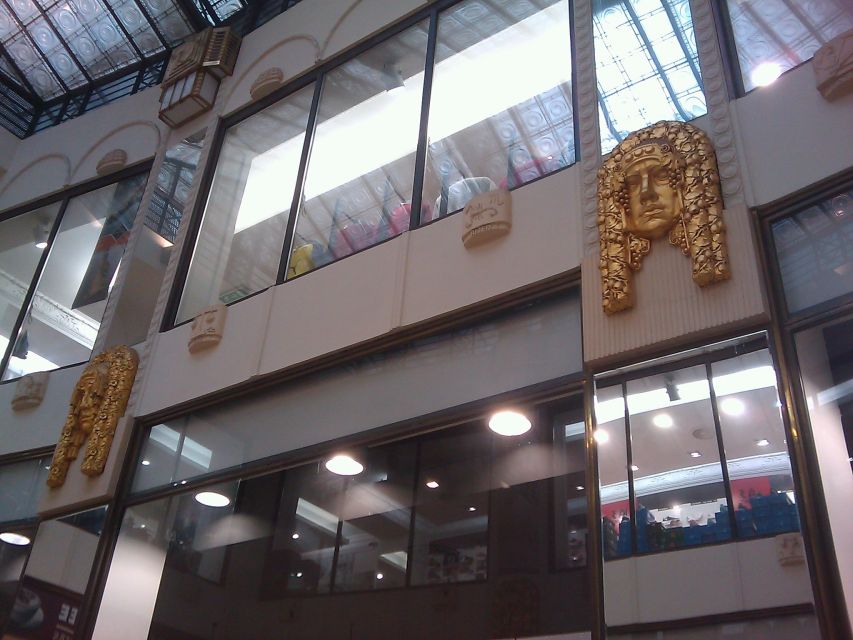
Prague’s Art Nouveau feels like a secret handshake. You’ll spot swirling metalwork and lettering-style details as you move from Republiky Square toward Wenceslas Square, learning how this look took hold in the city. The route also links Prague’s broader story to the architects behind it, with a French guide to translate the why behind the wow.
What I love most is the mix of top Art Nouveau structures plus plain explanations of Prague’s history, not just photos-for-your-camera stops. I also like that the focus includes specific names like Antonín Balšánek and Osvald Polívka, so the buildings start to make sense as a real design movement instead of random pretty facades.
One possible drawback: two hours goes fast. You’ll get the important hits, but if you want to linger on every door handle and gate flourish for 30 minutes at a time, this tour’s timing may feel tight—so comfortable shoes are a must.
In This Review
- Key highlights I’d plan around
- What Art Nouveau Looks Like in Prague (and why metros matter)
- Balšánek and Polívka: the architects to watch for
- Republiky Square to Wenceslas Square: moving through the city core
- Spotting signatures: lettering, ironwork, and gate-like entrances
- The history thread: Prague’s bigger story, not just decoration
- Private group pace with a French guide (and what that feels like)
- Price and value: $34 per group up to 25
- Practical tips so the 2 hours feel good
- Should you book the Prague Art Nouveau Tour?
- FAQ
- Where does the Prague Art Nouveau Tour take place?
- How long is the tour?
- What is the price?
- What language is the tour guide?
- Is pickup included?
- What route does the tour cover?
- Is the tour private?
- What should I bring?
- Can I cancel for a refund?
Key highlights I’d plan around
- A clear Art Nouveau focus tied to real Czech architects, including Balšánek and Polívka
- Republiky Square to Wenceslas Square via Na Příkopě, so you see a lot of city in one shot
- French live guide and a private group setup for easier questions
- Metro-friendly details: Art Nouveau gate-and-lettering elements show up around practical transit entries
- A short, efficient 2-hour format that’s easy to fit between museum stops
Still weighing up how to spend your days in Prague? These are the tours travellers book most.
- Prague: 50-Minute Sightseeing Evening Cruise★ 4.2 · 33,780 reviews
- Prague: Medieval Dinner with Unlimited Drinks★ 4.4 · 19,847 reviews
- Prague: Castle Tour with Local Guide and Entry Ticket★ 4.6 · 10,422 reviews
- Prague: Oldtown, Medieval Underground & Dungeon History Tour★ 4.3 · 10,277 reviews
What Art Nouveau Looks Like in Prague (and why metros matter)
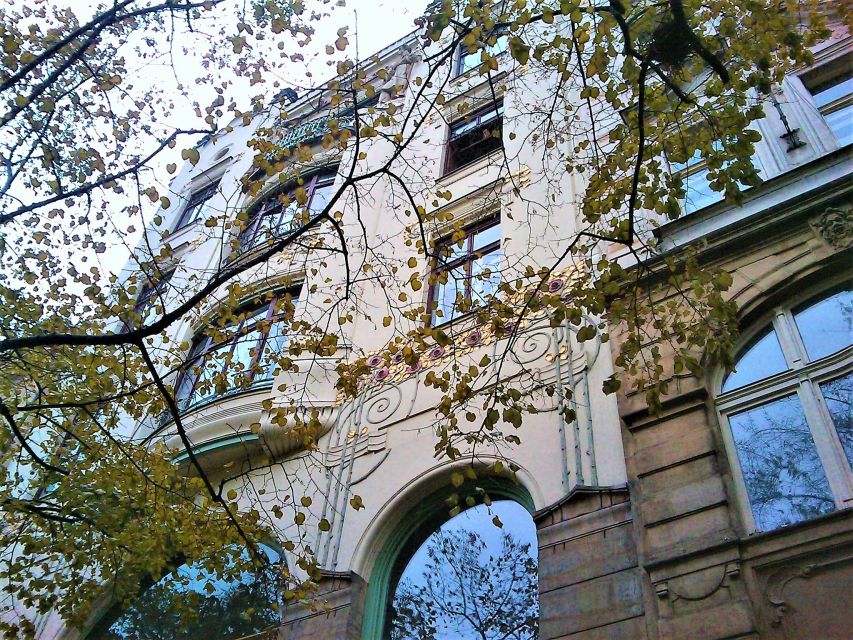
If you’ve walked around Paris, you’ll recognize the vibe right away: those swirling, plant-like gate shapes and the bold sense of design around entryways. Prague carries that same visual language, but it turns up in places that feel very everyday—especially around transit and street-level entrances.
That’s the hook of this tour. You’re not just reading about a style from a book. You’re seeing it on the kind of buildings you actually pass by. As you move through central Prague, Art Nouveau turns from an abstract word into a set of recognizable signals: curved lines that feel organic, ironwork that looks grown rather than built, and lettering details that act like part of the architecture, not an afterthought.
I like how this tour trains your eye. Instead of hunting for one “big” building, you learn to notice patterns. Once you catch them, the city starts talking back. You’ll likely find yourself spotting similar decorative rhythms on your way to the next stop—handy when you’re trying to understand a place quickly.
Balšánek and Polívka: the architects to watch for
This tour’s style lesson is built around specific architects, not vague labels. The spotlight includes Antonín Balšánek and Osvald Polívka, along with other architects discussed during the walk.
Why this matters: Art Nouveau in Prague isn’t one uniform look. It’s a conversation between designers, materials, and the era’s taste for movement and ornament. When your guide connects a building to a named architect, you get a map in your head. You’re not just looking at pretty features; you’re tracking ideas.
And the guide’s job is to make that easy. With French as the tour language, you’ll still get enough structure to follow along—especially if you’re comfortable with at least some basic French vocabulary. On a private group tour, you can also ask quick questions without feeling rushed, which makes the architect-and-style connection stick better.
If you’re the kind of person who enjoys art history when it has names and dates, this is a satisfying match. If you’re mainly in Prague for photos, it still works—because you’ll know what to look for when your guide points it out.
Republiky Square to Wenceslas Square: moving through the city core
The tour starts at Republiky Square, then continues through Na Příkopě street, heading toward the hub of Wenceslas Square. That’s a smart arc. You’re walking through central Prague’s core, so you’re not stuck in one neighborhood bubble for two hours.
In practice, the movement can be on foot, by tram, or by the metro. That flexibility is useful because it lets you cover more ground without turning the day into a walking test. It also changes how you experience the architecture. At street level, you catch the details. On transit, you get a wider sense of how the buildings sit in the urban grid.
This route also gives you a natural rhythm: architectural stops feel tied to the way you’d actually travel across the city. You’re getting context for where these buildings are located and why the style would be visible to people commuting, not just to tourists wandering off-grid.
One small consideration: since this is a two-hour tour, you’ll likely spend less time at each photo spot than you would on a self-guided loop. The trade-off is that you’ll see the important Art Nouveau hits and get the story behind them without planning a whole route.
Spotting signatures: lettering, ironwork, and gate-like entrances
A big part of Art Nouveau is the sense of “designed entry.” It’s not only about windows and facades—it’s about the thresholds: gates, archways, and decorative lettering that signals something is intentional right at the street level.
One way the tour helps you is by training you to read these clues quickly. You’ll watch for plant-like curves that spread like vines, and for wrought-iron details that feel rhythmic rather than random. The distinctive lettering style—mentioned as a key feature in the tour concept—matters too. It’s part of the architectural voice, not just branding.
As you move along Na Příkopě toward Wenceslas Square, you’ll get lots of chances to compare. Some buildings lean more toward ornamental ironwork; others feel more about the overall composition of the facade. The guide’s prompts help you sort what you’re seeing into categories, so you don’t leave thinking, It was pretty… but now what?
If you like architecture from street level, this is a strong approach. You’ll get a practical skill: how to recognize Art Nouveau in Prague without needing a guide every time you walk past a doorway.


The history thread: Prague’s bigger story, not just decoration
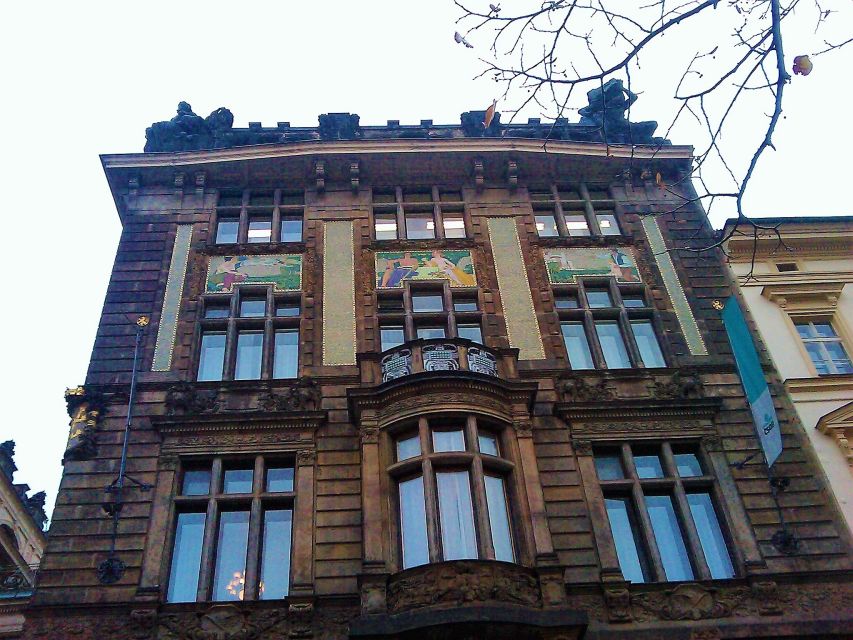
Art Nouveau can feel like decoration without context if your guide doesn’t connect it to the city’s timeline. Here, the tour explicitly includes the general history of Prague, and it links that to the Art Nouveau period and how the style spread into Czech design work.
That history angle is valuable because it turns aesthetics into meaning. You start understanding why the city would embrace this style: who wanted the look, what was changing in design taste, and how architects adapted ideas to local building traditions.
It also helps you place the buildings in your mental map. Instead of collecting standalone sights, you’ll connect them into a narrative: Prague’s identity evolves, and art and architecture are part of that change.
You’ll also get fun, human-scale facts—small details that make the buildings feel like they have personalities. One review described the tour as filled with Art Nouveau plus history information and fun facts, and that’s the sweet spot you want: learning without boredom.
Private group pace with a French guide (and what that feels like)
This tour is listed as a private group with a live guide in French. Pickup is included, and the guide comes to your hotel reception holding a desk with a name in front—so you’re not playing a guessing game in the lobby.
That matters more than it sounds. When pickup is simple, you start the tour with confidence. You can show up, meet the guide, and focus on the buildings instead of logistics.
The guide experience seems to be a major reason people rate this tour so highly. Names that come up include Tomas, and the feedback highlights a friendly guide who knows the city and its story well. I’d expect that kind of tone to make the explanations easier to follow—especially when you’re learning a design style that’s best understood by seeing and comparing features in real time.
Private pacing also helps if you’re taking the tour as part of a shorter stay. You’ll get structured highlights without losing time to waiting in big groups. In two hours, that difference is noticeable.
Price and value: $34 per group up to 25
At $34 per group (up to 25 people) for a 2-hour guided experience, this can be good value if your group is small or mid-sized and you want a focused architecture walk.
Here’s how I think about it:
- If you’re a couple or a small group, you’re paying for a guide plus the time spent moving through central sights.
- Because it’s a private group format, you’re less likely to feel like your questions are competing with a large crowd.
- The guide’s job is to translate Art Nouveau into something you can recognize quickly. That “skill gain” is worth real money when you’re trying to see more of Prague without getting lost in a long DIY research phase.
One note: the listing states price per group up to 25, so the actual value depends on how many people you’ll have in your booking. If you’re booking solo as a private group, you may want to check how the operator defines group size in practice at checkout. If it’s flexible, you’ll likely feel the value more strongly.
Practical tips so the 2 hours feel good
This isn’t a back-and-forth hike for a whole day. Still, it’s a city walk with possible tram or metro movement. Plan for a mix of street-level viewing and transit.
- Bring comfortable shoes. You’ll thank yourself when you notice details at each stop.
- Wear clothing that’s okay for short transit hops. You won’t be stuck for hours, but you’ll move.
- If you speak French at all, use that advantage. The tour is in French, and it’s easier to enjoy when you can catch the main points quickly.
- If you’re the type who likes photos, act like a collector: snap the facade first, then the doorway and ironwork second, so you can remember what you learned when you get back to your room.
Should you book the Prague Art Nouveau Tour?
Book it if you want a focused way to learn Art Nouveau in Prague—one that names key architects like Antonín Balšánek and Osvald Polívka, ties the style to Prague’s wider story, and walks you through central sights from Republiky Square toward Wenceslas Square.
Skip it (or pair it with your own plan) if you prefer long, slow architecture wandering with lots of extra time at each stop. This is a tight, two-hour hits-and-lessons tour, so it’s best when you want structure and clarity more than total lingering.
If you’re already curious about that Paris-to-Prague design connection—the gates, the lettering, the organic metalwork—this tour is an efficient way to turn curiosity into real recognition while you’re right in the middle of the city.
FAQ
Where does the Prague Art Nouveau Tour take place?
It’s in the Central Bohemian Region of the Czech Republic, focused on central Prague sights.
How long is the tour?
The duration is 2 hours.
What is the price?
The price is $34 per group, up to 25 people.
What language is the tour guide?
The live tour guide speaks French.
Is pickup included?
Yes. The guide picks you up at your hotel reception and holds a desk with a name in front of the hotel.
What route does the tour cover?
It starts at Republiky Square, continues via Na Příkopě street, and ends at the hub of Wenceslas Square.
Is the tour private?
Yes, it’s a private group tour.
What should I bring?
You should bring comfortable shoes.
Can I cancel for a refund?
Free cancellation is available up to 24 hours in advance for a full refund.
More Tours in Prague
More Tour Reviews in Prague


More Prague tours we have written up lately


Tours, compared.
 ★ 4.6Castle Tour with Local Guide and Entry TicketFrom $6110,422 reviews
 ★ 4.3Oldtown, Medieval Underground & Dungeon History TourFrom $3110,277 reviews
 ★ 4.7Prague Castle 2.5-Hour Tour Including Admission TicketFrom $578,927 reviews
 ★ 4.73-Hour Walking Tour of Old Town & Prague CastleFrom $305,696 reviews
 ★ 4.83-Hour Old Town and Prague Castle Tour in GermanFrom $365,671 reviews
 ★ 4.4Ghost Walking Tour Where Legends Come To LifeFrom $275,253 reviews
 ★ 4.3Ghosts, Legends, Medieval Underground & Dungeon TourFrom $315,104 reviews
 ★ 4.5Klementinum Library & Astronomical Tower Guided TourFrom $185,050 reviews